
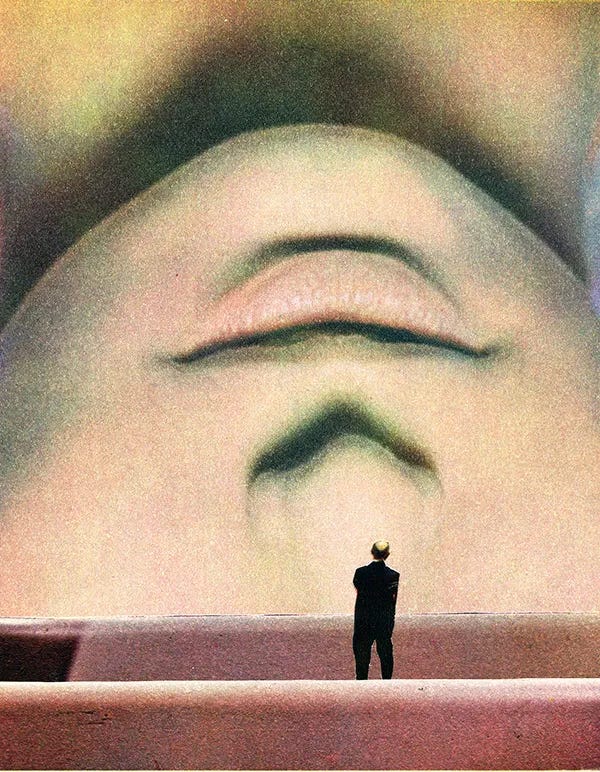
Two of the most counter-productive words in the English language are “try harder.” We think that the reason for our perpetual failure to reach simple goals—or to manage behavioral issues—is because we don’t try hard enough. Oh, if I only had more discipline (or clarity or motivation or support), we might complain, as if these are things we’re either born with or can possess like a magical talisman. If I had “that” maybe I could keep promises to myself. If I had “that” I could be “good.” If we’re already doing our best, trying harder solves nothing.
The result of this mindset plunged me into three years of talk therapy courtesy of the Veteran’s Affairs Department. That’s like 200 hours of professional therapy, plus homework. My therapist was an interesting dude with a spooky background. He had the sort of backstory that made me wonder if he was analyzing me or plotting my role in his next plausibly deniable mission. I both enjoyed and learned much from our weekly talks and the many books on psychology and philosophy that I read. He was brilliant at providing mental models instead of solving tactical problems. He gave me tools instead of answers. It launched me onto a relentless self-improvement path that morphed into an exhausting treadmill. When does it end?
What I’ve learned is that what you can change and what you can’t fall into three distinct categories, discussed below.
From what I see posted, it seems that a lot of people are fatigued by the cultural sentiment that you’re never good enough. It’s strange how silence sharpens your vision—quiet the noise, and clarity floods in. With good intentions, I triangulated in a self-help matrix of ambient dissatisfaction, relentless measurement, and a “not enough” mindset that strips the joy out of living like a distracted mom shushing kids at the park so she can scroll in peace.
I was perpetually ramped up trying to optimize across domains for increased physical dominance, psycho-philosophical sage flex and spiritual wizardry. Don’t tempt me with dessert, fiction, or a nap—I don’t have time for that. Of course, my idea of a wild night was meditating on my protein intake while staring at the ceiling, wondering if existential dread burns calories. Once I was done raising my inner child, setting personal records on every lift, stacking enough wins and transcending, I figured I’d take half a day off to celebrate with a rice cake and glass of fancy water, the kind with bubbles. Because nothing says ‘enlightenment achieved’ quite like fizzy water and a rice cake—the feast of champions. I had to give it a break, man.
Of course, being healthy is better than not being healthy, having energy is better than not, and the capacity to simply get things done is bedrock. There are plenty of things anyone can do to make things better. In the case of truth and consequences, both are hard. Lifting weights is hard and so is the slow, debilitating onset of systemic weakness. One is “good hard” and the other “bad hard.” One is hard now, the other hard later. I get to choose.
But we can spend so much time improving our lives that we forget to live them. “Never enough” becomes a joyless slog. The point of getting better is to enjoy it, not compare it to the next level. Professional athletes train hard so they can play better. I can view my life the same way. I can choose hard things and face hard truths so I can live better.
What follows is an inventory of what has worked for me and what has not during years of trying to get “better.”
You can read the bottom line below to get the short version, and I’ll leave you with a suggestion I’m currently exploring:
LESS self-analysis, body composition concerns, theology, non-fiction, naval-gazing and trying harder.
MORE cooking, lifting heavy things, running up hills and walking down, fiction, sunlight, silent prayer and phoning a friend.
I’ve come to realize there’s no self-worth scorecard—I’m not some child scrambling for gold stars on a life test. Modern capitalist culture has conflated human worth with productivity, a dehumanizing deception. If someone equates my overall worth directly with my productivity (boss, pastor, spouse), I turn down the volume on their noise or cut the power.
I believe we’re good—deep down, inherently equipped to live fully. If I never added another 10# to my deadlift, stacked any more cash, or unearthed another philosophical gem, I’d be just fine for a kick ass life. Heaven forbid I settle for ‘good enough’—I’d probably wake up one day realizing I’ve accidentally enjoyed myself.
Seneca said something like the object of praise is unchanged by praise, the object of ridicule is unchanged by ridicule. Failure’s lessons sharpen my functionality; success amplifies the best and worst of my true nature. But these remain externals—neither success nor failure alters who I am.
Mindset. Most of what’s good is the absence of something bad. Before I try to get better at anything, I’ll make significantly more headway by first emancipating myself from destructive beliefs, thoughts, and habituated behavior.
Whatever “it” is, we already have it. We are born with it. Look up, tap in, step forward.
Since psychology and philosophy got me here, a deeper dive follows. Psychology says we’re fragmented or broken and that a reintegration of self will cure it. Philosophy promises that our perceived dividedness can coalesce with a paradigm shift. Self-help directs us toward the optimization of integers toward improvement of the sum.
First, not every quirk needs a label or a fix. Thank God or I’d have been in therapy forever. In fact, very few do. Idiosyncrasies don’t make you pathological they make you human. Only to the extent that such idiosyncrasies create dysfunction do they warrant careful attention or treatment. Typically, we can just reign our weirdness in enough so that we can keep a few friends and function at work.
Second, modern psychology fails when it attempts to couch spiritual problems as biological ones and promotes languishing in problems as the cure for them. Substack’s own @lauralondon nails it better than I could:
Modern psychology offers a conceptually impoverished framework of suffering. The medieval Christians understood acedia, despair, demonic oppression. They had technologies for fighting them: asceticism, confession, community. We decided all that was superstition, reduced it to serotonin, and wondered why our depression rates keep climbing. Regression disguised as science. Modern therapy’s greatest trick was convincing us that understanding our wounds would heal them. As if cancer is cured by staring at the X-ray.
Our bodies and minds heal by design. Reliving trauma does not heal it. Where you find wounds that won’t heal you will discover lies. The lies we believe about ourselves and how the world works reopen such wounds. Only truth enables healing. It’s sometimes a simple epiphany. A teacher called you “stupid” in second grade; you remember it and realize you’ve felt stupid your entire life, and it’s kept you from trying. Then a friend says you’re one of the smartest people they’ve ever met, and you realize they’re telling the truth. Everything changes in an instant. Serious trauma and tragedies, of which I’ve had my share, warp perception proportionate to the wounds. No matter the depth of the injury, it is truth that frees me from it.
Third, at the clinical level, Martin E.P. Seligman, Ph.D.’s book “What You Can Change and What You Can’t” is a breakdown of ground truth on what works and what doesn’t in self-improvement and psychological treatment.
Seligman’s Bottom Line. Environment plays a part but is incomplete. Based on best evidence, the bottom line is that:
1) You can change some things easily.
2) You can change some things to some degree with a great deal of effort.
3) Some things you cannot change. We must “know what about ourselves will not yield ... Much of successful living consists of learning to make the best of a bad situation.”
Here are some facts about what you can change:
Panic [and daily anxiety] can be easily unlearned but cannot be cured by medication.
Our moods, which can wreak havoc with our physical health, are readily controlled.
Depression can be cured by straightforward changes in conscious thinking or helped by medication, but it cannot be cured by insight into childhood.
Optimism is a learned skill. Once learned, it increases achievement at work and improves physical health.
Here are some facts about what doesn’t change:
Dieting, in the long run, almost never works.
Kids do not become androgynous easily.
No treatment is known to improve the natural course of recovery from alcoholism.
Reliving childhood trauma does not undo adult personality problems.
For the things in our lives we cannot change, coping mechanisms serve us better than a futile search for cures.
1. Identity. Excavating root causes and finding the original, unburdened, untwisted and unacculturated version of myself reveals to me my true identity. This is the kid who was me before life got involved. That kid just wanted to jump his bike off the biggest ramp he could find or read books. This got me to the bottom of how I’m built and how I’m designed to operate. The beauty of the original identity is that it doesn’t take therapy. You can remember it and imagine it. Then start moving everything else out of the way, because everything else is accumulated trash. Do not confuse this with the mistake of trying to relive your youth. That doesn’t work. The point of finding wreckage is to clear it, not dwell in it.
2. I am the problem. If you’re my problem, I don’t have a solution. Example: I am the common variable in my string of failed relationships. Knowing this, I don’t search for the perfect wife, who doesn’t exist, I try instead to become the best husband I can. Recognizing this instantaneously frees me to look around and make a few improvements.
3. Understanding Ignorance. Most of us do our best, i.e., we do as well as we know how in any moment. Most of my memorable mistakes weren’t maligned character but ignorance. When I see that in myself I see it in you too. It makes it easier to forgive us both. Learn stuff, avoid ignorant mistakes. When I know better I do better.
My go-to philosophical paradigm for contending with things I can’t change has been Stoicism, and for the intentional direction of how I experience life, a God-centered phenomenology.
Stoicism. Stoicism is an effective behavior management system. Thoroughly embodied, even “soul” management. Sustained daily practice resulted for me in imperturbability, a simplified mindset, and discernment of my range of control. I was much freed from wasting time trying to control the uncontrollable. A measure of peace within an inner citadel.
Stoicism did not free me from myself, though it has enabled conscious self-control. But in moments when I was caught off guard—at the margins of my own behavior—I was as apt to react with self-preservation, anger or sarcastic disdain as ever. Though I can refine my reflective will through disciplined thought, my impulsive will is rooted in identity and conditioning, not thought. It’s automatic. Not even Marcus Aurelius could keep me from cussing my coffee table when I split my shin on it. My Stoic practice failed to reach the deepest part of my identity, replete with its hallowed ideas, entrenched beliefs, and the decades of conditioned thought they engendered. These beliefs are discussed in another essay, “Mind Over Matter.”
I think you’ll enjoy these next few academic paragraphs as much as I, like a mouthful of sawdust, so bear with me.
Phenomenology. Phenomenology is the study of “phenomena.” Its focus is the structures of knowledge and experience. As a discipline, phenomenology is awareness of all the ways I view and move in the world.
Our experience includes observable, measurable, biological, environmental, neurological, dream states, premonitions, sensual and sensuous, mythological and spiritual, and everything we can feel or perceive.
“Structures” of experience range from perception, thought, memory, imagination, emotion, desire, and volition to bodily awareness, embodied action, and social activity, including linguistic activity. Elemental to it is “intentionality”, or how I direct forms of experience toward the world. 1
So what? Impenetrable academic jargon is of little use. What I learned, slowly, is that what I observe in life is of far less importance than how I perceive it. How I intentionally direct or orient my mind determines how I perceive things.
1) The Reframe. As structures or mental models (~paradigms) determine how I interpret the world, understanding them and reframing my structures changes how I perceive everything— “there is not enough” or “everything’s a competition” or “I’m the center of the universe” becomes “there’s plenty to go around”, “we’re all in this together” and “we are made for each other.”
Things aren’t happening to me—they’re just happening.
2) Believe in the Unseen World. I can choose the nature of my experience by directing my mind with awe and reverence toward an unseen world that I cannot understand. This knocks out the walls of what is possible. I like to pay attention to “divine coincidence”, those moments when you get the same message from the universe three times in two days in totally unrelated ways. I once was deciding whether to accept a job offer. In a single day, I came across Nancy Reagan’s old anti-drug campaign, “Just Say No”, I walked into my living room to hear a sitcom character say, “No! No! No!”, and a buddy of mine said, “‘No’ is a complete sentence”, referencing a task he’d gotten outside his chain-of-command. I thought back on this after I turned down the job, which turned out to be a good decision, and thought, “maybe . . .”
3) Recognize what I can control and what I can’t. What I can control does not extend beyond my fingertips and often ends at my ribcage. What I can’t control I must accept or it will drive me insane. #1 on the Can’t Control list is other people. #1 on the Can Control list is what I say and don’t.
4) What I focus on becomes my reality. I’ve tried to create a habit of imagining the best things throughout the day. The best way for has been to memorize edifying things and chew on them constantly: scripture, poetry, complex ideas. Contemplate until they illuminate.
5) Eat it today, wear it tomorrow. I’ve learned to filter what I watch, read, listen to, eat, speak, or think—avoiding anything I don’t want to become. Everything I consume is the building material for or is absorbed into the structures through which I interpret my experience. How I interpret the world = my reality.
6) Do Stuff. True knowledge is derived from experience alone. Academic knowledge is like memorizing a menu and experiential knowledge is eating the food.
Experiences teaches us that we are more than we can imagine and that there are powers beyond us.
Change the easy stuff, decide if the hard stuff is worth it, and cope with the rest.
Comments
Nothing yet. Say the first thing.
Sign in to join the conversation.