
I just found out that “Brain Rot” was the Oxford word of the year in 2024. We may just want to pin that one to the top of the “Word of the Year” list until the quality of content offered on our feeds starts to improve.
In other words, keep it pinned indefinitely.
I recently came across this article about the brain rot concept, and found myself asking a question:
Are we really to the point where we have to tell people to go touch grass or their brains are going to start dissolving like a sugar cube in hot tea?
Yes.
That’s where we are. We are all facing down our own personal zombie apocalypse, where the catastrophe comes from within.
Here’s how Oxford defined “brain rot”:
The supposed deterioration of a person’s mental or intellectual state, especially viewed as the result of overconsumption of material … considered to be trivial or unchallenging.
And as much as we’d like to think it’s the younger generations with the problem, it’s not just teenagers glued to TikTok or lost in Instagram Reels. I’ve observed Baby Boomers also entranced by their screens, scrolling through Facebook or news apps with the same vacant stare. It’s as if we’ve all become toddlers again, pacified by the streams of no-effort-required content.
It’s not just about wasted time; it’s about what’s happening to our brains. Excessive consumption of short-form content can impair attention spans and memory. And research indicates that “short-form video addiction has been shown to be positively associated with various mental health problems, such as symptoms of depression, anxiety, and stress.”
Could there be a personal crisis easier to solve? It is a real problem, but the practical solutions available to us are incredibly simple. Here are three straightforward steps to reclaim your cognitive health:
Set a timer: When you start scrolling through social media feeds, set a five-minute timer. If you haven’t found something substantial to engage with by then, shut it down (This will not be easy, so set your timer sound to one of the more obnoxious options).
Move your body: Spend at least 10 minutes walking, preferably without any input from podcasts or music… just you and your thoughts. If it’s stormy or miserable outside, pivot to pushups, jumping jacks or dancing (the most underrated and underused option).
Engage in deep reading: Choose an article or a book segment, read it, and discuss it with a friend. Knowing you’ll talk about it later increases your commitment to truly understand the material. Ask them to book a 30 minute coffee or call on that one topic. As a result, you’ll feel connected to your friend and a little bit smarter.
These steps might seem simple, even obvious. But in a world designed to hijack our attention, simplicity is revolutionary.
Thoughts and quotes from what I’ve been reading this week
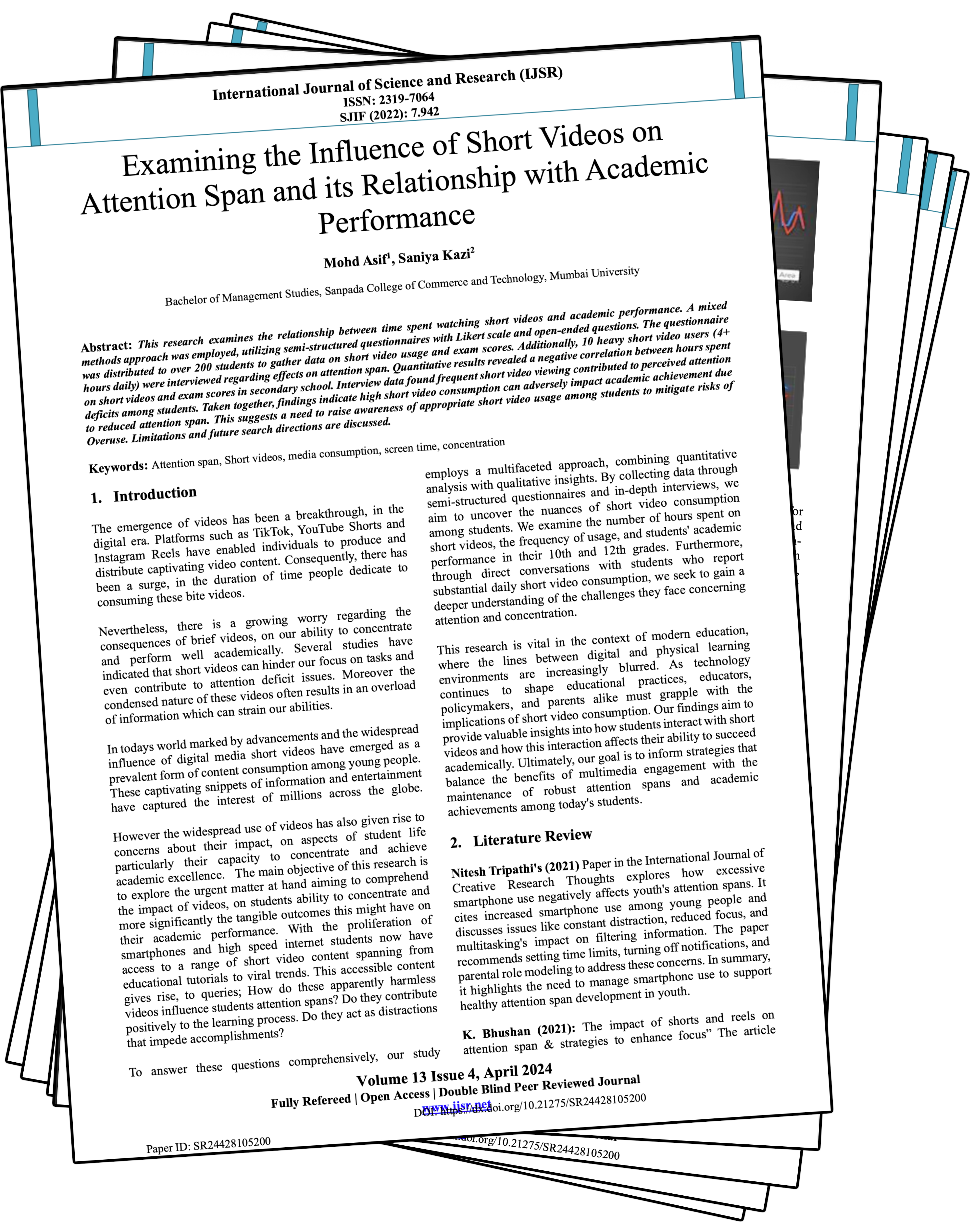
One of the studies I referenced above provides a lot of insight into what effect short-form content (specifically videos) is having on high-school students. Don’t let the format intimidate you. It’s not a difficult read, but will present a more thorough case for limiting our consumption of short-form content, especially in light of how it impacts our ability to retain information, concentrate on deeper work, and retain our focus for longer periods.
Also, I’ve finished Feel-Good Productivity by Ali Abdaal and cannot recommend it enough. Watch for a future post containing highlights and why I think just about anyone would benefit from this book.
Thanks for reading Curious and Clear! This post is public so feel free to share it.
No posts
Comments
Nothing yet. Say the first thing.
Sign in to join the conversation.