
Hello everyone:
I’ve been stretched a bit thin recently, and forgot to offer solstice greetings last week. I hope that for all of you, in both the northern and southern hemispheres, the solstice offered a moment of reflection on the movement of the spheres, and on our good fortune to be here for a little while within the wonder.
As always, please remember to scroll past the end of the essay to read some curated Anthropocene news.
Now on to this week’s writing:

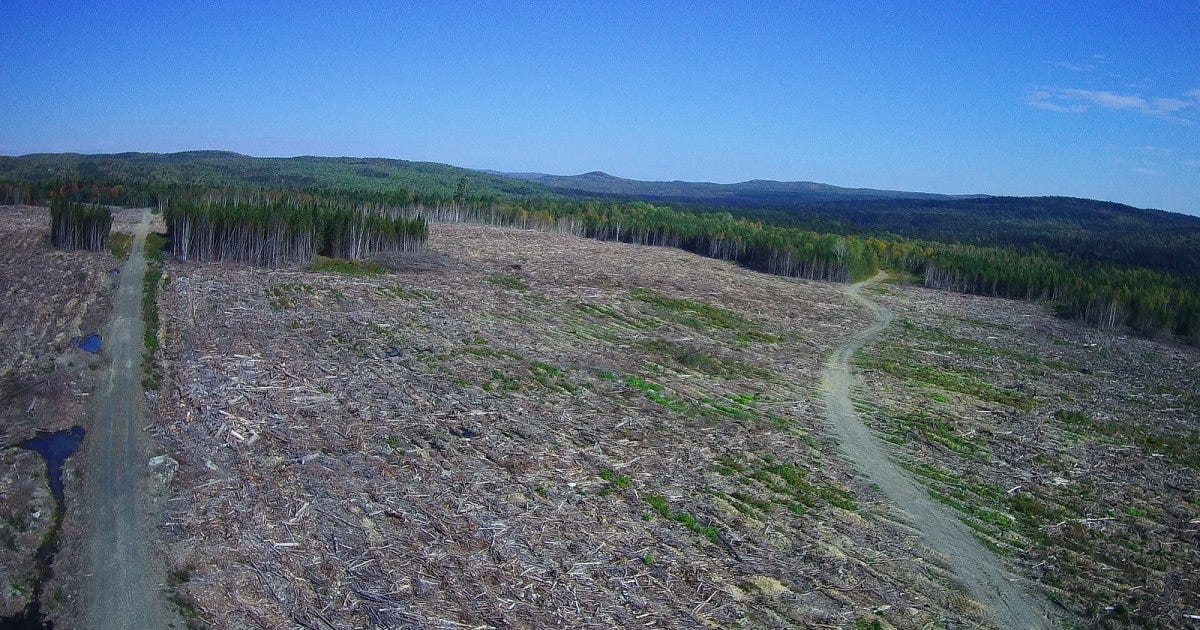
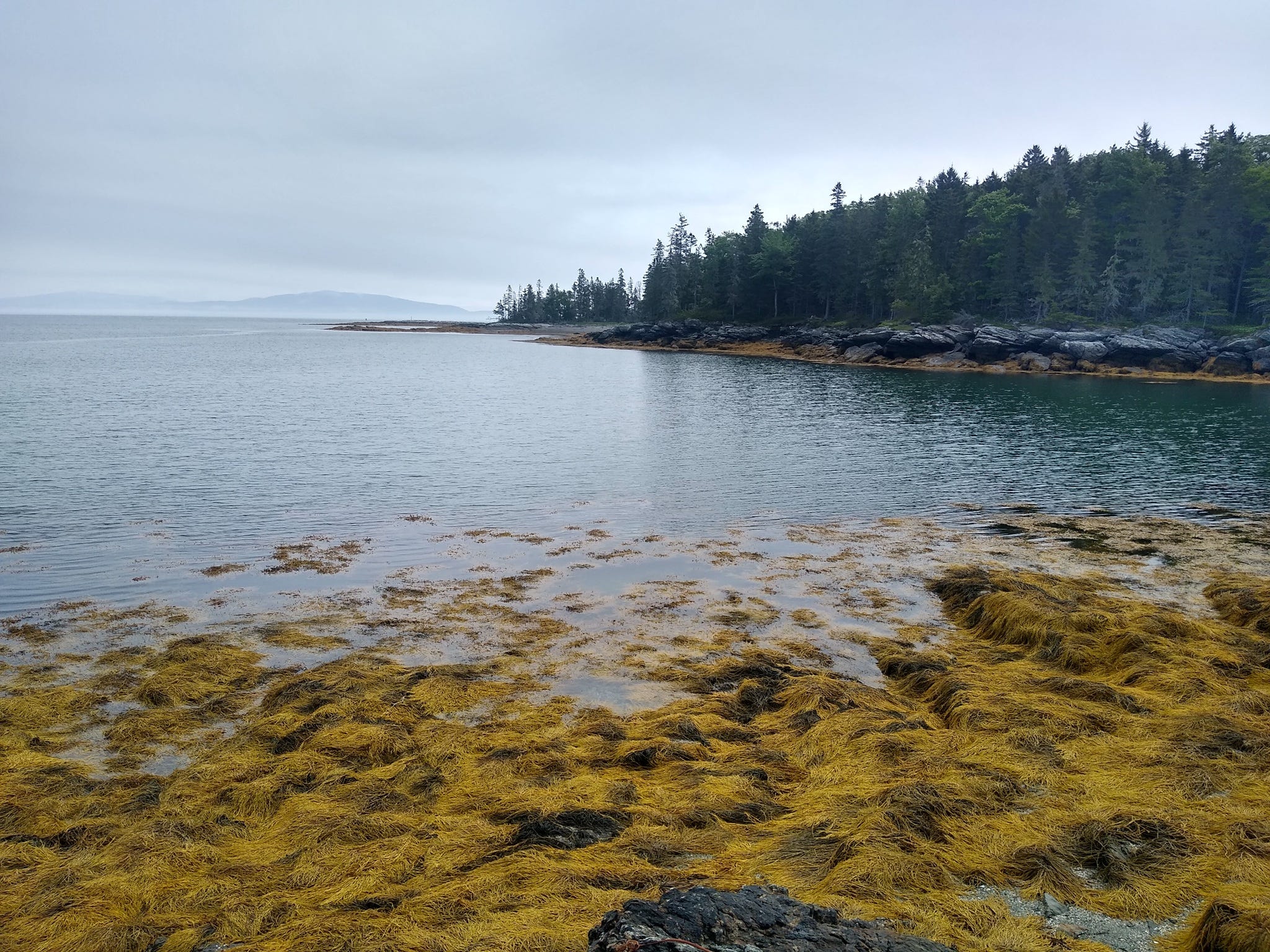
One of the worst, and luckiest, moments in my life was when I was lost in the woods for a couple hours as an adolescent. I was fifteen. My father and I were way up north here in Maine, at the dead end of one of innumerable logging roads cut randomly amid what felt to me then to be the endless and shapeless green mass of forest. That forest, cut and regrown in patchwork fashion every generation or so, and riddled with dead-end gravel roads whose logic is extractive rather than navigational, extends hundreds of miles to the Canadian border and beyond.
My father and I went off in different directions and were meant to meet back up at the car. But I missed the road on my return and kept going, sure it was just up ahead, and then increasingly worried that I was way off track and late and so should move faster and faster, crossing streams I had not crossed before, and making increasingly senseless decisions amid the loneliness of my panic.
It’s hard to quantify just how lucky I was, as I headed farther and farther away from the car and my father waiting beside it under the late afternoon sun, when some miles away I came across another lonely logging road, and how lucky I was that a car happened along a few minutes later, driven by a man with a map and the kindness to take me back to my father.
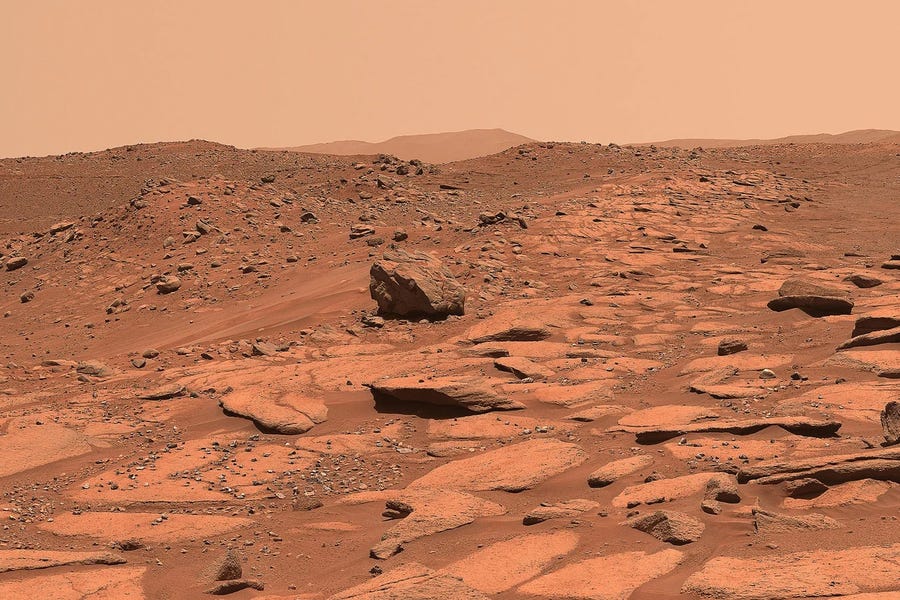
There’s more to that story - what it meant to me then and what it means now - but it came to mind recently when thinking about the dangerous absurdity of the idea that we’re on our way to “terraforming” Mars. The northern forest of Maine, like much of the Earth, is a deeply disrupted place. Managed like grass - a simplified and dismembered ecology cut down repeatedly for purely human benefit - these “working” forests are, like so many of the places we love, an example of how we’ve reshaped and diminished life on this planet.
Terraforming, defined as making another planet Earth-like for human purposes, is a grotesque and ironic fantasy. Men of a certain cold imagination seek to green Mars while the civilization they’ve siphoned far too much wealth and power from siphons far too much green life out of Earth. In any rational and empathetic analysis, the promise of Mars is as empty as the future they would create here, if we let them.
There’s a whole industry being built toward this, but the fantasy’s primary spokesman is Elon Musk, an inarticulate man-child who has always struck me as an adolescent acting out of the loneliness of his panic. (That panic wobbles between the usual white male anxieties behind racism, transphobia, and delusions of grandeur.) In his public persona, he is a half-witted Bond villain responsible for 780,000 deaths (most of them children) and a would-be trillionaire whose current business plan is to surround the Earth with a million AI-enabled satellites so he can control and weaponize the flow of information across civilization. (In most business uses AI will only slightly increase efficiency while drastically increasing corporate power.) If that makes him seem smart, remember that his stated justification for moving some of humanity to Mars is because in a billion years or so the Sun may make life on Earth impossible.
Meanwhile, due to previous human behavior (led by men like Musk), the conditions for life on Earth are rapidly changing. The atmosphere and oceans are heating faster than species can adapt, terrestrial forests and grasslands need to be restored rather than further degraded, the worlds of Arctic and Antarctic ice are changing by the day, and 8.3 billion people are increasingly suffering from a cascade of effects on every aspect of our lives. In the face of this threat to life that’s occurring now - and will intensify over the next few decades - many of the wealthiest and most powerful men on the planet are making things worse, not better, all while imagining that someday they’ll play Monopoly with the solar system.
No one articulates it this way, but as it’s formulated now the idea of terraforming Mars feels like a zero-sum game in which our focus on moving to an uninhabitable planet requires the disruption of this one. This is despite the fact that, as far as we know, Earth is the only place that supports complex life. Advertised as the genius of human thinking moving outward to the stars, terraforming fantasies seem to me instead to be the usual ugly tangle of colonial and parasitic impulses that have characterized the Anthropocene.
I should be clear: I think efficient space exploration with probes and rovers is great, and probably worth the price. More to the point here, I love sci-fi stories, and have cheerfully watched a lot of the genre on TV and in movies, but I try not to forget that what I’m watching is not a path to our future but a map of our moment. From Star Trek to Star Wars and all the more subtle storytelling that surrounds them in the sci-fi universe, these stories are what I think of as “stellarnovelas”: political fictions, cultural experiments, and soap operas meant to help us examine our 20th and 21st century social and civilizational behaviors. They are often meant to move us forward, but not outward; to encourage empathy over apathy; to make us better Earthlings, not half-witted Martians.
Part of what is so infuriating about lifeless men with wealth and power redirecting far too much of society’s resources toward the fantasy of colonizing a lifeless planet is the uselessness of the trajectory. It isn’t the most infuriating aspect - which is their disregard for both human suffering and the fate of life on Earth - but it matters that most of us are sure we’re being led down the garden path by violent fools.
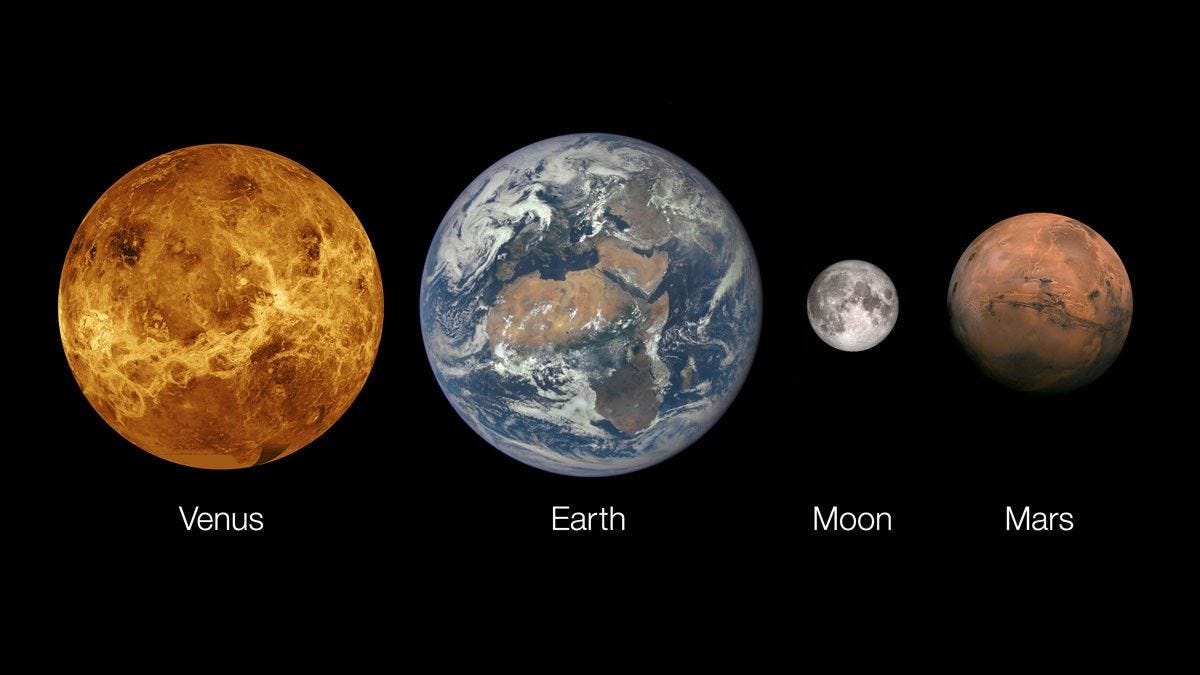
The fantasy of that path would turn the Moon into a mining colony, testing ground, and eventual scorched launch pad for the journey to Mars. As I’ve written, that plan is almost certainly a delusion to be betrayed by harsh lunar realities. And if the Moon plan fails, then so does our trip to Mars. But that failure won’t negate the harm of the pursuit. Because while our would-be tech overlords inflict the emptiness of their Mars-seeking souls upon our daily lives, what they’re ignoring (or abetting) is the Venusiforming of Earth.
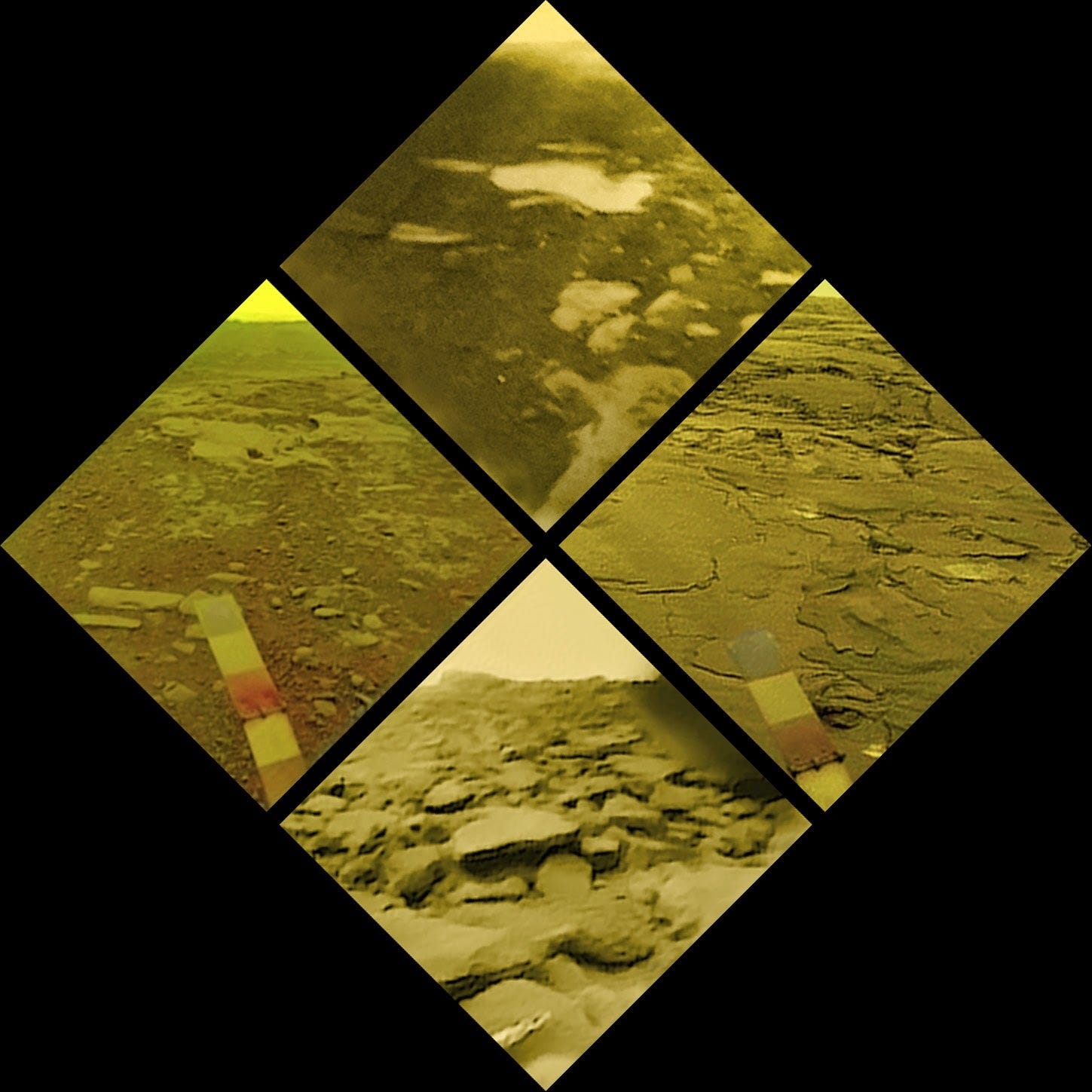
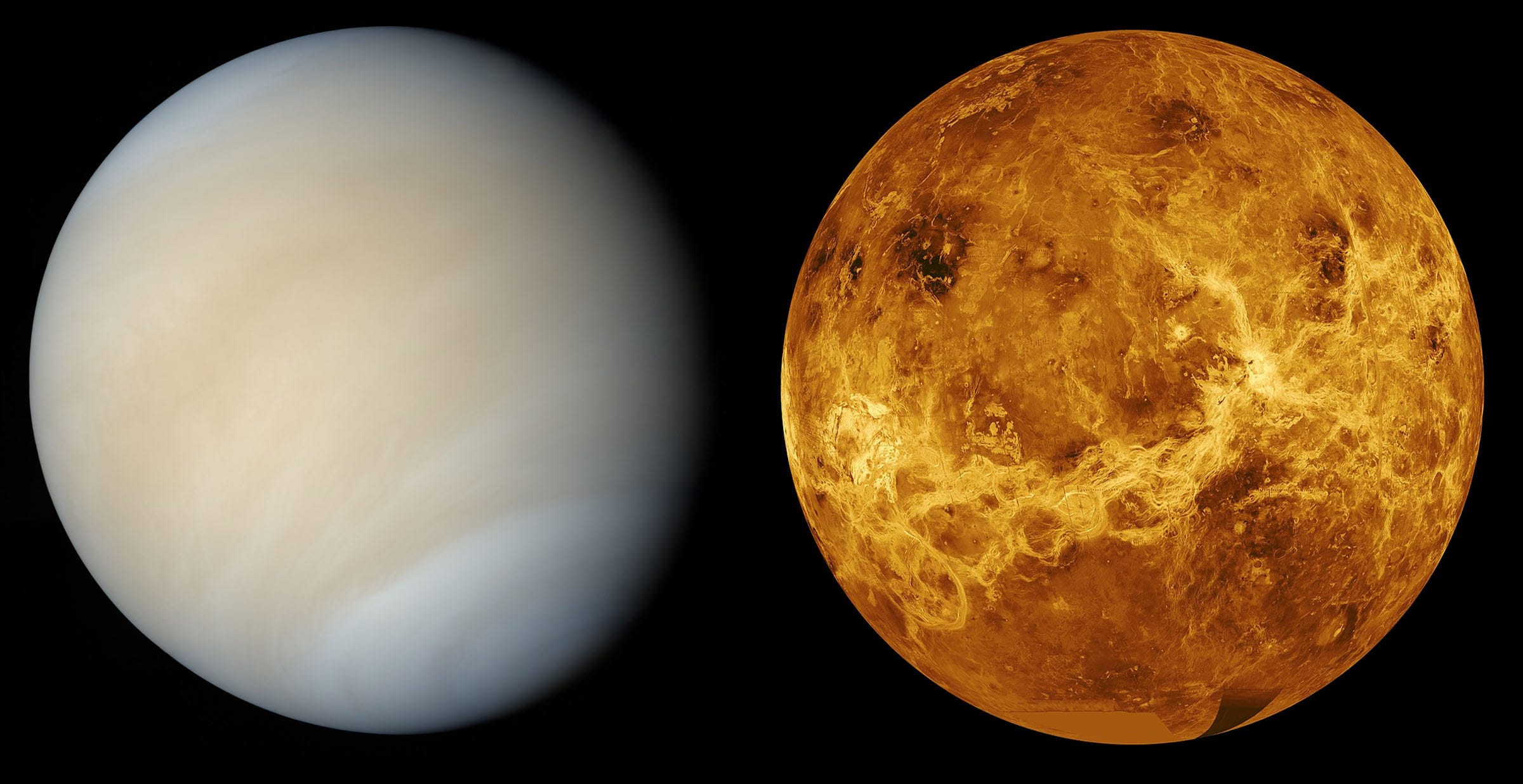
Venus, named for the Roman goddess of love and beauty, orbits the Sun between Mercury and Earth, and is a frequent bright companion in our night skies. If you were to attempt a visit, however, you’d find a hellscape. The atmospheric pressure on the surface is the equivalent of being a kilometer underwater, the pounds per square inch “like having a small car sitting on your thumbnail,” according to the Planetary Society. Temperatures can reach 870°F (460°C). The atmosphere is nearly all carbon dioxide and the persistent cloud layer that covers the planet is mostly sulfuric acid. Venus may have had liquid water and suitable conditions for life early in its history, but that dense CO2 atmosphere long ago led to a “runaway greenhouse effect,” a heating feedback loop that has boiled off all water and made the planet intensely inhospitable.
I’m not suggesting that we’re turning Earth into Venus. In fact, what research has been done on this question suggests that the physics of our emissions and deforestation simply couldn’t accomplish it even if that was our goal. What I am saying is that the way in which we currently imagine ourselves as a multi-planet species suggests we’re failing the test of being even a one-planet species.
Put another way, we’re acting like aliens from Venus who are Venusiforming, or “xenoforming,” Earth instead. Xenoforming is a sci-fi term for aliens changing the Earth to suit their own needs. Except, of course, that the warming and diminished Earth is proving to be as dangerous for us as it is for corals and penguins and grasslands.
From the point of view of most of life on Earth, we act more like aliens than community members, aliens who seem determined to fragment and diminish the planet’s ecosystems while pumping out a massive amount of CO2 and other greenhouse gases. Even if we limit the warming to a few degrees - which is not at all certain - the transformation of this planet’s living conditions, from ocean acidification and deoxygenation to the loss of polar ice and agricultural productivity, will be extraordinary.
It already is extraordinary. Just ask the Pakistani farmers who have been showing up at their dentist’s office with rapidly rotting teeth. In a must-read article from the Earth Island Journal, “When the Heat Steals Your Smile,” that dentist writes that these farmers, who regularly work in temperatures exceeding 113°F (45°C), are victims of “environmental collapse writing itself directly into human biological systems.” Despite drinking 15-20 liters of water per day in the heat, their mouths remain dry, and without saliva teeth can decay in a matter of weeks:
Before he left my clinic that day, I asked him what he’d want people to know about what’s happening to him and others like him… “Tell them that climate change isn’t abstract,” he said. “It’s here, right now, in my mouth, in my family’s survival, in my ability to work and eat and live with dignity… It’s not just teeth; it’s my entire future. And I’m not alone. Every farmer I know is experiencing this. We’re all getting older before our time. We’re all becoming invisible.”
It is, after all, very difficult to see a Pakistani farmer from a billion-dollar rocket headed to Mars.
It was my friend, the writer and photographer Jim Mastro, who wrote to me to suggest I write about the irony of our imagined terraforming of Mars while actually doing some Venusiforming of Earth. He noted that Elon Musk’s “knowledge of ecology and planetary geology is as void as his moral compass,” and worried, quite knowledgeably, that we may not limit warming to a few degrees. I should say also that I had the great luck of meeting Jim in grad school, where he told me about his work in Antarctica and then kindly helped me become an Antarctican too. Like the stranger in the car on the logging road, he redirected my life in ways I’m still immensely grateful for.
Between us, Jim and I have more than a couple decades of Antarctic experience, and we can say with certainty that despite being several orders of magnitude easier to occupy than Mars, Antarctica is still not a human home. We visit, work, even play on the vast sheet of ice, but no one truly inhabits it.
I don’t know how all this Martian dreaming will play out, but feel sure that if we don’t launch from a planet that we love and care for as deeply as we dream of a multi-planetary human future, then we will not have that future. Mars is impossible, Venus is unthinkable. Earth is perfect, and we are imperfect, but we’re home. For all the libraries and websites filled with information and stories about the biodiversity and climate crises, it all comes down to the question of whether we understand that we are already home, and whether we will begin to act on that understanding.
The nexus of physics and psychology is this: Who we are is what we do. The stories we tell ourselves about ourselves, whether each in our own little gray matter fable factories or across the entire human population, are only true if their narratives are borne out by the actions we take in the real world. If I’m a tough rocket-building hero in the stories I tell myself but a psychopath to the people around me, then I’m a psychopath. If we imagine that our species gives the Earth its meaning but are busy cutting off large branches on the tree of life, then we’re little better than a chainsaw amid the light-eating miracle of leaves.
Among the 8.3 billion of us are nearly 8.3 billion who know, one way or another, what I’m saying here. So many of us are doing good work to care for life on Earth, or supporting those who who do. Still somehow, though, like my teenage self we feel lost and a bit panicked amid the disrupted green world. We’ll need some luck, a tendency toward kindness, and a map to help us retreat from our dead-end exploitation of life and take us home. Which, to be clear, is neither Venus nor Mars.
Thanks for sticking with me.
For my Maine readers who care about the fate of birds, please check out the Avian Haven Blog. The bird-rescue facility Avian Haven, in Freedom, has for the last few months been publishing some well-written, thoughtful posts on what’s happening behind the scenes at their vital facility, like “Over 100 Baby Birds — And Not One of Them Can Know We’re Here,” about ensuring chicks don’t imprint on their caregivers; “She’s Spent 20 Summers Rehabbing Baby Birds,” about one of those dedicated caregivers; and “Our 1000th Patient This Year,” about the incredible amount of work they’ve already done halfway through the year. The blog also offers suggestions for favorite bird documentaries and books.
From the Times, “The Deadly Rise of Giant Trucks and S.U.Vs,” an excellent visual explainer of how the U.S. car industry has been building vehicles for a couple decades despite the serious increase in pedestrian deaths caused by high hoods and poor visibility from the driver’s seat in these oversized, overpriced trucks and SUVs. The motive is money, of course, because these larger vehicles don’t cost much more to build but earn far more in profits than the ordinary cars and trucks that we should be driving. One of the most effective segments of the article is a graphic/video showing what happens to a pedestrian when struck by a small car vs. a large pick-up.
From Jonathan Tonkin and Predirections, “Is Restoration Chasing Ghosts?”, a thoughtful exploration of what ecological restoration should be in a rapidly changing world. For all of our desire to bring back close replicas of the ecosystems and landscapes that existed before Anthropocene disruptions, that’s a) largely impossible, because of the depth and extent of change that’s occurred already, and b) probably unwise, given the resilience these natural systems will require to survive the changes that are coming. But this isn’t about giving up; it’s about restoring as much as possible, as fully and accurately and wisely as possible, all while acknowledging that what we’re restoring must fit the world we have rather than the world we lost.
From MIT Technology Review, “Hacking the Atmosphere: Geoengineering Gets a Reality Check,” an overview of current efforts - and the current debate - regarding stratospheric geoengineering, in which tons of sulfur dioxide and other particles would be spread by plane several miles above the Earth to partially shield it from the Sun’s rays, in order to slightly reduce planetary warming. The idea is still as logistically challenged as it is ethically nightmarish. The planes for this don’t exist, and we don’t know how to engineer the particles, while at the same time we have no clear idea on how the work would impact global weather or which poor nations would suffer the most (again) at the hands of rich nations’ wayward technology.
From Sam Matey-Coste and The Weekly Anthropocene, “Atrocity,” a deep, difficult, and necessary take-down of Elon Musk based on his DOGE team’s destruction of USAID and the hundreds of thousands of deaths it has caused around the world. Those 780,000 estimated deaths I noted in the essay above are comparable to many of the 20th century’s genocides. To his credit, Sam (who produces the most optimistic forward-looking newsletter I know) does not hold back:
In my personal opinion, Elon Musk has become far, far, far worse than Osama bin Laden. He has killed orders of magnitude more innocent children.
I don’t support the death penalty, though this case has tested that principle more than any other. I would prefer that everyone involved in this atrocity be charged for their crimes against humanity in a modern vision of the Nuremberg trials, and ideally jailed for multiple life sentences.
Musk is not quite history’s greatest monster. But he’s pretty high on the list, definitely in the top 100. It is obscene beyond words that he is also the world’s first trillionaire.
That’s my comment on the SpaceX IPO.
Vote blue in November.
From the Atlantic, “ICE Might be Violating America’s Other Bill of Rights,” an insightful and useful reminder that the ICE and CPB officers using excessive force “like an out-of-control police force” are not actually law enforcement. They are, under the law, administrative officials. This makes them more subject to the 1946 Administrative Procedure Act than to the Fourth Amendment, especially since the Supreme Court keeps siding with the Trump administration and limiting how the amendment applies to ICE and CPB. The APA, however, resonates with several Supreme Court decisions limiting the agents of federal agencies to activities explicitly defined by those agencies:
The statute also allows courts to review potentially unlawful action, thereby ensuring agencies follow the Constitution, other federal laws, and their own rules and procedures.
From Adam Mastroianni and Experimental History, a note in his quarterly round-up of fascinating stories about how AI might actually be a useful tool in convincing conspiracy theorists that they have been wrong about, say, 9/11 or the Covid-19 vaccine. Mastroianni cites a new study in Science which reports that “The AI chatbot’s ability to sustain tailored counterarguments and personalized in-depth conversations reduced their beliefs in conspiracies for months.” Mastroianni lays out a really interesting reality check in response:
This is, I think, an underrated and positive aspect of AI. People are worried about [AI] hallucinations and AI psychosis, and rightfully so. But keep in mind that many people do not know basic, uncontroversial truths about their world. 37% of Americans—a plurality—believe that God created humans in their present form within the last 10,000 years. 40% don’t understand how a control group works. 26% think that the sun goes around the Earth. For these people, talking to a chatbot is likely to leave them with a more accurate view of reality.
From Aeon, “What is this rock?”, a fascinating description of a too-fast geologic process occurring on a part of the English coast, in which conglomerates (sedimentary rock composed of pebbles and cobbles of other stones on the Earth’s surface) with human-made debris are being rapidly melded into a new kind of stone. The author and his colleagues “believe that this little-known section of the English coastline represents a tangible and potentially long-lasting signature of the impact humans are having on the planet.” Here’s his lead photo from the article:
Comments
Nothing yet. Say the first thing.
Sign in to join the conversation.