
One of the all time bad opinions, when it comes to reviewing books/movies/art, is that art should be evaluated “in a vacuum.”
The idea that we should remove all context – the circumstances in which is was made, its influences and allusions, the things it may in the future influence, the reasons for its creation, the obstacles to that creation, the people who made it, the reception, the format, and about a thousand other things – is idiotic. These are all part of the final product. These are all important to not only the creation of the art, but the receiver’s enjoyment. A piece of art, and I stand by this wholeheartedly, can be made better, even after you’ve experienced it and formed an initial opinion, once you receive context. Context can radically change how you view, and how much you like, a piece of art. This is not changing your mind, but updating your opinion with fresh information. There is value to that initial opinion (the “in a vacuum” opinion), but a true evaluation of art can only be complete when all the context is considered and understood.

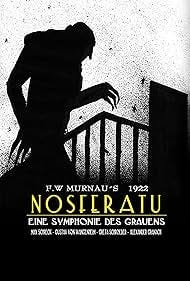
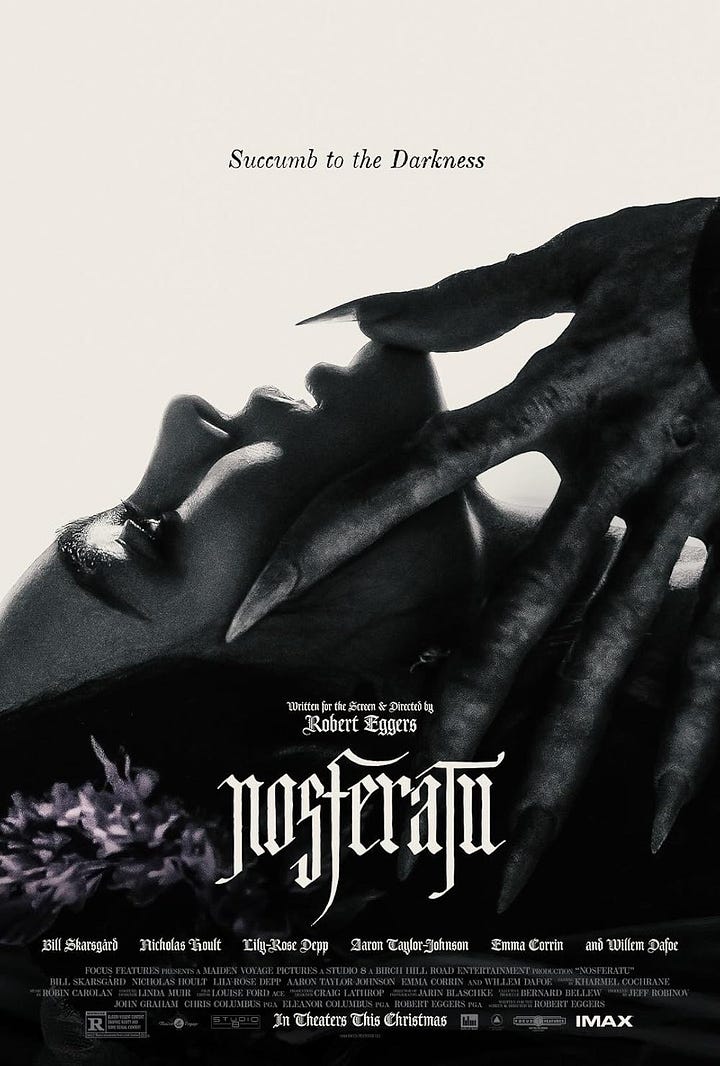
To say that the 1922 silent film Nosferatu: A Symphony of Horror is bad and the 2024 remake Nosferatu is good because “in a vacuum” the 2024 version has better effects, includes dialogue, boasts a clearer resolution, features more complex characters, or anything else of that nature is obviously a ridiculous opinion to have. Without context, comparing these two movies is a waste of time. They can be determined as good or bad only when examined as a whole – and that includes a lot more than just what’s on the screen.

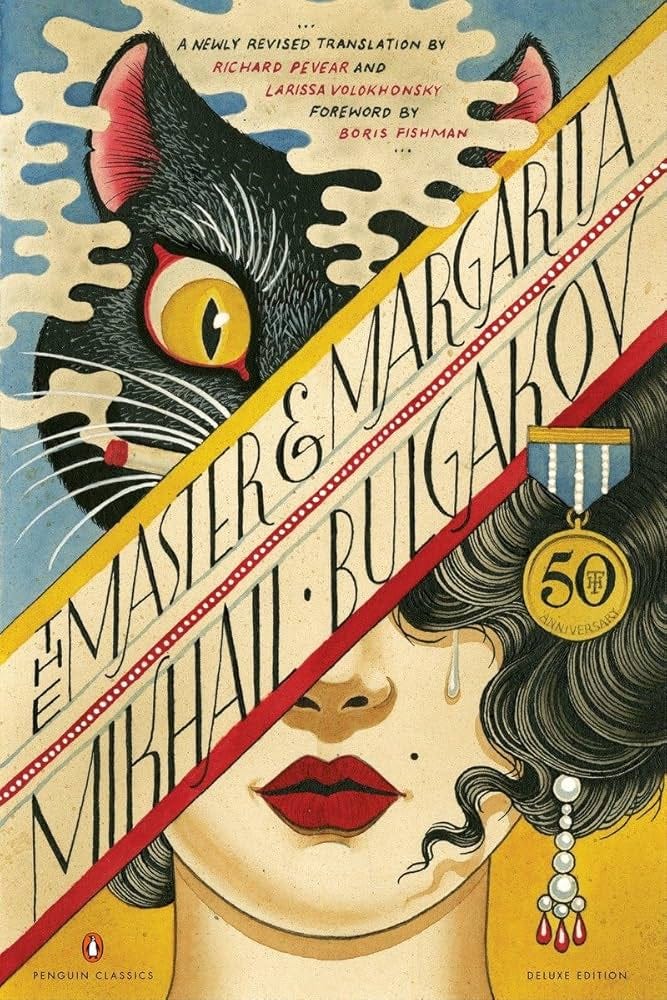
Take this personal example:
In 2024 I read Mikhail Bulgakov’s novel The Master and Margarita (which was not published as a complete book until 1967 – long after the author’s death). It was written in the Soviet Union between 1928 and 1940. The book serves as a hilarious and biting satire of Soviet society.
I know next to nothing about Soviet Russia.
Without proper knowledge of the subject of the novel’s satire, there were, without a doubt, dozens of references and critiques and jokes that I missed completely. In some ways, I was reading, with my limited understanding, a zombified version of the novel – one with the heart taken out. It functioned as a book, with plot and character, but it was missing something vital to its full appreciation. I loved the book. I loved the hijinks of the devil in the city. I loved the searing realism of the Pontius Pilate chapters. I loved the transformation of Margarita. But I also know that I have no legitimate grounds with which to critique the book as a whole, because I did not read the book as a whole.
My reading of The Master and Margarita was like looking at the Grand Canyon through a muddied lens. Sure, I can honestly claim I came and I saw – but I can’t say I conquered. I only scratched the surface. I got a distorted – though still enjoyable – view of something incredible. (some might argue, even if I was a studied Soviet Union scholar, that I would still be seeing only a partial view of the book; because first, I don’t speak Russian and read in translation, and second, I do not live in Russia and wasn’t alive during the Soviet era).

On the more positive side, to illustrate that my belief in the necessity of context does not always mean a reduced experience, I also in 2024 watched the Universal monster movie Frankenstein – released in 1931.
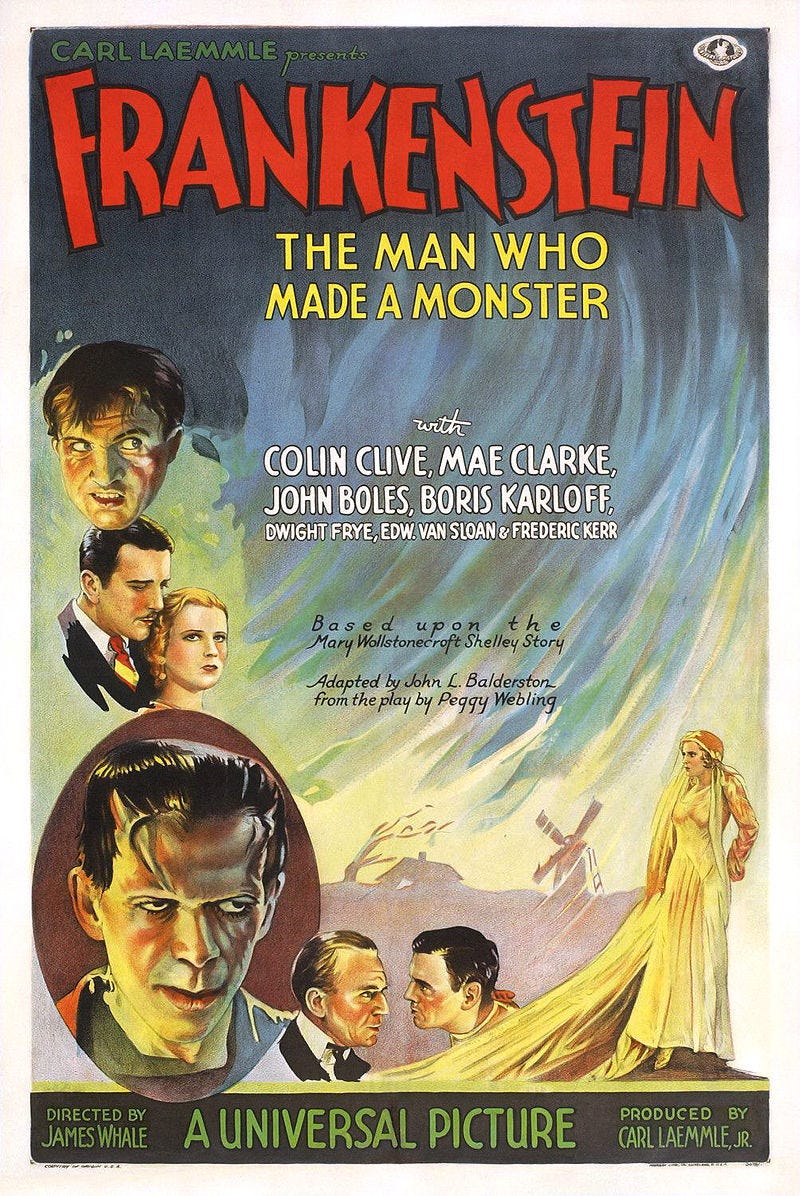
From the dubious “in a vacuum” lens, I enjoyed the movie. It told the story effectively with incredible character design, exciting moments, and a climactic close, but let’s move on quickly from that boring mindset and begin to consider the context.
A not insignificant share of my enjoyment of Frankenstein came from things swirling around the outskirts of the movie itself. Things that remind me of the context of the movie. A few examples follow:
In a scene set in a graveyard, when a shovel strikes a coffin, a deep reverberating echo fills the “outdoor” space. I loved hearing the evidence of the soundstage. In many of the “outdoor” scenes, large paintings served as the background with physical set pieces filling in the foreground. I enjoyed thinking of the artists commissioned to paint the large murals, and those tasked with creating boulders and paths and trees. I loved hearing the scratchy sound and seeing the flicker of the film. I loved the jitter of the title cards and the dummies used in stunts. I loved seeing simple camera moves and wondering how they managed it with the equipment they had. How did they pan the camera through the opening in a gate? How did they shoot the fire at the mill?
All these things – undeniably – added to my enjoyment of the movie.
I have forever missed out on the chance to sit in a theater in 1931 and watch this movie on its opening night. I will never watch this movie through the eyes of one who’s experience with moving pictures can be counted on two hands. I’ll never watch this with a heart truly gripped by fear. I’ll never watch this and wonder – what will this actor do next? I’ll never watch it and wonder if there will be a sequel. All that context is lost for me. But there is a lot I’ve gained. One watching in 1931 will never experience – as I have – the wonder of watching a movie nearly a hundred years old. They’ll never experience – as I have – the joy of contrasting Frankenstein with the technology of 2025, which they could never imagine. A person in 1931 could never watch this movie with an appreciation of the hundred years of Frankenstein’s monster halloween costumes and remakes and the deep cultural impact which all stemmed from the character design from this movie and gave us the green skin, flat head, and metal bolts.
In a way, a person in 1931 watched a different Frankenstein movie than I did. Despite the same frames showing and the same sounds playing, we would love or hate this movie for likely different reasons. Our emotional state watching it would be different. Our context would be different. So maybe I lost out on some of what they experienced and they lost out on some of what I experienced, but we are both able to enjoy our own “version” of the movie.
In conclusion, don’t throw away context when evaluating art. As far as you can – soak it all in, clean the dust from your lens, and try to see the beauty clearly and completely.


No posts
Comments
Nothing yet. Say the first thing.
Sign in to join the conversation.