
Welcome back to the seventh installment (of 12) of the actions, approaches, and stories from Learning Environment. In my last post, we explored how digital mapping tools can allow students to “Map the Invisible,” turning the local environment into powerful tool for community advocacy.
But even when we can make the invisible - visible - other “X-factors” are needed to take a project from a standard classroom assignment to another level. Oftentimes, I found that this would happen when I invited experts into the classroom.
When we bring expert partners (including family and community members) into the classroom, the learning environment can be transformed from an isolated island of instruction into and impact multiplier—even allowing our students to reimagine what is possible.
Of all the things I did as a teacher to engage and excite my students, I felt nothing was more potent than inviting partner organizations and experts into the classroom. Having classroom visitors helped break up the predictability and sometimes monotonous repetition of regularly scheduled class periods for students and teachers alike. Inviting experts into the classroom also demonstrated to students that what they were learning mattered—many of the professionals visiting them had dedicated their education and careers to the work they shared with my students. In this way, classroom partners, in combination with a carefully crafted curriculum, created an incredible synergy capable of amplifying the magnitude of learning for students.
— Learning Environment, page 39
Unfortunately, many expert visits are “one-and-done” events—a guest speaker who gives a talk and then departs. But when we build a learning environment that views experts as integral and necessary, magic can happen.
The Clean Air Green Corridor (CAGC) project is my own lived example of the magic that can happen when classrooms and partners combine. The CAGC was the outgrowth of a one-week course, co-designed by my colleague and me, that asked our students to reimagine their own school block.
When our one-week intensive course ended, after seeing students not only reimagine but also begin to bring their vision to life through litter sweeps, plantings, and community presentations, we wanted to keep the momentum going. As a result, we brought in an impact multiplier: a local filmmaker and a community-based organization, Futures Ignite.
Our network of experts didn’t just extend my students’ learning; they brought the professional standards of community organizing and environmental justice into our school. This synergy—the collaborative energy among teachers, students, and community advocates—created a positive feedback loop of engagement that kept the project rolling to this day.
When students work with practitioners like those at Futures Ignite, they saw that their skills, such as data collection and mapping, had real-world consequences and value. They weren’t just “playing school”; they were applying their learning to and for their community.
You don’t need a grant or to invest a lot of time to start building classroom partnerships. You can start building these expert connections by focusing on people and organizations who can bridge the gap between your content and your community:
Identify a Local Anchor: Look for a community member or organization that is already working in close alignment with your curriculum.
Collaborative Design: Shift the expert from speaker to collaborator. Instead of asking a partner to “give a talk,” ask them: “What is a problem in our neighborhood that my students could help you investigate?”
The “Professional Standard” Benchmark: Ask partners to share a real-world product they’ve created (e.g., a report, a map, or a campaign flyer). Use this as the “exemplar” for student work.
Invite Ongoing Feedback: If your partnership inspires a project, have the expert return to see the students’ progress. Knowing that a professional will be looking at their work raises the stakes for students beyond a grade.
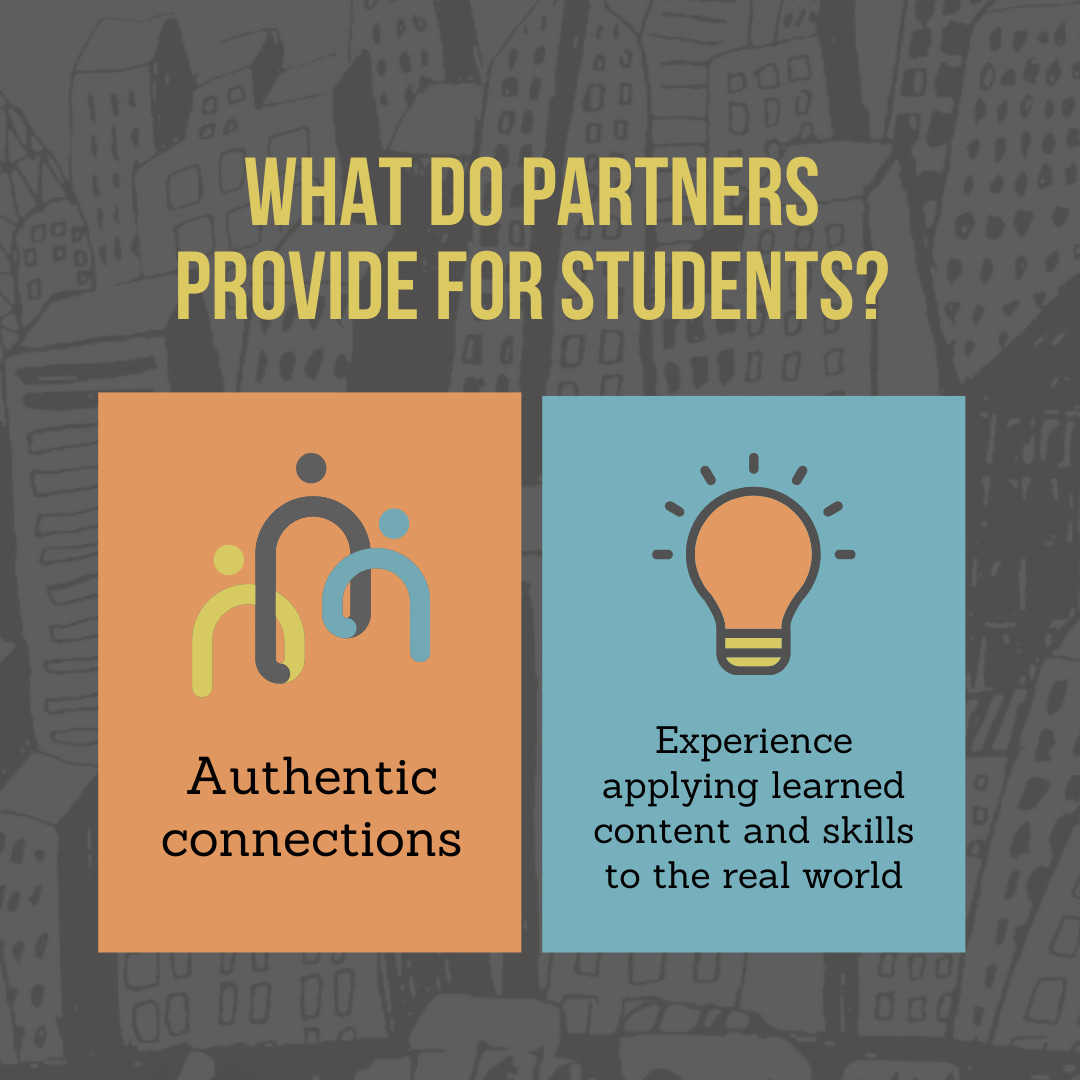
The Impact: Partnering with experts signals to students that their work has value in the professional world. By working alongside these impact multipliers, they can become community scientists, activists, and agents of change with authentic connections to the immediate world around them. This shift from passive learner to active doer creates the magic that can transform a typical school assignment into something that can, like the Clean Air Green Corridor, come to life outside the classroom’s walls.
Is your teaching feeling isolated or disconnected from local action? Do you want to move beyond guest speakers and toward true synergy with partners?
At Fox EduConsulting, I help schools and organizations identify and integrate impact-multiplying partnerships that elevate student work and programming to professional, community-changing standards.
Let’s Dream, Collaborate, and Create together to find the opportunities in your neighborhood. Reach out to discuss how we can build your network of expert partnerships together.
Coming Up Next: In post 8, “The Forest & The Trees,” we’ll dive into Systems Thinking as we examine how connecting isolated pieces of content to broader contexts can be both incredibly informative and powerful for students in the classroom and their community.
Buy Learning Environment Today
Dr. Jared Fox, is an education expert and the founder of Fox EduConsulting. Through his consulting practice, Jared helps schools and organizations craft authentic, engaging, and comprehensive learning environments - with a specialty working at the intersection of science, the environment, and social justice.
Comments
Nothing yet. Say the first thing.
Sign in to join the conversation.