
Firstly, apologies for the long absence. I got snowed under with work and other commitments, and had to put this newsletter on the back burner for a while. The once a week schedule has proven to be unrealistic, despite Substack pushing for it. From now on, I aim to send newsletters for Japanomics out as and when I can and make them a bit longer each time.
On Sunday, I attended a hanami party at Himeji Castle, beautiful weather, amazing views and a discussion about part-time wages. The ladies in the group remembered how paltry their part-time wages were “only 600 yen an hour!”, back in some era, but I didn’t dare ask when.
In the Netflix drama “Extremely Inappropriate” (Japanese title: Futekisetsu ni mo Hodo ga Aru! 不適切にもほどがある!), the hero, Ichiro Ogawa time travels from 1986 to 2024 and comments that the wage for the part-time bar job has barely changed. Who is right? The ladies at the hanami. Back in 1986 wages for bar work were about 500 yen an hour. Now, they are typically over 1000 yen an hour — they’ve doubled.
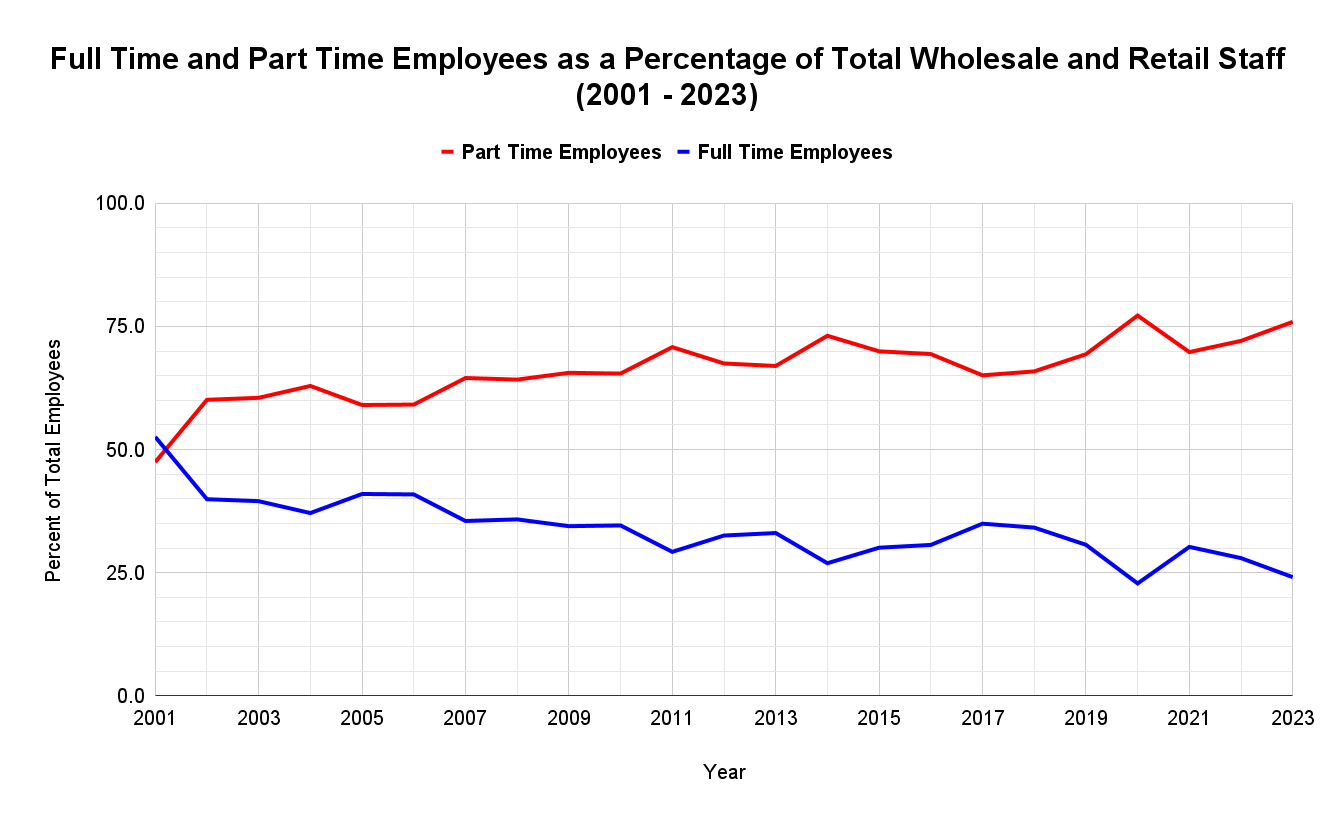
In the wholesale and retail sector, part-time workers now make up around 75 percent of the workforce. Part-time workers have also seen their wage rise far more in real terms compared to full-time workers:
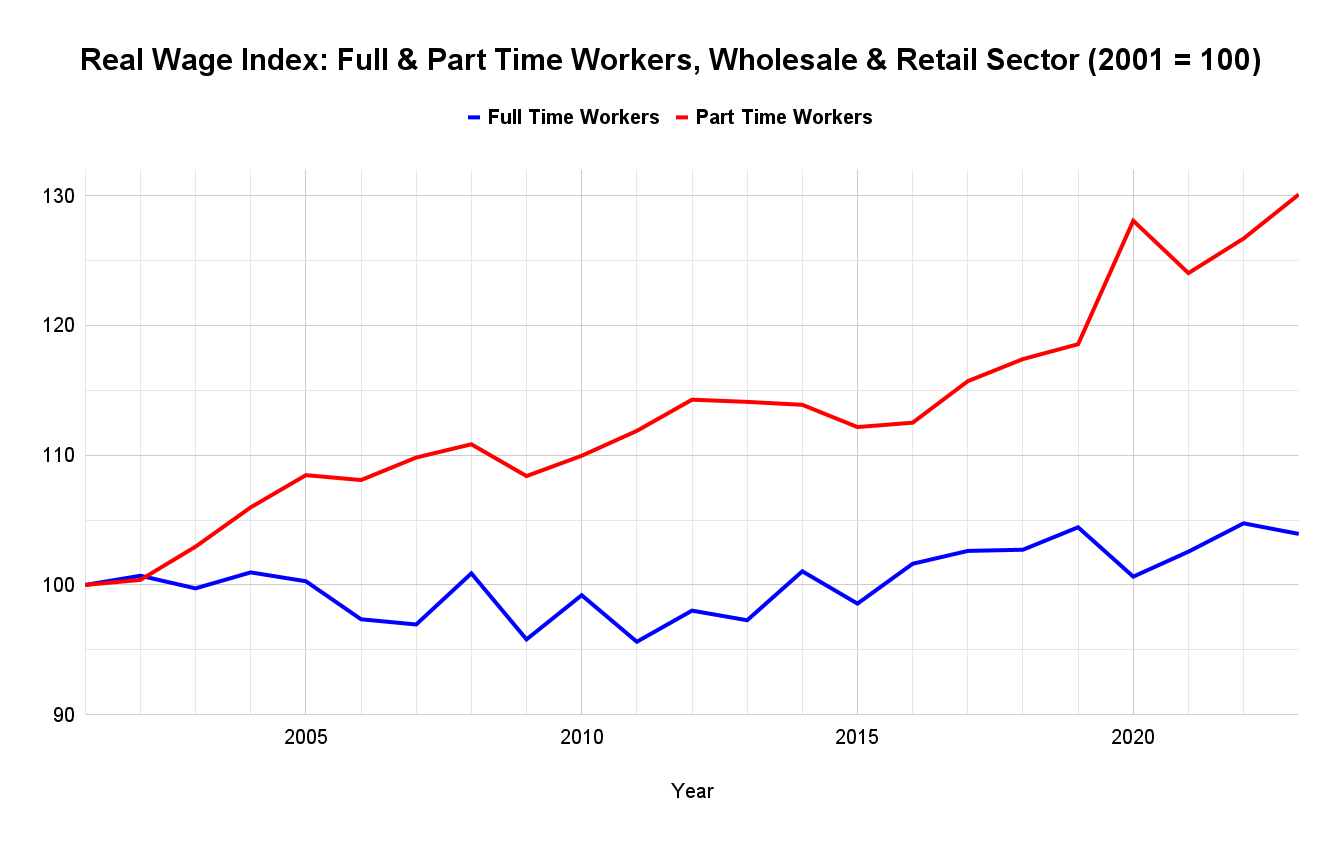
Part-time workers have seen their wage rise by about 30 percent in real terms since 2001, while full-timers have only seen theirs rise by a measly 4 percent, and most of that only recently.
Part-time workers are typically young university graduates and middle-aged ladies. With the falling population, the supply of young university graduates has been drying up and women in their twenties to fourties have been continuing in full-time work for longer, reducing the supply here too.
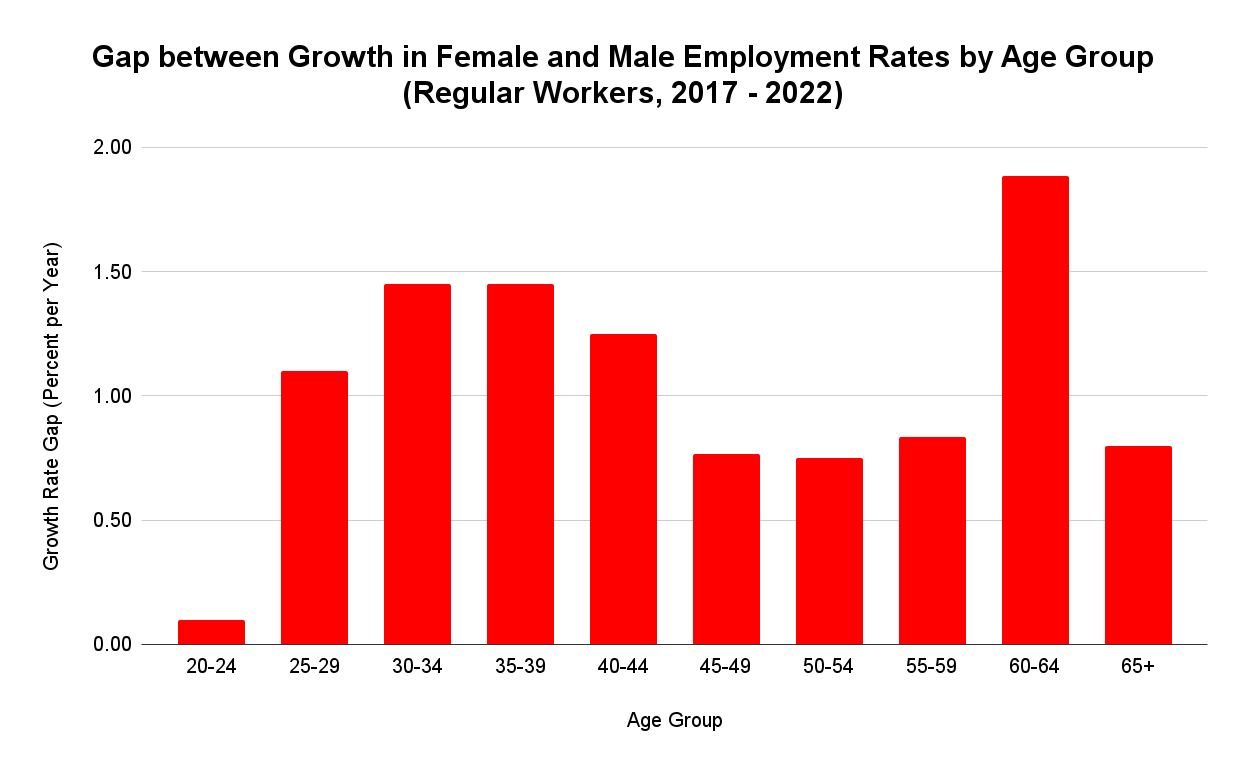
Even for the full-timer workers, wages have been pushed up for the youngest by the lack of workers in this age group:
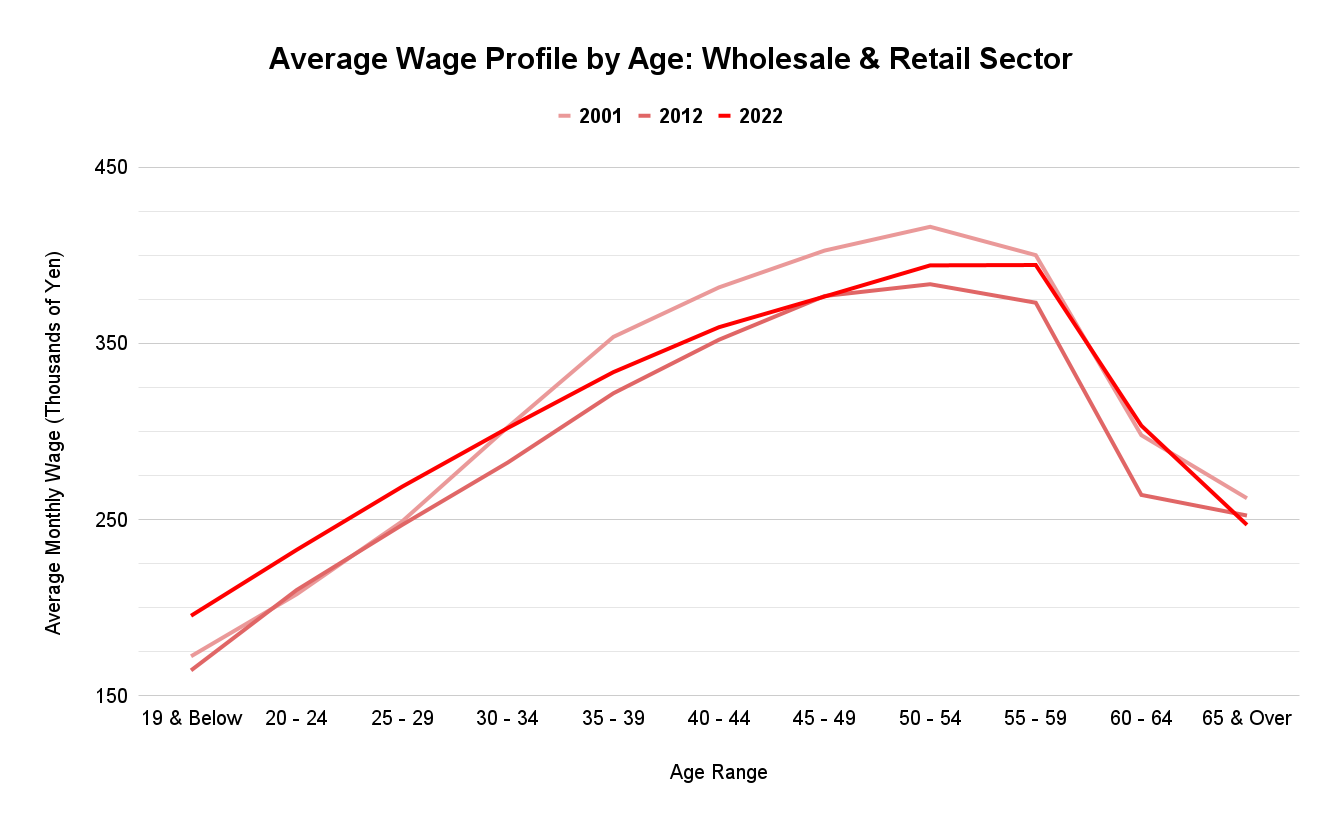
For middle-aged workers however, wages remain below where they were in 2001, possibly due to the increased supply of workers in this cohort who were born in the early 1970s — the echo boomers. The shifting of this echo boomer pig down the python should help wages to rise as they move into retirement in about ten years’ time.
We’ve covered the big three sectors that account for most of Japan’s employees. Next time, we’ll look at a niche sector, but one that’s very important to a lot of western foreigners in Japan — the English language teaching industry.
Comments
Nothing yet. Say the first thing.
Sign in to join the conversation.