

Jason Arday claimed to have “translated the entire works of Shakespeare into Klingon” at the age of seven, a journalist joked yesterday in the Spectator. But don’t expect the Star Trek reference to draw many laughs at Simon & Schuster. The publisher says it still plans to bring out Great and Unfortunate Things, a new book by the Cambridge sociologist who resigned Wednesday amid a torrent of credible allegations of plagiarism and other scholarly misconduct.
Arday quit hours after the university launched an investigation his work and three years after he became, at the age of 37, the youngest black professor at a university that counts 126 Nobel laureates among its alumni, staff, or researchers. He said he had autism, couldn’t speak fully until adolescence or write until age 18, and had a remarkable list of accomplishments, including that he had run 30 marathons in 35 days and raised £5.5 million for charity.
But in recent weeks, many of his claims have sparked a cascade of accusations of fabulism and academic fraud and comparisons to James Frey’s A Million Little Pieces, the most notorious of America’s “fake memoirs.”
Arday had said he’d been a visiting professor at Ohio State, which had no record of his employment. He’d said someone had left a severed pig’s head in a box at the home of this parents, which appeared on no police blotter.
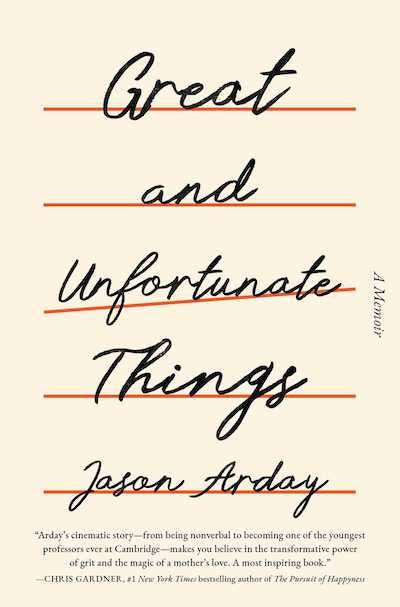
Amid the growing scandal, Simon & Schuster has stood by Arday while apparently making some eleventh-hour changes in his book. The firm has praised “the professionalism and integrity he has brought to every stage of the publication.” And it’s shown no signs of cancelling the book Arday co-wrote with Eve Claxton and is due out in the U.S. on Aug 11 and the U.K. later in the month.
Arday has said that Simon & Schuster paid him seven figures for Great and Unfortunate Things. Pulling his memoir at this stage would be a “pretty massive decision,” a publisher told the Guardian, and a logistical nightmare. S&S has probably printed and started shipping the book so “actively withdrawing the book now is both extremely difficult and quite expensive.”
Simon & Schuster should cancel the book, anyway. Going ahead with it is unfair to readers, booksellers, and others when too many questions remain about how much of it is true. Some of Arday’s claims are, on the face of it, so absurd that they could hurt people with autism if readers assume they are typical.
Daniel Engber had a blunt assessment in an early review in The Atlantic, where he is a senior editor:
“The story it tells should not be taken at face value; it differs notably from other versions of his life that Arday has shared in public and in private, including in the original proposal he sent out with his agent.”
Some of those versions had raised red flags even before his book began circulating, including the story that he had taught Ohio State.
“But the most disturbing inconsistencies arise from Arday’s book proposal, a copy of which was obtained by The Atlantic,” Engber writes.
The proposal, he adds, says Arday had won honors for which he could find no proof online. It lists some of the same events as the book but with different dates and details.
“And whereas the book describes Arday as having survived two brain tumors, the proposal says he had a bout of testicular cancer,” Engber says. “No reference to that illness appears in the memoir.
“Nor does the book describe the time that Arday, then a teenager, was struck by a car and spent several months in a coma. According to the book proposal, the doctors told his parents that he would never recover, and suggested taking him off life support ‘as an act of mercy’…
“The book doesn’t describe any of this, nor that he awakened ‘miraculously’ from the coma, nor the full year he spent ‘relearning everything—how to walk, how to talk.’ ”
How did testicular cancer become two brain tumors between the writing of the proposal and the book? Why did being struck by a car and spending months in a coma become important?
Even before The Atlantic and other media saw advance copies of the book, Arday had changed parts of his story. He had claimed interviews to have run 600 miles in six days, “an achievement that would made him one of the world’s most gifted endurance runners,” the Guardian said. Arday said, when questioned about the claim, that because of the “cumulative wear and tear of training” from his previous running, he “had to put rest days in between the running days just to finish” the 600-mile challenge, which was actually completed over a 12-day period.
There is much more like this in the early reviews in The Atlantic and elsewhere, so much that Arday’s book could spark the kinds of class-action lawsuits that hit Random House after its Doubleday imprint published James Frey’s A Million Little Pieces. The publisher eventually settled with readers who’d bought the book before Frey admitted he’d made up parts of it. Twenty years ago, representatives of 10 class action suits accepted a proposal that required Frey and Random House to pay up to $2.35 million for refunds to consumers, plaintiffs’ lawyers’ fees, and a donation to charity.
Buyers of Great and Unfortunate Things could sue, too, if Arday changed his story post-publication, as Frey did, in a way that meets the tests of libel, fraud, or another legal claim. But why should readers have to seek justice through the courts?
Simon & Schuster has options besides pulling or pulping the book. It could embargo the sale of print and digital editions until Arday has given better answers to the serious questions about the truth of some of his work. It could stop selling foreign or subsidiary rights, if that hasn’t happened. It could create a mechanism for alerting potential buyers to errors. Analog-era publishers inserted “Errata” slips into books listing mistakes that emerged after their printing. Simon & Schuster could set up a digital version, such as creating a public page on its website for Comments.
An especially troubling aspect of Arday’s work is that readers must take his word for it that he has autism and not something else, such as schizophrenia or borderline personality disorder. Simon & Schuster could help to ease the concerns by adding to future editions an appendix with statements from his doctors, as other authors have, confirming that he did in fact have autism and spelling out the degree to which his autism resembled or differed from that of others.
Putting the book on the market as it is could hurt booksellers as well as readers. Some U.K. booksellers offered their own refunds to buyers of The Salt Path when Penguin refused to do it after an exposé in the Observer found that Raynor Winn had misstated, exaggerated, or fabricated parts of her story. They shouldn’t have to do this.
If Simon & Schuster publishes the book as scheduled, it will expose Arday to more ridicule like the joke that he claims to have translated all of Shakespeare into Klingon at the age of 7. Late-night shows—and lawyers—could have a field day with it.
@JanHarayda is an award-winning critic and journalist who has been the book editor of a large newspaper and a vice president of the National Book Critics Circle.
Selected Notes
https://www.theguardian.com/uk-news/2026/aug/06/rise-and-fall-of-jason-arday
https://www.theatlantic.com/books/2026/08/jason-arday-cambridge-academic-memoir-resignation/688206/
https://www.simonandschuster.com/books/Great-and-Unfortunate-Things/Jason-Arday/9781668085578?gad
https://spectator.com/article/how-black-lives-matter-created-jason-arday/?edition=us
https://www.cam.ac.uk/research/research-at-cambridge/nobel-prize
https://www.thebookseller.com/news/the-salt-path-bookshops-give-refunds-and-recommendations-after-controversy-as-new-book-delayed
https://www.nytimes.com/2026/08/05/books/review/cambridge-jason-arday-resignation-investigation.html
https://www.nytimes.com/2006/09/07/arts/james-frey-and-his-publisher-settle-suit-over-lies.html
You might also like my earlier newsletter, “Who’s to Blame for Fake Memoirs?”
Interested in books I like? Come back Friday for another entry in my Friday Flashbacks series for paid subscribers, which revisits some of my favorite books from the past, including both classics and books I’ve read more recently but deserve more attention.
No posts
Comments
Nothing yet. Say the first thing.
Sign in to join the conversation.