
This week: Artificial authors, CGI poetry and why ‘a man walked into a bar’ is not the oldest joke in the book…
Last year Coral Hart, the pen name of a South African romance novelist, produced more than two hundred ‘AI-assisted’ romance novels under twenty one pen names. Coral self-published them on Amazon and, collectively, sold around 50,000 copies, generating a six figure income. Let us compare this with the poet John Keats who published three slim volumes during his short life, selling around 200 copies in all.
Self-published AI books are now so common on Amazon that, according to Sean Thomas in The Telegraph, the site has had to ban ‘authors’ from publishing more than ten titles per week. I’ll say that again. Ten titles. Per week.
Bill Johns, a 70-year-old retired cybersecurity consultant used ChatGPT to release 445 different titles. William Blake produced around twenty titles during his lifetime, hand printing no more than around 400 copies of his books in total. Billy Johns began his endeavour aged 70. Billy Blake died, in relative obscurity, aged 70. But these are just numbers, figures, statistics. This is not poetry.
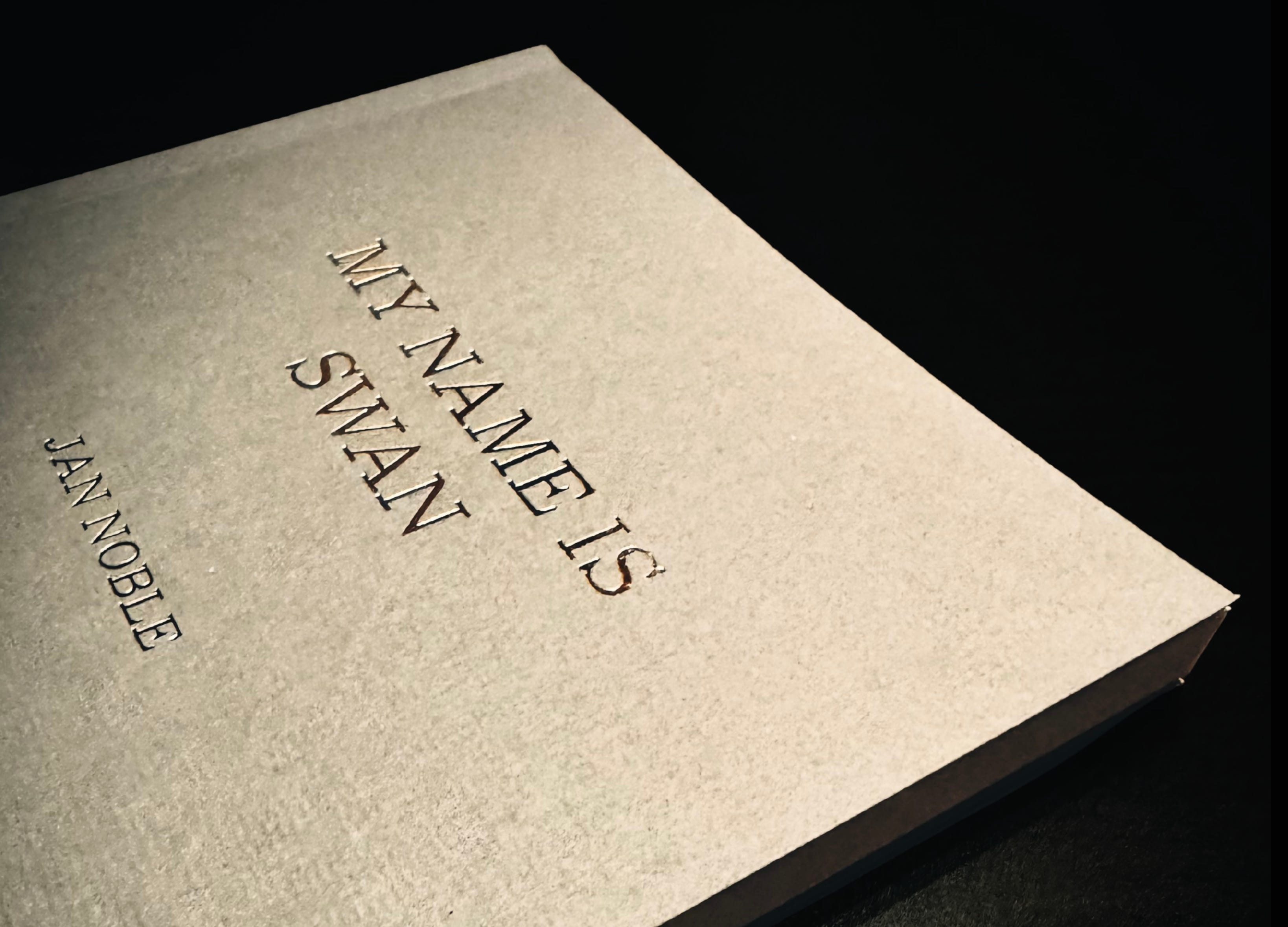
In an age of mass overproduction, for a poet to say, “I have a new book coming out” is almost a redundant statement. I don’t have a book coming out. I have 250 books coming out. 250 books with single title: My Name is Swan. Each copy, I believe, is an object, each carries significance. If you buy one it won’t simply be a transaction, you will be taking part in a tradition, a rite, a ceremony. You will not own a book you will enter into a pact, you will become a custodian, a guardian, an advocate of this work.
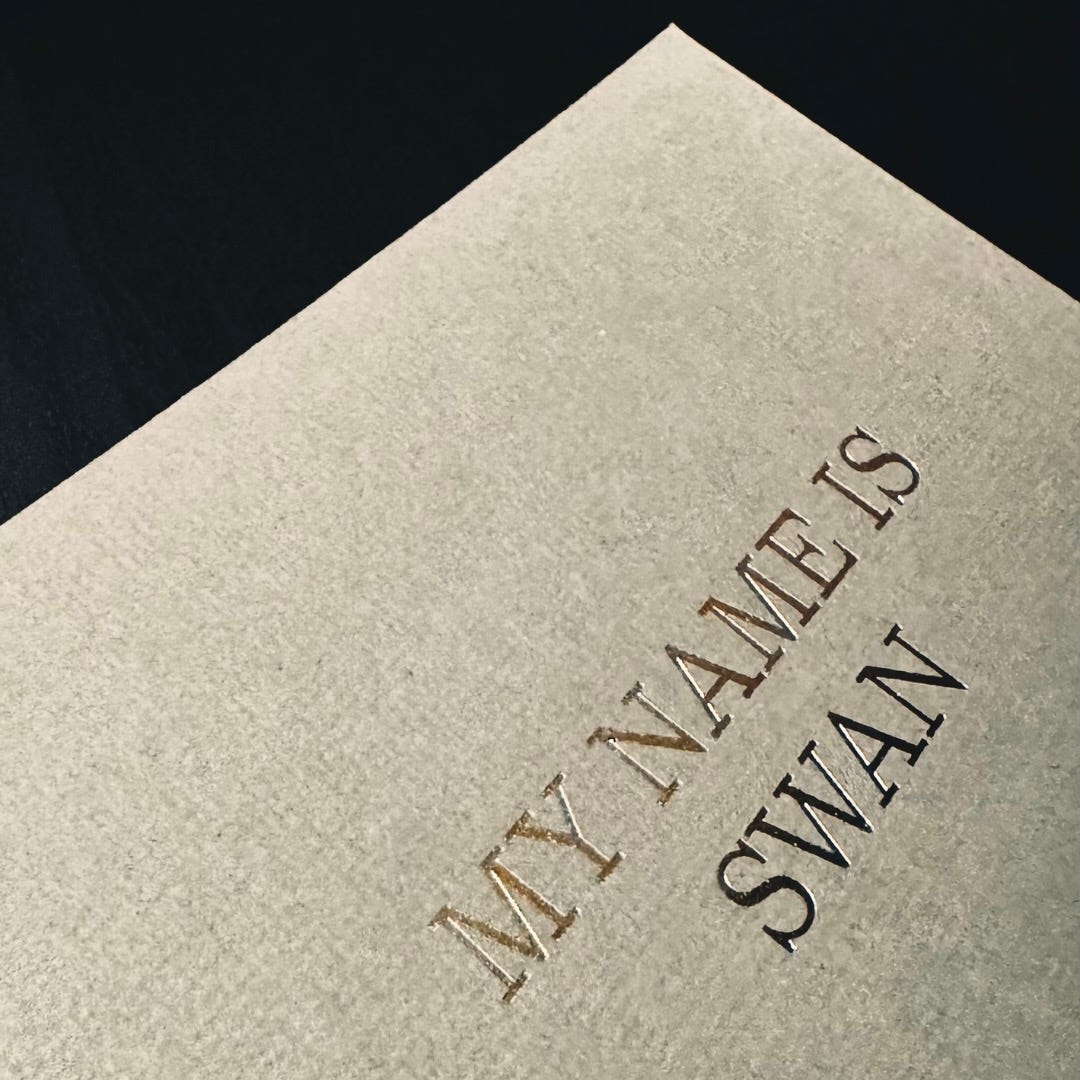
My Name is Swan is my first authorised title. It has taken ten years to come into print. It contains just three poems, three long-form poems, carefully typeset over 120 beautifully bound pages. It is, I believe, the publisher’s intention to make the book - not simply this book, but all of their books - an event, an occasion, a celebration. Their mission is an act of rebellion against super-consumerism, a quest for the quiet preservation of poetry.
In the wake of Christopher Nolan’s The Odyssey, for it is now Nolan’s and no longer Homer’s, the conversation has, for the most part, focussed on how ‘true’ the film has been to the ‘original’ story and what has been lost or gained by Emily Wilson’s adventurous translation. Little attention has been given to the poetry, to its oral machinery. The sensuality of language is absent entirely. There are no wine-dark seas or rosy-fingered dawns. Even its translator has argued the movie’s spectacle has overwhelmed the poem’s human intimacy. The epic film has superseded the epic poem.
Like the word ‘iconic’ or ‘legendary’, ‘epic’ itself is now used to describe anything from a night out to a breakfast spread. Epic poetry is something we consider largely consigned to the past. T.S. Eliot left it in pieces, offered us fragments with The Waste Land, a poem of remnants recovered from the ruins of world war.
Epic poems have been revisited by contemporary poets who lend a recognisable voice to resurrect ancient tales. Seamus Heaney wrestled with Beowulf and The Aeneid. Current Poet Laureate Simon Armatage breathed new life into Sir Gawain and the Green Knight and this October will see the release of his translation of The Epic of Gilgamesh - a poem with the word epic ridden into its title.
October will also see the release of My Name is Swan which, rather than riding a great wave of public adulation, will glide slowly from the dark creeks, will appear hissing in river tributaries, will come ashore on silent, midnight slipways. I do regard this trilogy of works, taken as a whole, or in parts, particularly Reynard and Body 115 as epic poetry. Or at least an attempt at it.
These are epic times, this, an age of despots and tyranny, of fear and war and division, of rifts and conflict. This, surely, is an age for epic poetry.
My Name Is Swan - Full Film →
I do not have the steady eye required for fine, needlepoint poems and My Name is Swan is more a hanging tapestry. It isn’t, I hope, overly ornate or unnecessarily complex, it’s just a work that won’t find easy positioning in scholarly magazines or on social media feeds. It won’t sit neatly in a cosy poetry corner.
Where poetry goes and who it is for are questions that have always concerned me. Accessibility in poetry has come to mean ‘the easy read’. While the visuals in Nolan’s Odyssey are sumptuous and rich, the dialogue is often pedestrian, the language diluted for quick consumption.
I have taken My Name is Swan to places where poetry is unexpected, have performed it before audiences who probably even have a justifiable reason to be suspicious of or even hostile toward poetry but I have always been struck by people’s ability to ‘feel’ language rather than immediately need to understand it.
In a bar, in a backstreet of Milan, a man thanked me for the poem that I’d read out in English. He was Italian, unfamiliar with the barbarity of the Anglo-Saxon tongue. He’d only come inside to get out of the cold, for a quick drink before going home, but he’d heard my wanderer’s tale, My Name is Swan.
“It’s about loneliness isn’t it?” he said, “I felt it,” he said, “I didn’t understand exactly, it’s not my language, but I knew what you were trying to say.” He had tears in his eyes. He was a wanderer too. His name may have been Swan.
I make no claim that he was touched or moved by my poem, more, I think, it was the event, the experience, his connection to it. Perhaps it was simply being witness to a strange vernacular, how baffling that can be and how liberating it is once you accept the mystery of being lost, of finding something there beyond comprehension. It took me years to realise this was the essence of poetry.
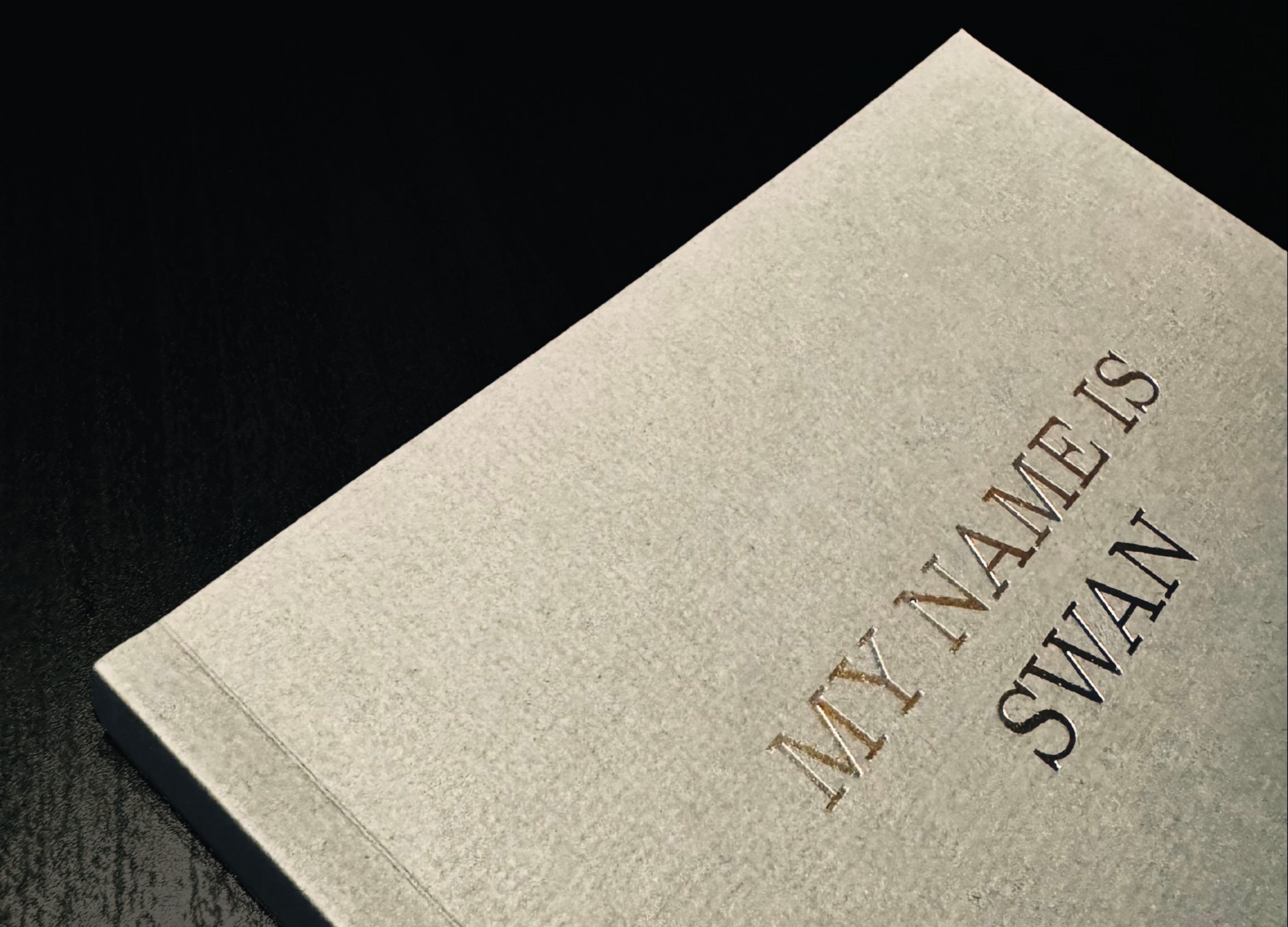
This work has now undergone a translation, from oral tradition into physical form. And there is something magical, and intimidating, still in picking up a book. I hope you will hold it a while in your hands, imagine the story that came before it was set, printed, pressed, consider how far it has travelled and importantly where you might take it next.
NEXT WEEK: When Swan went rogue, off-schedule at the Oxford Lit Fest and a performance in the Queen’s Ballroom, mid Atlantic aboard an ocean liner…
UPDATE:
Due to the unexpectedly high volume of orders we received at the UK site some of you may have seen, or will see, a ‘Payment Pending’ notification from PayPal. Be assured, your orders will be processed in the next days and you will receive your book(s)
Thank you!
Comments
Nothing yet. Say the first thing.
Sign in to join the conversation.