
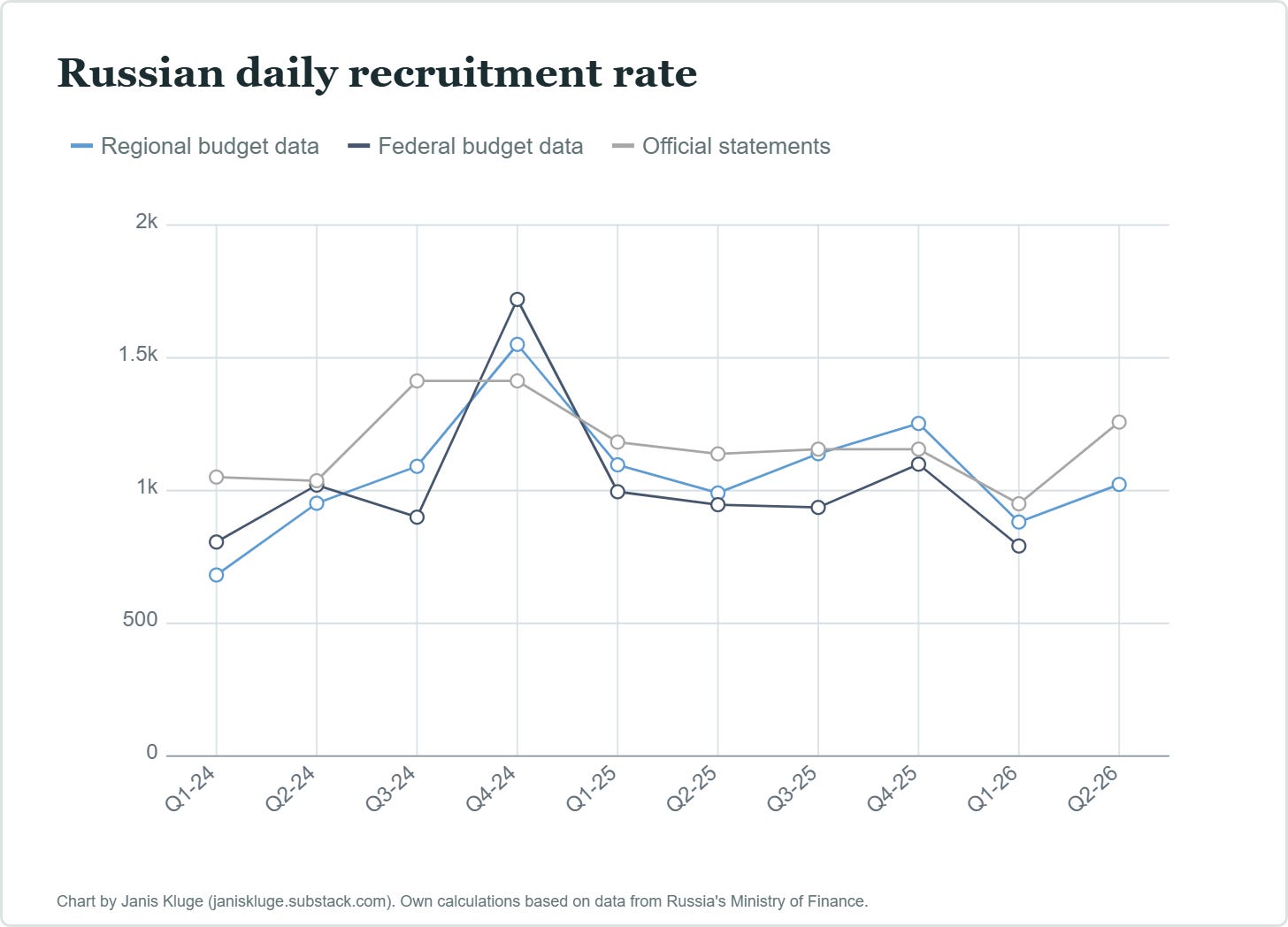
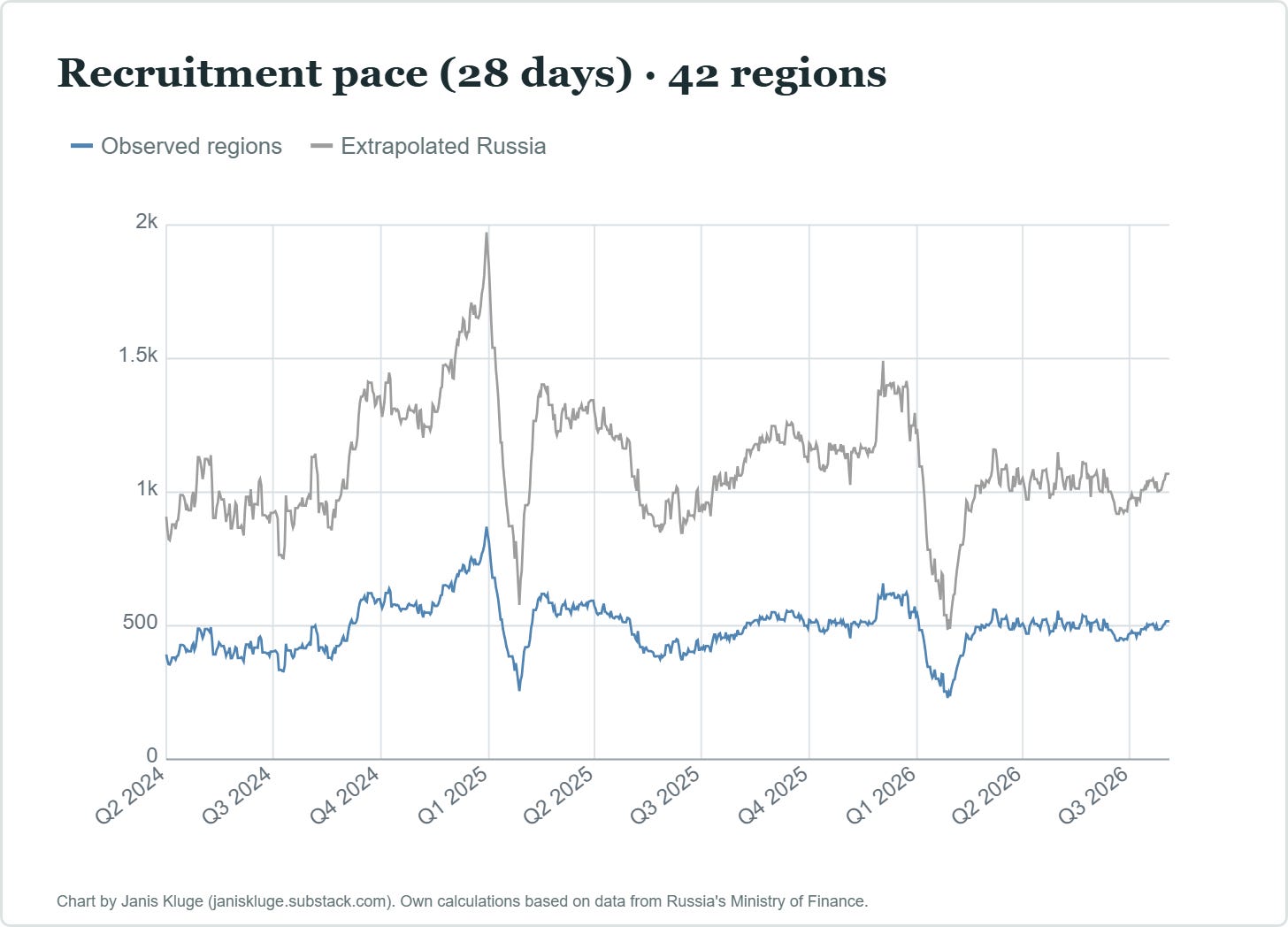
While Russia’s recruitment campaign has shown signs of strain this year, regional spending figures indicate that Russia is still recruiting around 1,000 contract soldiers each day. Based on regional budget data, 93,000 new contracts were signed in the second quarter. If federal budget data confirms this trend in a few weeks, this could mean that the pressure for another round of mobilization is not as high as it seemed earlier this year.
Of course, the question of mobilization is not decided by recruitment numbers alone: the size of Russian losses on the battlefield plays a role, as do the fitness and capabilities of the men who can be recruited under the current model. It may help increase the numbers that the State Duma recently relaxed restrictions on recruiting people with criminal records “to achieve the plan for recruiting soldiers for the SVO,” as Deputy Defense Minister Viktor Goremykin put it. But it won’t improve the quality of Russian personnel.
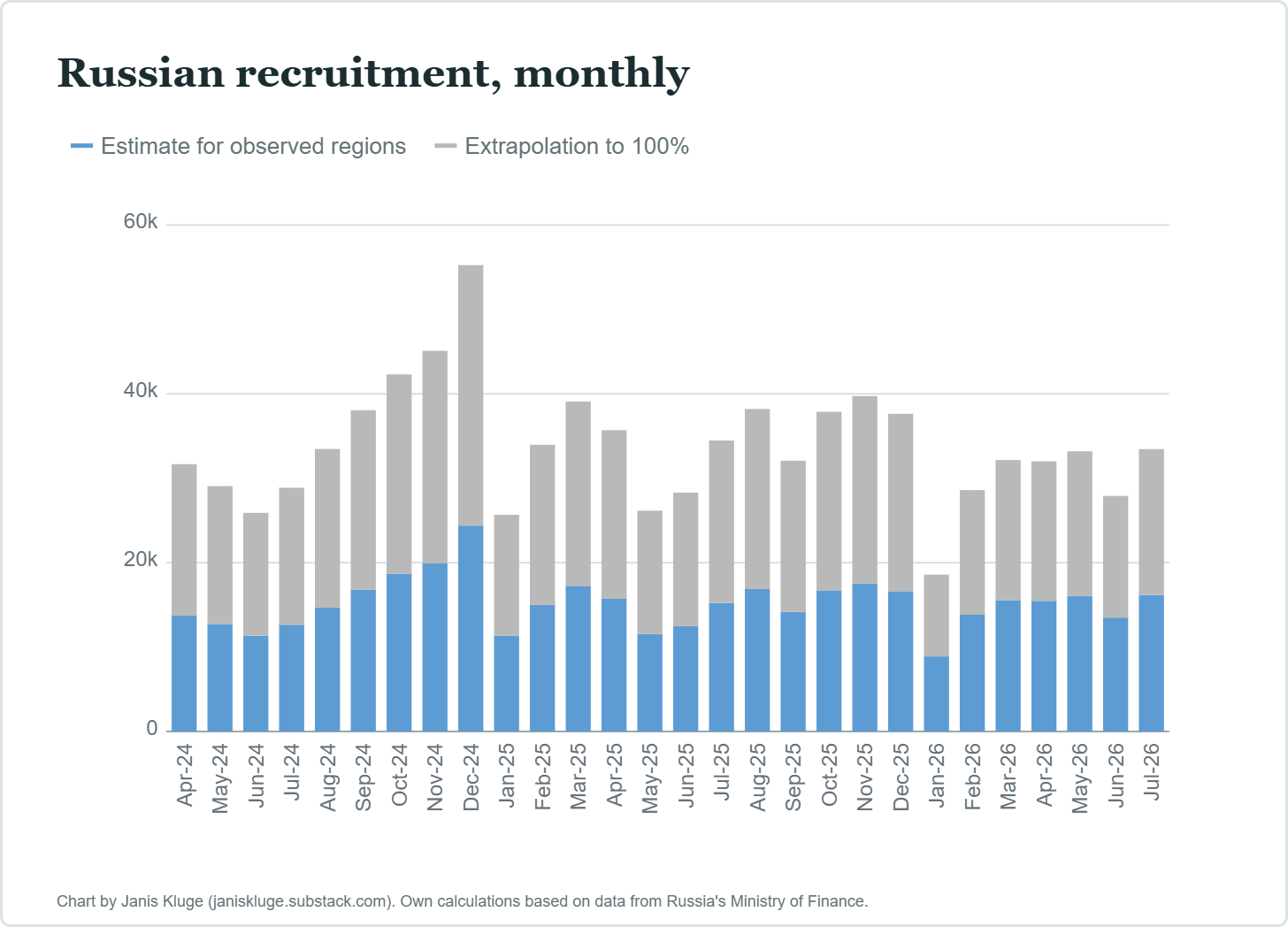
On July 28, Dmitry Medvedev announced that “around 200,000” new contracts had been signed in the first half of 2026. At the end of Q1, on March 27, he said that “over 80,000” contracts had been signed, and on April 30, he cited a total of 127,000. While the latest estimate based on regional budgets is - as usual - around 10% below Medvedev’s figure, the stabilization in the second quarter is visible, as is a longer-term downtrend since late 2024.
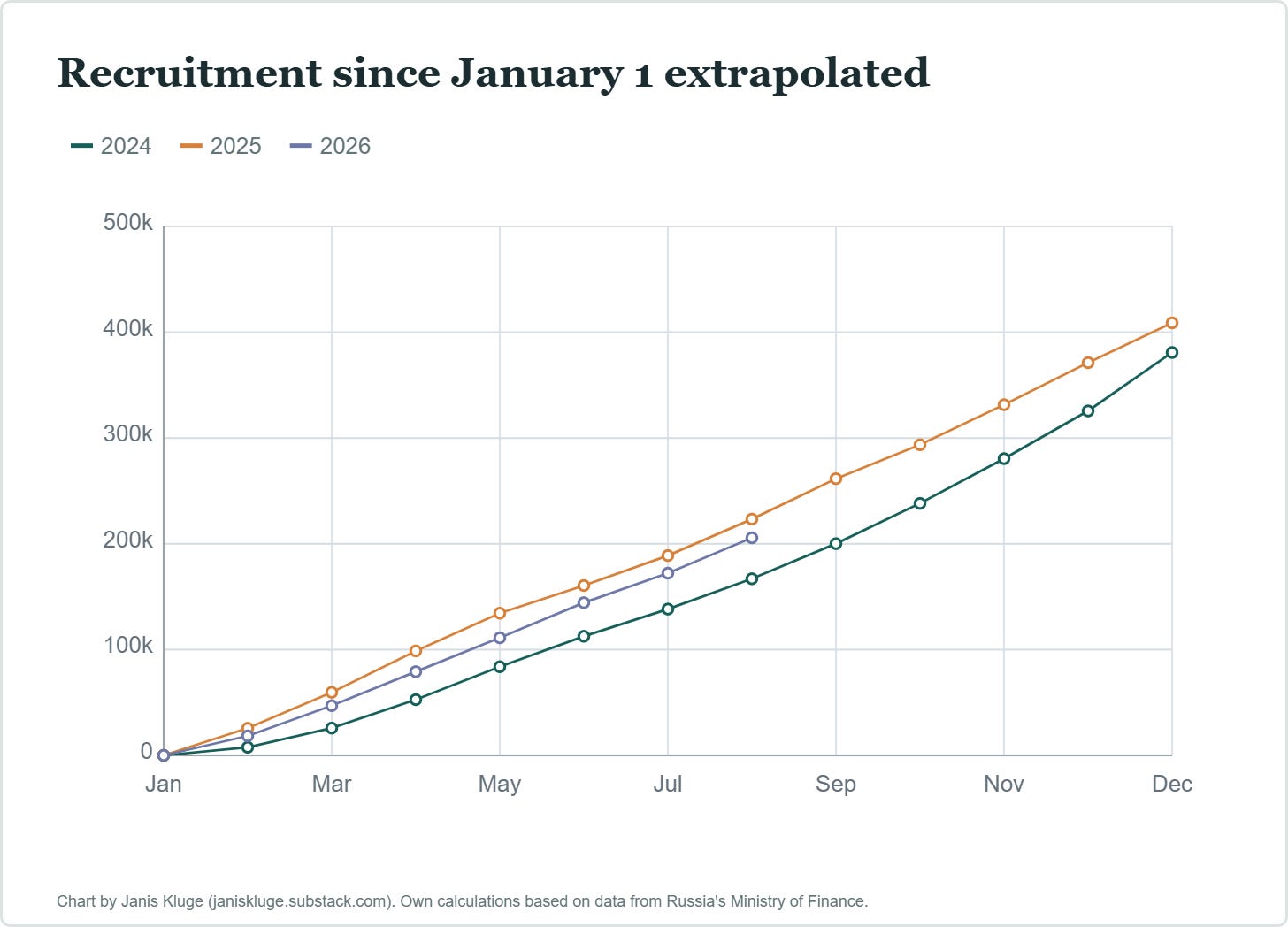
At the same time, based on regional budget data, Russia’s total for this year is only slightly below last year’s level.
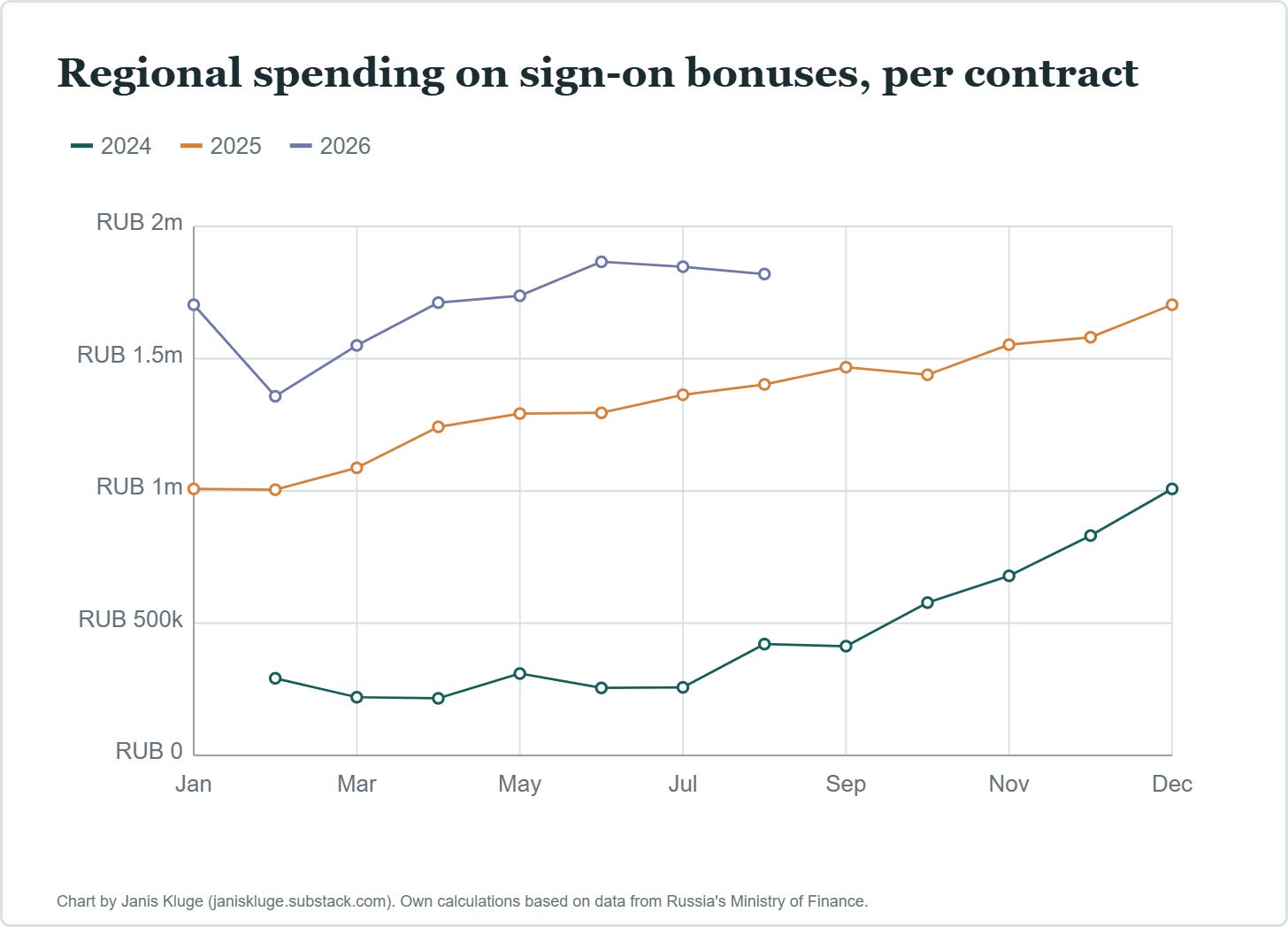
The size of regional sign-on bonuses continued to increase in the first half of 2026 and reached 1.65 million rubles in August, a new all-time high. Despite the general uptrend, there are a few regions that significantly reduced their bonuses, such as Samara Oblast: From 2.2 million rubles between February and May 2026, the bonus fell to just 400,000 rubles in August.
There is an interesting twist, however: While the general sign-on bonus fell, the commission for recruiting someone from outside Samara Oblast increased from 500,000 to 800,000 rubles in August. Bringing in a local recruit is much less lucrative, at just 100,000 rubles. So Samara’s bonus changes can also be read as a sign of more intense competition among regions. The phenomenon of incentives for “poaching” out-of-region recruits has been reported for other regions as well (see iStories and Moscow Times), with out-of-region commissions increasing disproportionately, for example in Ryazan Oblast.
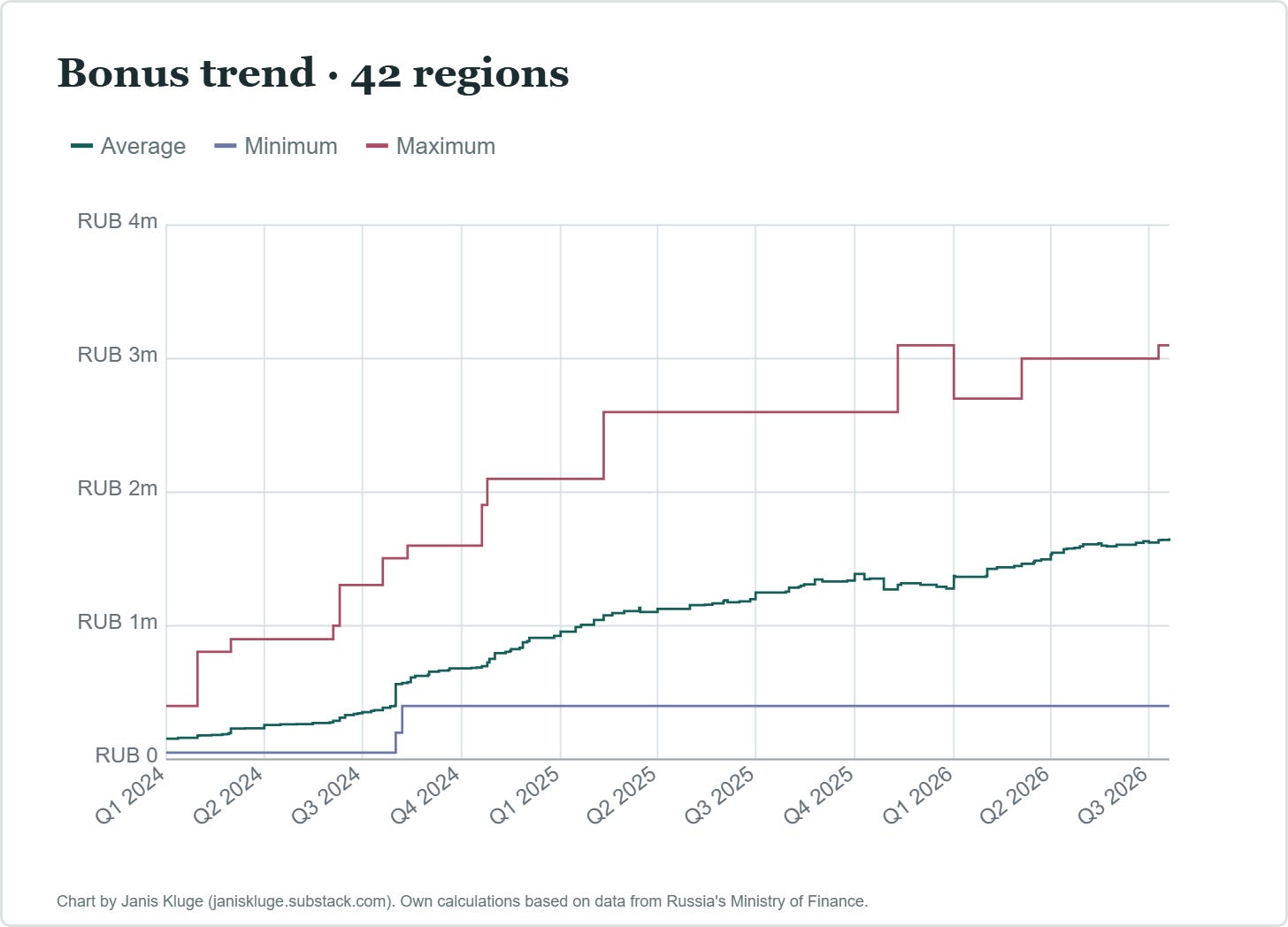
The higher cost is also reflected in the amount that regions spend on average on sign-on bonuses per contract, which has increased by 30% from last year: While average payouts were around 1.4 million rubles in mid-2025, they are now between 1.8 and 1.9 million rubles (this is higher than the average bonus because regions with higher bonuses recruit more). These figures do not include commission payments to recruiters, which, according to iStories, have also increased this year. The Moscow Times also found that the number of regions offering commissions almost doubled from 31 in October 2025 to 56 in August 2026.
In a meeting with Putin on June 18, the head of Tatarstan cited unusually detailed statistics on recruitment in his region. To my knowledge, this is the only region for which such data exists (offical and public). According to these figures, the pace of recruitment in the region seems to be more or less on target this year.
The annual recruitment rate per capita (0.3%) is just slightly above the per-capita recruitment rate in the dataset I use for estimating recruitment (based on regional budget data, recruitment in the observed regions in 2025 was 0.28% of the population). This, again, indicates that the Kremlin mostly assigns regional recruitment quotas based on population, although there certainly are some “overachievers.” If you apply 0.3% to Russia’s total population, the result (438,000) is relatively close to Russia’s annual recruitment target.
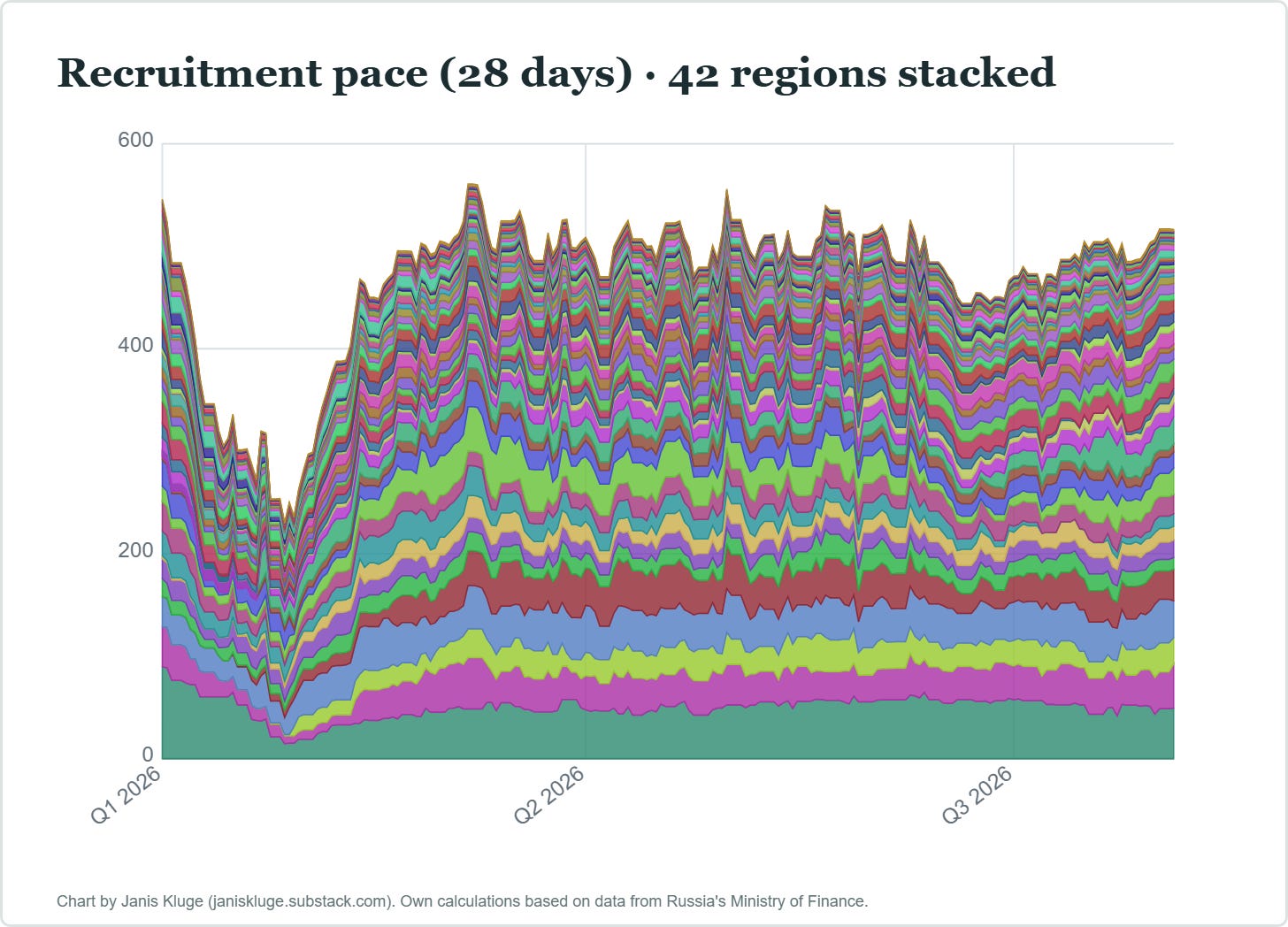
Finally, if you are interested in the composition of the regional budget estimates, here is an impression from this year: The biggest recruiters in the dataset are Moscow Oblast, Bashkortostan, and Sverdlovsk Oblast. The small dip in late June/early July was mainly caused by three regions (Kemerovo, Saratov, and Orenburg) and is most likely related more to technical factors (budget spending slowing at the end of Q2, changes in bonus sizes) than to fundamental shifts in these regions.
On July 30, I had the chance to discuss the recruitment estimates and the method behind them in detail with Alexander Gabuev on the Carnegie Politika podcast. Take a listen if you can deal with my German accent and want to learn more about the background of this analysis, the challenges of working with Russian data, and the outlook for Russia’s budget this year.
Click here to go to the podcast episode, or listen directly with the player below.
0:00
-44:01
If you compare the monthly data in this post with my previous publications, you will notice a slight change in the data for late 2025 and early 2026. Because some regions had drastic bonus changes within just a few weeks (down in late 2025, up in early 2026), there were a few distortions in the data. For example, one region drastically cut its bonus payout in December, but the recruitment estimate for that region subsequently went up because the budget data still reflected higher bonus payments. I was able to resolve most of these issues by adjusting the delay model used in my estimates (the time between when the bonus is announced and when it becomes visible in the budget). As a consequence, my estimate for Q1 increased to 79,000 new contracts. Here is a more detailed look at recruitment dynamics over the last two years:
No posts
Comments
Nothing yet. Say the first thing.
Sign in to join the conversation.