
Amnesty International has apologised for publishing its dreadful briefing A Growing Threat, which accused dozens of grassroots organisations of being part of an “anti-rights” movement.
The report named 51 organisations it categorised as gender-critical - including women’s rights groups, gay and lesbian campaigners, organisations concerned about the medical treatment of children and SEEN in Journalism which campaigns for accurate reporting on sex and gender
Following formal complaints from many of those named - and the threat of legal action from JK Rowling, whose domestic violence support service Beira’s Place appeared on the list - Amnesty withdrew the briefing.
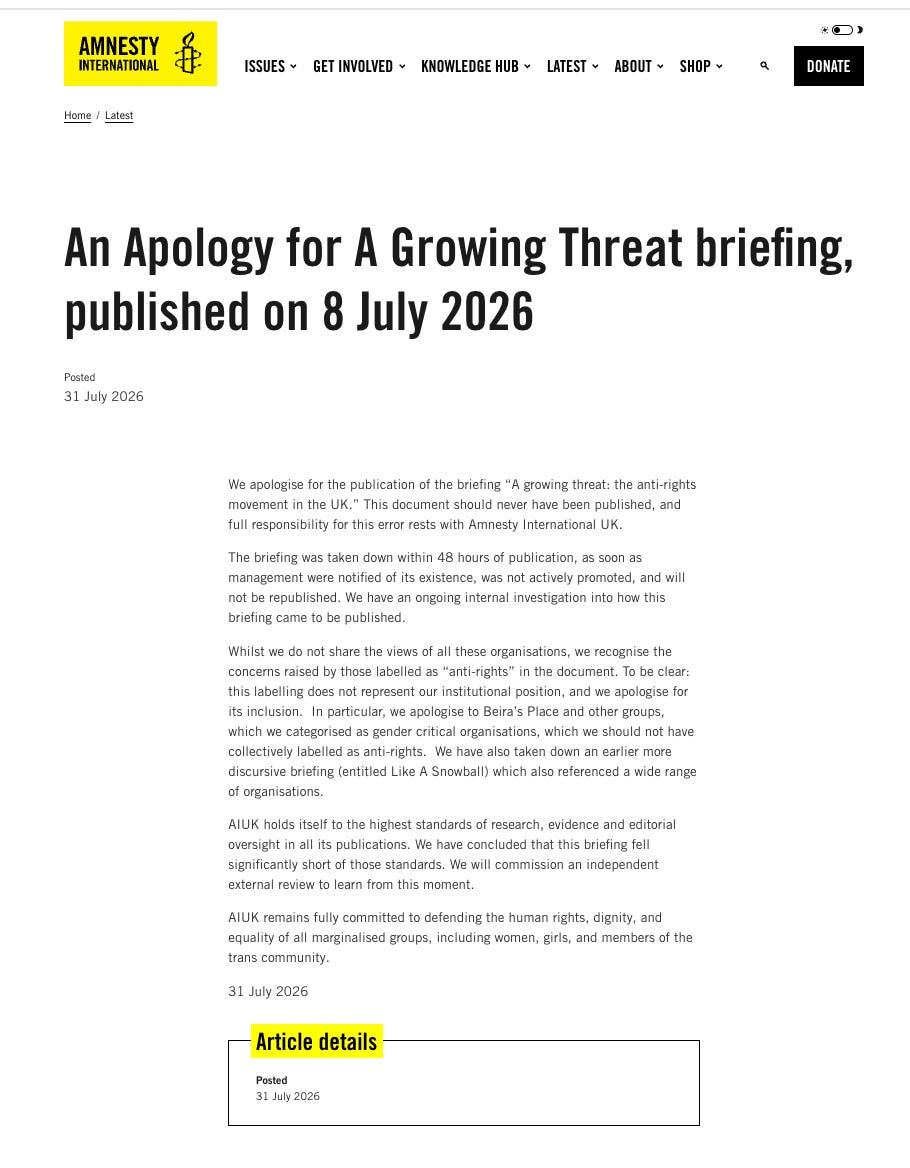
In a public statement Amnesty UK admitted the report had fallen “significantly short” of its research, evidential and editorial standards. It accepted full responsibility, apologised to the organisations affected and commissioned an independent external review.
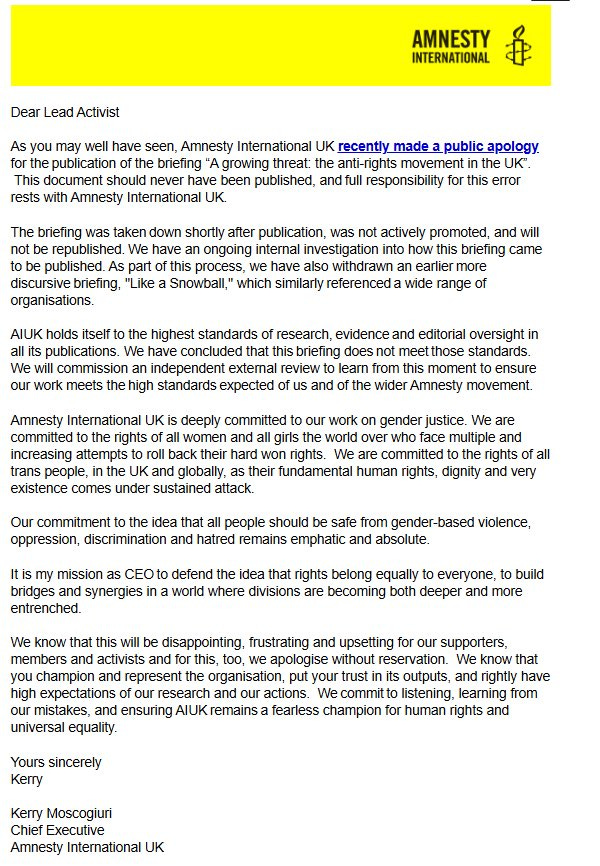
Amnesty also sent an email to supporters, members and activists which stated:
“We know that this will be disappointing, frustrating and upsetting,” it told them, “and for this, too, we apologise without reservation.”
In other words, Amnesty apologised for publishing the briefing - and also apologised to its supporters for withdrawing it.
The language is revealing. Amnesty acknowledges that the briefings fell short of its research, evidential and editorial standards. But it does not say that the ideas underpinning them were wrong.
Instead, it emphatically reaffirms the same broad worldview. It remains committed to defending trans people whose “very existence” is said to be under sustained attack, while declaring its support for “all women and girls” facing attempts to roll back their rights.
What it does not acknowledge is that many of the organisations named believe women’s rights are being undermined by policies promoted in the name of trans inclusion- or even that a conflict of rights exists.
Nor does it admit that portraying lawful organisations as part of an “anti-rights” movement was itself wrong.
In effect, Amnesty is telling its supporters: the briefings were flawed, but our underlying position remains unchanged.
In other words: sorry, not sorry.
Sadly, this is not unusual. In recent years, we’ve seen similar responses from organisations captured by gender ideology that have been forced to apologise or change course.
When Girlguiding announced in December 2025 that boys who identified as girls would no longer be eligible to join, it did not acknowledge that its previous policy had been wrong - or recognise the legitimate concerns of the women who had challenged it.
Instead, it presented the change as something forced upon it by the Supreme Court: a “difficult decision”, made “with a heavy heart”, which it “would have preferred not to make”.
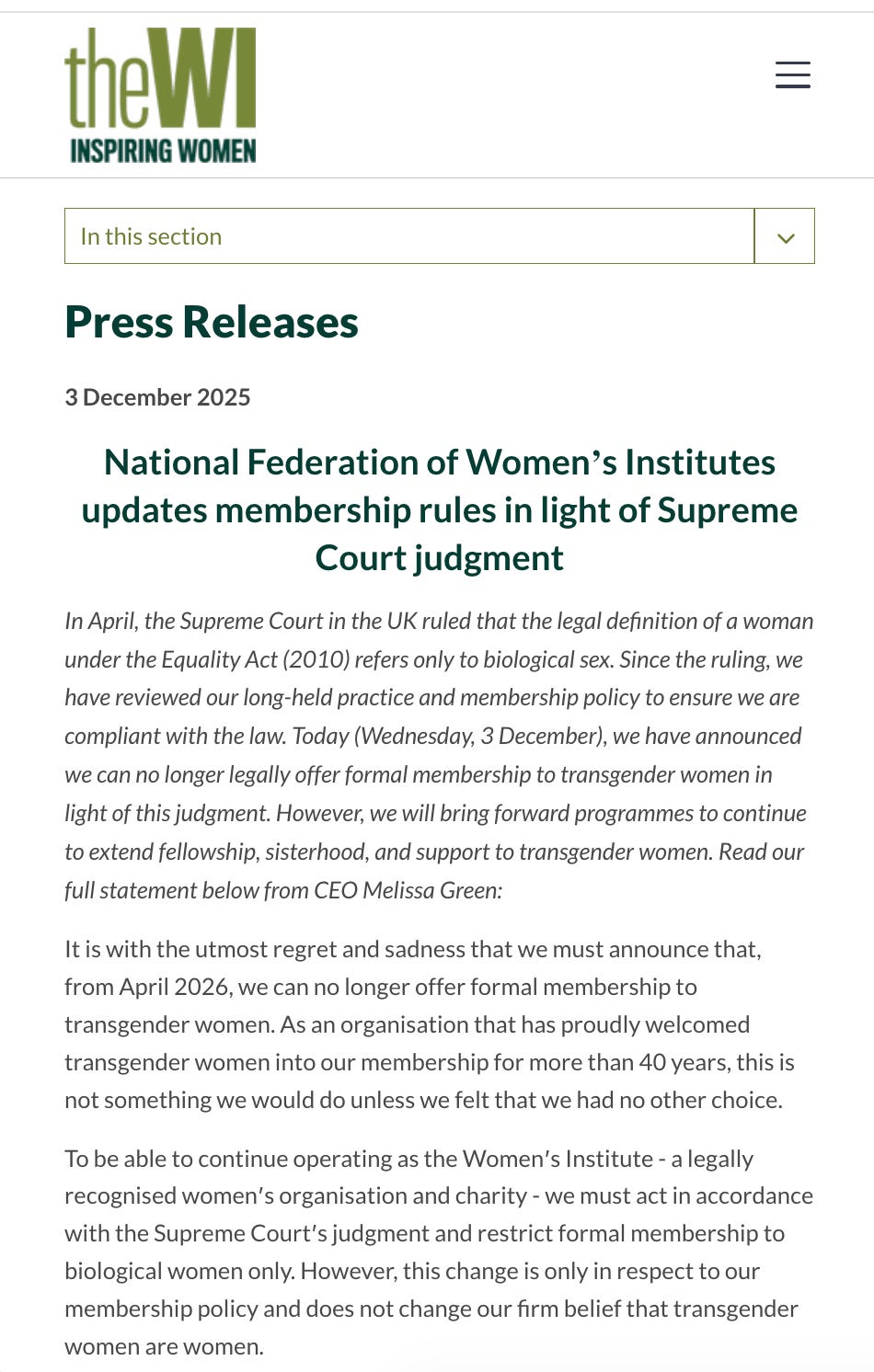
The Women’s Institute struck a similarly reluctant note when it announced that men who identified as women would no longer be eligible for membership.
The WI said it was acting with “the utmost regret and sadness” and only because it had “no other choice” following the Supreme Court judgment.
It did not acknowledge that admitting men to a legally recognised women’s organisation had been wrong.
Instead, it emphatically reaffirmed its belief that “transgender women are women” and promised to continue extending “fellowship, sisterhood and support” to them.
I’ve even experienced a “sorry, not sorry” reversal first-hand.
In April 2026, the choir I founded was dropped from Scope’s London Marathon cheer squad because of my lawful gender-critical beliefs.
I tried to resolve the matter quietly. But Scope refused to accept that its decision might have discriminated against me and the other choir members - who, to my knowledge, had expressed no views on the subject whatsoever.
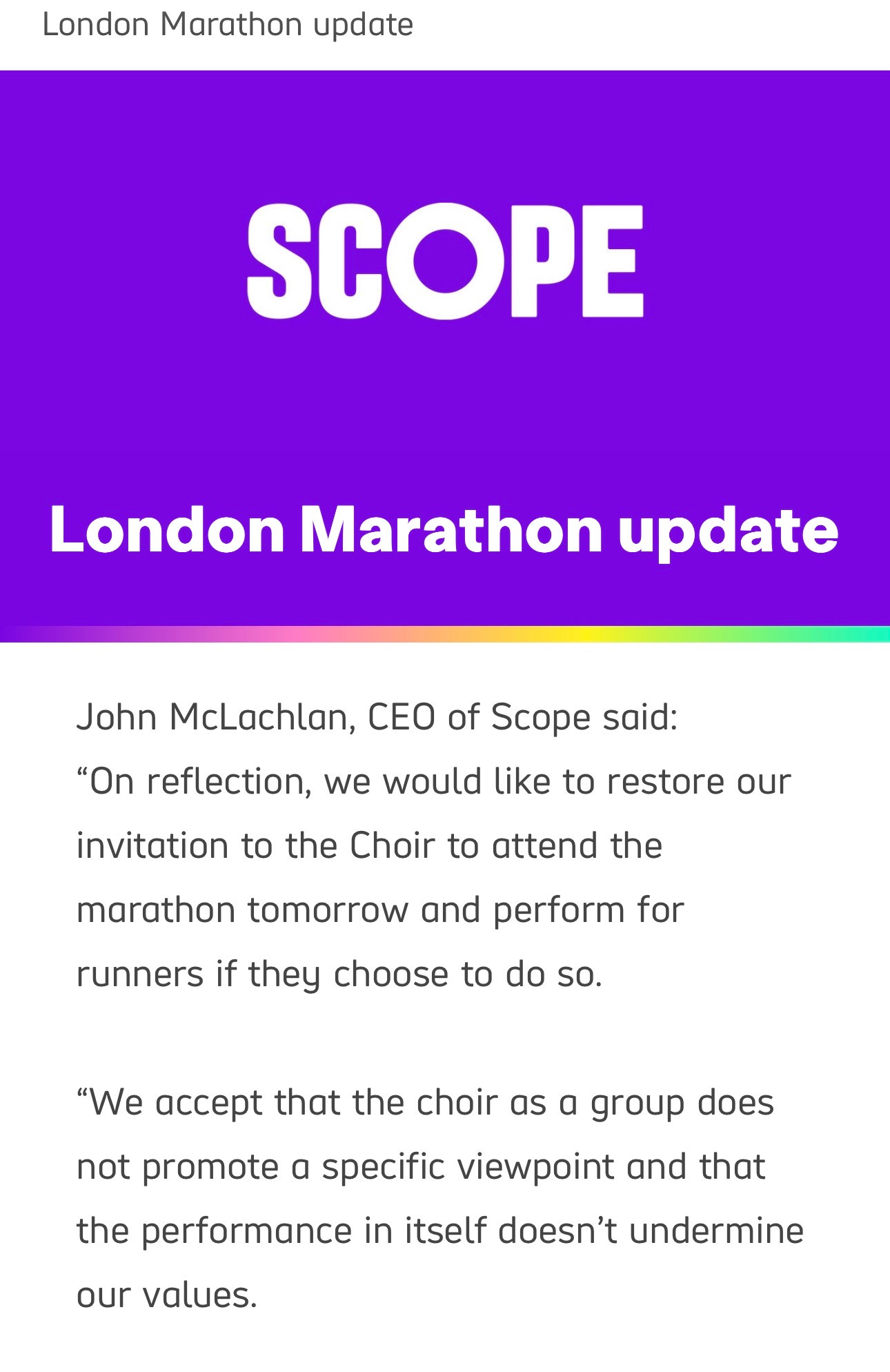
The choir was reinstated at 6pm on the eve of the marathon, after lawyers became involved. But there was no apology or acknowledgement that cancelling us had been wrong.
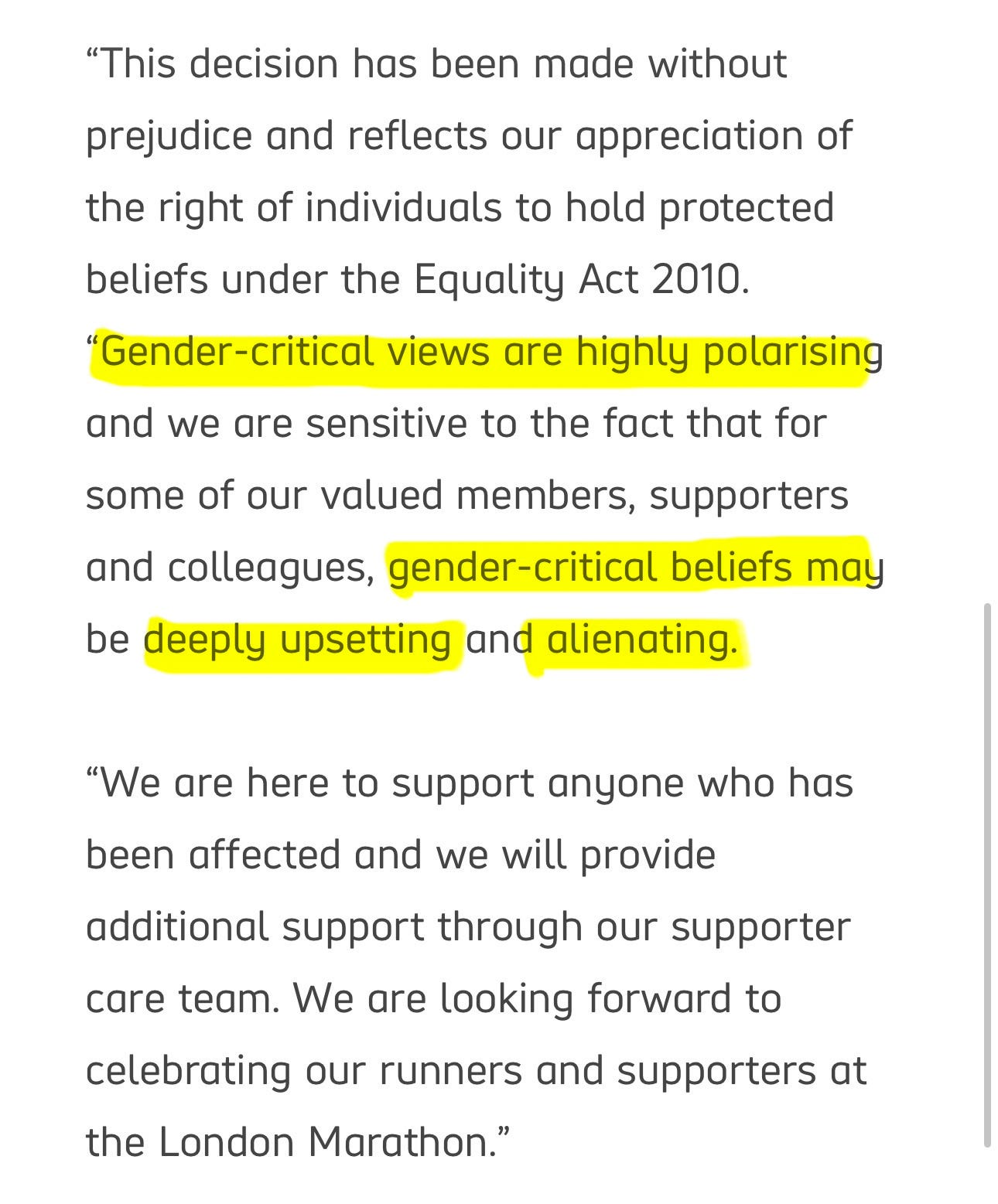
Instead, Scope recognised my right to hold protected beliefs while describing those same beliefs as “deeply upsetting” and “alienating”- apparently feeling the need to reassure its supporters even as it reversed its decision.
None of these reversals came easily. In every case, women had to question, complain or threaten legal action before the institution changed course.
I say reversal rather than apology because, when organisations are captured by gender ideology, apologies rarely sound sincere. They become reputation-management tools: a way to placate those they have wronged while reassuring their own side that nothing fundamental has changed.
Like a child made to apologise for bullying, they are contrite while the teacher is watching - then back to poking classmates in the ribs the moment their attention shifts elsewhere.
Amnesty’s external review should examine more than its research methods and editorial processes.
It should ask how a human-rights organisation came to portray women defending single-sex spaces, gay and lesbian campaigners protecting same-sex rights, journalists committed to accurate reporting and parents concerned about children’s medical treatment as part of an “anti-rights” movement.
Which voices shaped the briefings? Which assumptions went unchallenged? And why did Amnesty’s safeguards fail?
A meaningful review would confront all these questions. But I’m not hopeful - because nothing in Amnesty’s response suggests it believes its underlying position was wrong.
That is the problem with captured institutions. The challenge is not merely to make them say sorry.
It is to make them understand why they should be.
No posts
Comments
Nothing yet. Say the first thing.
Sign in to join the conversation.