
Today I promised you the launch of a third book in The Tangled Web series, The Tangled Web: Thread Spinning, a wide-ranging book that would help you spin the long threads of your series and career. I’ve been hard at work on it, but many of its core ideas really need a few more months to marinate. So I’m punting to another idea that’s captured my heart: The Tangled Web Weaves Tropes.
This book will let us talk about all those delightful mystery tropes, like dying declarations, amnesia, and English house parties. We’ll discuss the structural form behind mystery classics like closed circles, heists, and stings. And we’ll dig into that wonderful magic behind found families and—of course!—slow burn romance.
Without further ado, let’s kick things off with Chapter 1.
Many mystery tropes have become classics because they offer delicious moments of drama that not only advance the investigation, but also give the reader a wonderful thrill. The Dying Declaration is no exception.
You’ve read scenes like this before: the hard-boiled detective pulls up outside the home of the aging Hollywood starlet whose testimony may crack his case. He rings the doorbell, but when no one comes, he pushes his way inside. In the drawing room he finds the starlet, bleeding from a stab wound to the chest. He gathers her into his arms, and she mutters something he can’t make out. He leans closer. With her lips practically pressed against his ear, she mutters, “mustard seed.” And then she dies.
Or perhaps she pushes a note into his hand. Or scrawls a number in her blood. She could point, with a trembling finger, to a painting above the mantel, or even open her clenched fingers to reveal a single crushed peony. The point is, she indicates some information—and that information, when first received, is never understood.
This is the fun of the Dying Declaration trope—not just the buzz of a dropped body and a cryptic clue, but the quest upon which it must launch your Sleuth, as he tries to suss out exactly what the declarer was saying.
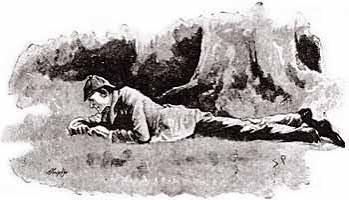
The most common piece of information being communicated in such scenes is the identity of the killer. In one of Arthur Conan Doyle’s Sherlock Holmes stories, “The Boscombe Valley Mystery,” a man named Charles McCarthy is beaten over the head and dies in his son’s arms. The son is questioned, and admits that his father said something about a rat. But since he can’t come up with any reason his father might have mentioned a rat, and in fact believes his father must have been delirious, the police quickly move on to other matters. It’s only the clever Holmes who realizes that the reference may not be to a rat after all. When he begins to suspect that the crime has something to do with McCarthy’s former life in Victoria, Australia, Holmes wires for a map of the province, and finds a clue—a city named Ballarat. Further investigation reveals that McCarthy wasn’t referring to a literal rat, but to Black Jack of Ballarat—a criminal with whom McCarthy had a sordid history, and whom he had been blackmailing.
Thanks for reading The Tangled Web! This post is public so feel free to share it.
There are many ways that dying declarations can be distorted so that Sleuth fails to understand.
The witness may receive only a portion of the declaration. This is what we see in “The Boscombe Valley Mystery,” in which the son is only able to make out two syllables—“a rat,” rather than the full name.
The witness may misunderstand the declaration. In an episode of Murdoch Mysteries called “Convalescence,” a parrot faithfully repeats its owner’s dying declaration: Hugo, the name of one of the suspects. But because the parrot’s language is generally insulting and aggressive, the Sleuth initially thinks it is saying, “You, go!”
The declarer may die before completing the declaration. In an episode of Frasier called “Retirement is Murder,” a woman tries to scrawl the name SHELBY in the dirt, but dies before completing the lower bowl of the B, so that the message looks like SHELP.
The witness may alter the declaration, deliberately or by accident. In the same episode of Frasier, one of the first responders kicks dirt over the S in the Victim’s declaration, causing the message to read HELP.
The declaration may have been placed into code. In an episode of Monk called “Mr. Monk Goes to the Ballgame,” the dying Victim translates a license plate, GCE15P, into a mnemonic, girls can’t eat 15 pizzas, to prevent both himself, and the witness he finds, from forgetting it.
The declaration may reflect a misunderstanding by the declarer. In Elizabeth Peters’ The Seventh Sinner, the Victim names the wrong sibling as his killer, not realizing that the Villain has approached him using a disguise.
The declaration may reflect an allusion, or other in-group knowledge. In the same novel, the Victim refers to the character he accuses as “Virginia,” the name he knew her by in their youth. He doesn’t realize that most people now call her “Ann.”
While the most common piece of information in a dying declaration is the identity of the killer, it’s not the only possibility. Your Sleuth may instead pick up a vital clue from the declaration. This could be a simple breadcrumb clue—a clue that gets him to the next line of inquiry in his investigation. For example, in an episode of Remington Steele called “Steele Waters Run Deep,” a dying Victim whispers, “Toodle-Loo.” This is not, as it may appear, a stylish way to bid the world farewell—rather, it is the name of a boat belonging to one of the characters. When the Sleuths realize this, they know where to go looking for their next clue.
But occasionally, a dying declaration may contain the clue your Sleuth needs to re-envision the entire case. In the novel A Game of Thrones by G.R.R. Martin, Jon Arryn, the Hand of the King—that is, the king’s top advisor—sickens and dies. As he lies in his final agony, he repeats over and over the words, “the seed is strong,” along with the name “Robert.”
Thanks for reading The Tangled Web! This post is public so feel free to share it.
This is initially taken by his widow as reassurance about the character and future of their son, feeble Robert Arryn. This misunderstanding allows the characters to put the dying declaration out of their minds for a bit, as they get down to the important business of appointing a new Hand of the King, Ned Stark, and dealing with all the political turmoil plaguing the kingdom—including the longstanding conflict between King Robert Baratheon and his beautiful but vicious wife, Queen Cersei.
But Ned believes that Arryn’s death may have been due to foul play—and as he follows Arryn's movements over the last several months, he begins to realize why. The case finally comes into focus when he examines a book of kingly lineages that Arryn had been reading. The records show that every child of the Baratheon lineage is born with black hair. This stands in sharp contrast to Queen Cersei’s three children, each of whom’s head is as golden as hers. This gives Ned a Lightning Strike Moment—a moment of sudden realization—that helps him understand that Cersei has been unfaithful. Arryn’s words didn’t refer to his own son, Robert; rather, they referred to King Robert, whose strong seed should have produced black-haired heirs.
I hope I’ve given you an idea of the wonderful narrative possibilities offered by the Dying Declaration trope! I’m happily assembling the outline for The Tangled Web Weaves Tropes, and I’ll be back next week with another chapter.
Classic Mystery Trope: The Dying Declaration
Summary: A dying character gives us a critical piece of information, which is initially not understood
Examples: Frasier, “Retirement is Murder”; The Seventh Sinner by Elizabeth Peters; Murdoch Mysteries, “Convalescence,” The Dead in Their Vaulted Arches by Alan Bradley; “The Boscombe Valley Mystery” by Arthur Conan Doyle;
Comments
Nothing yet. Say the first thing.
Sign in to join the conversation.