
We give space to students to explore their art/craft—BUT, at a certain point, we require them to come down to earth, face reality, art doesn’t pay. Go get a real job,
There are very few career artists. The economy does not allow it.
During the Great Depression the government hired artists to go out and ply their talent in the field. Literally. The Works Progress Administration (WPA), created in 1935 by President Franklin Roosevelt, sent Margaret Burke-White out into the fields to photograph migrant workers and rural sharecroppers. Her images have become some of the most iconic of the era.
No one is paying artists these days. There is no free healthcare for struggling musicians, painters, essayists, etc. We’re on our own.
I’m not trying to discourage anyone in their pursuit, just reflect the road I’ve walked. I’ve actively been writing since my 20s. At no time was I ever able to commit full-time to my art. It’s always been a sacrifice of time with little to no compensation. I still haven’t monetized this Substack—but soon, hopefully!
I’m still building a subscriber base.
The long haul.
I’ve already written about William Shakespeare who has his wife to thank for allowing him the freedom (at least from the perspective of the film Hamnet) to go off to London and abandon husband/father duties to devote himself to his work. Truthfully, I’m glad for this. And Sister Corita was able to produce her body of work while a nun at the Immaculate Heart. She was able to devote herself totally to God and art without thought to her bodily needs. The convent made sure she had meals, a bed to sleep in, art supplies (no small matter), time/space to create.
But, who stays in it for the long haul?
Those who have something to say.
From Art & Fear, pg. 108
Some people who make art are driven by inspiration, others by provocation, still others by desperation, Artmaking grants access to worlds that may be dangerous, sacred, forbidden, seductive, or all of the above. It grants access to worlds you may otherwise never fully engage. It may in fact be the engagement—not the art—that you seek.
This kind of thinking gives insight into why we succumb to affairs. It is the heart, not the head, that loses itself. There is a perceived need that has to be fulfilled. The act. The engagement, gives you meaning.
We lose our way, resurface, only to drown again. Again and again.
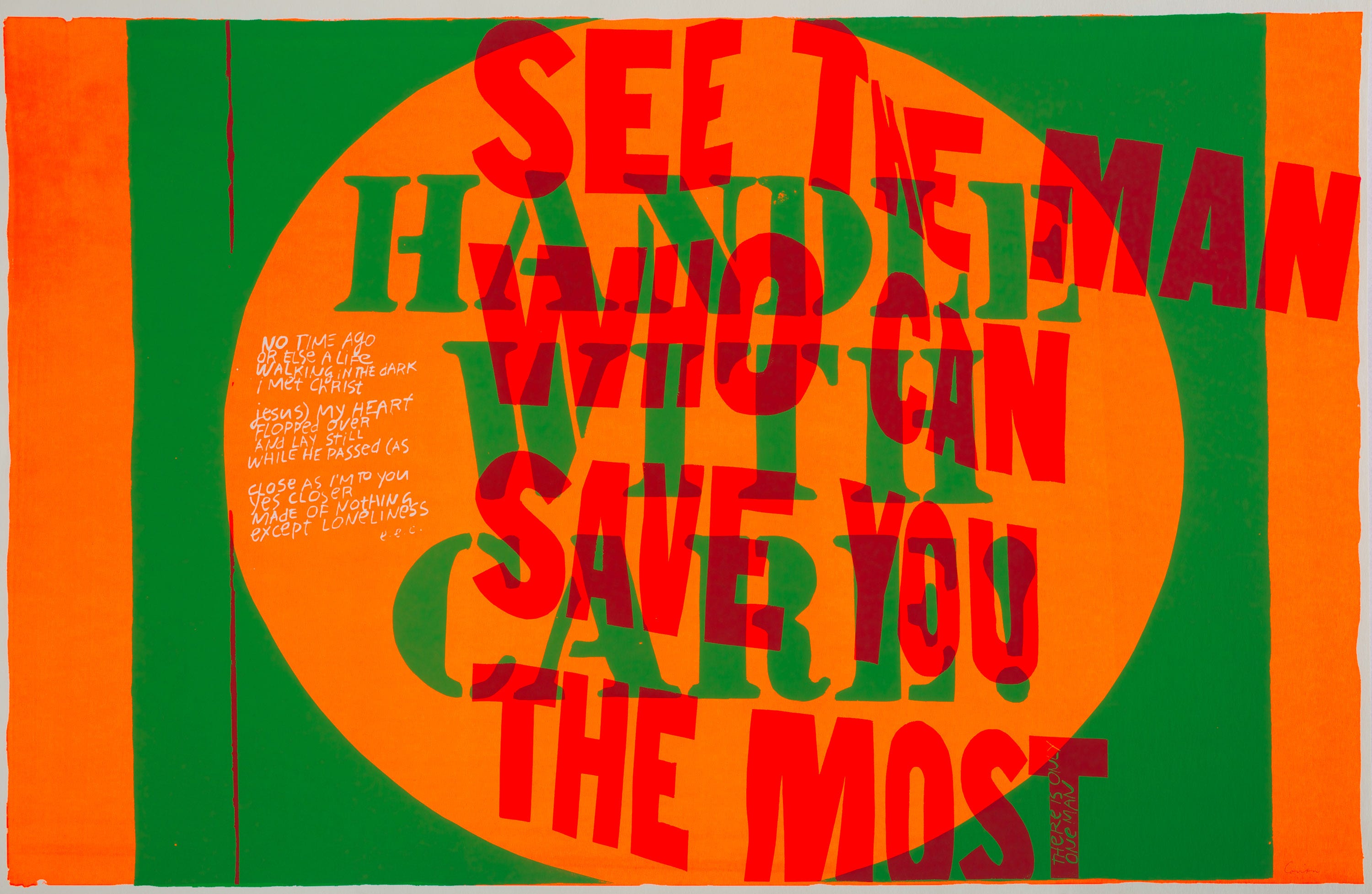
The authors of Fear & Art sum it up in their last chapter titled “The Human Voice.”
Text within this block will maintain its original spacing when published
We tell the stories we have to tell
Work really worth doing
The stories only we can tell
What we care about
We have to risk
And face our fear(s)
It all comes down to being happy and not happy at the same time. A fluid state of impermanence. To paraphrase the authors: The veteran artist has to make peace with his or her self; they have to navigate a paths fraught with pitfalls while at the same time imbued with delightful discoveries.
NEXT: To sum it up, it isn’t rational
No posts
Comments
Nothing yet. Say the first thing.
Sign in to join the conversation.