
This is part of Paths of Presence, a series on philosophy and embodied public theology.
In our modern maelstrom of economic precarity mixed in with the mindset of “not enough,” the idea of deliberately living with less can seem radical, or even threatening. It seems like society trains us to fear scarcity and dependency, while technology impels us to stay busy to avoid being alone with our thoughts. We learn from an early age to strive for “ideals” of more and bigger in a fictional framework of hyper-independence.
Against this tide, Dorothy Day made a countercultural choice.
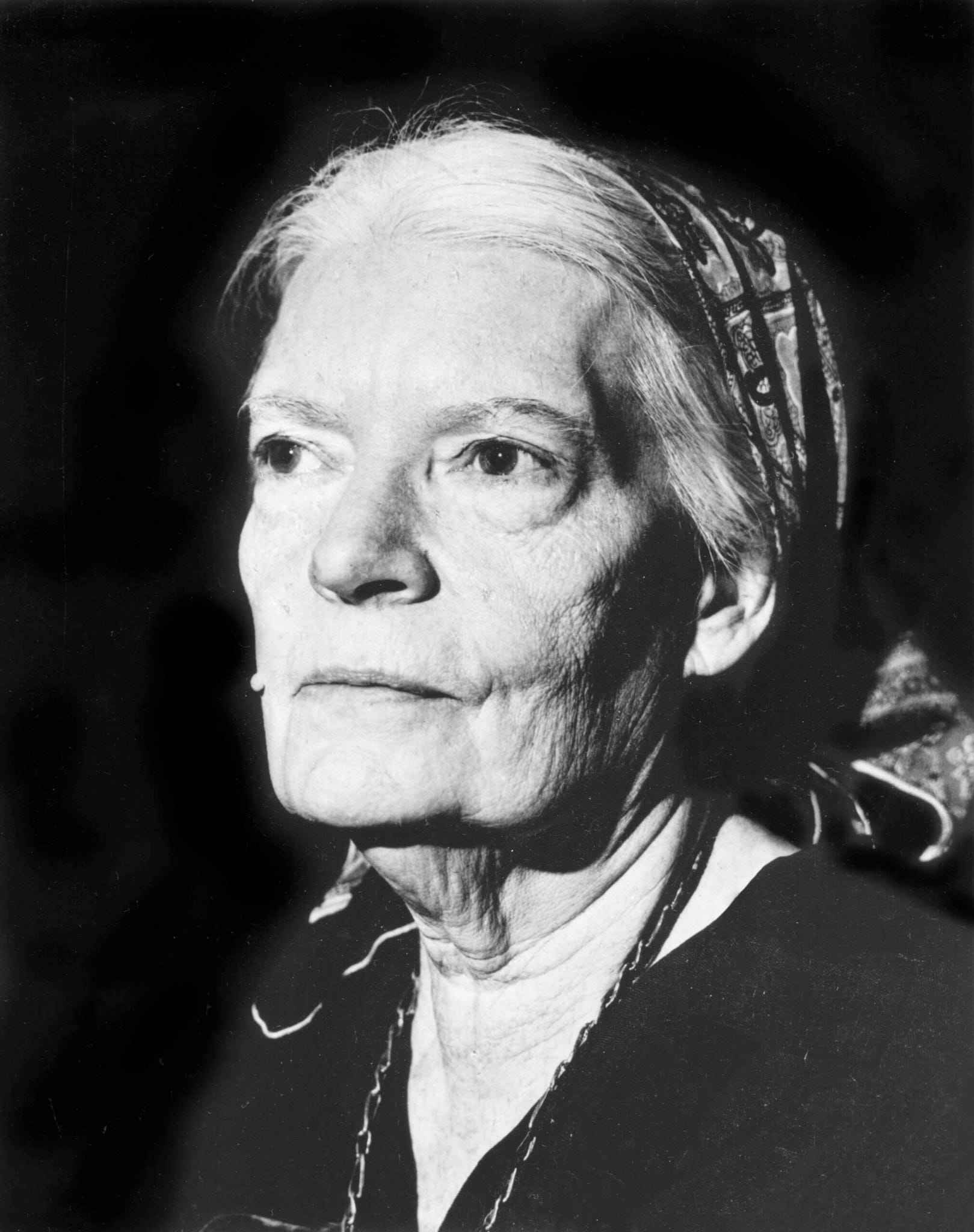
Day (1897-1980) was a journalist, activist, and co-founder of the Catholic Worker Movement, which is a network of houses of hospitality, communal farms, and a newspaper devoted to mercy and justice. She lived simply alongside the poor, grounding her writing and activism in a shared daily life of feeding, sheltering, and accompanying those on the margins. In choosing her form of voluntary poverty, Day chose a life of radical attention and simplicity.
Her life inspires some compelling questions: what does it mean to live deliberately, to align our inner conviction with our public action, and to let our spiritual choices shape our material and social life? Day’s radical hospitality is an embodied phenomenology of encounter: in refusing to distance herself physically from the material reality of those she served, Day was not retreating from the world but opening herself fully to it.
This essay explores how Day’s choice of simplicity functions as an existential practice: a deliberate stance that cultivates ethical witness and relational care. We’ll consider how her voluntary poverty was a form of resistance and a way of reclaiming moral and social freedom.
It’s essential that we distinguish between involuntary poverty, such as that imposed by structural injustice, and Day’s voluntary poverty, which was an ethical stance she chose to live out. Of poverty, she wrote: “I condemn poverty and I advocate it; poverty is simple and complex at once; it is a social phenomenon and a personal matter. It is a paradox.”
As a convert to Catholicism, Day’s life was rooted in her understanding of the teachings of Jesus; the “primacy of the spiritual” made everything easier to bear. This is not unique to Catholicism, Christianity, or even organized religion; what matters is to have an ultimate compass point.
“Work as though everything depended on ourselves, and pray as though everything depended on God.” —Dorothy Day
Day’s vision was not without critics. Some argued that she risked romanticizing poverty, but she understood her choice and did not prescribe it for others. For her, material detachment was a source of freedom rather than suffering: it meant living with enough. This created an increased capacity for presence and solidarity through freeing attention and effort from consumption and status-seeking to enable a greater focus on works of love, mercy, and justice. This posture is a form of existential self-definition, in the refusal to let social pressures dictate one’s lived values.
Chosen poverty mirrors the existentialist idea of the chosen risk, a deliberate decision that places one outside the comfort zone of predictable social norms. Imagine Dorothy Day opening the door of a tenement-flat kitchen each morning with no guarantee of enough food for everyone, but choosing that shared life nonetheless. Embracing simplicity is both a personal and a moral statement, and this choice requires a disciplined interior life.
In Day’s case, her existentialism receives its moral logic from Christian personalism, which is centered on the inherent dignity and value of the human person as created in God’s image. In life, freedom is realized in the recognition and reception of the other as a bearer of infinite worth; for Day, we are all children of God. She chose a life of proximity to the sites where dignity is most threatened and most visible: the vulnerable humans lined up outside her door, “the least of these.”
Simone Weil’s philosophy can help us understand Day’s practice in a new way. For Weil, attention is “the rarest and purest form of generosity” and is the precondition of moral life. It undergirds the difficult work of suspending ego, fear, and projection long enough to let another person’s reality really touch upon our own, as Dorothy Day did daily. Attention is a form of moral gravity, anchoring us in what is real even when reality is painful—like during the Great Depression, how each morning hundreds of people lined up in the street and in the cold outside the Catholic Worker offices, awaiting coffee and bread. Each person would be received fully, in their personhood and need.
Another philosopher, Iris Murdoch, helps by showing how attention becomes moral vision. She emphasizes the clarity in slowly purifying our perception to allow us to see others truthfully, rather than through the fog of fantasy or projection. Our choices are only as good as the vision that guides them. The interior life, then, is neither escapist nor fully private; it is the field where our responsibilities take form.

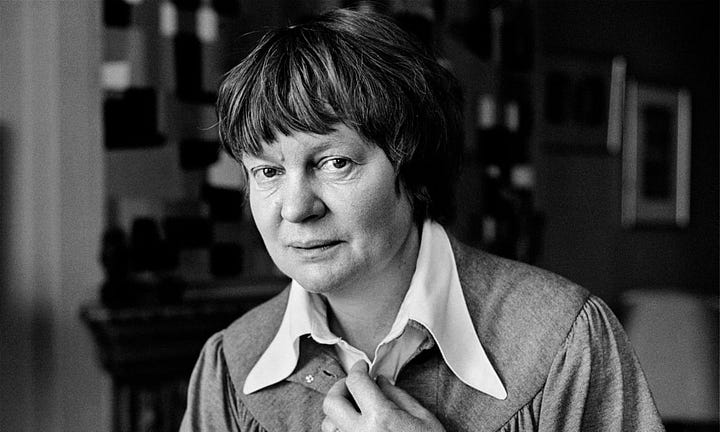
Day’s hospitality is Murdoch’s vision translated into material form; it is Weil’s attention enacted through meals, shared rooms, and the stubborn refusal to turn away when things got hard. A degree of renunciation becomes an existential and moral practice: a chosen risk that makes a new kind of attention possible, a form of clear seeing that makes love responsible, and a simplicity that makes solidarity real.
Seen in this light, Dorothy Day’s voluntary poverty is a sustained practice of attention and clarity. Her simplicity was a way of turning down the inner noise that distorts perception. This is why the Catholic Worker houses were more than sites of charity: they seem to have almost served as laboratories of attention. The crowded rooms, unpredictable encounters, and shared precarity all demanded of Day a disciplined openness to the reality of the persons before her.
Her work with hospitality houses, soup kitchens, and the Catholic Worker (both the newspaper and the movement more broadly) are all ways of materializing love in action. This might have looked like serving a simple meal in winter to everyone in line around the block, or midnight rushes to get the paper to press on time. Day created material and spiritual space for others in her life. She knew that shared vulnerability generates solidarity, and she would have been familiar with Galatians 6:2 (“Carry one another’s burdens”) and Matthew 25:40 (“Whatever you did for one of the least of these, you did for me”) and taken them to heart.
Day refused to occupy a position from which the suffering of others would be merely observed without also being shared. In this, we hear echoes of the existential and the social: Day understood that one only discovers the contours of one’s freedom by choosing a risk that reveals what one is unwilling to abandon.
Seen within the broader grammar of existential and public courage explored across this series, we may remember how Kierkegaard illuminates the inward courage required to choose a life against the crowd, and how MLK showed that individual moral courage finds its expression in communal struggle. We see how Day’s life embodies both the inward decision and the relational enactment of care, made manifest in shared material vulnerability. In her world, radical hospitality is inseparable from the concrete realities of everyday life.
For Day, the “works of mercy” were rich opportunities to stake one’s life on a different ordering of value. During the Depression, for instance, she spent nights on tenement stairwells during eviction crises, keeping watch so that marshals could not drag a family’s furniture into the street. This material proximity also reframes courage itself. Fear diminishes not only through inner fortitude but through mutual presence, and through the recognition that vulnerability becomes more bearable when it is shared. Day’s willingness to be caught in the same sorrow as those she served exemplifies relational courage.
Dorothy Day’s life teaches that freedom and care are inseparable. Opting to live with less is a resistance to the structural and psychic forces that encourage greed, distraction, and moral disengagement. To embrace simplicity is to practice courage: to notice, to release, and to welcome openness.
Voluntary poverty can readily be misread in ways that blunt its razor-sharp edge. It is not an aesthetic preference or some kind of privatized morality; it’s a phenomenology of ethical life. But Day’s example is too costly for many to imitate literally—and that’s part of why she is such an extraordinary figure, and literally on the way to being recognized as a saint by the Catholic church.
Her personalism was radical and pressed back against the systemic issues which created and maintained the gulf between the “haves” and the “have-nots.” The tension most of us experience in learning of her life and service can be generative: it forces us to confront our own thresholds of comfort, fear, and complicity.
In a contemporary context, Day’s practice is profoundly countercultural. We all know that algorithmic consumerism, the attention economy, and subscription capitalism can foment an intense psychological pressure to accumulate, perform, and distract. Choosing voluntary simplicity can help us resist these dehumanizing rhythms: slowing down, keeping possessions light, prioritizing people over productivity, and practicing mutual aid. We don’t have to be as radical as Day to make important room in our lives for the powerful work of mercy and goodness; we just need to be willing to try something new.
Small, concrete acts, like releasing unnecessary items, or giving generous time or attention to others, become existential gestures. When we create space to relate to others as Day did, rather than instrumentalizing or strategizing our relationships we can reclaim freedom, cultivate solidarity, and restore a sense of ethical agency. Voluntary poverty can exist on a spectrum, and in this light, it’s not a moralistic demand but a practical undertaking: it is an experiment in freedom, an embodied way to navigate modern life with greater attentiveness, courage, and relational presence.
The durable power of Day’s witness invites us to consider the possessions, habits, and fears we cling to, and to ask: what would it mean to loosen one clenched fist, if only a little? Her aphorism, “Love is the measure,” reminds us that ethical life is enacted in the humble, courageous, and relational choices we make every day.
In a culture organized around scarcity and self-inflation, Day’s life suggests another possibility: that freedom may be more about release than holding on. We may consider what we gain not in what fills our hands, but in what they’re free to offer.
A practice for letting go of attachment and reclaiming attention and space for what truly matters
Each week, choose one thing (or five, or three) that you can release, recycle, delete, or share with someone. These can be physical items, digital files, or even habitual thoughts or behaviors. For each, you might pause and reflect: “In opening my hand or in letting this go, what freedom might be created? How might this action allow me to notice someone or something else more fully?”
Dorothy Day’s life was less about deprivation and more about creating availability for others, for moral attention, and for lived presence. This ritual is a micro-practice of that stance.
Dorothy Day, Selected Writings, edited by Robert Ellsberg. Eminently readable and highly moving writings from her journal, newspaper, and more—inspiring and powerful.
Simone Weil, Gravity and Grace; I have the Emma Crawford and Mario von der Ruhr translation from the French, which includes new material previously not included in earlier editions. This work is a collection from Weil’s notebooks, published posthumously.
Iris Murdoch, The Sovereignty of Good. An accessible and interesting entry to Murdoch’s work.
If you liked this article, please like and share it, which helps more readers find my work.
Comments
Nothing yet. Say the first thing.
Sign in to join the conversation.