
I haven’t been close to disability rights work for more than ten years now. But I was, once, and I still watch it from the side lines the way you watch a sport you used to play. I notice things others may not.
So when I read the International Disability Alliance’s latest annual report, I wasn’t looking at it as news. I was looking at it as a nineteen-year-old experiment finally showing its results. The UN Convention on the Rights of Persons with Disabilities was adopted in 2006. There’s now a real, visible movement of Organisations of Persons with Disabilities (OPD) sitting in rooms at the UN Human Rights Council, briefing the Security Council on Sudan, shaping the outcome document of a G20 summit, contesting the wording of humanitarian reform. That didn’t happen by accident. It happened because a generation of advocates fought, slowly and unglamorously, to turn a piece of paper into a seat at the table.
There’s now serious momentum toward a UN convention on the rights of older people. It is overdue. Those who believe in this convention would do well to sit with this report for an afternoon, because it’s basically a field report on what nineteen years of “we have a convention now” actually looks like in practice. Some of it is inspiring. Some of it should worry them as it does me.
Here’s the encouraging part.
A convention doesn’t just create rights on paper. It creates a mechanism.
The disability movement now has a treaty body that governments have to answer to, a system of national reporting that forces uncomfortable questions and crucially, organisations that were built specifically to hold all of it accountable. IDA didn’t just show up to conferences in 2025. It helped write the language, briefed the negotiators beforehand, and then handed the resulting commitments back to its members to use as leverage at home.
That loop from lived experience to global standard and back to national pressure is the whole game. Without it, a convention is just a nice speech.
Who is going to be the IDA?
Because that infrastructure, a genuinely representative, internationally connected and well-run alliance of older people’s organisations, rather than organisations that speak for older people, does not yet exist in anything like the same form. And building it is slower and less glamorous than winning the treaty vote. The disability movement had a two-decade head start on this, and even now, this report admits plainly that
“OPD participation remained structurally underfunded, especially for grassroots organisations.”
If that’s still true nineteen years in, what happens to the ageing movement in year three, when the summit afterglow has worn off and the money hasn’t followed?
Who gets to speak?
Disability rights had to fight its way out from under charities and medical professionals who assumed they knew best. “Nothing about us, without us” became the whole ethos precisely because it wasn’t the starting point. Ageing advocacy risks the same trap, arguably worse, because so much of the existing infrastructure around older people is built by other people pension bodies, care providers, family carers, gerontologists with the best of intentions and none of the lived authority. Will older people themselves lead the movement that claims to represent them, or will it be led on their behalf, the way disability rights nearly was?
What happens the first time the money gets pulled?
This report is refreshingly honest that 2025 nearly broke the disability sector. USAID cuts hit dozens of organisations with sudden existential uncertainty. A movement built entirely on donor goodwill is a movement one funding cycle from collapse. Any ageing convention needs to think about durable, diversified financing from day one, not as an afterthought once the ink is dry.
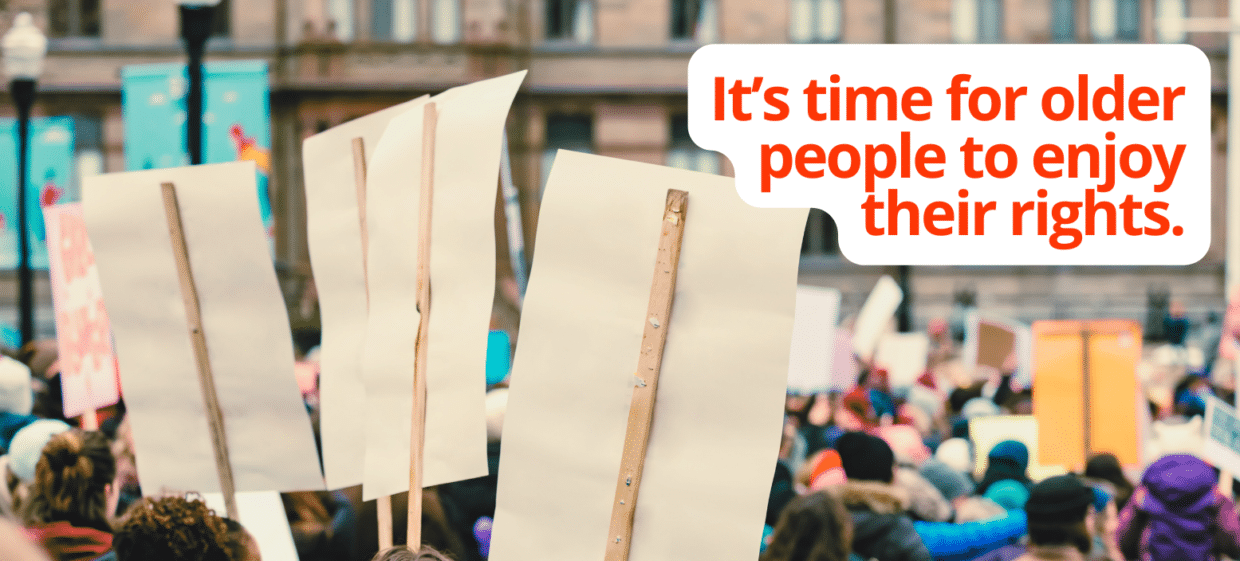
My view is. Do not wait for the convention to build the movement. Fund older people’s organisations real ones, led by older people, including older disabled people, older refugees, older women before the treaty exists, so there’s someone ready to hold it accountable the moment it does.
Build the reporting and accountability mechanism with teeth from the start, not as a nice-to-have added later. And resist, hard, the instinct to let a big glamorous summit stand in for the unglamorous work of national implementation, because that’s the gap the disability movement is still, nineteen years on, trying to close.
The convention isn’t the finish line. It’s the starting gun.
The disability sector has the bruises to prove it.
Comments
Nothing yet. Say the first thing.
Sign in to join the conversation.