
L’été fromage blanc, l’hyver fromage puant. (Summer, fresh white cheese, winter, stinky cheese.) - Supplément au Dictionnaire Universel Français et Latin, 1752
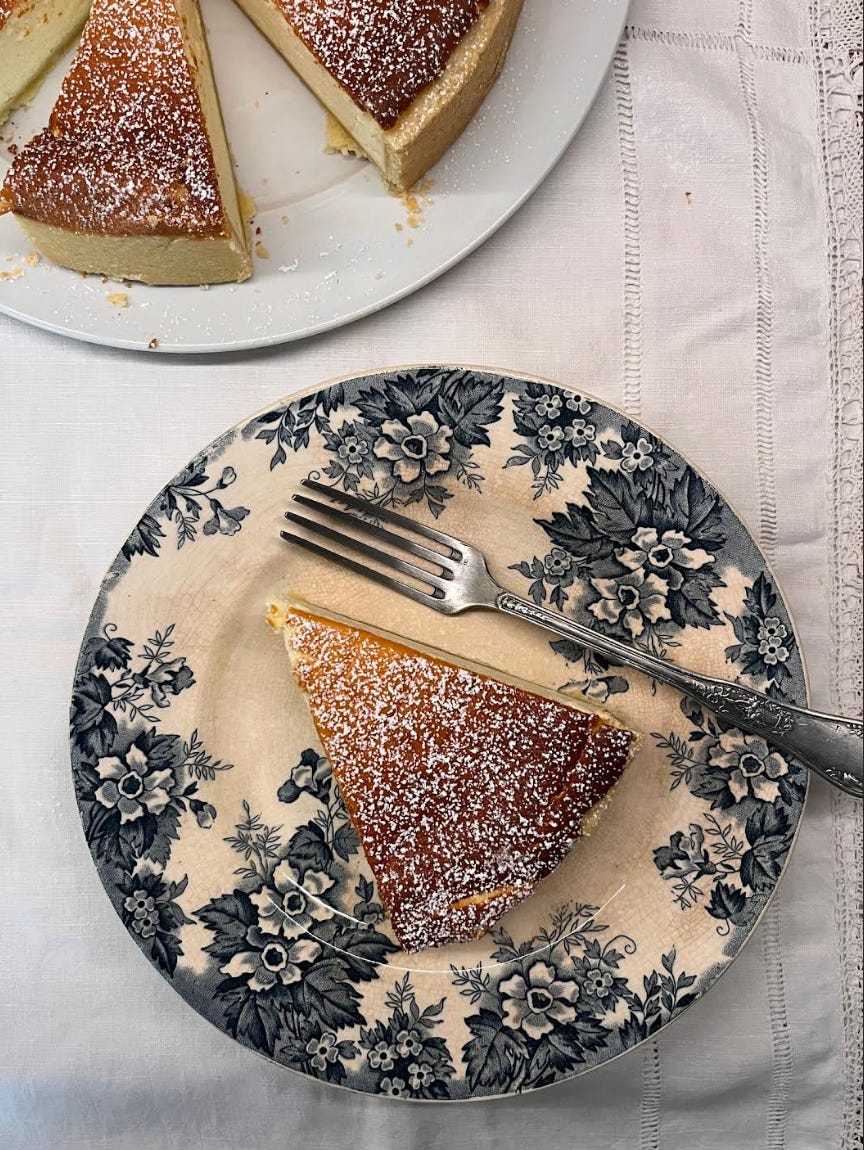
“…a cheese-pie milk-and-honey-mixed was there, - a soft pie baked in a mould” - Deipnosophists, or, Banquet of the learned of Athenaeus, 228 CE
A short while back, someone asked if I had a recipe for a tarte au fromage blanc. A French cheesecake, if you will. I energetically, vehemently dislike American cheesecakes made with tangy cream cheese, but the tarte au fromage blanc, prepared with creamy, delicate fromage blanc, a fresh dairy product the consistency of sour cream but without the tartness, heavy cream, and egg whites, with just the right hint of vanilla, all whipped until light and ethereal, not dense and thick, baked in a shortcrust pastry shell, is absolutely divine.
But I had never made one before so had no recipe. Until now.
Tarte au fromage blanc — or tarte au fromage (cheese tart) — might very well be, I suspect, the first pastry to be created. Milk and cream, and thus all the various forms of cheesy by-products, have been part of the human diet since the domestication of animals during the Neolithic period; cheese likely emerged soon after, when milk carried in bladders made from the abomasums of ruminants naturally curdled due to the presence of rennet, the movement assisting the process of turning milk into cheese. This undoubtedly created a fromage blanc (“white cheese”) or a lait caillé (literally “curdled milk”) — as well as a “whipped” cream — as nomadic peoples traveled across Mesopotamia, these bladders strapped to the sides of cows, horses, camels, or whatever beasts jostled, lurched, and swayed across the uneven landscape.
It’s said by some that Anna Wecker wrote the first recipe for a tarte au fromage blanc in her landmark Ein Köstlich new Kochbuch (A Delicious New Cookbook) in 1597. Ein Köstlich new Kochbuch was a spectacular achievement being both the first cookbook published in Switzerland and the first cookbook written by (Anna) and published by (her daughter Katharina Taurellus) women in German. Wecker’s work wasn’t intended for aristocratic households with huge kitchens, professional chefs, and numerous household servants, like almost every cookbook written up to this time; it was written for simple, modest homes in which women prepared simple, home-style dishes, which made it truly unique. And yet, despite her stunning achievements, cheese tarts were already fairly common pastries in Europe by the time Anna put her recipes on paper.
Take a Syerziger (fresh whey cheese) or a cheese made from rich milk; when the whey has been well pressed out of it, beat it very smooth with eggs to the proper thickness. Sweeten it with sugar, and add good sweet butter to it, already in the pot. Bake it; while baking, sprinkle plenty of sugar over it, and cinnamon too, if you wish. It should become nicely crisp/browned. - Anna Wecker, Ein Köstlich new Kochbuchn 1597
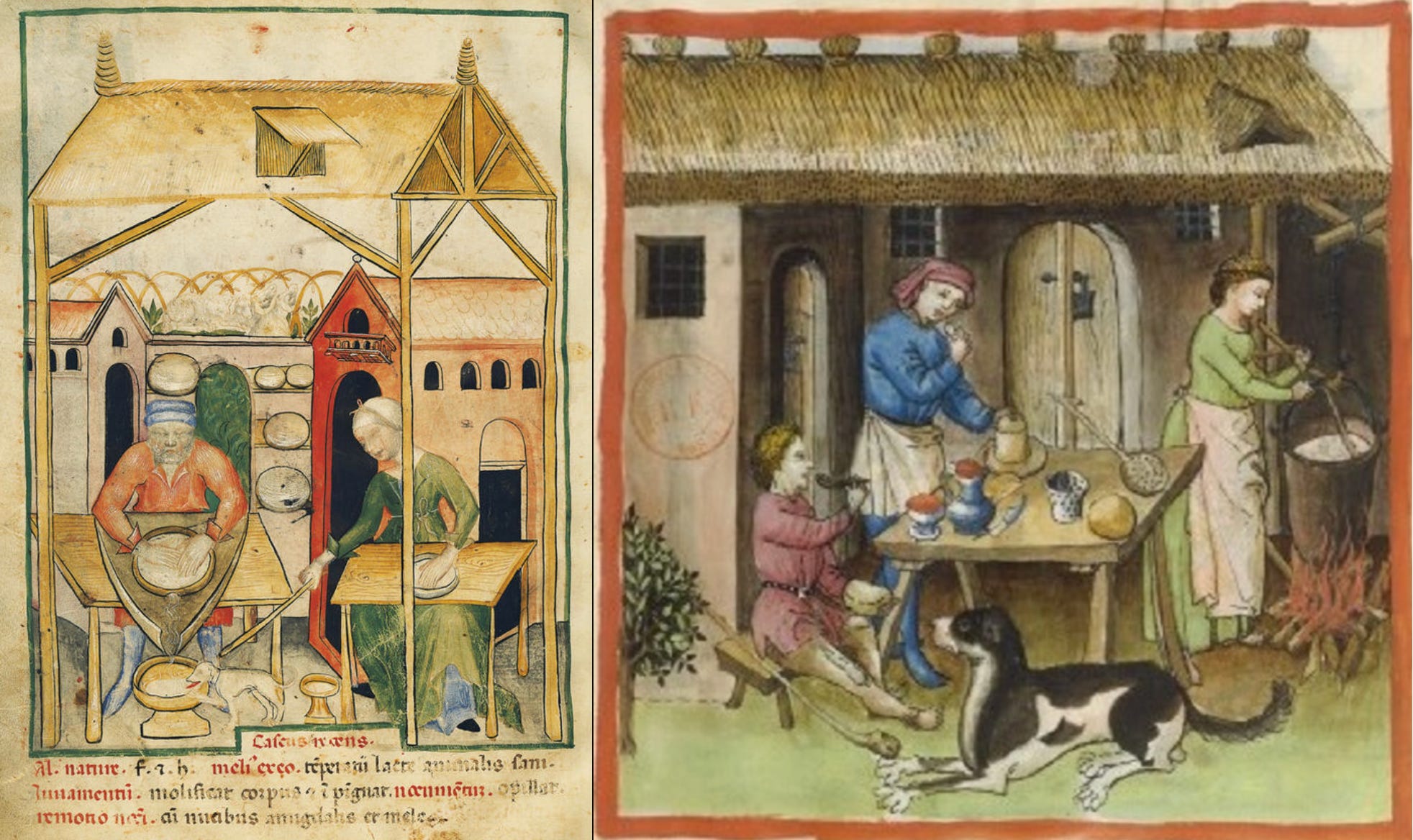
The earliest known cheese tart, or so others say - a mixture of cheese with other ingredients and placed in a pastry casing — can be traced back to ancient Greece where it’s believed to have been fed to athletes in the first Olympic Games, several centuries before the Common Era, the cheese tart being considered highly nutritious and fortifying. It was also most likely an offering to the gods. A food of the gods? Divine! From there, the cheese tart spread, and hasn’t changed its essential form since.
Cato the Elder, most likely influenced by Greek culture, penned (penned?) De Agri Cultura (On Agriculture) in 160 BCE and offered not 1 but 2 recipes for a tart of this kind : the savillum is made with copious amounts of cheese blended with flour, honey, and a single egg , then baked in an earthenware pot. It is glazed with more honey and sprinkled with poppy seeds to serve. Cato’s placenta is a mixture of cheese and honey layered between thin sheets of pastry.
By the early Roman imperial period, a century or two after Cato’s treatise, the world of cheese pastries seems to have become more widespread and more elaborate. Chrysippus, an ancient Stoic philosopher from Tyana in Cappadocia (what is modern Turkey), appears to have written one of the earliest known specialized treatises devoted entirely to bread and cakes, The Art of Making Bread. His work survives thanks to Athenaeus, who, in his Deipnosophistae (The Banquet of the Learned), written around 228 CE, quotes Chrysippus’ writing, enumerating more then 2 dozen varieties cheese cakes and pastries of the ancient world. Some, we read, are made with groats and some with rye, some blended with wine or mead or flavored with sesame seeds, and
“this last,’ he says, ‘you will soften with sour wine, and if you have a little cheese you may mash the montianum up half with wine and half with cheese, and so it will be more palatable.”
“There is also,’ says Chrysippus, ‘a cheesecake made of rye. The phthois is made thus: - Take some cheese and pound it, then put it into a brazen sieve and strain it; then put in honey and a hēmina of flour made from spring wheat, and beat the whole together into one mass.”
Cheesecakes and cheese tarts were very popular, indeed.
By the Middle Ages — 2 centuries before Anna Wecker brought her fresh cheese tart into German and Swiss homes — and the Renaissance, this type of cheese pastry could be found in a slew of cookbooks in other parts of Europe, it’s popularity seemingly undiminished. And while the recipes may be more refined, they remain fundamentally rooted in the same ancient tradition. Forme of Cury, a collection of medieval English recipes compiled around 1390 by the master-cooks of King Richard II, included a recipe for a Tart de Bry (with just a little twist of flavor) : Make a pie crust an inch deep in a pie pan. Take yolks of eggs raw & Autumn cheese & mix it & the yolks together. Do there-to powder ginger, sugar, saffron, and salt. Do it in a pie shell; bake it & serve it forth.
Le Viandier by Guillaume Tirel (known as Taillevent), the first cookbook printed in France in 1486 though written roughly a century earlier and therefore contemporary with Forme of Cury, included not one but three recipes for fresh cheese tarts. The Bourbonnaise tart is a neutral pastry, neither savory nor sweet, the filling made simply of cream, cheese, and yolks. The Jacopine tart is a two-crust pie, the same as the other with the addition of a large quantity of sugar and eel. Yes, eel, sliced and well boiled, most likely adding both a savory and a rich, fatty element to the tart; the addition of both eel and sugar, an expensive ingredient, made this a more elaborate and luxurious version of an otherwise simple dish.
While those early Greek and Roman cheese tarts were often and commonly sweetened, in these later years in France it was highly unusual for cheese tarts to include sugar mixed into the batter; rather, it was only dusted on top just before serving, sugar being treated as a rare and costly spice or flavoring, suggesting that the pastry itself — with or without sugar incorporated into the filling — was nonetheless considered a dessert.
Taillevent’s third recipe was for a talmouse, a pastry described by Jean Nicot in his 1584 Dictionnaire François-Latin as a placenta triquetra caseata— a triangular cheese pastry — placenta for the pastry base, triquetra for its iconic tricorne shape, and caseata for its cheesy filling. The phrase itself preserves a culinary vocabulary — and influence — stretching all the way back to De Agri Cultura, where placenta already referred to a cheese-filled pastry. The talmouse would be popular for centuries, easily found in many cookbooks, the combination of ingredients of the filling varying from one recipe to another over time, but always, always centered around cheese.
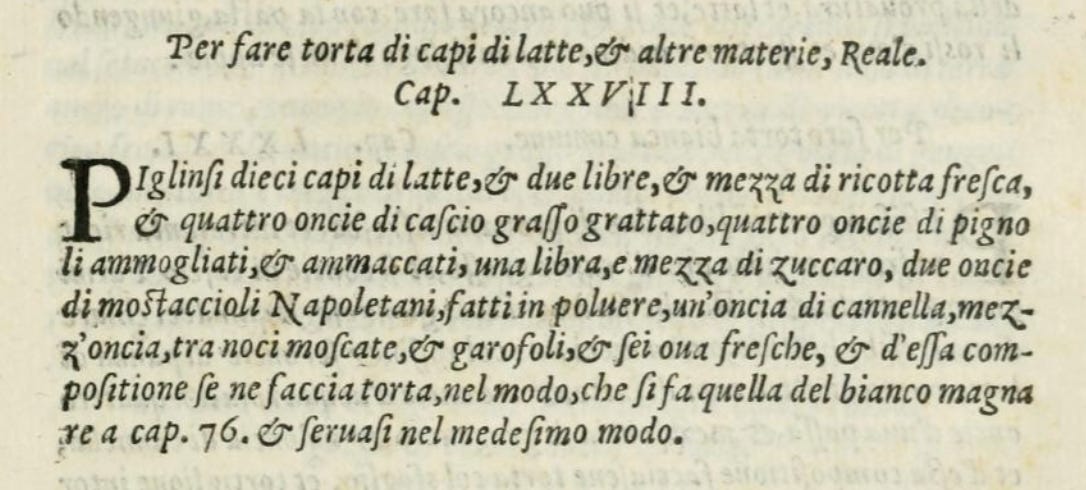
Bartolomeo Scappi’s luxurious torta di capi di latte (in his 1570 cookbook Opera, the Art and Craft of a Master Cook, a quarter century before Wecker’s) is a sophisticated, regal blending of capi di latte, a fresh curd cheese like thick cream or the French fromage blanc or lait caillé, ricotta, a grated rich hard cheese, eggs, sugar, spices, pine nuts, and ground cookies for a thickener (the French often did this instead of using flour). This filling was baked in a pastry shell and served dusted with more sugar.
By the mid-17th century and François Pierre de La Varenne’s landmark Le Pâtissier François, the tarte au fromage or “cheesecake,” prepared with a soft fresh cheese, had become almost standard, and his recipe is a clear transition between the medieval cheese tart and the modern cheesecake, much like Wecker’s, although with some differences. But La Varenne has 2 versions of his “tarte au fromage” : the one I have given below in italics, using a mix of soft, full-fat cheese and, like Scappi, grated slightly aged dry cheese; this second might very well have been added to the tart as a flavoring agent. He creates a cream by beating in melted butter and eggs, indicating very precisely the consistency of the uncooked filling, then adding just a tad of flour to bind. The finished tart is dusted with sugar, making this tarte au fromage blanc, like the others, either a savory or a sweet dish.
Take an amount of full-fat soft cheese about the size of two fists, and one or two walnut-sized pieces of slightly aged dry cheese, crushed, grated, or cut into very small pieces, with salt to taste and about a quarter-pound of good unsalted butter, melted. Add the white and yolk of one or two eggs. Mix all these ingredients together thoroughly to loosen them, adding a little cold water if the mixture is too thick; but if the soft cheese is very soft and releases whey, no water should be added—instead, the whey should be drained off, otherwise the mixture will become too runny. Bring the mixture to the consistency of a thick cooked porridge or glue. Add also an amount of fine flour or white breadcrumbs about the size of an egg. Fill the tart with this mixture and bake it in the oven; when baked, it may be dusted with sugar. Note that good pork fat may be used instead of butter in making these cheese tarts. - La Varenne, Le Pastissier François, 1653
His second recipe, most definitely a dessert, in my opinion, sweetens the cheese tart in a rather unusual way: a layer of egg yolks beaten with sugar is first spread over the crust, then topped with the cheese filling before baking, creating a kind of sweet custard base beneath the creamy cheese.
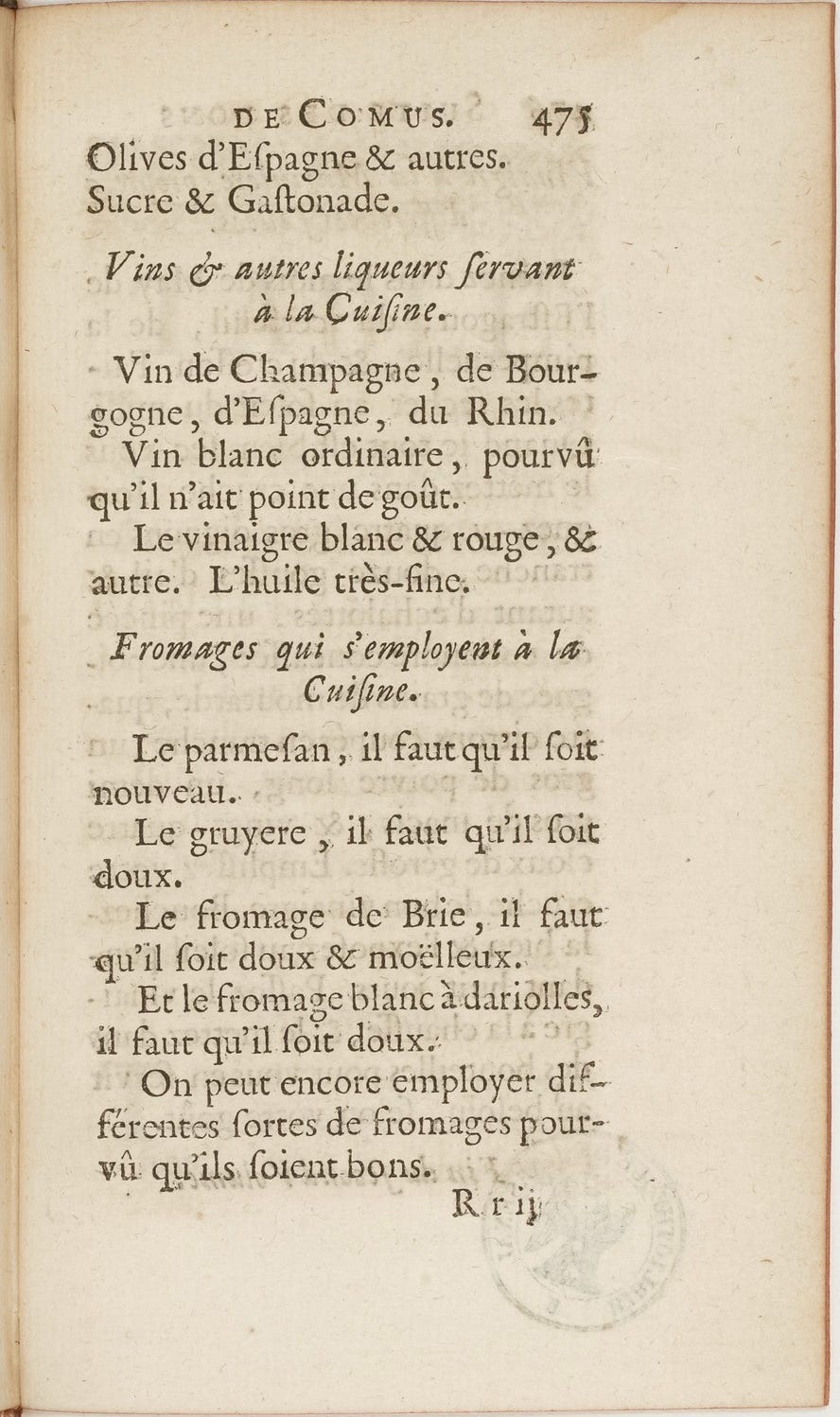
Although the first mention I could find of the exact term “fromage blanc” was from 1581 — “Plus seven thousand one hundred and ten pounds of fromage blanc, not including the said covered persons and prebendaries, who are supplied elsewhere.” — mentioned a single time in a political book by Nicolas Barnard entitled Le Cabinet du Roy de France, as part of a long list of quantities of foodstuffs distributed, consumed, taxed, or provisioned, the term fromage blanc wasn’t used in cookbooks until 2 centuries later, or so I could find. Cheese tarts, darioles, and flans, when not made with simply cream, were made with fromage mol (or mou) non-écrémé (or gras) ou fin fromage — soft, full-fat cheese or fine or rich cheese, consistency unknown, and even possibly variable.
Until Joseph Menon finally pulls out the words “fromage blanc” in Les Soupers de la Cour in 1755. His tourte à la paysanne is interesting in that it is not only prepared with “un fromage blanc à la crême fait de la veille” — “a cream-based white cheese made the day before” — but that it is considered a “paysanne” confection, a peasant’s tart. Even though his recipes were, indeed, for the Court.
Fresh (frais) and soft (mou) cheeses such as Neufchâtel and Viryou à la crème; white cheeses or fromages blanc (à la pie): These cheeses, which can be endlessly varied by whipping them, mixing them with other ingredients, or flavoring them with rose or vanilla, etc., must always be eaten very fresh, as they turn sour quickly. The simplest way to serve them is to thin them with a little milk and add sugar. - Sophie Wattel, Les Cent Mille Recettes, 1800s
What I find so curious is the idea that kept coming up in my research: that the tarte au fromage blanc, or cheesecake, may have been brought into northern Europe — Germany, northern France, Alsace, and surrounding countries — through the Jewish community, the wandering diaspora carrying recipes from various cultures and traditions and adapting them into their own culinary world wherever they settled. What makes the theory so compelling is the importance of dairy dishes in Jewish cuisine itself, as well as the presence of Jewish communities in Ancient Greece and Rome, throughout the Middle East, and later in Russia and the Slavic countries, where fresh-cheese pastries existed long before the medieval tarte au fromage blanc. The idea that Jews may have embraced a dairy-based pastry and carried it with them through migration into the heart of Europe makes this idea, while difficult to prove directly, intriguing nonetheless.
And then, just like that, the tarte au fromage blanc seems to disappear from French cookbooks for nearly a century, eclipsed by newer and more elaborate pastries, as the 19th century ushered in a remarkable period of culinary innovation, from Carême to Gouffé and Garlin, not only in the pastries themselves, but in the techniques, utensils, and methods that transformed la pâtisserie française into an increasingly refined and technical art. The 19th century, perhaps with the rise of the bourgeoisie, seems to have moved momentarily away from simpler, homier desserts in favor of more elegant creations. It would only be with the rise of domestic cookbooks intended for modest households that these older home-baked traditions would re-emerge in print, or in regional cookbooks, often as a tarte alsacienne.
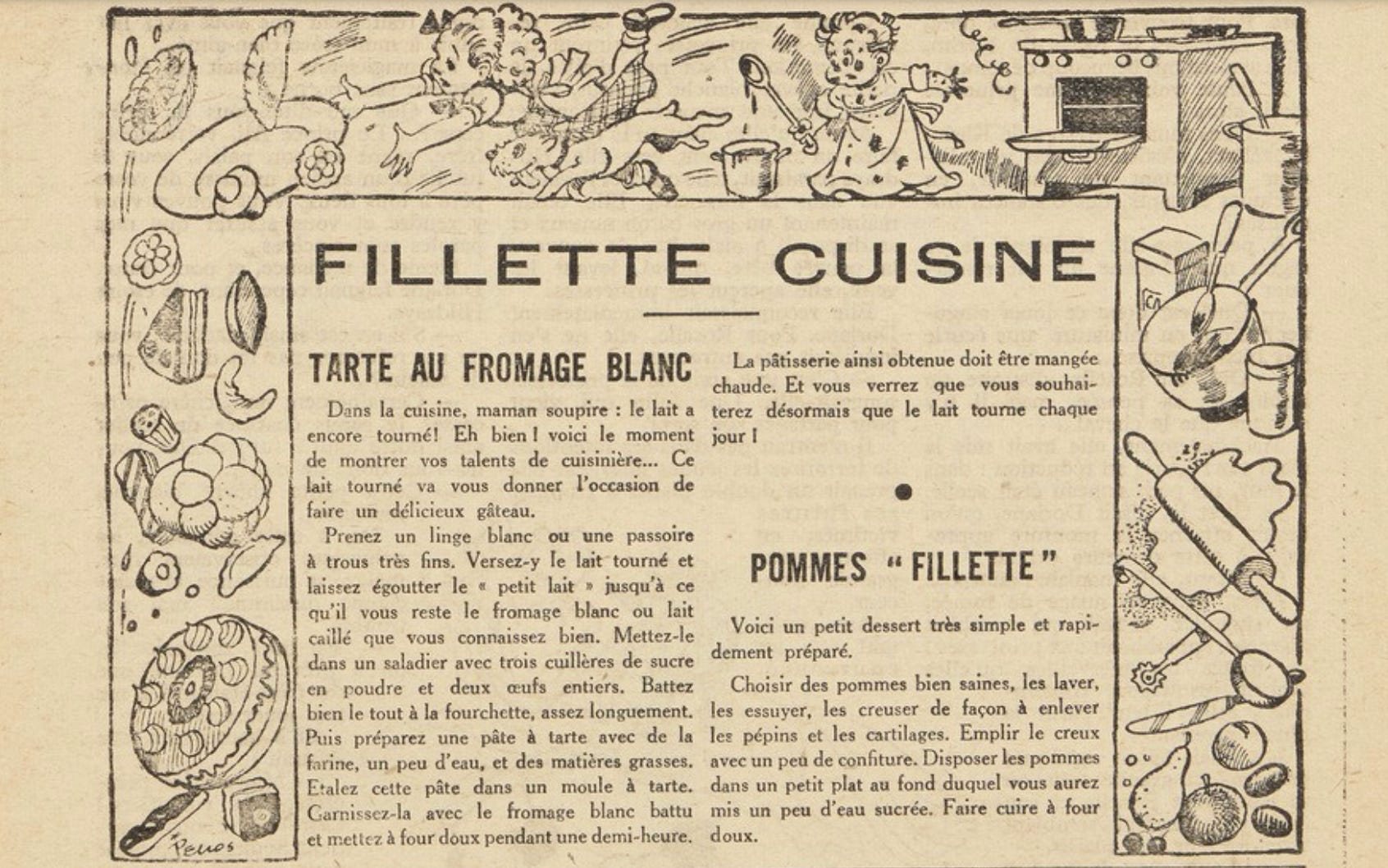
By the beginning of the 20th century, the tarte au fromage blanc seems to have settled into regional culinary traditions, as different regions gradually began claiming it as their own. The käskùche in Lorraine, käseküeche or käsekuchen in Alsace, flaune in the Massif Central, fiadone in Corsica, tarte au maugin or m’gin in Metz and Moselle, tarte au maugin or môjin in the Vosges, le tourteau fromagé in Poitou, all variations on the same fresh-cheese pastry, each using its own local fresh cheese and shaped by regional tastes and traditions. The tarte au fromage blanc also began appearing often in women’s publications and newspaper columns as an easy, nutritious, and economical homemade treat.
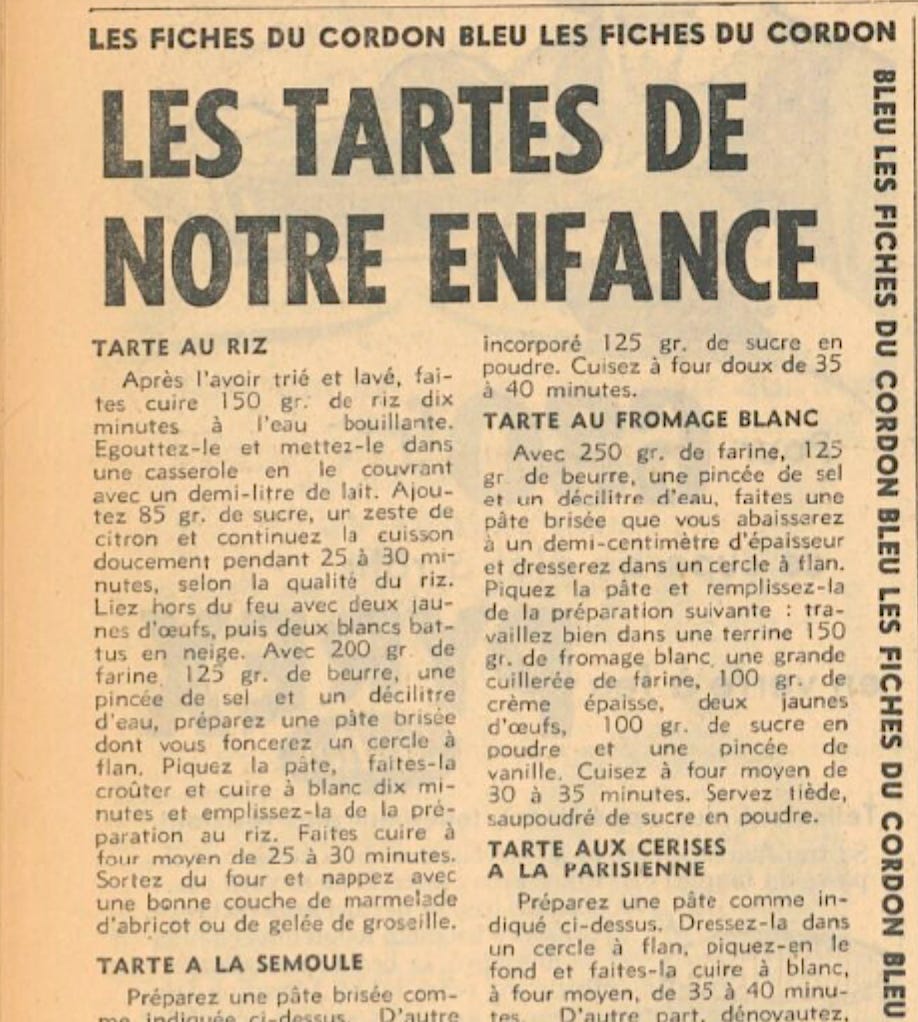
And so, yes, I now have a recipe for a tarte au fromage blanc. This simple treat with its simple history — I’m beginning to suspect that the simplest foods, humble or otherwise, often possess the longest and most far-reaching histories — has now found a place in my own kitchen. It’s long, winding history from Ancient Greece and Republican Rome to medieval Paris, from Renaissance Germany to the kitchens of Alsace and Lorraine, it remains a stunningly humble, ordinary, and yet very special dessert. I’m so glad someone asked me to make it.
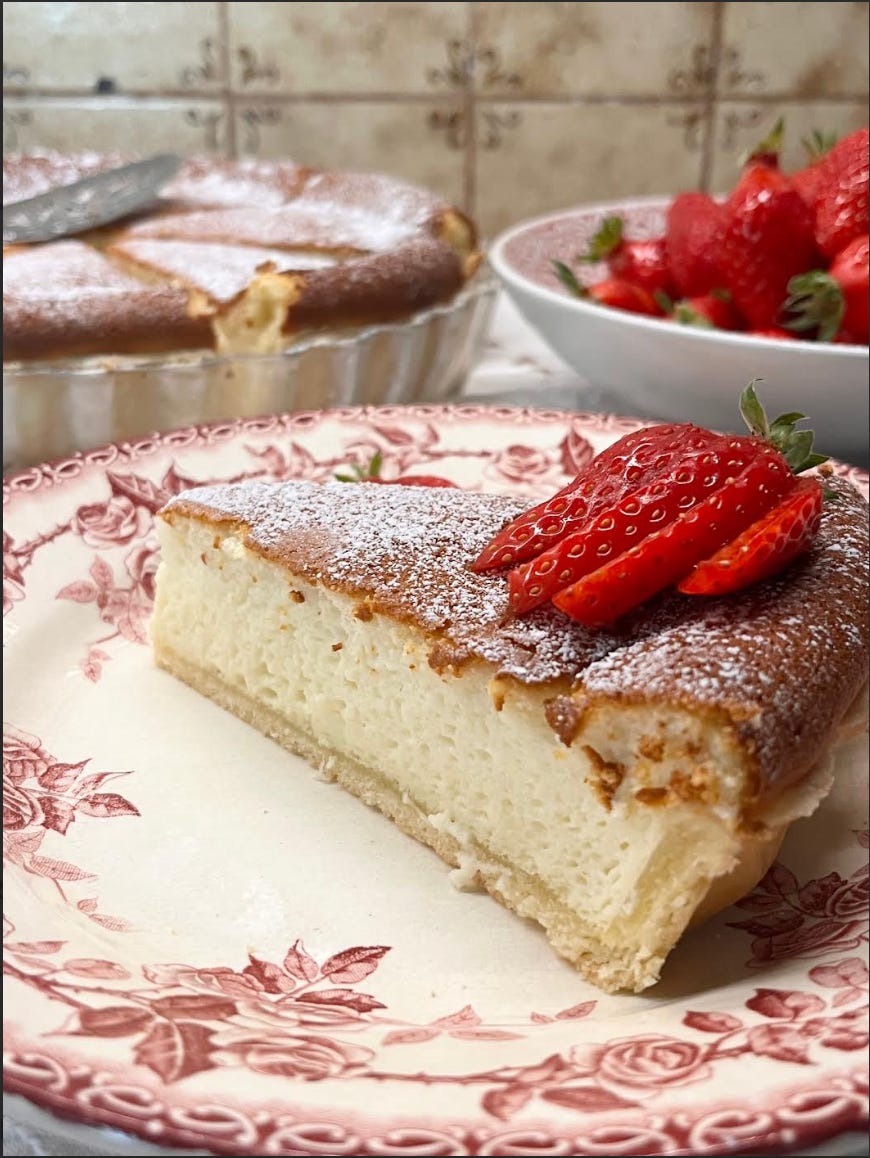
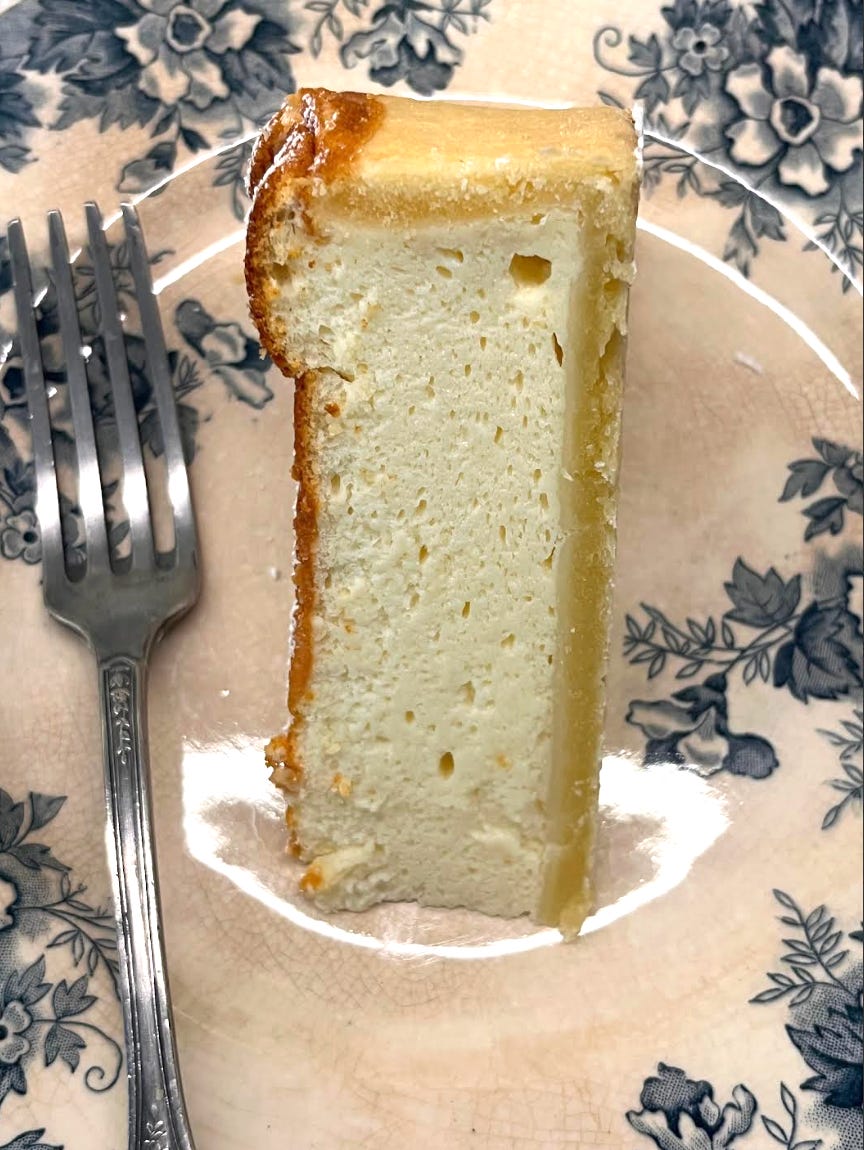
I made the recipe twice, one in a smaller, shallower pie plate that did not hold all of the filling. The second I made in 9 ½ inch springform pan that was the perfect size for both the pastry crust and the filling recipe quantities. The texture for both tarts once baked was exactly the same — light and airy and delicate.
Tarte au Fromage Blanc
For a 9 ½ to 10-inch (25/26-cm) tart.
Pâte brisée - sweet shortcrust dough:
1 ¾ to 2 cups (260 grams) all-purpose flour
¼ cup (50 grams) sugar
8 ⅓ tablespoons (125 grams) unsalted butter, chilled but slightly softened, cubed
¼ cup (65 ml) cold water
Filling:
3 eggs, separated
500 grams full fat fromage blanc
¾ cup (200 ml) full fat heavy cream
¾ cup (150 grams) sugar
1 ½ teaspoons vanilla extract
6 tablespoons (60 grams) flour
Prepare the pastry crust:
Toss the flour and sugar together in a large mixing bowl. Add the butter in cubes, tossing in the dry ingredients to separate them. Using your thumbs and fingertips, rub the butter and dry ingredients together until there are no more chunks of butter visible (it’s fine to have tiny bits of butter left), all the dry ingredients are moistened with the butter, and the mixture looks like damp sand or ground almond meal. Using a fork, vigorously stir the cold water into the mixture until everything is moistened and a dough starts to form; add another tablespoon of cold water if necessary. Using a soft bench/dough scraper and then your hands, scrape and gather the dough together into a ball then knead lightly until you have a smooth, homogeneous dough. Gather the dough into a ball, wrap in plastic wrap, and refrigerate.
Preheat the oven to 350°F (180°C).
Butter the bottom and sides of a 9 ½ to 10-inch (25/26-cm) pie dish or springform pan at least 2 inches (5 cm) deep. Dust the buttered dish or pan with flour and shake out the excess.
Prepare the filling:
Separate the eggs, placing the yolks in a small bowl and the whites in a medium-sized bowl for beating, preferably plastic or metal. Add a small pinch of salt and (if you have one on hand) a couple of drops of lemon or lime juice to the whites and set aside.
Put the fromage blanc and the heavy cream in a large mixing bowl; using an electric mixer, beat on low speed to blend, then increase speed to medium-high and continue beating for about 2 minutes until thick and creamy. Beat in the egg yolks one at a time until well blended. Beat in the vanilla and then the sugar.
Scrape down the side of the bowl and beat in the flour in 3 or 4 additions until you have a thick, smooth batter.
Using very clean beaters, beat the egg whites on low speed for 30 seconds, then increase speed and beat until the whites are opaque, no longer foamy, and just hold soft (not stiff) peaks. Gently fold the whites into the batter in 3 additions.
Personally - I like to beat the eggs whites, then prepare the rest of the filling, then roll out the dough and line the pie tin and THEN fold the whites into the batter just before pouring into the lined pan. Either way is fine.
Prepare the tart:
Remove the dough from the refrigerator and discard the plastic wrap. On a lightly floured board, roll the dough out to fit the prepared pie dish - gently lift it to the plate or pan and fit the dough into the dish; trim before or after adding the filling. Prick the bottom of the pastry crust all over with a fork.
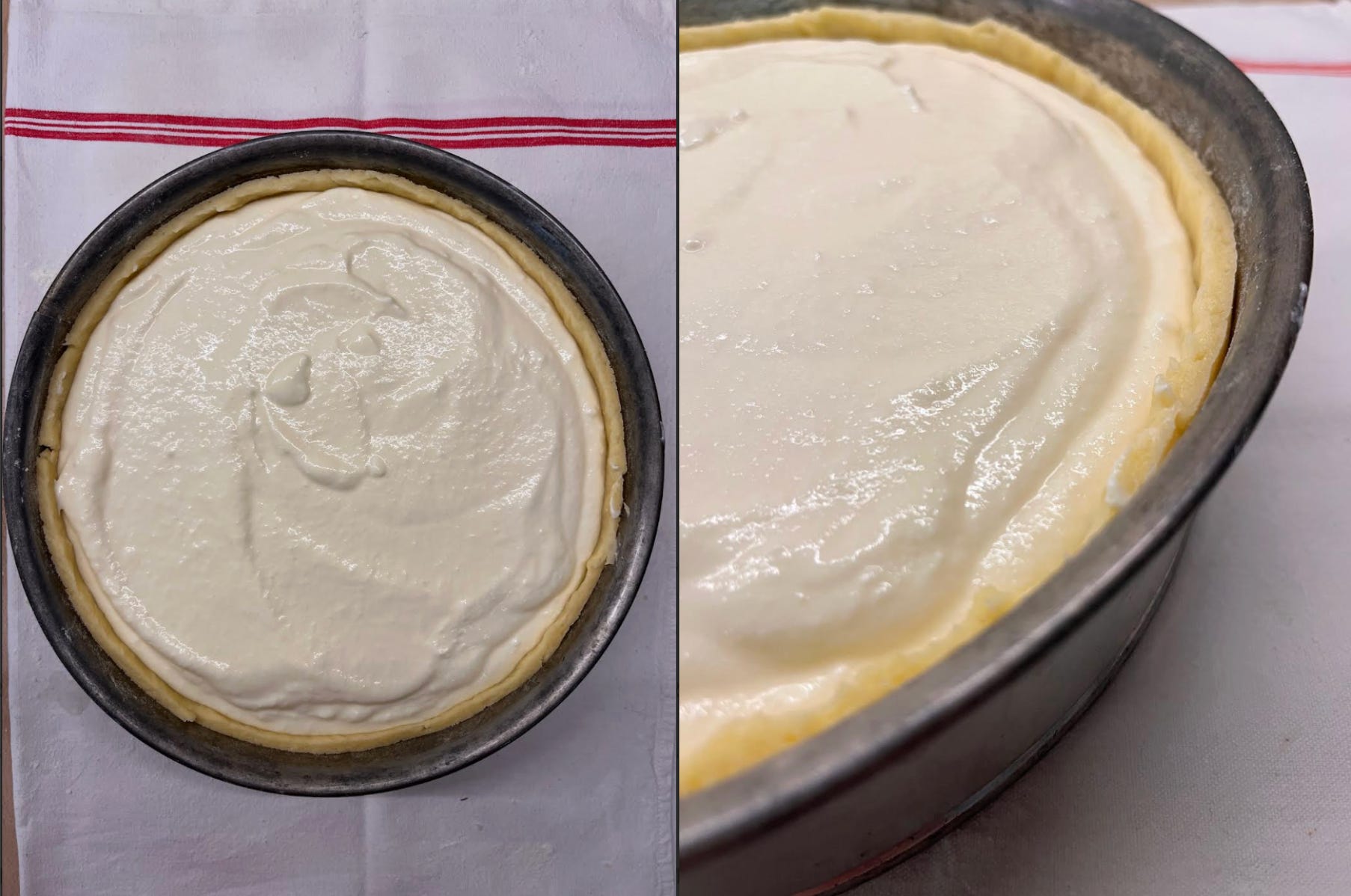
Gently pour the filling into the pastry crust and lightly even the top, making sure the cream fills the dish all the way to the sides. The filling should come up to the top edge of the lined pie dish and pastry shell.
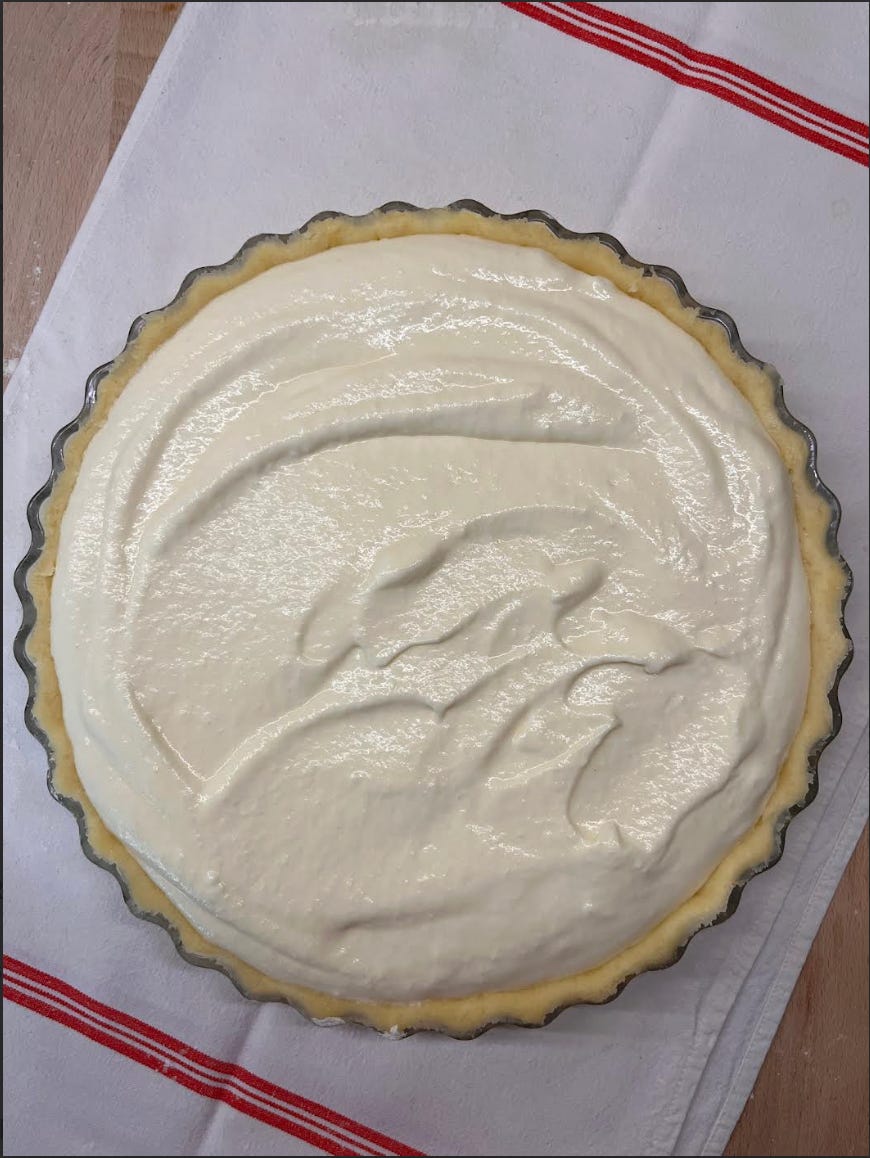
Bake the tart in the preheated oven until puffed up and a deep golden brown; don’t worry if the tart cracks. The crust should also looked golden and baked.
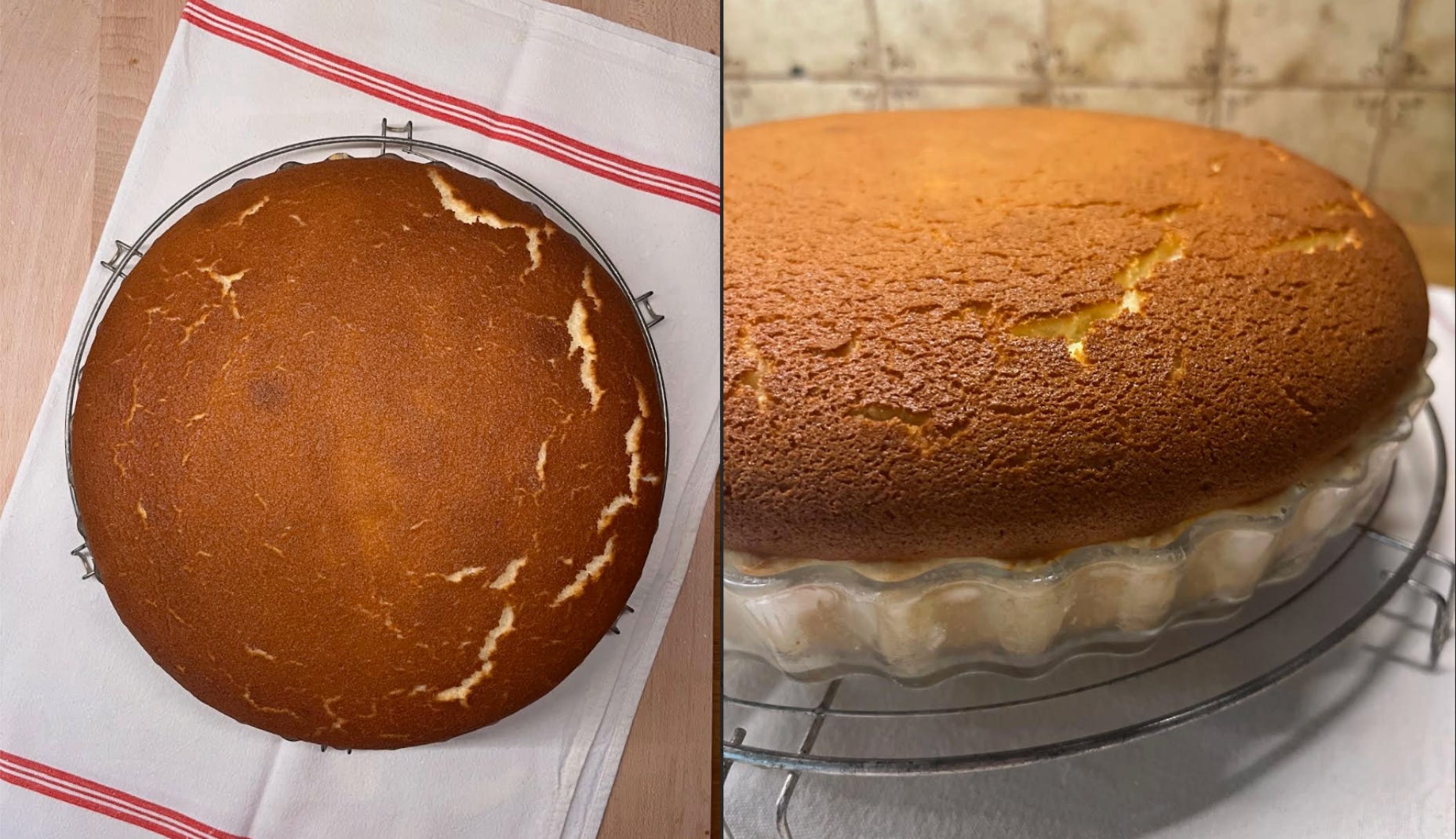
Mine both baked for 1 hour 15 minutes. Check yours often as different pie plates and ovens can affect baking time.
Remove the tart from the oven and allow to cool on a rack before removing from the pan (if baking in a springform pan) and slicing. Enjoy this tarte au fromage blanc warm, at room temperature, or chilled. Serve dusted with powdered sugar and with fresh summer berries or a nice berry or plum coulis, sauce or compote.
Thank you for reading and subscribing to my Substack Life’s a Feast. Please leave a comment, like and share the post…these are all simple ways you can support my writing and help build this very cool community. If you would like to further support my work and recipes, please consider becoming a paid subscriber.
No posts
Comments
Nothing yet. Say the first thing.
Sign in to join the conversation.