
Executive Summary:
Under Ahmad Masoud, the National Resistance Front (NRF) has expanded beyond its Tajik origins, and now aims to unify anti-Taliban Afghans through international efforts such as the Vienna Process.
The NRF seeks to exploit the Taliban’s internal ideological fractures, costly conflicts with Pakistan, and international backlash over oppressive women’s policies.
The NRF faces challenges from the Taliban’s growing diplomatic normalization with neighboring states, while controversies over Masoud’s legacy hinder a stabilizing political solution.
The National Resistance Front (NRF) traces its origins to the Northern Alliance, which was led by the well-known Tajik commander Ahmad Shah Masoud. Masoud was one of the key figures in the campaign against the Taliban in the 1990s. The movement was originally mostly ethnically homogeneous, as its membership was largely composed of Tajik tribesmen (E-ir.info, July 8, 2022). During the offensive phase against the Taliban after October 2001, however, the movement expanded its membership to include non-Tajik members. The Northern Alliance responded to ethno-regional political dynamics but was largely shaped by Tajik-centric interests. Its main regional sponsor was also Tajikistan, although Dushanbe’s posture was always more cautious than that of other Central Asian countries because of its fragile internal security conditions (see The Monitor, November 9, 2000; January 11, 2001).
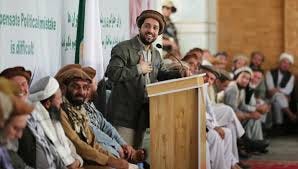
Masoud’s son, Ahmad Masoud, began his political and militant career as CEO of the Masoud Foundation in 2016 (Asia Plus, July 7, 2022). In 2019, however, he officially launched his own political movement to oppose the Taliban (Stars and Stripes, September 5, 2019). Unlike his father, the younger Masoud has been able to extend his organization beyond a Tajik-centric paradigm by presenting himself as a unifying figure for anti-Taliban Afghans inside and outside the country (see Militant Leadership Monitor, December 5, 2022). In this role, he could serve as a focal point for efforts to unify different factions of the Afghan diaspora into a broader political framework for a post-Taliban Afghanistan.
Internationalizing the Anti-Taliban Struggle
This process of internationalizing the anti-Taliban struggle reached a new phase with the birth of the Vienna Process for a Democratic Afghanistan in April 2022. This event brought together several members of the Afghan diaspora and opposition leaders “to discuss together about human rights, women’s education and democratic perspectives,” according to the initiative’s website. This episode contributed significantly to Masoud’s political career by making him the de facto leader of the Afghan resistance (Arab News, June 22, 2024; Afghanistan International, April 22, 2025).
Masoud’s political role is likely to grow because of the Taliban’s own internal weaknesses in Afghanistan. A few fault lines present current opportunities for exploitation. First, rather than being a monolithic movement, the Taliban is a movement marked by tribal and ideological fractures. The most famous of these is the Akhundzada-Haqqani divide, which has important implications for Taliban leadership (Military & Security, March 17, 2023). Second, the de facto Taliban government is currently engaged in an asymmetric confrontation with Pakistan, a conflict that has thus far proved considerably more costly for the Afghan side (BBC, May 12). Third, international pressure on the Taliban’s restrictive policies toward women is intensifying after the fatal shootings of two demonstrators in Herat and the arrest of 30 women, also in Herat, for allegedly violating the Taliban’s dress codes for women (UN News, June 11). The NRF may view these crises as opportunities to consolidate its political power and establish itself as a viable opposition force.
Assessing Taliban Control
At the same time, the Taliban’s control of Afghanistan appears to be more stable than it was in the past. Unlike 20 years ago, the group maintains stable diplomatic relations with all its neighbors. Central Asian countries have gradually normalized their relations with the Islamic Emirate, especially through joint economic initiatives and infrastructure projects. The culmination of this steady normalization is the Afghanistan–Central Asia Consultative initiative, which aims to enhance regional exchanges and mobility (Afghan Ministry of Foreign Affairs, April 5). Although Central Asian states still do not treat Afghanistan as an entirely stable or reliable country, their pragmatic posture is a significant shift compared to the past. Russia is the only country that has officially recognized the Taliban thus far, however, and Moscow appears to be seeking to enhance its military partnership with the Islamic Emirate (amu.tv, May 28; Economics & Energy, May 28).
The Masouds’ Legacy and Legitimacy
Ahmad Shah Masoud’s controversial legacy poses concrete threats to the younger Masoud’s legitimacy inside Afghanistan. While the Masoud name provides an immediate basis for anti-Taliban mobilization, it also evokes memories of abuses and war crimes committed against specific Afghan communities—such as the Hazara—during the civil war that followed the Soviet withdrawal in 1989 (Human Rights Watch, January 1, 2005; Hazara International, January 30, 2011).
No formal apology has yet been issued by Masoud’s son, which raises questions about his ability to reconcile the political needs of the Afghan diaspora with those of Afghanistan’s inhabitants. Furthermore, Masoud’s ability to contain the threat from other jihadist groups remains to be seen. It is difficult to establish, for example, whether the NRF has the capacity and resources to contain Islamic State in Khorasan Province’s (ISKP) attacks (KabulNow, July 30).
Conclusion
The NRF appears to be the only Afghan political movement actively challenging the Taliban. It has not, however, demonstrated that it can provide a long-standing and stabilizing political solution for the country. No Afghan opposition organization has yet developed a sufficiently unifying posture, continuing to weaken any anti-Taliban political strategy.
The article was originally published in Terrorism Monitor
Andrea Serino is an independent analyst who holds an active collaboration with the Pakistani geopolitical platform TheKhorasanDiary. He holds a Master’s degree in Philosophy from the University of Turin, specializing in Political Philosophy and its intersections with Geopolitical Developments in the Broader Middle East. His research focuses on jihadist movements, exploring both Western political thought and the intellectual traditions of the Eastern world. He can be reached by email at: andreaserino3@gmail.com.
Comments
Nothing yet. Say the first thing.
Sign in to join the conversation.