
Executive Summary:
In the People’s Republic of China (PRC), cultural security is one element among 20 that constitute comprehensive national security. Advancing cultural security is therefore critical to ensuring Party and state security.
The Ethnic Unity Law is the Party-state’s latest attempt to codify and internationalize “cultural security” as a critical component of the primacy of regime security.
While the Ethnic Unity Law is the most recent example, other laws that relate to cultural security, such as the Cybersecurity Law and Anti-Foreign Sanctions Law, also maintain an extraterritorial reach.
Cultural security guides the PRC’s foreign policy more broadly, justifying Beijing’s competition with the West. This pattern emerges in Chinese sources as well as through Beijing’s inclusion of cultural security concepts in bilateral agreements and UN resolutions.
In late July, the Shanghai Cooperation Organization convened in Kyrgyzstan for its annual Foreign Ministers’ Council Meeting. A report by the Xinhua Research Institute published following the summit stated that the multilateral institution “will continue to expand the scope of security cooperation by placing greater emphasis on cooperation in such nontraditional security fields as climate change, energy security, food security, cybersecurity, ecological security, digital security, and cultural security” (上合组织将继续拓展安全合作领域,重视气候变化、能源安全、粮食安全、网络安全、生态安全、数字安全、文化安全等非传统安全领域合作) (Xinhua, July 27, [a], [b]). This apparent endorsement by other countries of Beijing’s sprawling conception of security—and of cultural security in particular—is key to its efforts to ensure its own national security by shaping norms, laws, and behavior beyond its borders.
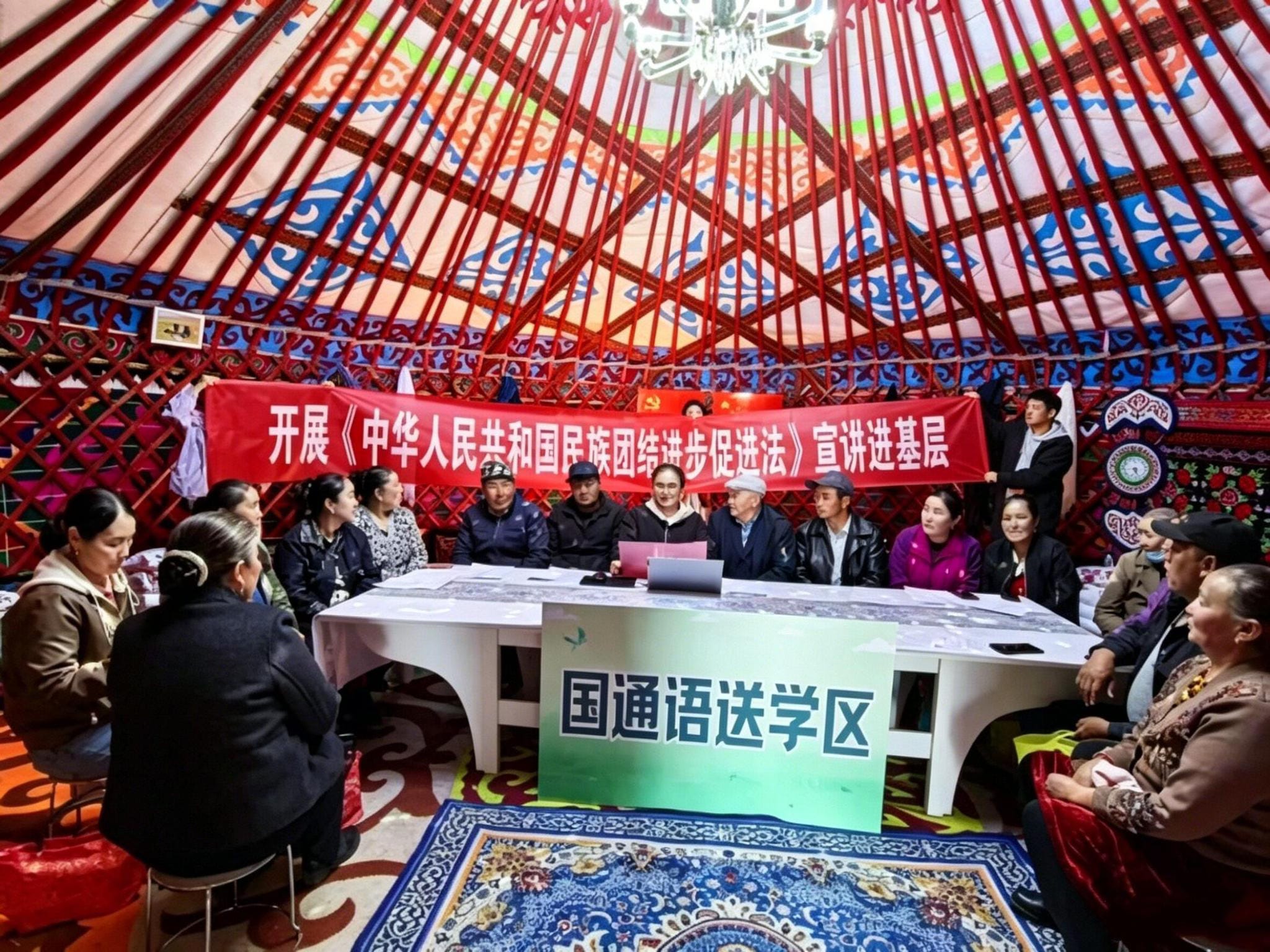
The Law of the People’s Republic of China on Promoting Ethnic Unity and Progress (Ethnic Unity Law), which took effect on July 1, represents another attempt to ensure Beijing’s broader security (Xinhua, March 12). [1] The law combines and codifies years of policy and practice concerning ethnic minority groups, notably in Xinjiang and Tibet, but also throughout the PRC more broadly. The law’s potential impact on the rights of ethnic minority groups and its extraterritorial reach represent a further step in the internationalization of the PRC’s cultural security, which it executes through a mutually reinforcing blend of law, statecraft, and multilateral diplomacy. This has significant implications for the domestic security and diplomatic influence of democracies, as Beijing more confidently pursues its cultural security agenda across multilateral organizations to strengthen support for its preferred international norms, and limit scope for international criticism.
Cultural Security Within ‘Comprehensive National Security’
Cultural security is just one of more than 20 components of General Secretary Xi Jinping’s concept of “comprehensive” (总体) national security, of which political (i.e. regime) security is paramount. The concept’s components, which combine traditional and non-traditional domains and approaches, are closely interrelated and overlapping. For example, cultural security and cybersecurity both address concerns around online narratives about the PRC (Xinhua, April 15, 2015; Liu and Liu, November 18, 2024; National Data Center, April 15). [2] Party literature equates cultural security to both national security (because culture is the “soul” (灵魂) of the Chinese nation) and ideological security (because cultural integrity is guaranteed by faithful adherence to CCP ideology—in particular, Xi Jinping Thought on Culture) (Qiushi, July 18, 2022, January 3, 2025). Its central importance to the Party is underscored in fears over “cultural nihilism” (文化虚无主义), through which Western cultural influence (and a lack of Chinese cultural confidence) threatens the Party’s political survival by undermining Chinese civilization (China Brief, March 28, 2025).
Article 23 of China’s 2015 National Security Law provides a legal grounding for cultural security, identifying socialist culture and values, traditional Chinese cultures, resilience against “negative” (不良) cultural influences, and ensuring the ideological and cultural dominance of the state (National People’s Congress [NPC], July 1, 2015). The new Ethnic Unity Law, which contains 44 mentions of “culture,” extends that legal grounding to encompass perceived violations of ethnic unity, as the Party defines it (PRC Supreme People’s Procuratorate [SPP], March 13). Article 63 of the law extends Beijing’s overseas reach to include foreign actors it perceives to foment ethnic disunity and, by extension, undermine the PRC’s social stability and national security (Central Government, July 1, 2015).
Translated into policy, cultural security operates on the basis of these laws both internally and externally—since the early 2000s, the Party has used cultural security to “occupy the battleground of the media” and “to resist Western hostile forces’ cultural colonial expansion” (PLA Daily, December 13, 2000). [3] Internally, it ensures people of all backgrounds prioritize allegiance to the “Chinese nation” (中华民族) and state above other aspects of identity, and to prevent the dissemination of incorrect thought and foreign interference that could undermine ideological security. Guidance published on the 2026 Ethnic Unity Law refers to the concept of the “Chinese nation,” first introduced through a constitutional amendment in 2018, as a superseding organizing principle around which members of all ethnic groups should cohere; it is a Han-centric and exclusive definition of what it constitutes to be “Chinese” (Ethnic Affairs Commission, May 25).
The aim of these policies is to insulate the PRC and the CCP against unwanted influences that could foment greater threats to national security, such as separatism and terrorism, as well as anything that may undermine the Party’s ideological authority. In practice, it involves managing ethnic relations, cultural heritage, and national identity issues, as well as controlling information to ensure ideological security. Examples include the widespread detention and “reeducation” of members of ethnic minority groups, and calls from top-level Chinese officials, notably Xi Jinping, for the “Sinicization” (中国化) of religion, calling for religious groups in the PRC to adopt Chinese and socialist principles and safeguard national security (Taiwan Work Office of the CPC Central Committee, December 6, 2021; Xinjiang Police Files, accessed August 11). Overseas, this means silencing diaspora activists and organizations that contradict the Party’s narratives and priorities. Given how the Party defines cultural security, it is unsurprising that it treats overseas dissent and criticism in the same way as sanctions, cyberattacks, and espionage.
Externalizing Security Through Law
The Ethnic Unity Law has taken effect amid a wider effort by Beijing to internationalize its national security priorities by introducing extraterritorial clauses into largely domestic-facing laws. Article 63 of the law states that foreign institutions and individuals whom Beijing judges to be undermining ethnic unity shall be held legally responsible (SPP, March 13). This aligns with other recent laws that have sought to strengthen the Chinese authorities’ capabilities to enforce security priorities overseas and specifically account for entities perceived to work against PRC national security and interests. One prominent example is the Cybersecurity Law, Article 77 of which empowers authorities to pursue overseas actors for actions deemed harmful to cybersecurity (NPC, December 29, 2025). This law also closely touches on cultural security: article 13 prohibits any individual or organization from creating or propagating information that undermines national unity or disrupts social order.
The PRC previously pursued its security priorities overseas largely through the Anti-Foreign Sanctions Law, which has been used widely to prosecute overseas critics. A notable example is the 2023 sanctioning of the U.S. intelligence firm Kharon and its researchers, which were designated due to their work on Xinjiang, with the sanctions framed in part as a response to the U.S. spreading “false stories” (虚假叙事) about Xinjiang intended to “smear and defame” (污蔑抹黑) the PRC (Ministry of Foreign Affairs, December 26, 2024). While delivered under the PRC’s sanctions regime, this case illustrates Beijing’s willingness to penalize actors it considers to be spreading information contrary to its own narratives and harmful to its ethnic policy.
Such cases demonstrate precedent for the extraterritorial pursuit of those deemed to harm the PRC’s cultural security. The growing raft of extraterritorial laws will increasingly empower authorities with both the legal framework and capacity to enforce the PRC’s comprehensive national security concept and pursue its cultural security priorities through both formal and unofficial channels.
Cultural Security Goes Global
The Ethnic Unity Law has brought cultural security into the PRC’s suite of extraterritorial laws, but it also sits within a much broader strategy of externalizing Beijing’s cultural security. Given that cultural security focuses heavily on limiting the proliferation of external ideas and influences, it has driven much of Beijing’s policy in recent years intended to weaken the ability of democracies to criticize it. The online and offline influence operations and united front work through which Beijing pursues these objectives within democracies, as well as its transnational repression to control its critics, are well-documented (The Jamestown Foundation, January 12, 2025, February 11, March 6). These unofficial approaches continue amid an increasingly formalized strategy to build international support for cultural security.
Xi Jinping’s Global Civilization Initiative (GCI) is the primary vehicle through which the PRC is attempting to internationalize cultural security norms through diplomatic means. An official Party publication states that the GCI provides the “ideological foundation” (思想基础) for different countries to achieve cultural security (Feng Yangli, September 10, 2025). [4] It is also an instrument of the PRC’s “discourse power” (话语权) that Beijing uses to undermine the position of the United States, the West, and a universalist conception of human rights (China Brief, January 6). As the head of the China Media Group said in 2023 following the official promulgation of Xi Jinping Thought on Culture, the PRC must “win the international public opinion and cognitive wars” (South China Morning Post, October 15, 2023; China Brief, October 20, 2023). These efforts also include funding cultural protection and restoration projects in other countries, with the express intent of promoting the PRC as a guarantor of cultural security and supplanting what the CCP perceives to be Western ideological hegemony (Xing & Yan, July 31, 2024). [5]
Beijing has achieved some success operationalizing the concept. For instance, it managed to pass a resolution based on the GCI at the United Nations General Assembly in 2024 (Permanent Mission of the PRC to the UN, June 7, 2024). It also deploys civilizational language in bilateral engagements, which surfaces in the text of bilateral agreements, such as a recent joint statement in which Serbia endorsed all four of Beijing’s global initiatives (Embassy of the PRC in the Kingdom of Norway, May 25). Chinese officials often encourage foreign representatives and officials to think of China as a civilization, rather than a country (Author’s interview, July 2026). This framing suggests an effort to promote the idea that the standards expected of a regular state should not be applied to the PRC, and that its actions should be perceived as serving an entire culture or segment of humanity organized within a unit higher than that of a single country. This language extends to Beijing’s international engagement. Xi Jinping’s recent speeches have been laden with language referring to relationships between civilizations, rather than states (Qiushi, October 15, 2025). The objective, in part, is to quell attempts by external actors to interfere with the PRC’s internal affairs by entrenching non-interference as a more concrete international norm.
Such efforts bolster the PRC’s long-term efforts to build a stronger consensus for non-interference in internal affairs. These efforts are visible in the language of Chinese officials, who have argued that asserting extraterritorial jurisdiction against foreign entities working against PRC interests is a normal legislative practice consistent with the basic principles of international law (State Council Information Office, June 26). For Beijing, the apparent contradiction in invoking principles of non-interference and sovereignty to justify extraterritorial enforcement is not accidental, as it views prosecution of overseas critics as legitimate, defensive actions against threats to its cultural—and therefore domestic national—security.
Conclusion
The recent passing of the Ethnic Unity Law means there have not yet been any visible, public cases of its extraterritorial clauses being applied, but other cases illustrate that Beijing can and will seek to invoke and enforce the global aspects of its laws. The extraterritorial clauses within the Ethnic Unity Law therefore signal a clearer intent and confidence by Beijing to pursue its cultural security priorities abroad. While Beijing has strong precedent for sanctioning its critics, the growing trend of extraterritoriality means that a much more proactive approach may be taken, including sanctions, trials in absentia, extradition, and the use of international crime cooperation channels. At the same time, Beijing’s wider cultural security strategy to build consensus against criticism may mean that, internationally, the pursuit of critics overseas is increasingly seen as normal and justified.
This article originally appeared in China Brief. Check it out here!
James Jennion is a British foreign policy analyst. He began his career advising the UK Foreign Affairs Committee on China and Indo-Pacific policy, and has since worked for and with a range of international organizations including Amnesty International, the International Rescue Committee, and the OSCE. He is an Associate Fellow of the British Foreign Policy Group and a Research Associate of the China Strategic Risks Institute. He writes in an individual capacity.
Notes
[1] China Brief has previously covered various aspects of the law (China Brief, March 27, April 2, May 6, May 15).
[2] Liu Yuejin [刘跃进] and Liu Liming [刘黎明], “What National Security Includes and Does Not Include [国家安全包括什么不包括什么],” Journal of the Central Party School (National Academy of Governance) [中共中央党校(国家行政学院)学报] 28, no. 4 (2024): 98–107.
[3] Kong Lingtong and Luo Xiaobing, “Discuss National Security Strategy Realities [研讨国家安全战略的现实问题],” PLA Daily archive, December 13, 2000. Cited in Samantha Hoffman, China’s Mobilization State, The Jamestown Foundation, 2026 (forthcoming), p. 165.
[4] Feng Yangli [冯颜利], “The contemporary value and global significance of the Global Civilization Initiative [全球文明倡议的时代价值与世界意义],” Contemporary World [当代世界], 2025(8).
[5] Xing Lijuan [邢丽菊], Yan Chuanruolan [鄢传若斓] “Chinese Cultural Security and Path in View of Changes Unseen in a Century [百年变局视域下的中国文化安全与路径].” Modern International Relations [现代国际关系], 2024(7).
Comments
Nothing yet. Say the first thing.
Sign in to join the conversation.