

We talked in our previous edition about believing an inflection point is coming in the affairs of this country. The level of absurdity in our public affairs has reached an end place. The illustration above portrays a series of inflection points in the development of a business, that essential focal point of the free enterprise belief system where the best of us unsaddled by limits on our freedom to operate as we see fit make a steady climb toward success at the top of the hill. That’s the way it’s supposed to be, right?
That’s not the kind of inflection point we’re thinking about: those little wiggles from one side to another of the incline we’re surmounting. If anything, they might suggest the undulations between one political party and the other in trying like Sisyphus to get the damned rock up the hill. Maybe it’s the political system failing most of us while egregiously enriching so few. This photo could be seen as the decline from the top through increasingly wild swings to the bottom as late stage economy comes undone.
We’re talking of course about our devotion to capitalism, that sacred cow to which we’ve yolked our social order in the devoted belief there is no better economic system possible for elevating us from the muck. Whether it was ever true, that fatted calf we continue to offer up in celebration belies the reality that most Americans are worse off in real dollars than they were 50 year ago. What we glimpse of wealth now when the light illuminates its bovine bliss in repose looks suspiciously like, well, like Elon Musk.
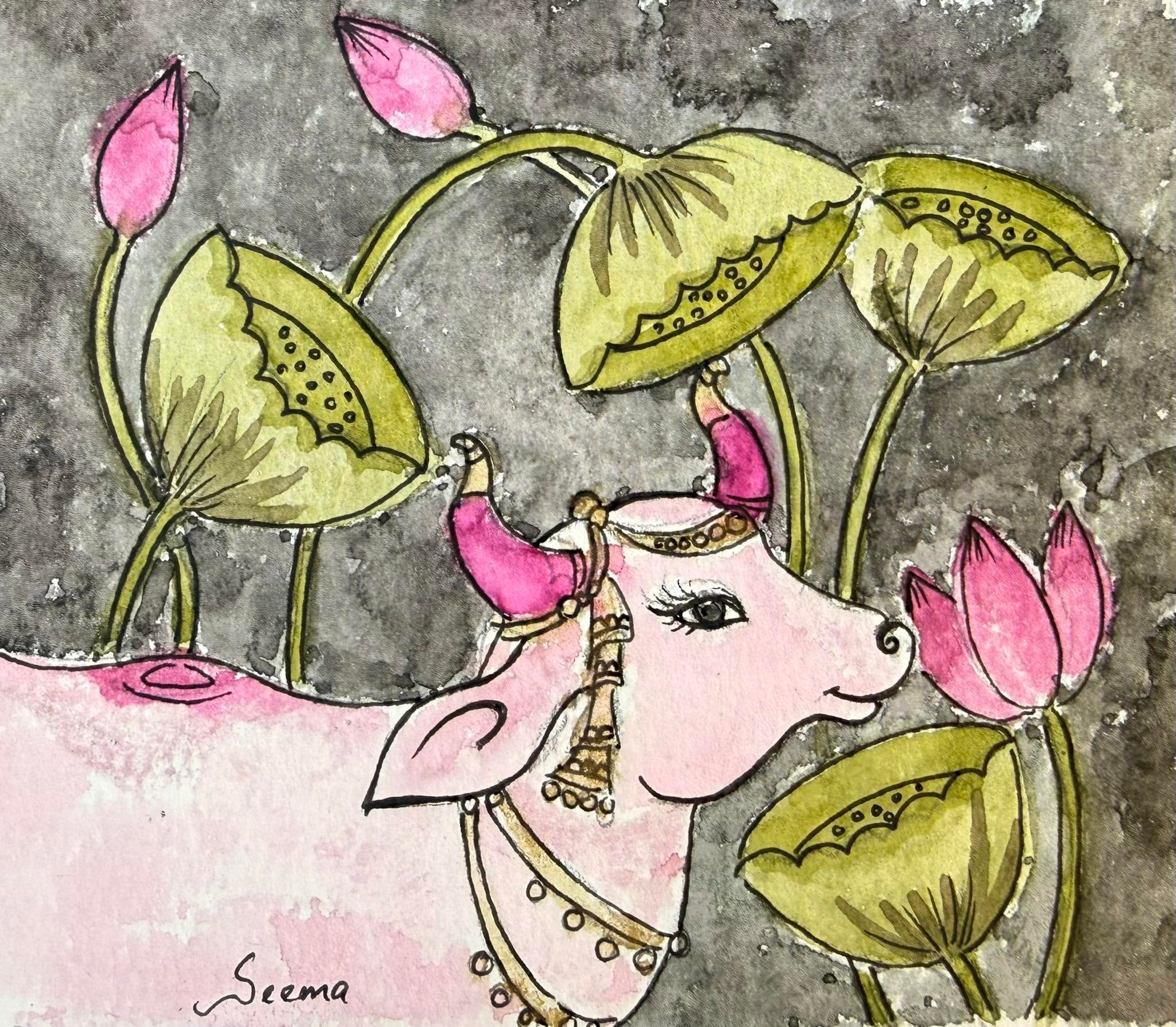
At New Northwest we like to turn sacred cows on their heads to see what they look like upside down. It gives us a different perspective. This image is how they should appear as their best and truest selves, having absolutely nothing to do with capitalism but rather with aspiration for peace, tranquility, a state of being that is accessible to all. That does indeed seem worthy of worship, whereas Elon and his ilk not so much. They are the winners because we are the losers and that’s how they measure success.
So upside down we might ask: is that true capitalism, a winner-take-all game where money is siphoned from the economy and hoarded by every means possible to keep it from the rest, where that very wealth is deployed to influence public policy for the benefit of the few at the cost to the many, where the smartest, most privileged, and luckiest among us utilize every advantage at their disposal to tilt the playing field ever further in their favor and distance themselves as far as possible from the rest of us?
Do we really believe we can’t we do better in supporting the social order? Can’t we reasonably question in our 250 years as a nation founded on the ideals of the Enlightenment how far we have wandered from a focus on the right to life, liberty, and the pursuit of happiness? Is there something sacrosanct about an economic system that vests more wealth in the hands of some two dozen families than the rest of the country’s population combined? Isn’t it time to consider change for the better?
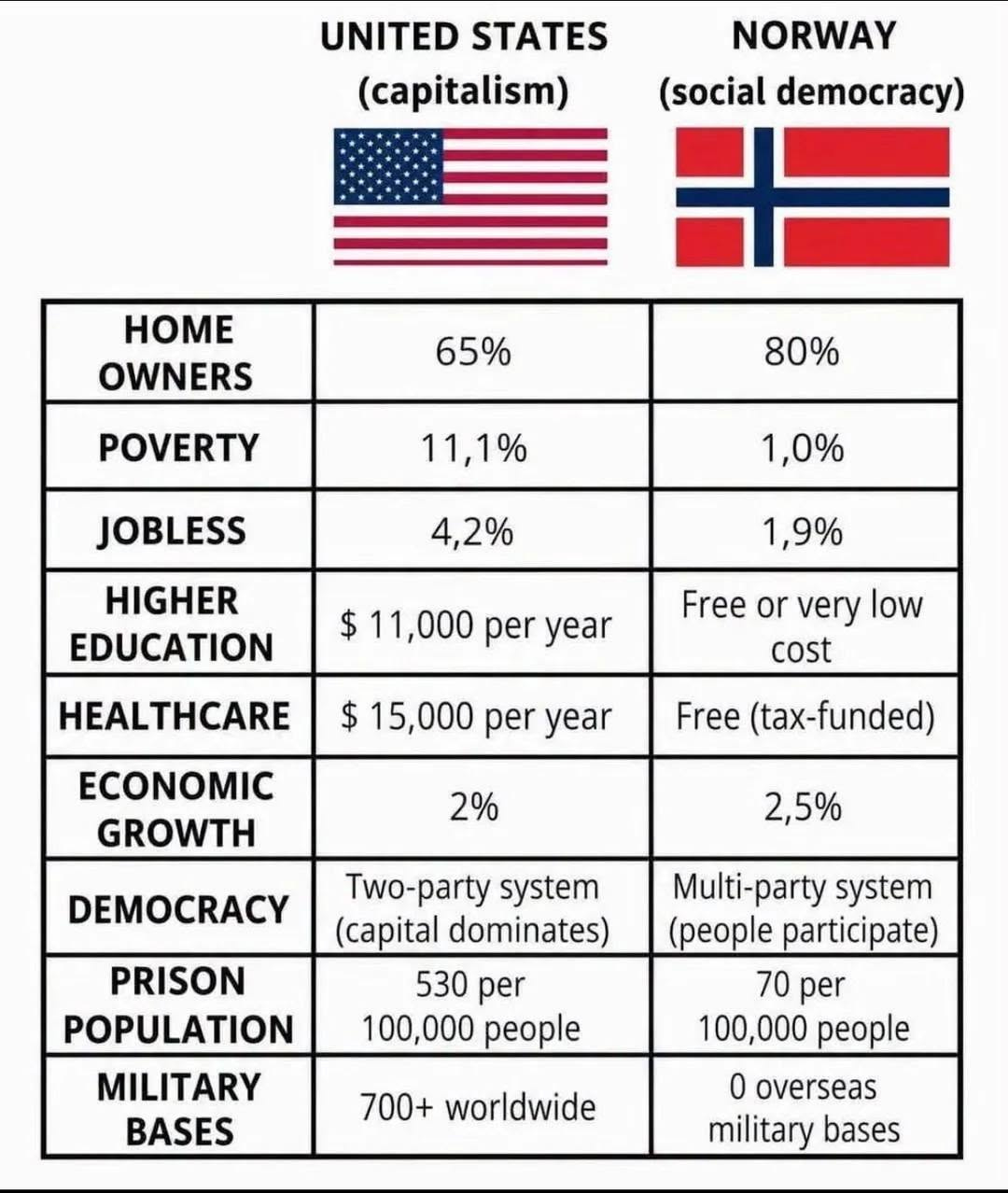
Here’s a case in point. Dogma tells us that a nation based on individual rights (if not responsibilities) and unrestrained economic freedom proves the U.S. to be superior. It also suggests nations that employ any aspect of the term “social” as in socialism or social democracy or whatever are a mere step from communism and demonstrably discredited. Yet by any measure of a nation’s quality of life, prosperity, and strength (except military might), many nations belie that canonical leap of faith we cherish.
As the chart above illustrates, Norway as an example exceeds the U.S. in all those measures to a considerable degree. Most notable of the categories are the difference in rates of Poverty and Incarceration, which perhaps are directly related. Another of note is the relative political systems, in theirs of which people themselves rather than capital are the driver. Skeptics will call apples and oranges in comparing nations so different in size and demographics, but perhaps focus is the greatest differential.
We can argue that infusing money into the economic system so that it continues to circulate is pure capitalism and that an equitable tax on wealth creation, rather than on labor, is a preferable mechanism. We can demonstrate that providing basic income to support the lowest rungs of the social order is money that will be spent in meeting needs rather than hoarded. We know that all people are NOT created equal, but we do deserve equal attention under our laws and policies. As a society, we can do better.
Comments
Nothing yet. Say the first thing.
Sign in to join the conversation.