
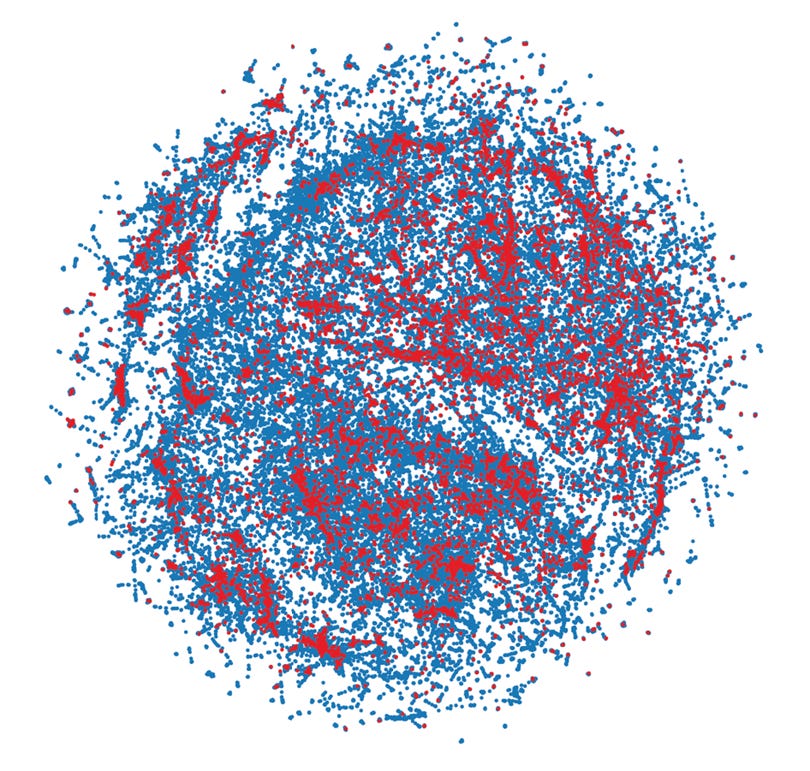
Image: How gunshots spread. JAMA Intern Med 2017;177;(3):326-333
Leukemia fell over my mother like a fever. I asked her oncologist if it might be contagious (I knew it was in cats). If not between strangers, what about over time, in the rivers of DNA that connect mothers and sons? He shook his head.
It still made sense to me. Our genome is partly virus and passed down like eye colour. Viral parts of our genome are expressed tenfold in leukemic cells compared to healthy ones.
The question of what passes between us, and how, led me to the emergency room. Without the confines of a patient practice, and by learning a bit about everything, I could do what I really wanted: study war, close up, without choosing a side. Perhaps I could learn to treat the war inside me, so determined to pass itself on.
My interest was piqued after a visit to Cambodia in 1999, the same year the Khmer Rouge finally surrendered, by the ghostly look on people’s faces when I asked them what occurred there and why.
After a few years of emergency training, I returned with skills, and worked with the recently surrendered group of Khmer Rouge, still organized as a military despite their new civilian status. The commander of the region, Chan, gave me my first hint that war was passed person to person.
“How did you wind up here,” I asked.
“Bombs,” he said, through a translator. I asked for more.
“I was eleven,” he explained. “One morning I woke up covered in dirt, my whole family dead.”
He was alone, afraid, no one to care for him.
“Someone told me of a group that was responding, the Khmer Rouge, and now I’m here,” he said, gesturing at the venomous jungle around him.
“And how many are in this valley, men, women and children?” I asked.
“Twenty-one thousand.”
“And how many soldiers?”
“Twenty-one thousand.”
And so it spreads.
One hundred and fifty years ago, Robert Koch came up with four ‘postulates’, rules for proving a specific pathogen causes a particular illness. They are still used to understand infectious disease and they may be an entry point to other contagions.
For instance, one postulate is: the agent must cause disease when introduced to a new host. A study in JAMA Internal Medicine traced every gunshot in Chicago over eight years and found that they spread like a sickness, fanning out to include hundreds of victims (see figure above). Gunfire maps like cholera did from the town pump.
Not just that, but we can find signs of transmission in the brain and watch it travel. You can see it on fMRI, strengthening pathways in fear and aggression, diminishing ones devoted to restraint. At a genomic level, epigenetic signatures show marks from violence generations later, even in people unexposed.
In other ways, it’s an imperfect analogy. There is nothing to study singularly under the microscope, though it travels so similarly to infections, the distinction might be semantic. Tuberculosis is only partly about a bacterium and mostly about poverty. In the hot Sudan sun, I watched young boys crawl on their bellies as if under fire, holding broomsticks in one hand. Whether those broomsticks became guns for some or all of them, I don’t know, but the feel of the gravel on their stomachs will be part of them forever.
Can we imagine damping the mode of transmission? There have been successes. “Cure Violence”, started in 1999 by Gary Slutkin, used biological thinking to counter gunfire in cities with gang crises. One method that proved successful was, when violence occurred and threatened to spill over, a former victim who found a way beyond it met with people involved and tried to broker a peaceful resolution. Assaults and gunshots went down. A systematic review showed shootings dropped 63% in New York City with similar successes in Colombia, where murders fell 74%.
If the violence doesn’t live in our DNA, perhaps it is in our thoughts and sentences.
In an attempt to meet the intention we set for the ER, a few nights ago some doctors and nurses sat together and talked about how we might pacify our words. As a method, we used Marshall Rosenberg’s “Non-Violent Communication”, attempted to name the feeling that arose within us in times of distress, then the unmet need underneath it.
Once these were clear, we made a request that included both. Instead of telling someone to sit back in their stretcher, we learned to say “I’m afraid you’re going to fall, and I need to put eyes on another sick person. Can I get someone to help you in a few minutes?”
My mother fell from her hospital bed and died from it. It was a dizzying call to receive. How many bed rails have I put up in my 22 years? Thousands.
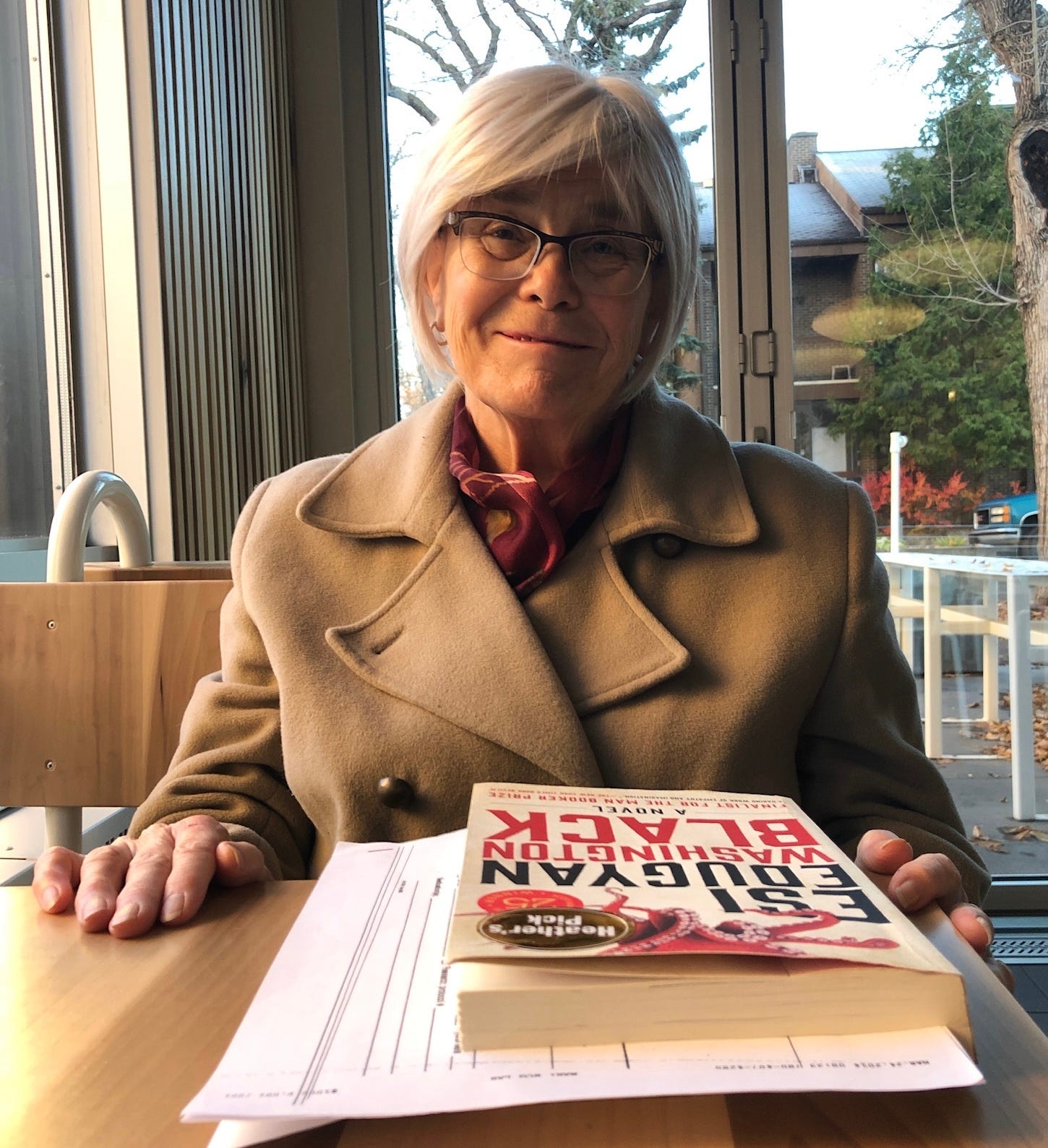
She has been gone for six years now. Well, as a person. Half of her is here, fingertips clacking keys. I am only just dreaming about her again. She was the most peaceful person I ever met. It wasn’t that she never got angry. She did. But it was never at a person, or at least not for long. It was at injustice. The pursuit of greed. Those who claimed god’s name while hurting other people. Even when I picked her up from the blood transfusions she needed every few weeks near the end, instead of lamenting the hours it stole, or the years, she would say, “this disease has taught me so much.”
Even when it made a final claw at her bones, there was no sickness in her.
Comments
Nothing yet. Say the first thing.
Sign in to join the conversation.