
Flowers can be extremely intimidating to draw. They’re delicate, complex, and they often come in messy clusters!
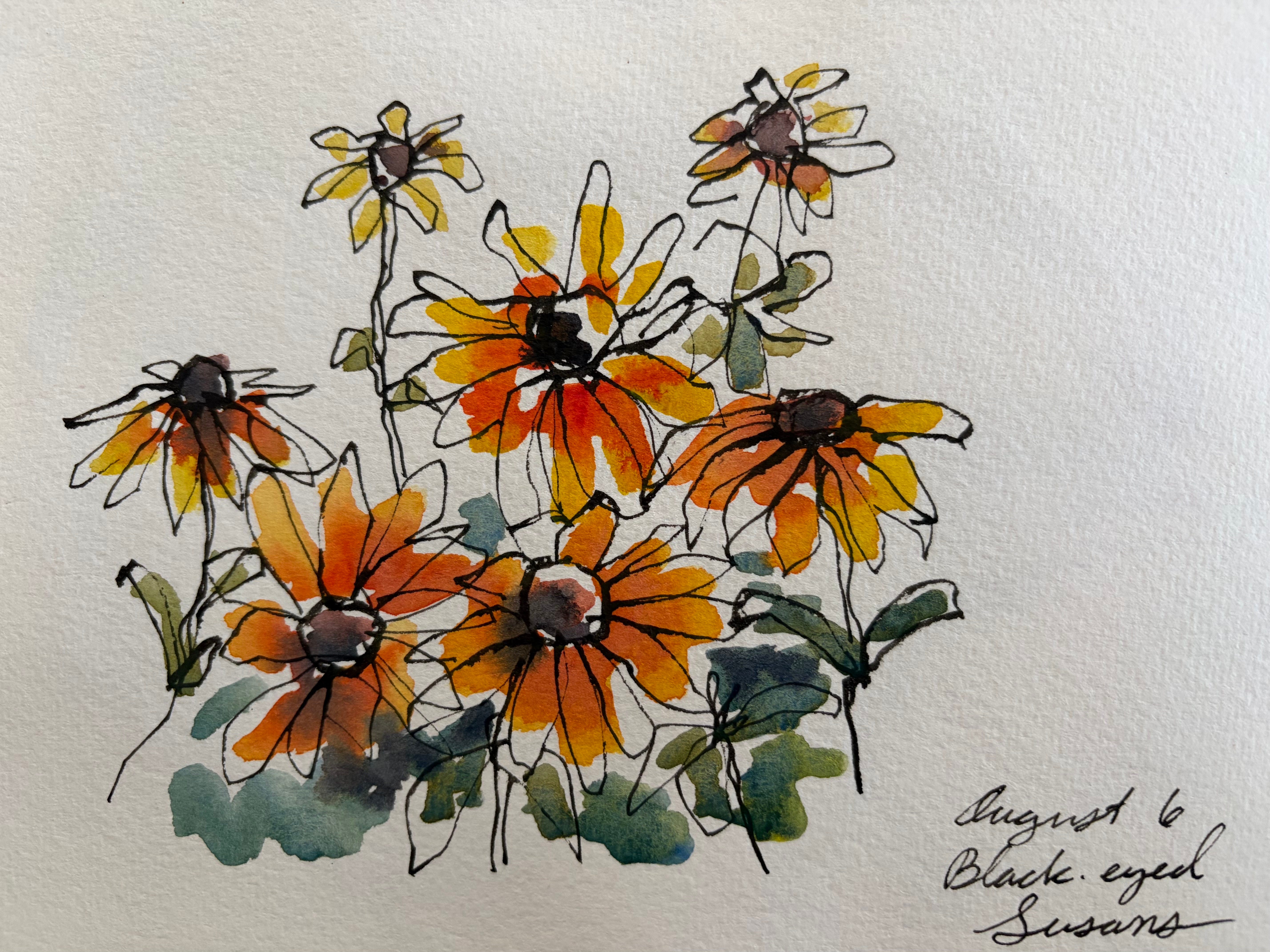
I used to avoid drawing flowers, but now they’re one of my favorite subjects! Since I’ve started drawing them more often, I’ve learned a few things, and I’d like to share them with you.
I draw flowers nearly every chance I get. Living in New England, there is a big chunk of the year where colorful plants just don’t exist, so I’ve learned to take advantage of them while they’re around. If I see a flower that catches my eye, I sketch it. If there are none around, I’ll buy a bouquet at the farmers market just to draw it. To get better at drawing flowers, the number one thing you can do is draw more flowers. I’ve said it before, and I’ll say it again. Practice is the most important thing you can do to get better at anything.
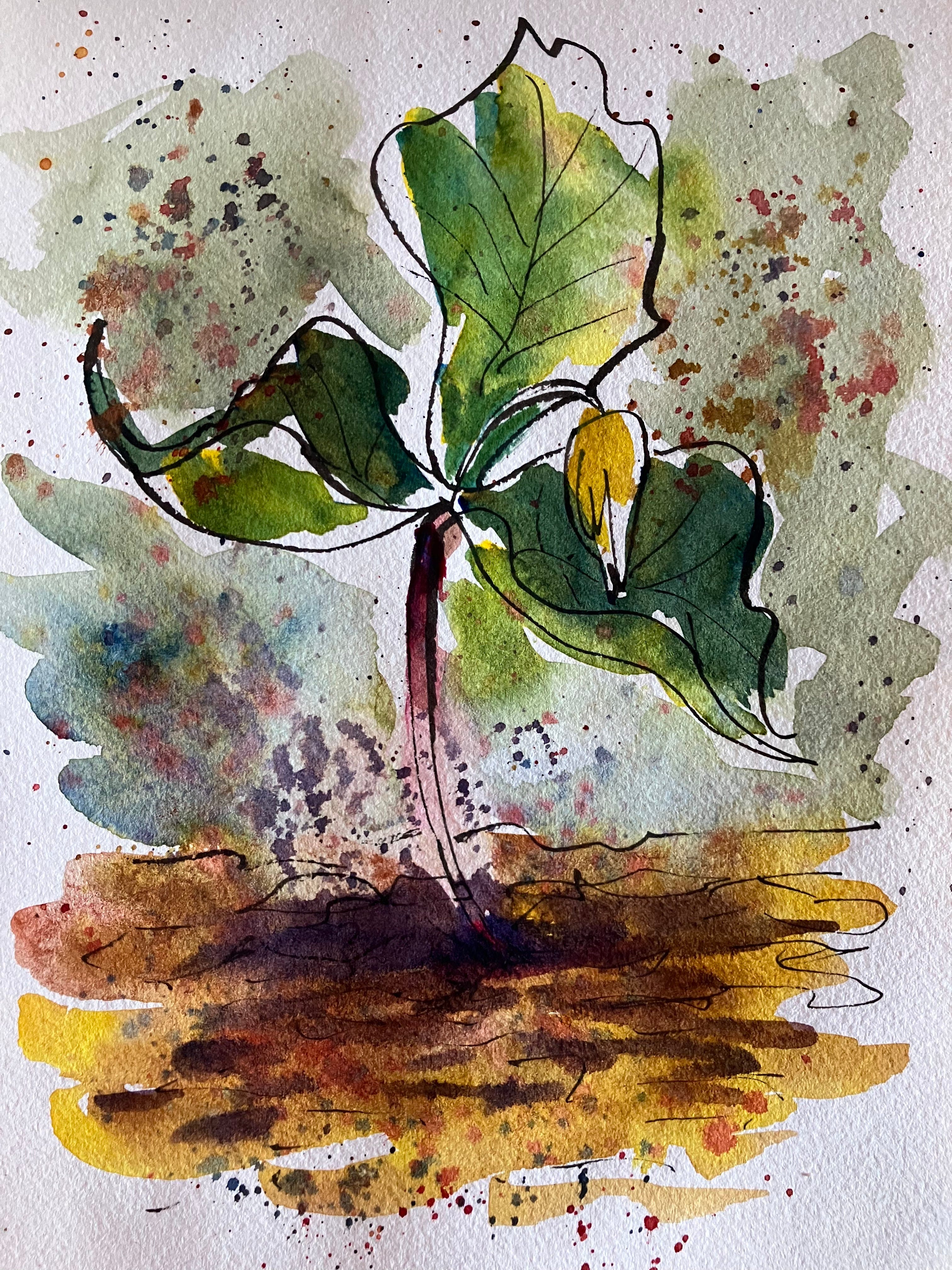
Before you start drawing, find the basic shape of the flower. Is it perky and upright? Does it droop? Does it have a lot of petals shooting out, or is it one big shape? What are the leaves and stem like? Your drawing should focus on the basic outline of the flower. Using a continuous line can help with this—look at your flower, and touch your pen to your paper. Trace the silhouette with your eyes, and let your pen follow. Don’t pick up your pen until you’re done. This technique can help you stay nice and loose while drawing a complex subject.
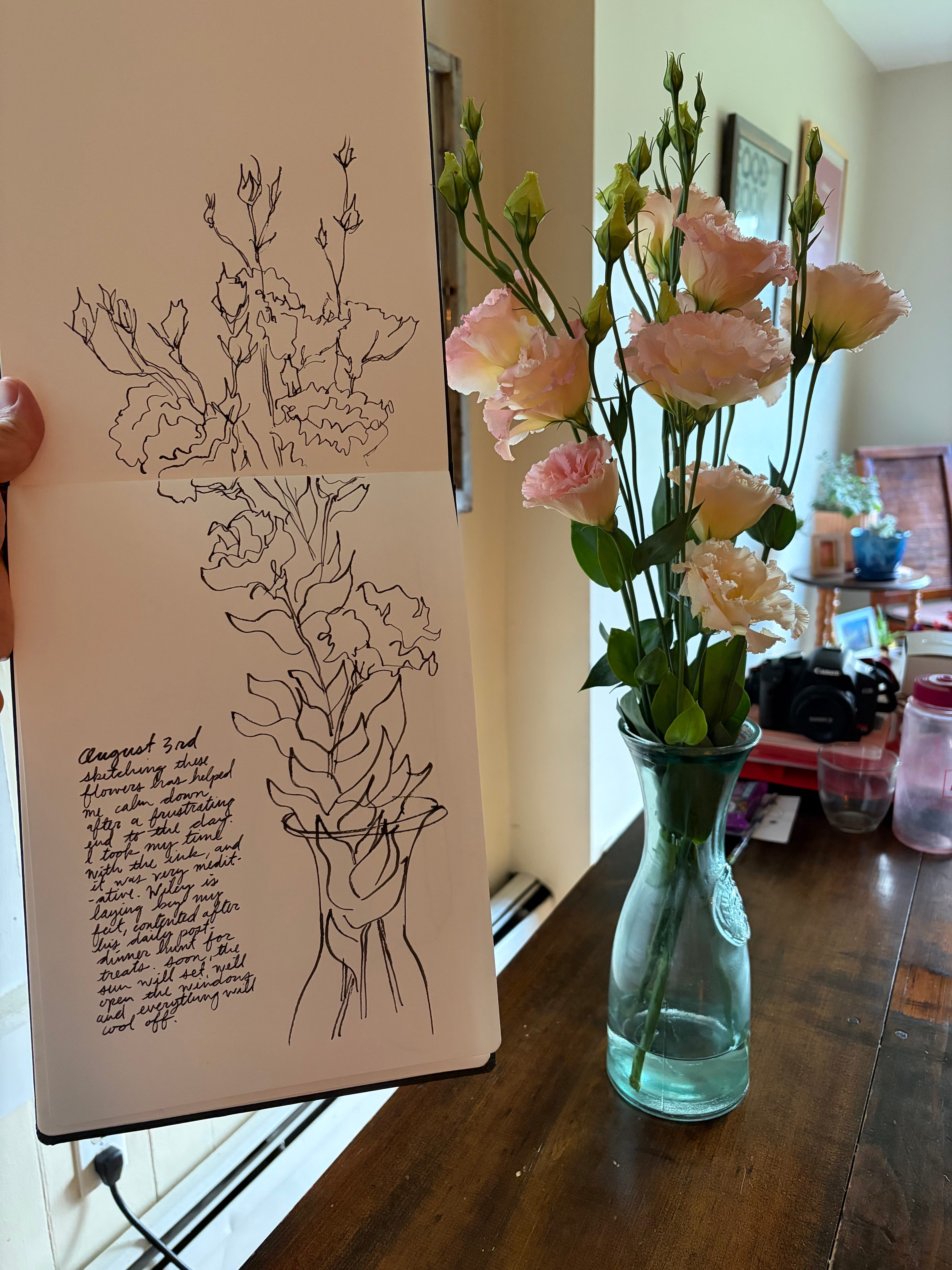
It may be tempting to try to capture everything you’re seeing inside each petal of a flower, but I would caution you to stop while you’re ahead! You have to keep in mind that each line you add will add weight to your drawing, and too many lines will make your flowers seem heavy and overwrought. Your intentions may be good, but trying to capture the texture or shading you see on a flower will eventually cause your sketch to lose its delicacy. Just remember: lines add weight. To capture delicacy, use fewer lines.
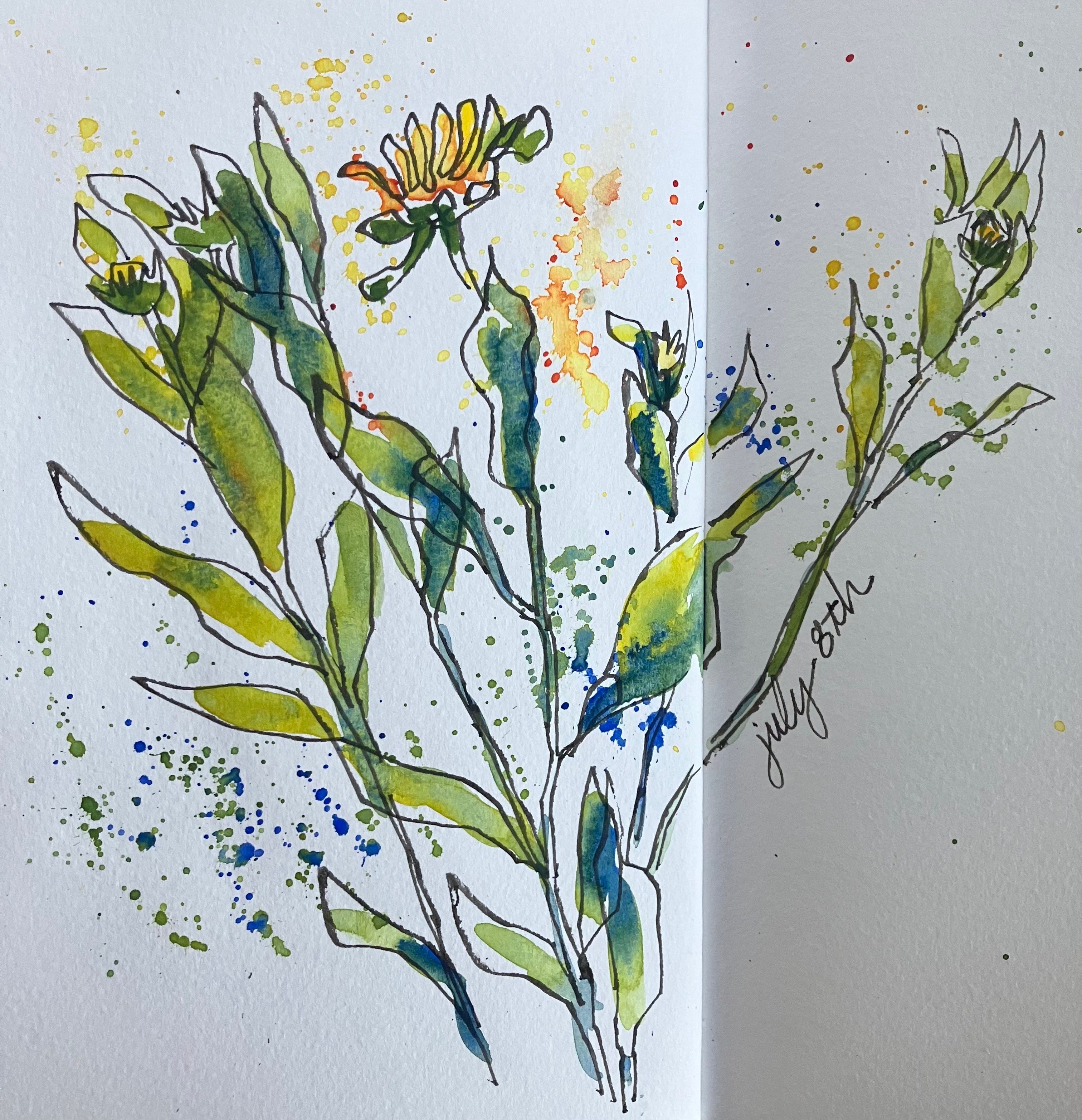
Just as piling on the lines will add weight to your drawing, adding layer upon layer of watercolor will make your sketch lose its luminosity. Flowers are fresh and bright, and you want to capture that in your drawing. I recommend adding watercolor in one pass, and if you want to add more, do it while the paint is still wet. I love mixing my colors on the page for florals—you can get variations in your washes without adding the weight and muddiness that you risk with multiple layers.
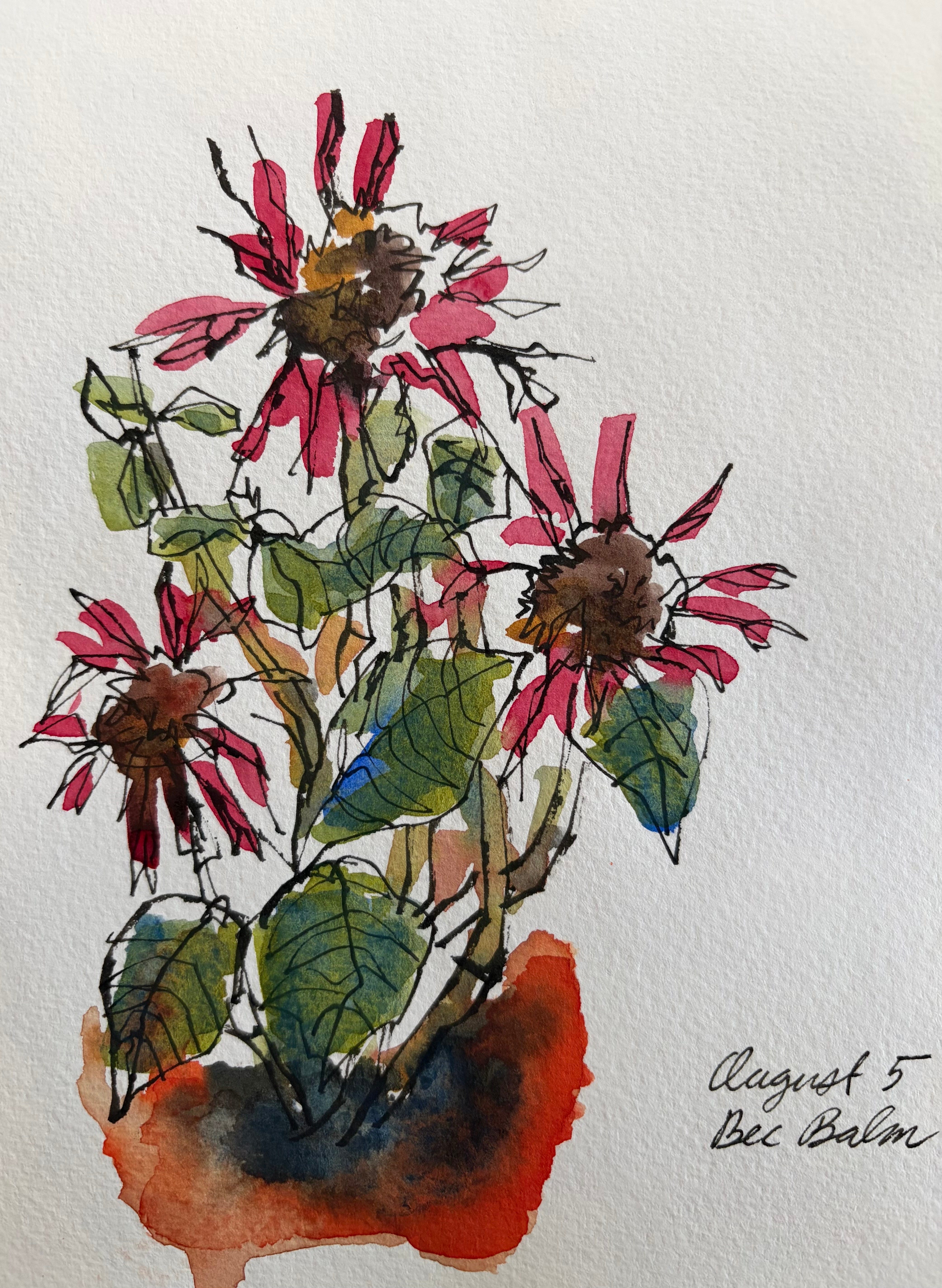
When drawing a flower, it may be tempting to include the surrounding landscape, or the garden bed the flower is growing in, or the neighboring house—don’t. If the flower is your subject, focus on the flower. At most, you can include a bit of grass, or a stroke of blue to indicate the sky, or an ink line to suggest a vase—but leave it at that. An impression is enough to set the scene. Anything more will detract from your subject. I often leave the background out entirely and use spatter as my only embellishment. For white or lightly colored flowers, you can use a solid color background to define them through negative space.
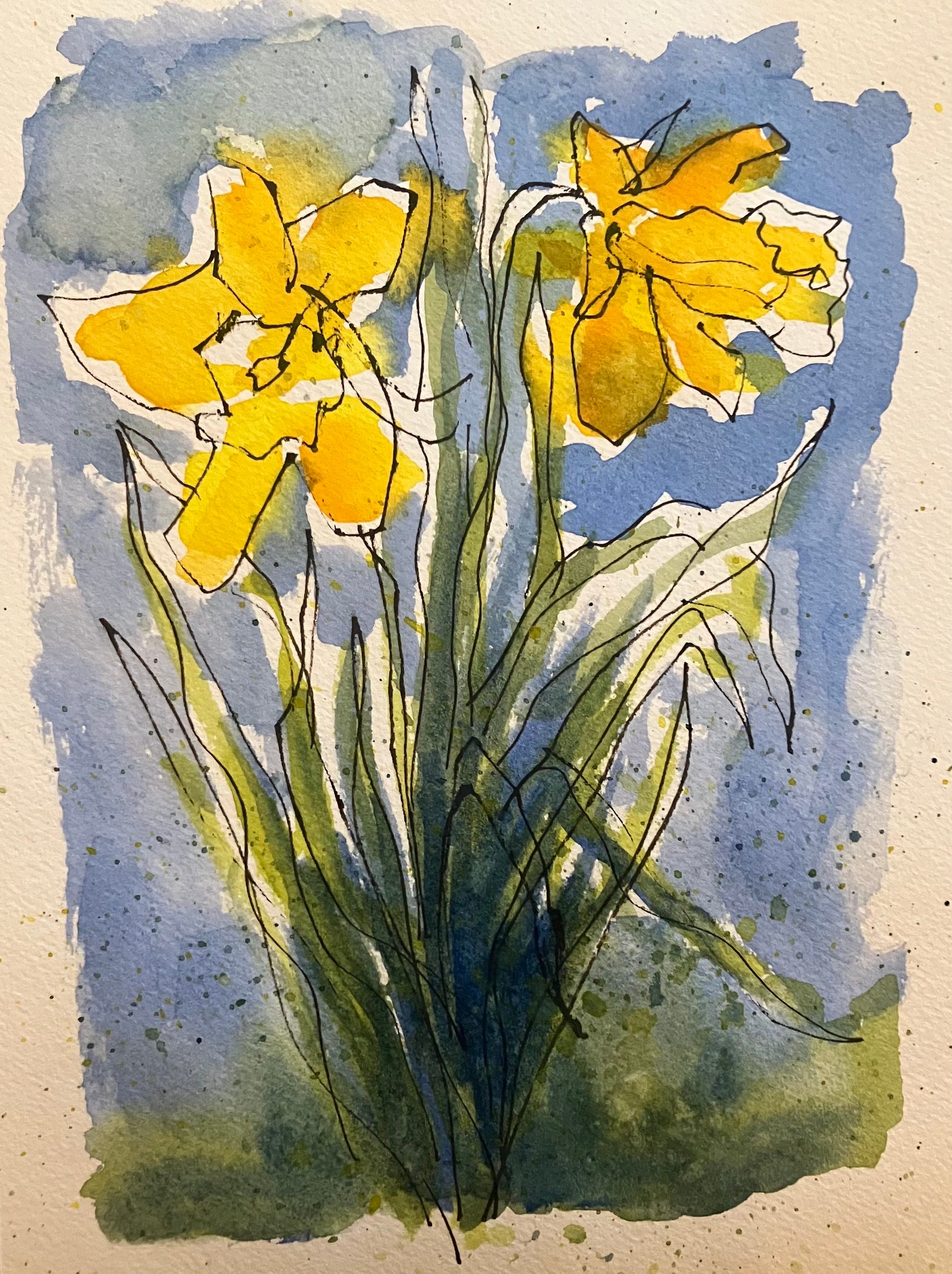
If you’re a scientific illustrator, or you’re drawing the flower as a study in your nature journal, accuracy is a part of what you’re going for. Otherwise, don’t worry about it. Your viewer will be satisfied to recognize your sketch as a Black-eyed Susan—I promise you they’re not going to lean in and count the petals. Don’t let being a stickler for scientific accuracy weigh you down—drawing flowers should be fun! Let your drawing be loose and impressionistic—I know from personal experience that I’m always happier with my results when I’m sketching loosely, even if my drawing loses touch with reality a bit.
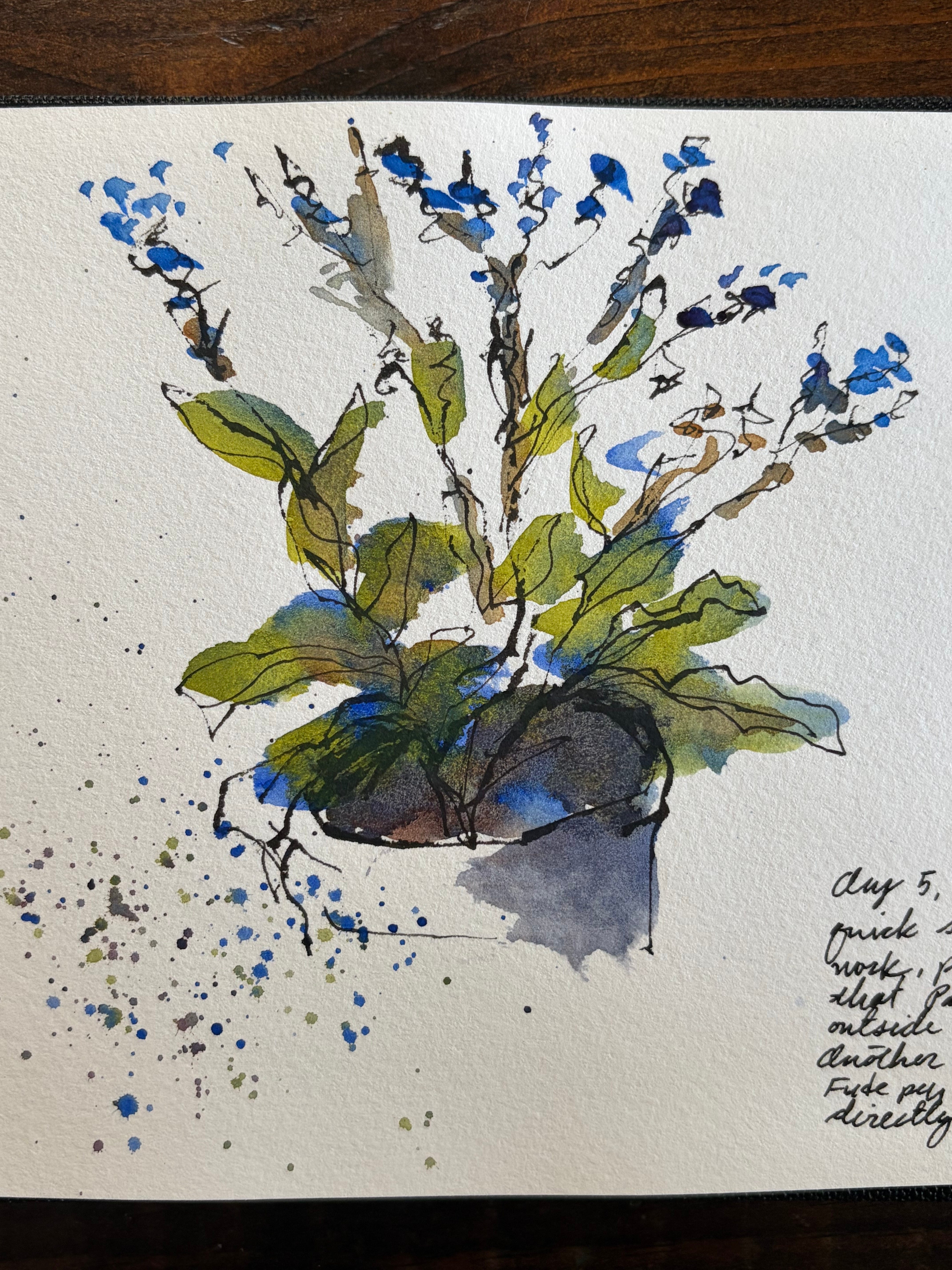
If you were apprehensive of drawing flowers before reading this article, I hope you’re at least a little less hesitant now! Just take a good look at your subject, then dive right in—let your pen do the work. I promise, you’ll get more confident the more you practice.
If I’ve inspired you to sketch a flower, please share your work and feel free to tag me! I’d love to see what you create.
As always, thanks for reading, and happy sketching!
-James
No posts
Comments
Nothing yet. Say the first thing.
Sign in to join the conversation.