
I had a recurring nightmare as a child. I was stuck on a giant chessboard overcrowded with people. The giant board would be tipped in one direction and we’d all start running or falling in a panic towards one corner. We’d be cramped in the corner, pressed against each other, until the board was tipped again and everyone raced in a new direction.
Which is a bit like being an artist using technology as part of your practice in an environment where a new technological innovation emerges every few months. There’s no off button.
In advertising, using technological innovation is a reliable way to capture an audience’s attention and make your brand appear progressive. The big tech companies employ aspirational, future-facing language to powerful effect.
When it comes to technology and art, it’s become a kind of arms race, with artists competing to produce the most technically innovative work. This is partly wanting to engage with the world around them as it develops, partly a desire for novelty.
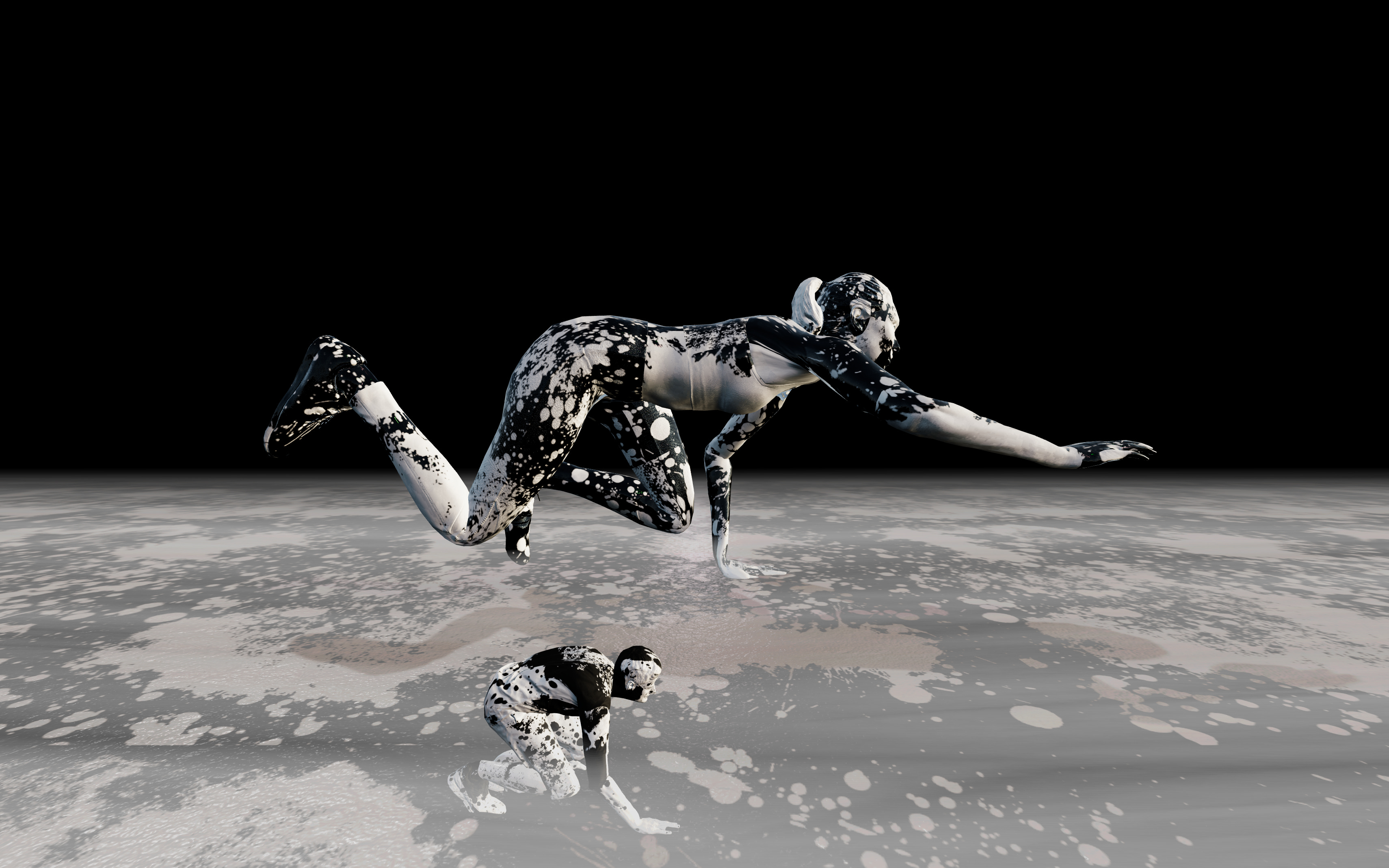
I’ve tried to approach technological innovation in a self-reflective way. One way I’ve done this is to layer innovations on top of each other to the point where instead of enhancing beauty or meaning, they ruin it.
My artistic process is continual invention until something breaks. This ‘method’ is partly driven by my own failure to use the technology as it was designed to be used, which is a result of my lack of technical expertise. The breaking point is often the point where something else is revealed.
There are many artists who have used technology as part of their practice. Since the 1950s computers were invented for military, scientific or commercial purposes, but even back then artists were allowed into the lab for short periods to work towards alternative goals. These acts of eversion form the historical basis of computer art.
When a new technology is released, if you want to make art from it you will inevitably go through a period in the weeds of how it works. It’s ironic that artists have to undergo a process of logical deduction to arrive at a result that isn’t always logical.
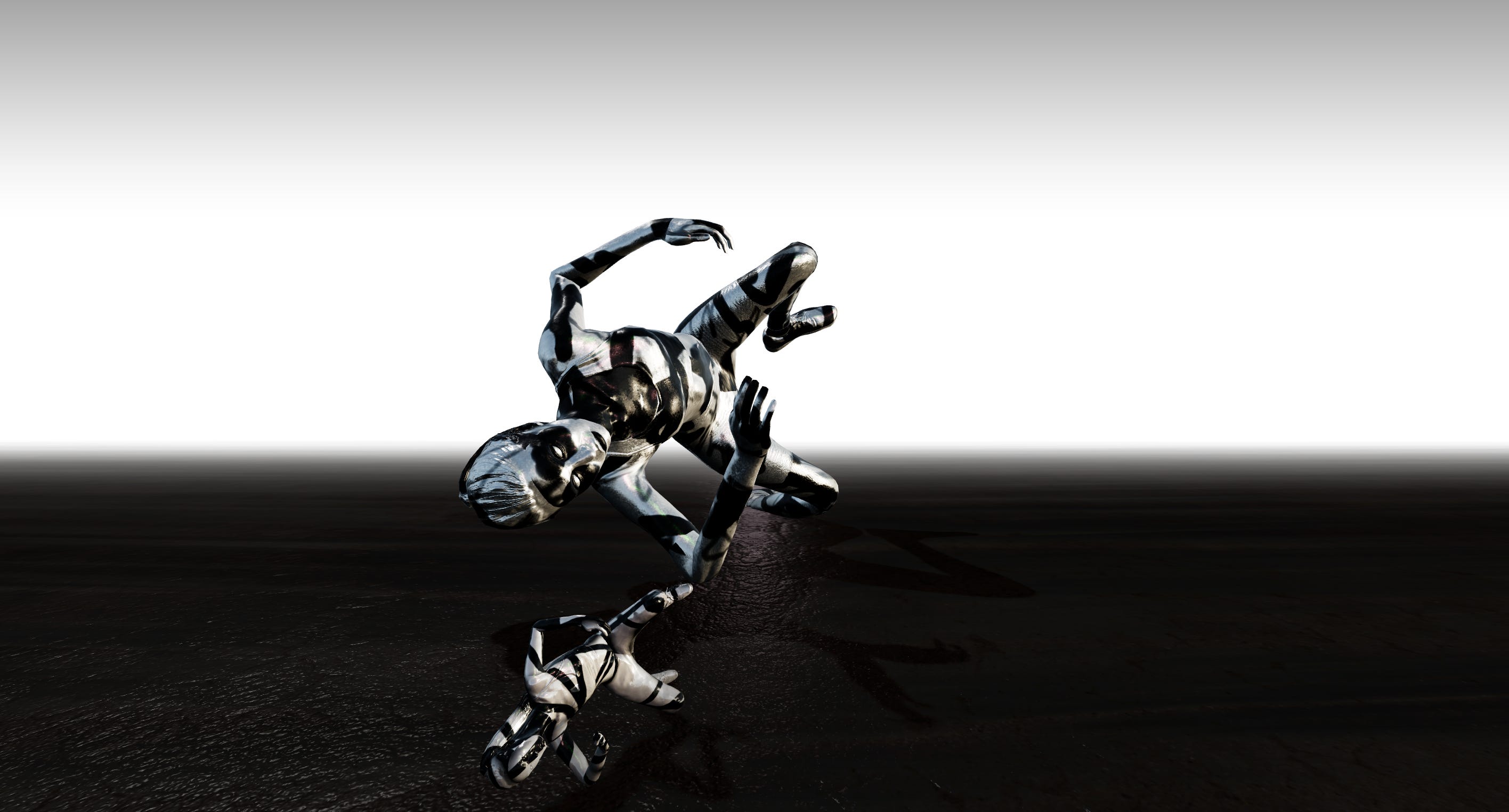
Technological innovation and artistic innovation with technology are different things, even though both require obsessing over the ‘nuts and bolts’ for a period of time. It’s good to be aware of the difference though. Easier said than done.
Growing up with constantly advancing technological progress is a bit like having a narcissist with ADHD for a parent. You can’t take your eyes off them and are constantly trying to catch-up to problems that belong to someone else. Seeking therapy from ChatGPT isn’t going to solve it.
I use overcomplexity in the design of my artworks, making it difficult for viewers to understand how they work at a mechanical level. Something similar can happen to people’s visual interpretation of the work too. The imagery has been processed, enhanced or multiplied to breaking point and it becomes hard to read.
The series I’m working on at the moment involves running an advanced Reinforcement Learning agent in an environment where it learns to walk as a quadruped, from scratch. The process of performance optimisation takes millions of steps over several days, as the agent progresses from helplessness to proficiency.
I take these learnt behaviours and transpose them onto real human 3D scanned models. The newly embodied behaviours are then run in a live environment where a second Reinforcement Learning agent breaks down the linear improvements in performance, resulting in a continuous, disjointed flow of real-time body motion.
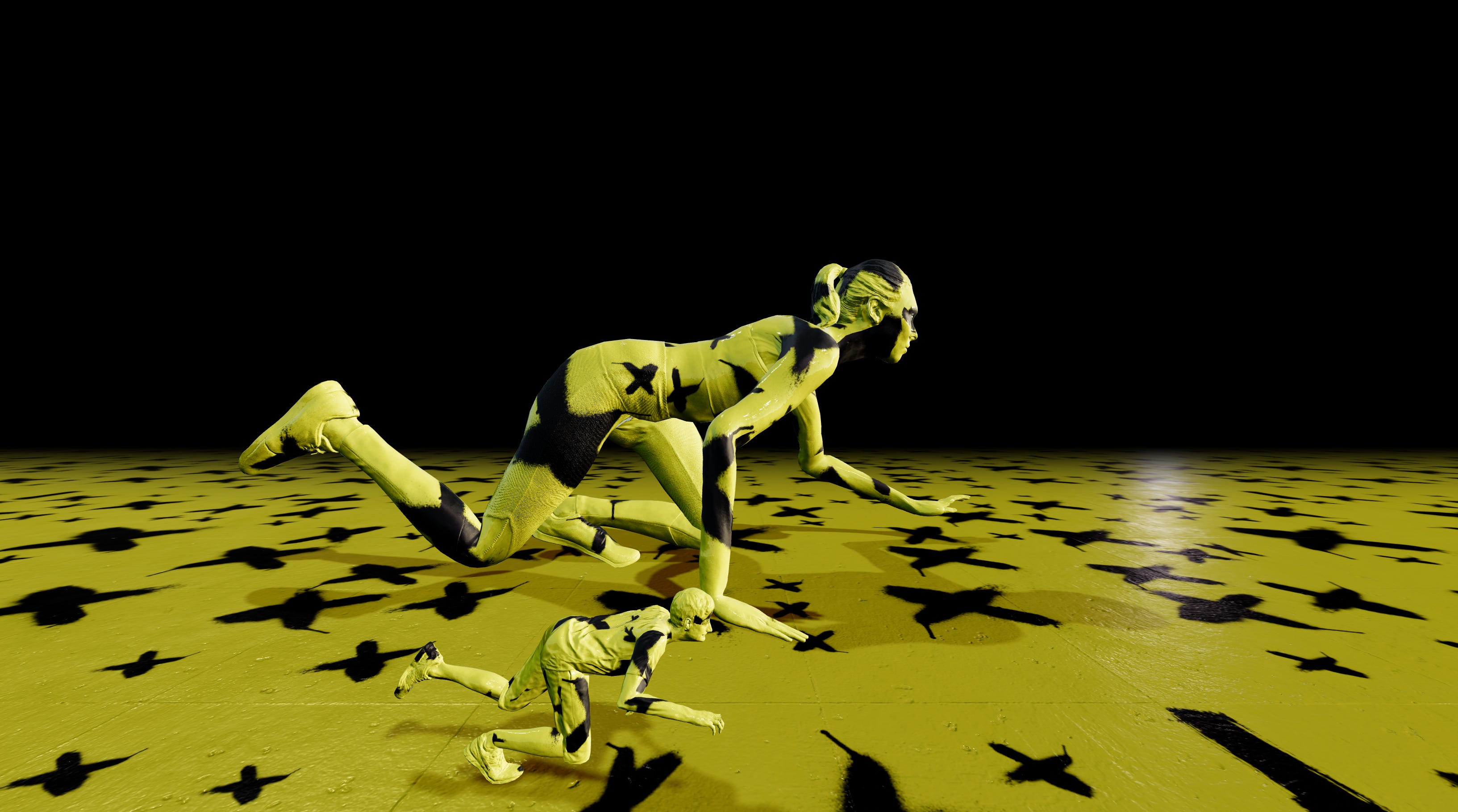
Making this series has been a long and difficult process. It’s ironic to be working with cutting-edge AI tools and arduously refining their functionality to achieve the opposite purpose they were designed for. It’s an obsessive love-hate relationship where I keep trying to make things work and it always ends up in a fight, but I can’t let go.
A by-product of having such a complex process is that it’s difficult to write a neat text describing the work. Hard to read too, posing a challenge for any viewer to make sense out of what’s happening under the surface. At the very least I‘d hope these texts might generate some sympathy for me in this arduous process.
There’s a race on, with systems that not only improve and change constantly themselves, but also demand changes in our own thoughts and behaviour. You either sink or swim. It’s a situation by turns disorientating, rage-inducing, frightening and comedic. And we find ourselves stuck with it.
One answer is to put all this stuff in an artwork while also breaking its agency. You might not be able to escape, but you can choose how you look at it. This is fine.
No posts
Comments
Nothing yet. Say the first thing.
Sign in to join the conversation.