
"Whenever the government provides opportunities and privileges for white people and rich people, they call it ‘subsidies.’ When they do it for Negro and poor people, they call it ‘welfare.’ The fact is that everybody in this country lives on welfare. Suburbia was built with federally subsidized credit. And highways that take our white brothers out to the suburbs were built with federally subsidized money to the tune of ninety percent. Everybody is on welfare in this country. The problem is that we all too often have socialism for the rich and rugged free enterprise capitalism for the poor. That’s the problem."
Everyone knows Martin Luther King had a dream. But when did it begin? Born in 1929 in Atlanta, Georgia, Martin Luther King Jr. grew up the son of a Baptist preacher and a teacher, shaped by the Black church and the sting of segregation. He entered Morehouse College at the age of fifteen, went on to Crozer Seminary, and later earned his doctorate from Boston University. His faith was a fire that called him to confront the injustices he saw around him.
King first stepped into national leadership during the 1955 Montgomery Bus Boycott, where his preaching and resolve transformed a local protest into a year-long campaign that shook the foundations of Jim Crow. In 1957, he co-founded the Southern Christian Leadership Conference (SCLC), which carried the movement forward from Birmingham to Selma, and ultimately to the steps of the Lincoln Memorial, where he thundered the words that would make him famous: “I have a dream.”
But King’s vision was always larger than a single speech. By the mid-1960s, he began to confront not only racial segregation but also the twin demons of poverty and militarism. He spoke out against the Vietnam War, decried America as “the greatest purveyor of violence in the world,” and called for nothing less than a radical redistribution of wealth. His Poor People’s Campaign sought to unite Black, white, Latino, and Native workers in a struggle against the American economic order itself.
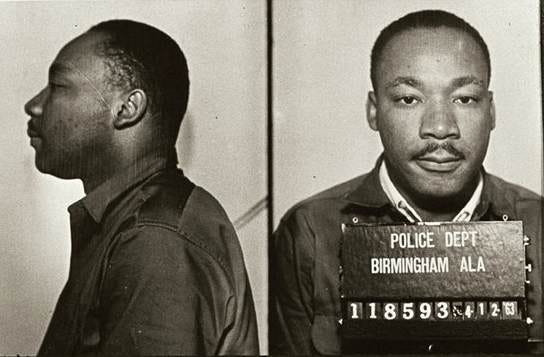
On April 4, 1968, Martin Luther King Jr. was assassinated in Memphis, Tennessee, while standing with striking sanitation workers. The timing was no coincidence. King had moved beyond the safe terrain of civil rights legislation into far more dangerous ground: calling for economic justice, denouncing militarism, and exposing the hypocrisy of capitalism.
The King who died was not the King celebrated in school assemblies and corporate advertisements. He was a Christian socialist prophet:
April 3, 1968, the day before his assassination, King gave his final speech, “I’ve Been to the Mountaintop.”
In this speech, MLK references Deuteronomy 34:1-4, where God instructs Moses to climb to the top of Mount Nebo and tells him that he will not cross into the Promised Land. Moses died there in Moab, and MLK died the next day before he could see the fruits of his labor.
However, this is where the Capitalist lie begins. The Civil Rights Act of 1965 was only the first fruit of King’s faith. His vision of liberation for the poor and downtrodden is unfulfilled.
Every January, politicians and corporations line up to quote Martin Luther King Jr. They recite one sentence about a dream, then return to business as usual. They host parades and run commercials, but they will not touch his words about poverty, war, and capitalism. They have stolen his image while silencing his message.
This is the capitalist lie: that King was simply a dreamer of racial harmony, not a revolutionary who demanded the redistribution of wealth and power. It is the lie that civil rights could be won without economic rights, that justice could be achieved while the poor still cry out under the weight of exploitation.
But the Scriptures King preached tell the truth. James 5 warns: “The wages you failed to pay the workers who mowed your fields are crying out against you. The cries of the harvesters have reached the ears of the Lord Almighty.” That cry had not been answered in 1965. It has not been answered today.
To reclaim King is to reclaim the struggle he actually fought, the struggle against racism, poverty, and militarism, all bound up in the same sinful system. To honor him is not to quote him, but to continue his work.
The dream is not fulfilled. The lie must be shattered. The harvesters still cry out.
Written by our founding contributor: Ezekiel Chojnacki, MPP
No posts
Comments
Nothing yet. Say the first thing.
Sign in to join the conversation.