
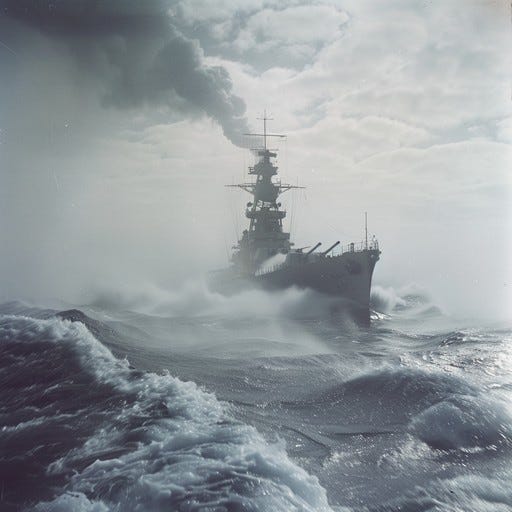
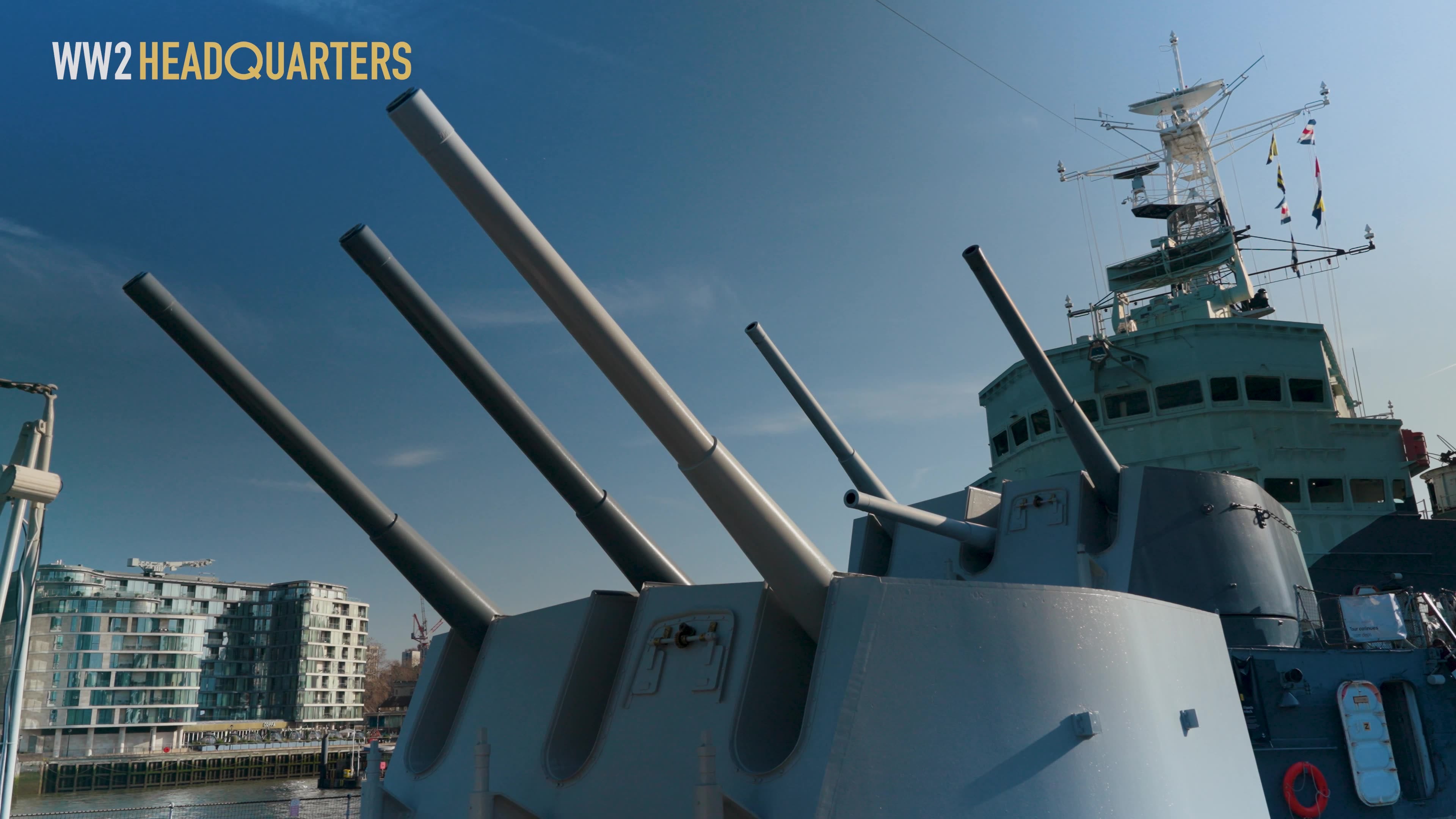
I was aboard HMS Belfast the other day, permanently moored on the River Thames near Tower Bridge in London, and every time I’m visiting I’m always in awe of its solid vastness and immense comlexity. Just look at those twelve 6-inch guns, or the technical efficiency of the magazines and shell hoists. Or take a look in the engine and boiler rooms with their snaking array of interconnected pipes and tubes. They’re almost fantastical - like something from Willy Wonka’s factory. Yet Belfast wasn’t even a particularly large warship. Rather, she was a light cruiser and one of just forty-one in the Royal Navy’s arsenal in September 1939 with a further nine under construction in shipyards around Britain at that time. Just think about this: at the start of the Second World War, the Royal Navy had 15 battleships, 7 aircraft carriers,15 heavy cruisers in addition to those 41 light cruisers, 181 destroyers, of which 113 were modern types, 65 submarines, 44 minesweepers, 54 escorts such as corvettes and other warships. There were plenty of other vessels besides, as well as the Royal Navy Patrol Service, better known as Harry Tate’s Navy, which was made up from hastily armed trawlers and other vessels and which swept and laid mines and helped keep watch in our home waters.
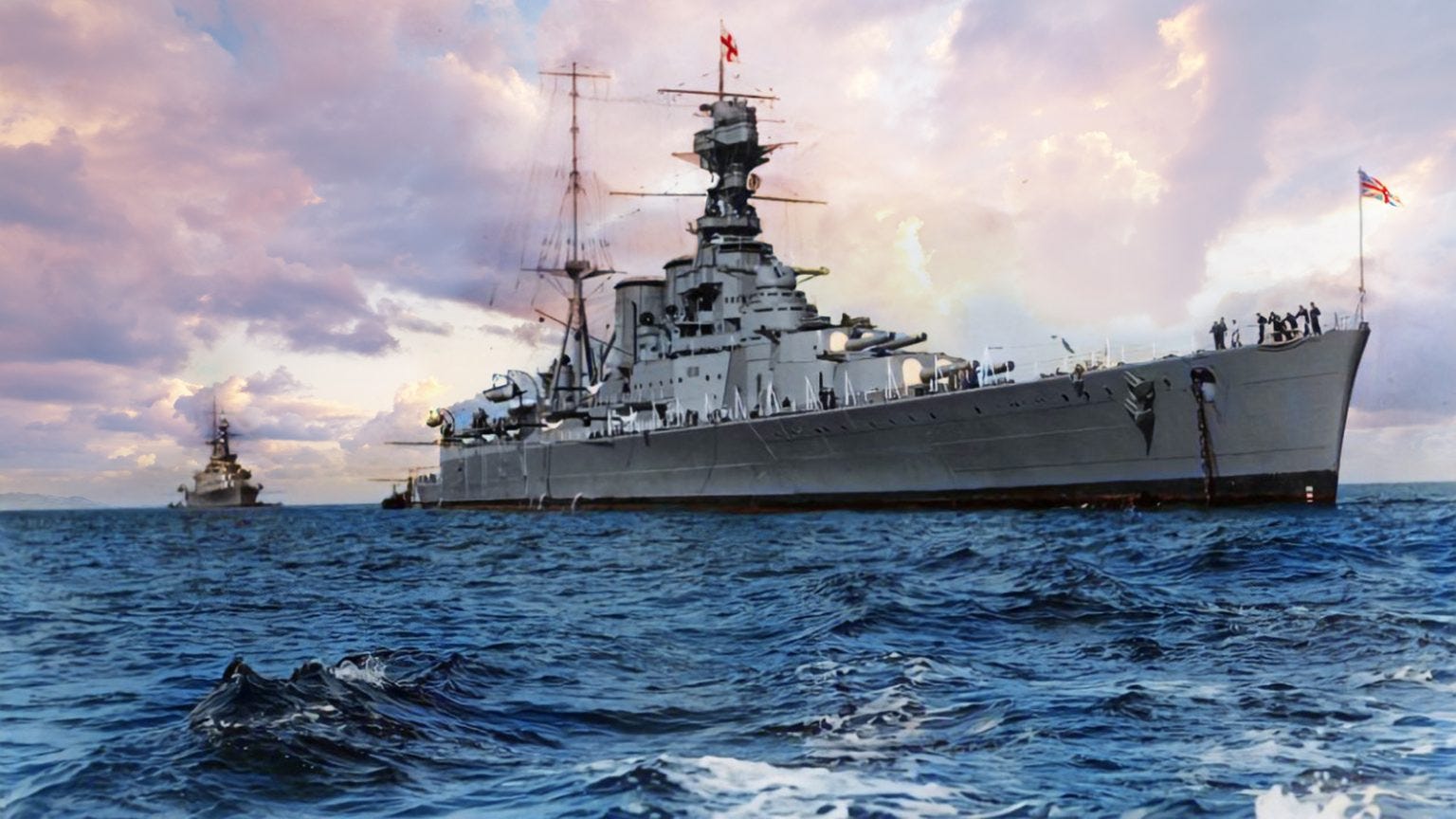
This immense force ensured that Britain’s Royal Navy was the largest of its kind in the world, despite being half the size it had been in 1918. What’s more, as the Second World War began, a further 9 battleships, 6 carriers, as well as the 9 light cruisers, 24 destroyers and 80 corvettes were also under construction. It was a force befitting an island nation with immense global assets, both imperial and extra-imperial. Its Home Fleet alone was large enough to place Nazi Germany under an immediate economic blockade. There were warships in the Far East and an entire fleet in the Mediterranean, based variously at Gibraltar, Malta and Alexandria. HMS Hood, a giant 860-foot-long heavy cruiser, was the world’s largest warship and also by some margin the most famous vessel in the world. The Royal Navy was Britain’s Senior Service for a reason and the country’s naval power – and the projection of that power – lay at the very heart of Britain’s identity and even culture. Nelson, Trafalgar, the dreadnoughts, Britannia ruling the waves and superior seamanship was hard-wired into Britain’s core: its defence, its power, its wealth, its national pride, all lay in the hands of the Royal Navy.
Today, our slant on history takes us to the battlefields and even the skies more than the seas and oceans, yet naval personnel remained absolutely critical to Britain’s war effort. After all, it was seas that ultimately defended the British Isles and it was because of the oceans that Britain was able to remained supplied throughout the war. It was also only by sea that Britain could take the fight back to the enemy; alongside her Allies, all operations were necessarily amphibious.
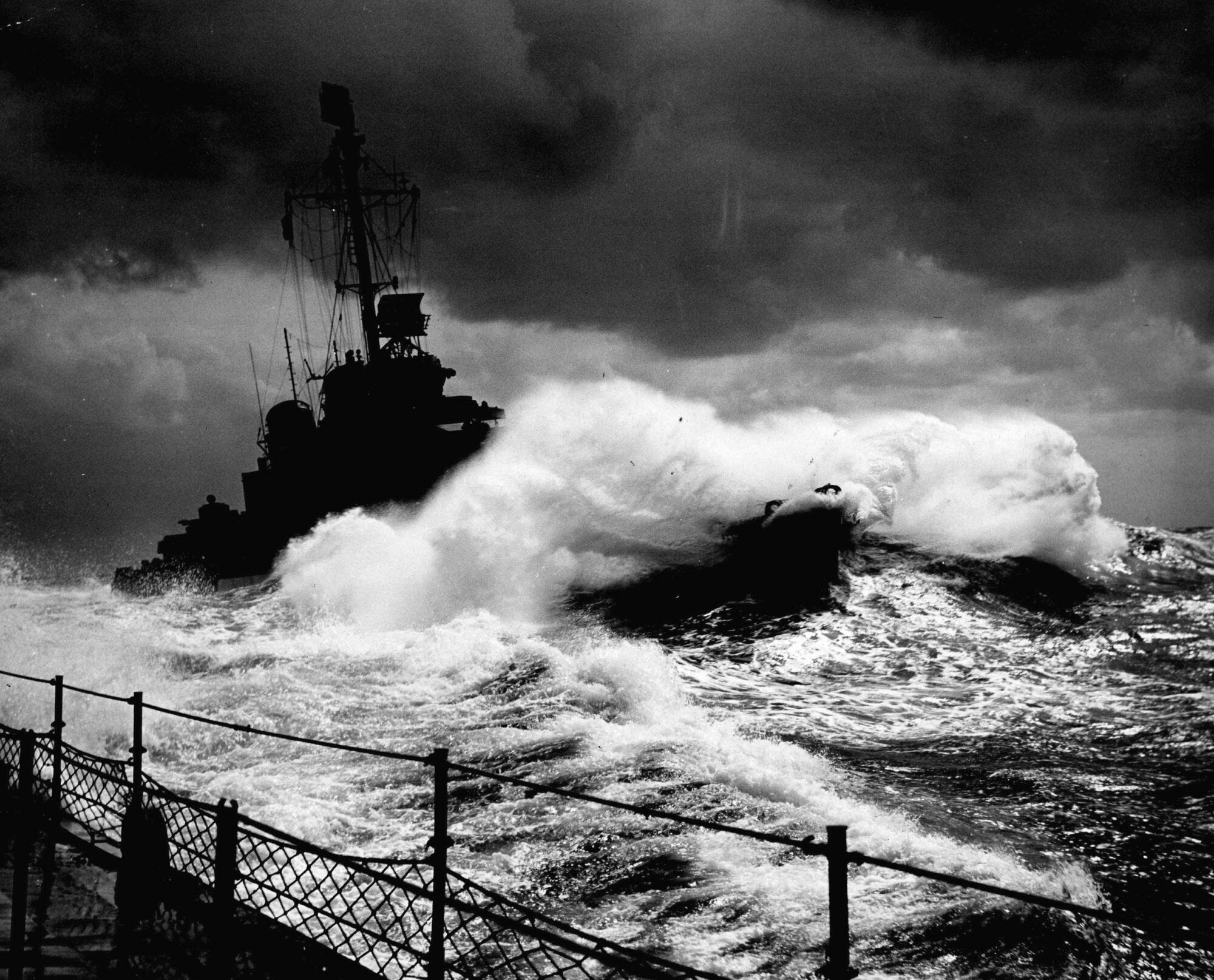
The men and women who served in the Royal Navy did so across the globe and often in in conditions so gruelling it’s hard to comprehend. There was a reason the Atlantic was known as the cruel sea. The destroyers, corvettes and other escorts protecting the vital convoys heading back and forth through the Atlantic had open bridges and often rising swells and storm conditions raged in summer was well as winter, hurling sea and spray across the decks, lashing the men striving to keep the ships under their care cutting through the water. Many of the men spent much of their time permanently soaked, often freezing. Back in late 1940, Peter Gretten, then a lieutenant, found himself in a storm on the tribal-class destroyer, HMS Cossack, when one of the lifeboats sprung free from its davit. With three ratings he attempted to try and fix it only for a giant wave to crash over them and sweep all four men out to sea. A moment later, a second wave flung him back on deck but the other three were instantly lost to the icy winter waters. Battered, bruised, freezing cold and soaked through, Gretten reported to Captain Philip Vian’s, Cossack’s commander, who promptly chastised him for leaving ship without permission. On their return to Scapa Flow in Orkney, Gretten then spent more than a week in hospital recovering from hypothermia.
Captain Tubby Crawford DSC was No.1 – second-in-command – on the most successful Allied submarine of the war, HMS Upholder, and was part of an action in the Mediterranean in which they emerged inside a destroyer screen and sank the 18,000-ton Italian troopship, the Conte Rosso. They were then depth-charged thirty-eight times over a matter of hours. Tubby told me the boat rocked and bucked, lights flickered on and off and bits of corking fell on them from the blast of the repeated explosions. One of the crew lost his mind. ‘I suppose it was a bit hairy,’ Tubby said.
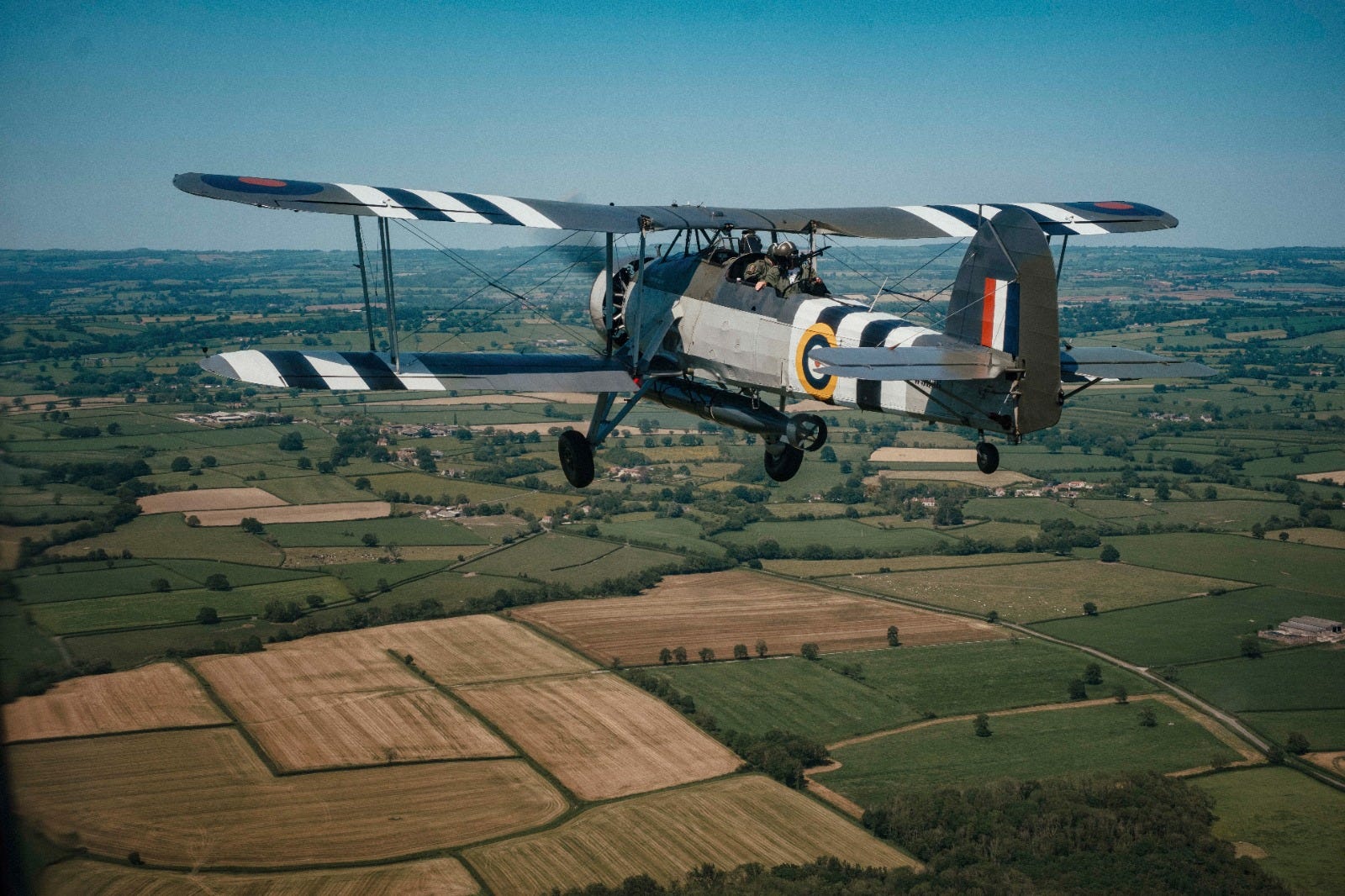
Then there were the men of the Fleet Air Arm. It was FAA Swordfish crews that successfully flew off HMS Illustrious and bombed the Italian Fleet in Taranto. It was also Swordfish crew that successfully jammed the rudder of the mighty German battleship, Bismarck, crippling her and leading directly to her subsequent sinking. Swordfish were still being used in the Arctic in early 1944 as reconnaissance aircraft flying off short escort carriers. And for those who are unfamiliar with the Swordfish, it was a three-crew biplane with an open cockpit. I remember talking to Nat Gold, a telegraphist/air-gunner on a Swordfish, operating in the Mediterranean. At night, they flew across the sea from Malta to drop mines in Tripoli harbour. The key was to arrive silently, so as not to arouse the enemy anti-aircraft defences, so they would cut the engine at 8,000 feet and glide down to just 400 feet, drop the mine, then restart the engine, praying it would fire, and fly home with the flak chasing their tail. And, needless to say, pray again that they found Malta in the dark.
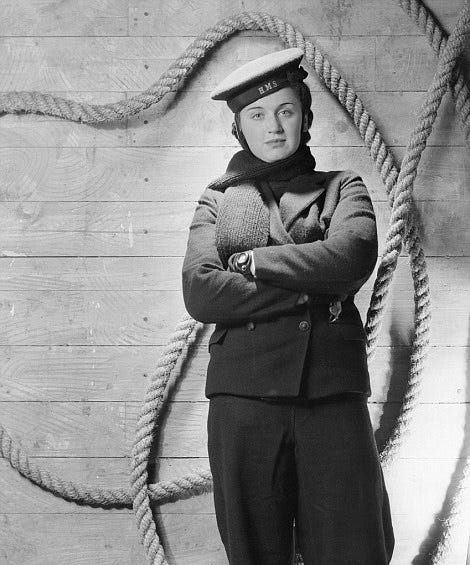
Royal Navy Wrens also made an incalculable contribution to the operation of running the Atlantic war as well as in the intelligence war at Bletchley Park and at the Naval Intelligence Centre in London. Wrens were responsible for much of the minutiae planning and preparation of Operation NEPTUNE, the naval operation for D-Day, much of it carried out from tunnels dug into the cliffs below Fort Southwick, overlooking Portsmouth.
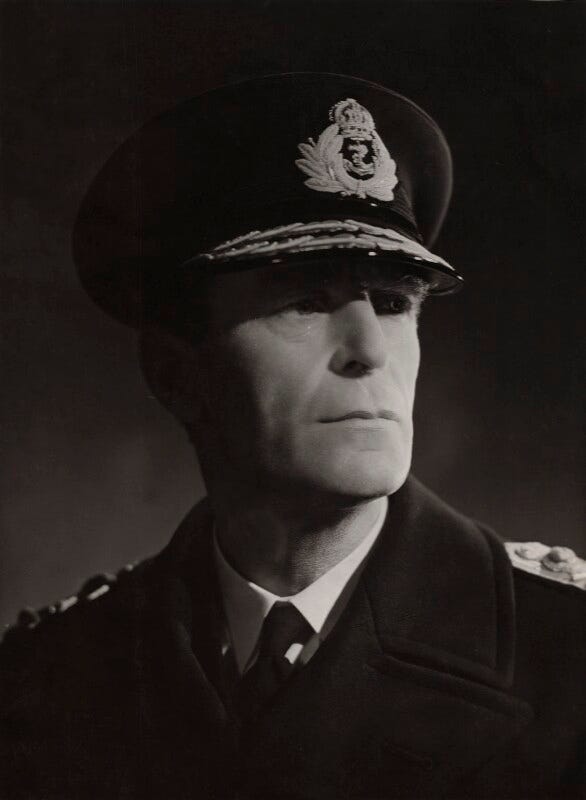
And while the British Army during the Second World War still receives criticism - albeit largely unfair in my opinion - for being slow, cautious and cumbersome, similar accusations cannot be thrown at the Royal Navy’s senior commanders. They’re not as famous as Slim, Alexander and Montgomery et al, but were, to a man, imbued with the aggression and fighting spirit of Nelson. Andrew Browne Cunningham, Bertram Ramsay, Philip Vian, James Somerville, Bruce Fraser and John Tovey, to name just a few, were all incredible sea warriors and deserve to be far better known.
The Atlantic was the most important theatre of the entire war because without those all-important sea-lanes, Britain would not have been able to survive and the Allies would not have been able to successfully fight to beat the Axis forces in the West. Every soldier in Northwest Europe had to come through the Atlantic. Almost all Allied supplies for Britain and for Europe had to pass through the Atlantic, whether originating from North or South America, Australia or India.
That being so, it’s hard not to accept that the Royal Navy played a decisive and war-changing role in the war. After all, it was the Royal Navy that defeated the Kriegsmarine in the Battle of Norway, reducing their effective surface fleet by roughly half. It was also the Royal Navy – far more so than the famous Little Ships – who saved the vast majority of the British Expeditionary Force lifted from Dunkirk. This miracle allowed Britain to kick all thoughts of opening peace talks with Germany into the long grass and ensured they could fight on. It was the RAF who defeated the Luftwaffe in the skies over Britain in the summer of 1940 but the Royal Navy that would have crushed any amphibious attempt by the Germans to cross the Channel. This is entirely beyond debate, by the way.
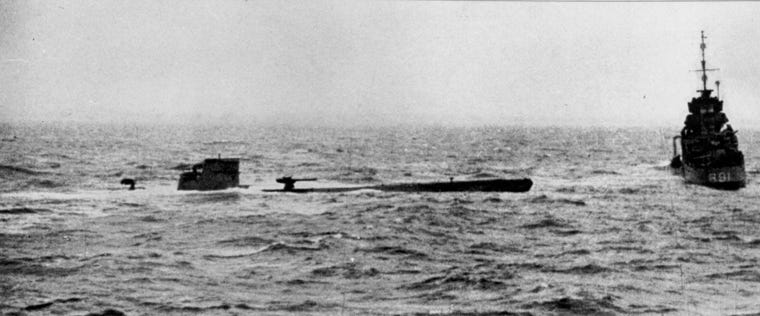
It was also the Royal Navy in the Atlantic that first, sank three of the most successful u-boats in the U-Boat Arm in March 1941. U-boat commanders Schepke, Kretschmer and Prien were national heroes and the successes of these men had papered over the fundamental fragility of the u-boat force: that it was too small and overly dependent on these experienced aces and a few others. Their losses were irreplaceable. It was also the Royal Navy that then captured U-110 in early May and with it an Enigma coding machine and accompanying code books. It was also the Royal Navy that hunted down and sank the Kriegsmarine’s only battleship, the Bismarck, the same month. The Bismarck episode was the last time a German surface raider ever ventured into the Atlantic and was a crushing blow for the German pre-war naval strategy. The end of May 1941 also marked the moment Britain could no longer conceivably lose the Battle of the Atlantic. This didn’t mean it had yet won it, our sea lanes were not yet fundamentally secure, but our supply lines would no longer be crushed by the Wolfpacks. That was a game-changing moment in the war.
And it was also the Royal Navy’s economic blockade of Germany, and Britain’s refusal to sue for terms in the summer of 1940 that forced Hitler to turn east and attack the Soviet Union in June 1941, far earlier than he’d originally planned. He’d had no choice as Germany was running out of everything but most importantly food and fuel. Britain’s blockade, begun on 3 September 1939, played a large part in Hitler making this early and catastrophic play for Lebensraum in the East.
The Royal Navy also controlled the Battle of the Atlantic for all Allied ships. The navy continued to be at the fore of every major episode of the war in the west: escorting convoys, further evacuations, offering protection to the invasion fleets in Northwest Africa, Sicily, and Italy. Supporting Commando operations. Sinking the Scharnhorst in the Battle of the North Cape in December 1943. And D-Day, when some 973 of the 1,213 warships were British and 3,261 of the 4,127 assault craft were also sailing the white ensign. Finally, in August 1944, the Royal Navy formed the Pacific Fleet and operated side-by-side with the US Navy in the final months of the war against Japan.
It was an extraordinary contribution. Only a couple of ships from that astonishing wartime navy still survive. One of these is HMS Belfast, permanently docked on the River Thames near Tower Bridge in London. Belfast was commissioned in August 1939 and went on to play a vital role in the Battle of the North Cape in December 1943, helping to sink the battle cruiser, Scharnhorst. She later operated off Juno Beach on D-Day, supporting the landings of the Canadians. Later, she served with the Pacific Fleet. Belfast is an amazing vessel – only a city-class light cruiser of 12,000 tons but a warship that epitomised the agility and multifarious roles expected of the Royal Navy at war.
The Royal Navy is now much denuded. We have destroyers out of action or barely functioning, two giant aircraft carriers with almost no aircraft and which also rarely seem to work and insufficient escorts to work with them and create the naval task force such capital ships require. Naval officers are reputedly actively trying to avoid commanding a ship as it is seen as damaging to career prospects. Once it was the acme of ambition.
Fleets on the scale of World War 2 are no longer needed but Britain remains an island nation and the Royal Navy still has a vital and critical role to play. During the war, fighting captains and admirals were, to a man, imbued with the aggressive spirit of Nelson and would always steam towards a fight. Morale is currently low, recruitment struggling and our navy something of a laughing stock around the world. We need to urgently rekindle the spirit, identity and ingenuity that led the Royal Navy to play such a critical role in the victory that ended the war in 1945.
No posts
Comments
Nothing yet. Say the first thing.
Sign in to join the conversation.