
“…the war situation has developed not necessarily to Japan’s advantage…”, the Japanese emperor Hirohito announced over radio to his people in one of the great understatements of history. The year was 1945, three million Japanese soldiers and civilians had died in World War II, every major city had been reduced to rubble and ash, in the case of Hiroshima and Nagasaki by nuclear weapons.
The radio announcement was a great shock to Japan. But not only because it meant the end of the war. It was also the first time the vast majority of Japanese subjects ever heard the voice of their Divine Emperor. He had emerged from sublime seclusion to deliver the message.
Since the pyramids were built, the biggest beasts on the planet were the emperors. With divine claims, they ruled mighty states throughout history from Egypt to Mexico to Japan. Like the dinosaurs, just about every trace of them is now gone. The last ruling emperor is actually that of Japan, but he is now a well-adjusted constitutional monarch.

The pharaohs of Egypt claimed to be gods. The Roman emperors were only slightly humbler, and only claimed to become gods after they died. The emperor of China was the Son of Heaven. The Muslims had their “caliphs”, a word that literally means “successor”, as in the successor of the prophet Mohammed. The Byzantine emperor was “the Equal of the Apostles”. The Inca of the Incan Empire was so sacred that when his litter was attacked by the Spaniards, his people threw themselves forward to avoid letting it fall, being cut down by Spanish swords.
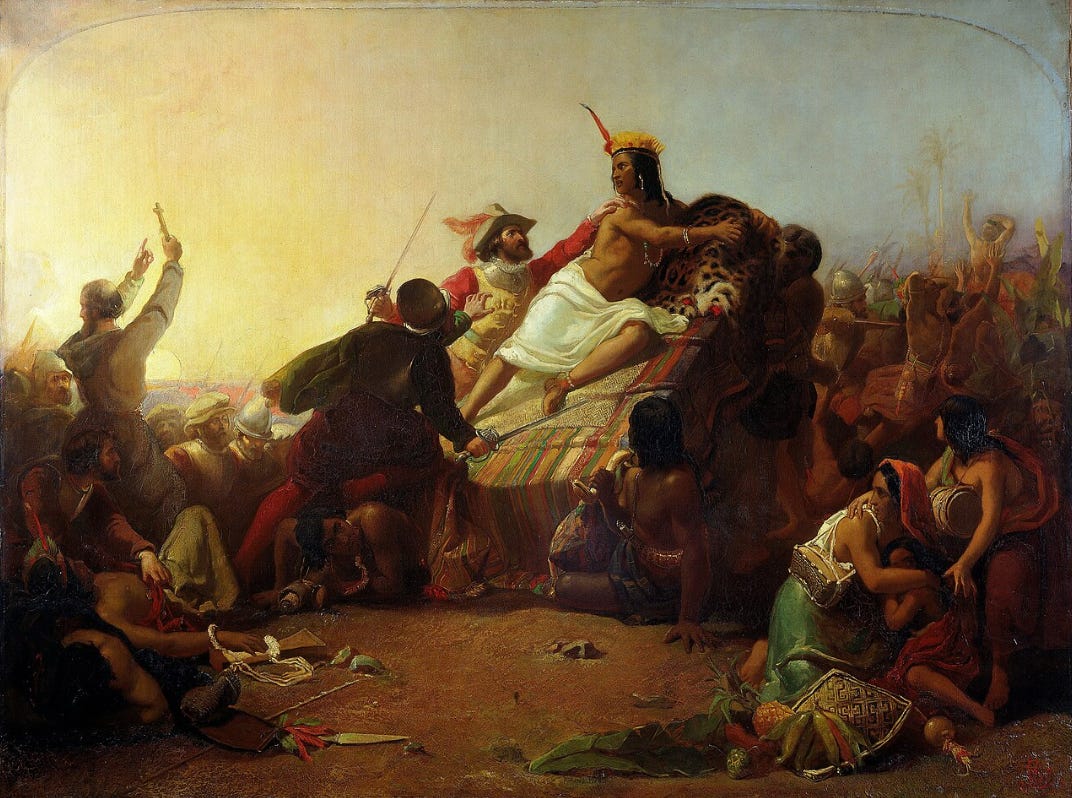
Often, the emperors were kept away from the view of their people except on the most important ceremonial occasions. People were not allowed to look at them, and even their servants had to do their jobs with downcast eyes. They met envoys seated behind screens. Heirs were often raised in imperial harems surrounded by courtiers, servants and concubines. The word “harem” literally means “forbidden”. The largest was that of the emperors of China, who lived in a palace called “The Forbidden City” with a supposed 9,999 rooms.
Why? For the sake of mystery and authority. Being thought a god increased the odds of being listened to. But no man is a god. Therefore, emperors were put to an impossible task. They had to pretend to be gods, while only being men. This meant that even though the God-Emperors were incredibly powerful, feared and admired, their power was brittle.
If people got to see their emperors and their bad teeth, smell their foul breath, hear their clumsy jokes and their snoring, experience their pettiness and mistakes – in short, everything that makes them human – the divine aura would dissipate. As Alexander the Great – a man who aspired to the divine respect of his Persian enemies – said, sleep and sex made him conscious of his mortality.
Ultimately, modern technology and communications have made this illusion of divinity impossible to uphold. The less knowledge subjects have of their leader, the more plausible that he is a god. But now we have television, radio and the internet. Social media has brought us closer to our leaders than ever before, for good and ill. This is still a long process, and even the printing press and the ease of travel have contributed. It is now much harder for leaders to aspire to divinity. The only place where semi-divine leaders still rule is North Korea, where the illusion is kept up by extreme repression and isolation.
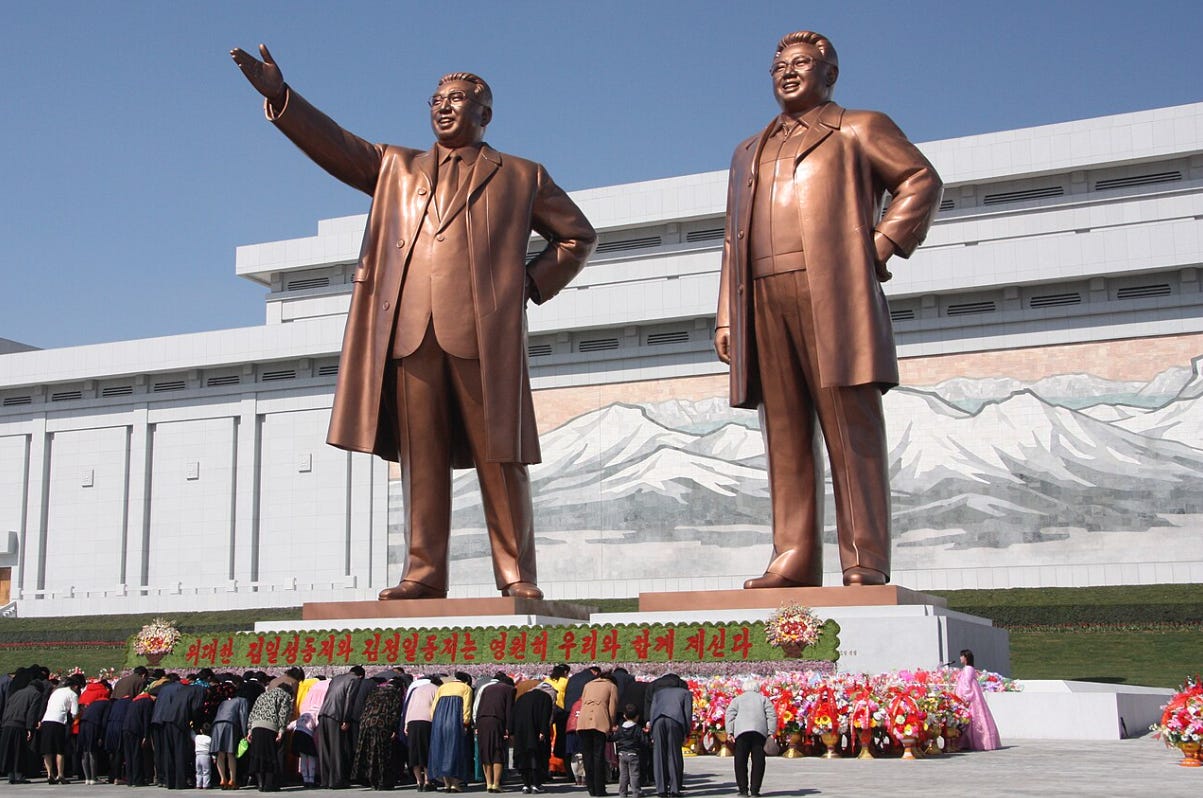
Many democratic leaders now try the exact opposite path to power that the god-emperors did. Instead of pretending to be special, they present themselves as “the man of the people” or “one of you”. Often, this is also an act.
There is still more truth in the modern view of our leaders as regular human beings than in the idea of the god-emperor. But the change is still a part of what Max Weber called the “disenchantment” of the world, the disappearance of meaning-giving belief in magic. It probably made people happy to think they were ruled by wise and benevolent gods. Now we know this is not the case. But from the fact that we today seem to switch back and forth between lionizing our leaders to being disappointed in them, it is clear that we can’t quite shake the idea that leaders are supposed to be more than mortal.
Immanuel Kant said that the Enlightenment was the world reaching its age of majority. But this also places a heavy burden of responsibility on us to handle our countries, communities and selves without divine assistance. This is the responsibility of knowledge.
Jakob Sjölander
No posts
Comments
Nothing yet. Say the first thing.
Sign in to join the conversation.