
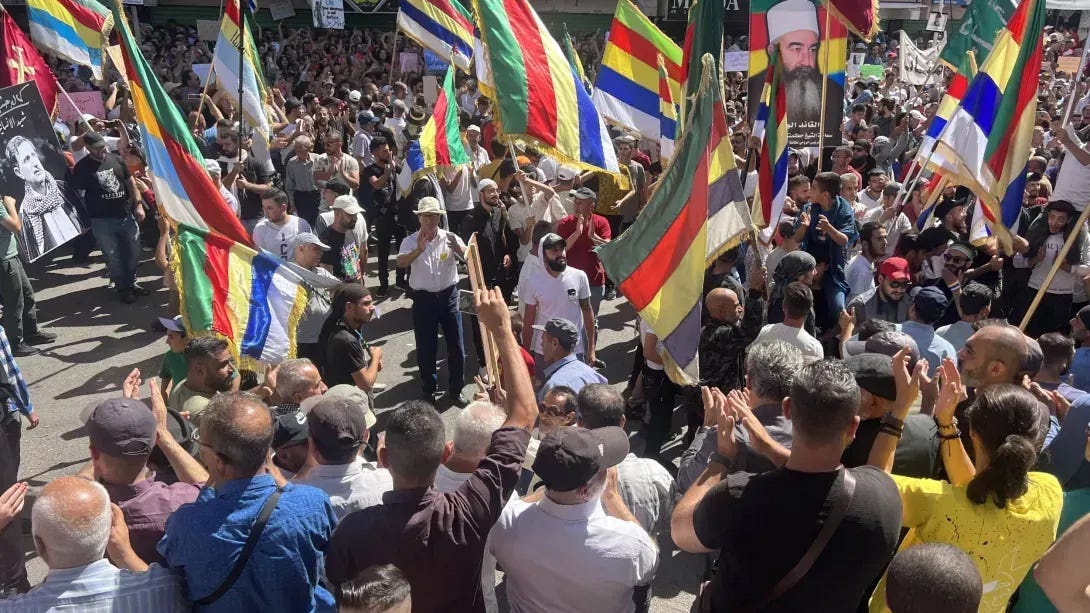
Ask a Druze elder in Jabal Bashan what “Syria” means to him these days, and you will get a shorter answer than you might expect. It means the men who came over the hills a year ago to burn his village. It does not mean the flag, the anthem, or the seat at the United Nations.
Just over a year has passed since Sunni Bedouin militias, backed by fighters loyal to Damascus, swept into Sweida, in Syria’s stony south, and slaughtered close to 1,500 people, most of them Druze, in a spasm of sectarian violence that shocked even a region inured to shocks.
Israel intervened with air strikes, ostensibly to protect the 700,000 or so Druze clustered around the area, a move Jerusalem has not been shy about repeating since. In July, marking the anniversary, Sheikh Hikmat al-Hijri, the Druze’s spiritual leader and the nearest thing it has to a head of state, thanked the country that came to his people’s aid.
“We will never forget those who stood by us,” he said. “I would especially like to mention the State of Israel, given our geographical proximity.” He has spent much of the past year calling, in terms that leave little room for misinterpretation, for self-determination in what he prefers to call “Jabal Bashan” rather than Sweida. In his vision, this would be an autonomous zone guaranteed by Israeli power, rather than continued subjection to a Damascus government led by men who, in living memory, were fighting for al-Qaeda’s Syrian franchise.
Enter the diplomats.
Comments
Nothing yet. Say the first thing.
Sign in to join the conversation.