
Hat/Harriet Richardson is a white, semi-speaking, multiply neurodivergent Speech Pathologist, Neurodevelopmental Practitioner and writer. She runs the social media account @hat.talks.uk.
Kim Mears is a neurodivergent speech and language therapist who has multiple identities. She is a wife, a mother, daughter and friend. She also identifies as an AuDHD narrator and information sharer who loves learning, unlearning and disrupting.
Their new book, Exploring Semi-Speaking as a Communication Identity: A Reflective Practice Guide, is out today.
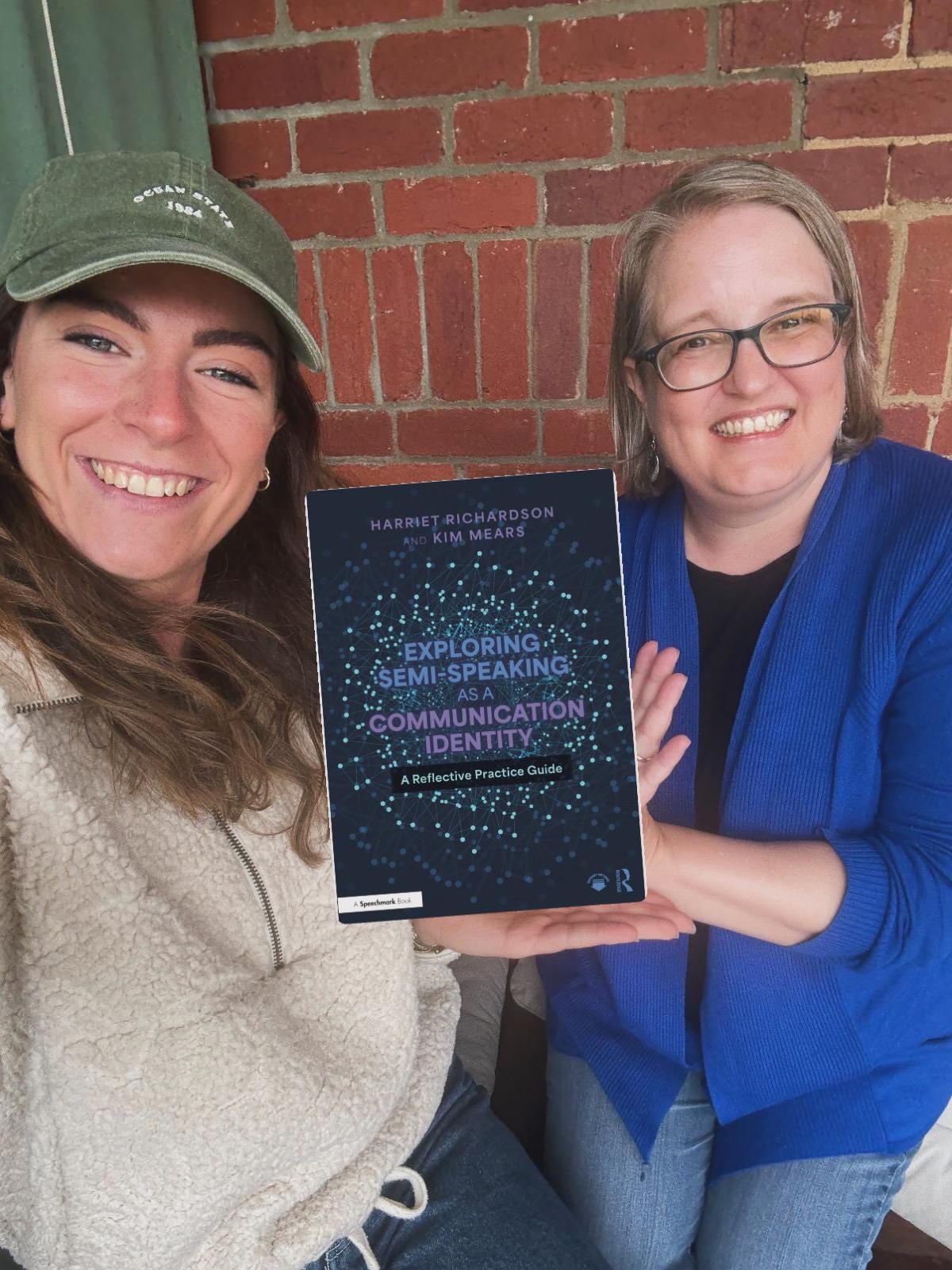
Over recent years, there has been an increase in information and shared knowledge that has come from the lived experiences of the autistic community. Semi-speaking is a term that has emerged through discussions mainly within the autistic community. Many people have shared their experiences of sometimes not having access to mouth words and/or finding speech exhausting and effortful.
Many of our contributors are advocates within the autistic community, who have shared their own experiences of being semi-speaking, as well as neurodivergent professionals who empower the people they support to explore their communication identity through a neuro-affirmative approach. We feel very fortunate to have so many contributors who have shown so much enthusiasm to this project including Dr Alyssa Zisk who wrote the foreword and supported us in our writing and information gathering.
In our book (Richardson and Mears, 2026) we propose the following working description of semi-speaking:
“Semi-speaking is a communication identity that has evolved to describe the internal experiences of people who have access to speech and have periods when they are unable to access speech. This can be for a wide range of reasons including distress, intense joy, fatigue and overwhelm. The internal experiences can include periods of mutism, forced speech and conserving speech.”
Comments
Nothing yet. Say the first thing.
Sign in to join the conversation.