
When we left BC in December, we anticipated being gone for a month. But a month turned into two. We spent the first month in Palm Springs, California (you can read about that here) and the second in Sedona, Arizona. The plan was to train for Tarawera 100K in a warm, desert climate then return home to BC for a few weeks before flying to New Zealand.
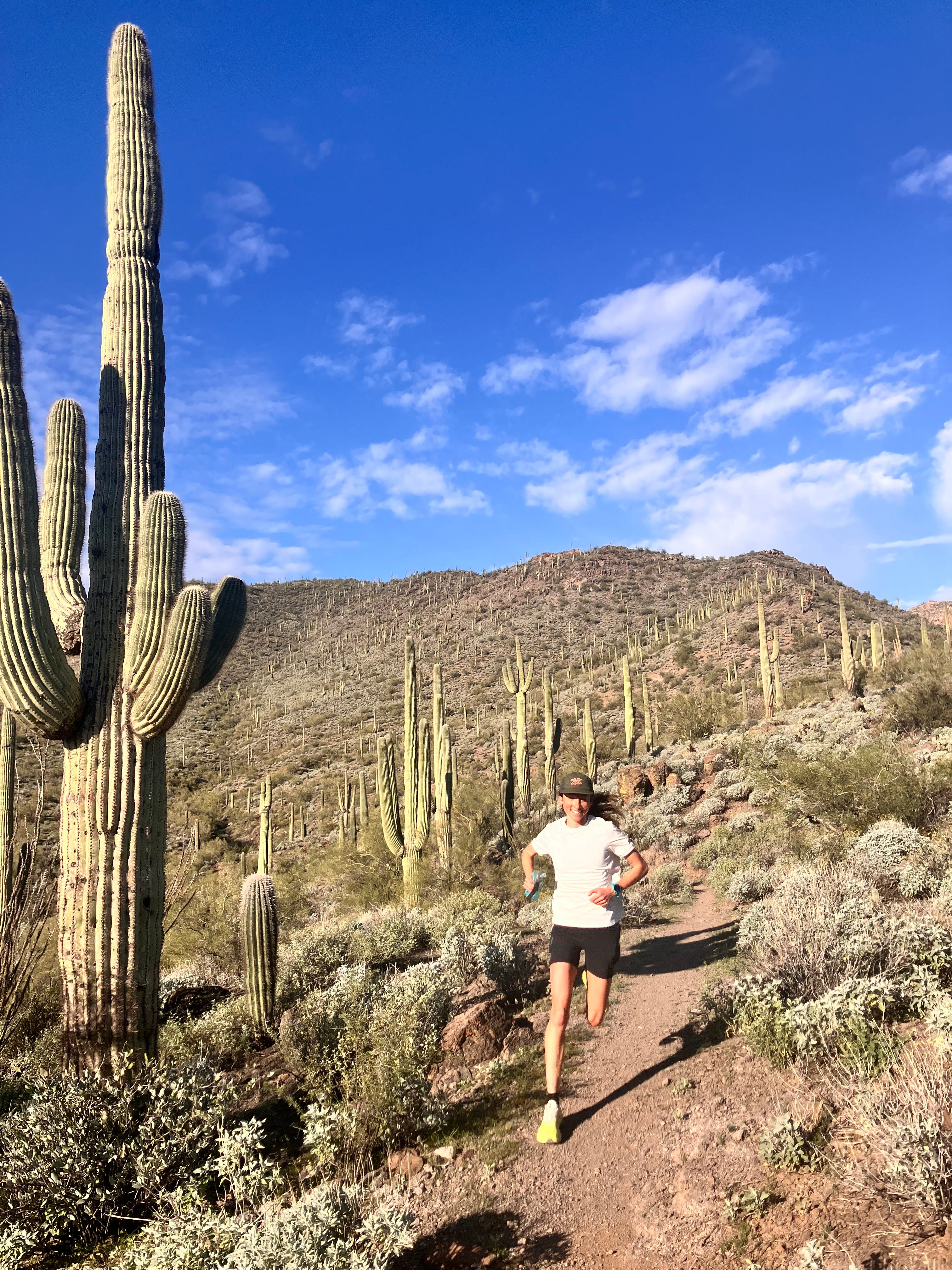
We set up half of our animals (two dogs, three cats, three rats and Betty the rabbit) in the Subaru and fit our clothes, running shoes and work items in the roof rack above. Then we drove 21 hours south. In Palm Springs, I logged a lot of miles and a lot of vert running fire roads and singletrack and laps on the track. We got a month pass at the local gym and did strength work and a few threshold sessions on the uphill treadmill. I set the FKT up the Skyline Ascent route on San Jacinto. We walked the dogs in the sunshine.
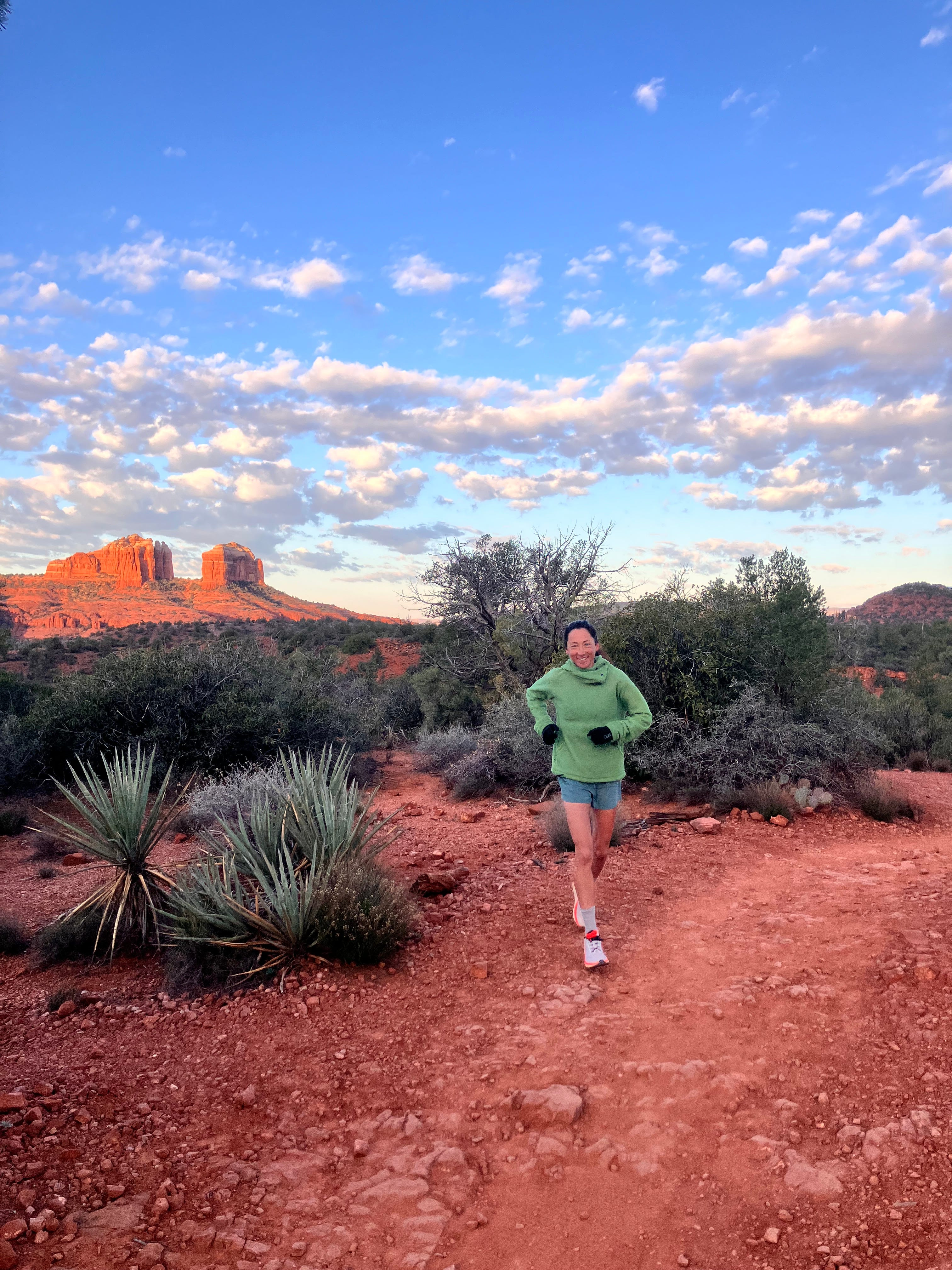
Somewhere in there, we looked at the financial and logistical requirements of getting to New Zealand and worked out that choosing a different golden ticket race and spending another month in the southwest was cheaper than driving home and then flying to Tarawera. So I withdrew my entry to Tarawera and instead entered Black Canyon 100K, entirely changing our plans. We decided to stay in Sedona, both because it was familiar (we living there for several years during the pandemic) and because it was a relatively short drive to the start of the Black Canyon 100K. This would also give me the opportunity to train on the course.
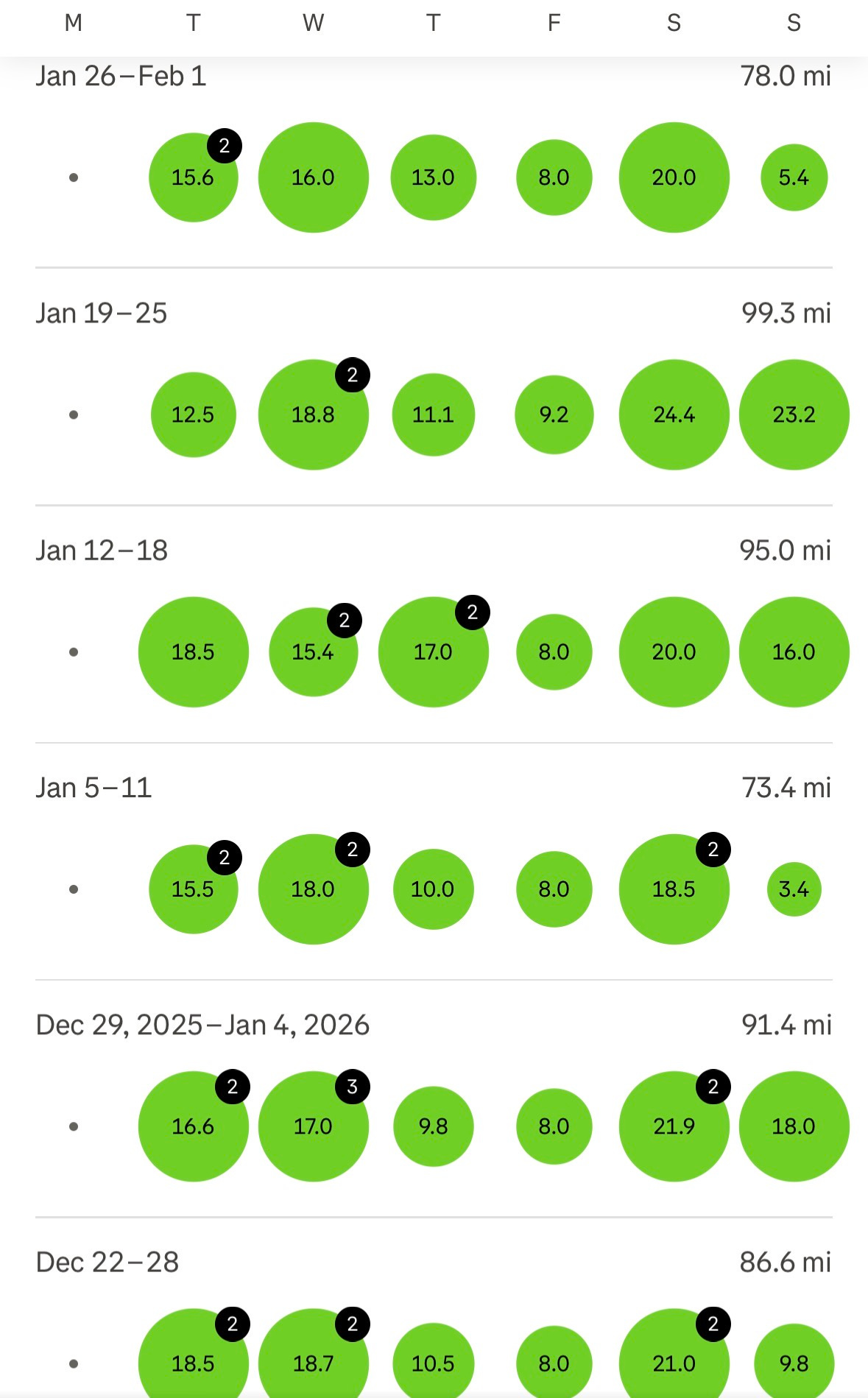
I completed all but one day of the scheduled plan, which says something about how well this training block went. But what you can’t see on my Strava profile are the feelings that came up as I trained. Over the last four years, January has been an emotionally charged time for me. After a childhood of back-and-forth visits and arguments about where my brother and I would spend the holidays (or even what holiday we were celebrating) this time of year is not my favourite.
Anger has been a constant through this time, and running has amplified it. It’s perhaps not surprising: a higher heart rate means less regulation, more reactivity. I can’t run through my emotions (nor do I want to) and the fitter I’ve become over the years, the less I can afford to process my emotions this way. There are some workouts that can be helpful as a way to funnel these feelings, particularly with feelings that require a physical processing, but I’d risk injury if I did this more than once or twice a week. I also don’t want to spend my energy like this. It’s tiring.
So I sat with the anger. Or, rather, I let it stay with me as I ran. I wasn’t ashamed or frustrated or annoyed that it came along for my runs. It just existed. While I’d love to say that I spent all of those miles feeling grateful and delighted, the truth is that anger was present for a large portion. And that’s okay. The anger just is.
But a couple weeks ago, something changed. This time, I felt it manifest in me: an impingement in my hip. I took two days off of running, then made appointments to see a chiropractor and myofascial release specialist. I felt some relief, but it was still there, nagging me.
My brain does a lot of thinking while I sleep and I find that questions I have incorporate themselves into dreams. Sometimes when I wake in the morning I feel an answer within me. Ten days before the race, I awoke to an answer: I had to express it, this anger. This time, it needed to have a voice.
I didn’t rush to conclusions. I spoke about it first with Nick, feeling sheepish as I explained that I felt that this was my body telling me something. Was this unconventional, too spiritualistic? But he got it immediately and agreed I should consider not just sitting with it but doing something, about the pain. I spoke to my therapist, too, and he helped me come to the conclusion that this was something I wanted to do.
And so later that day I sent a message I’ve long been wanting to send . It was an acknowledgment of my hurt and of questions I wanted answers to. I didn’t expect to receive anything that would satisfy this pain. That wasn’t the point. What I needed to do was finally express my anger.
As soon as I did, I felt lighter. The next day, the lagging in my leg improved significantly and it’s continued to lessen each day.
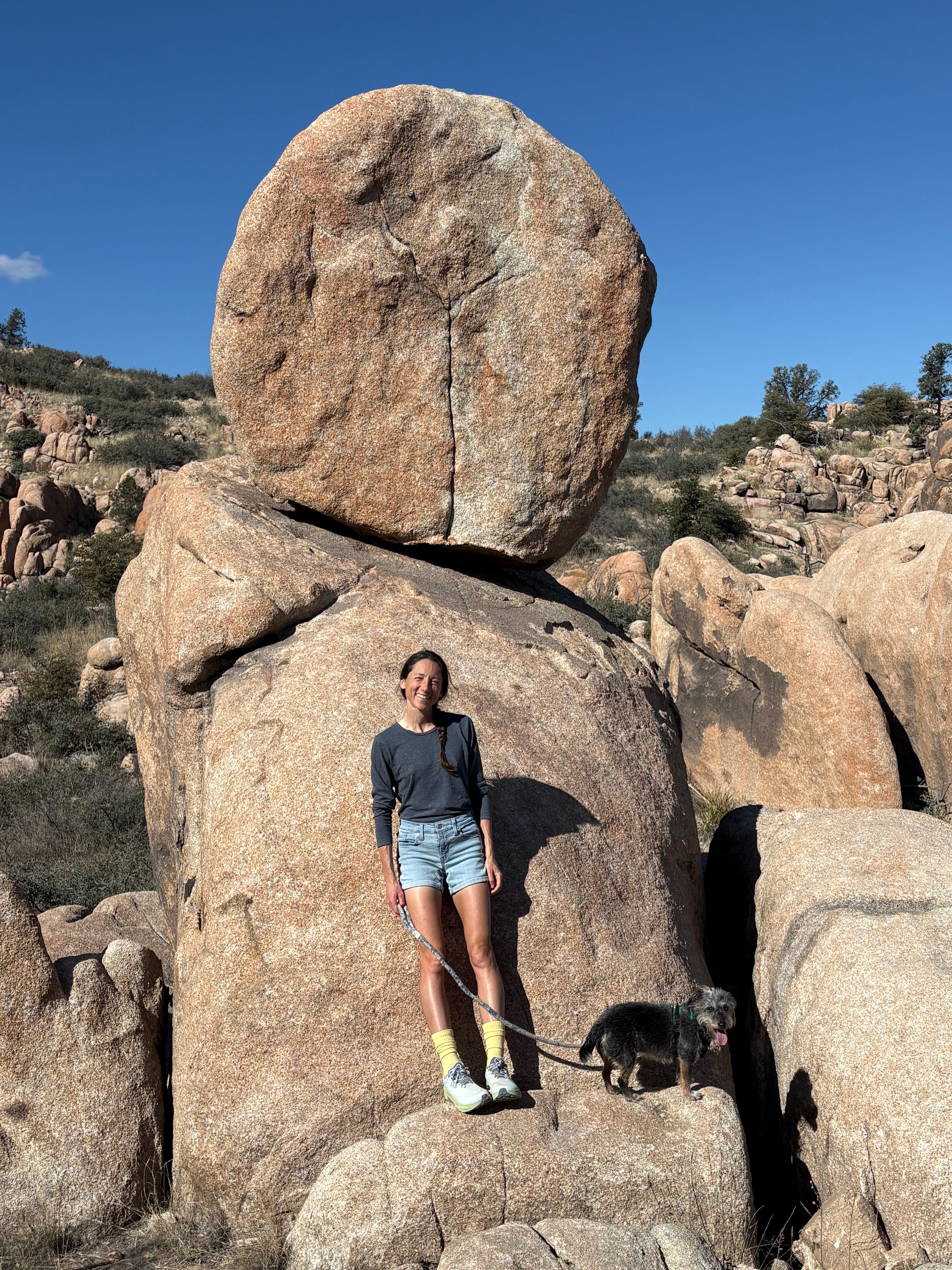
But it didn’t decrease enough before the race. I spent every morning mobilizing—foam rolling, stretching, having Nick helped me with fascial stretching—but I still felt like I was protecting the left hip.
I woke on race morning crying. I had dreamed of Casper, the first time I’d done so since his passing in October of 2024. I was with him in the dream, brushing his fuzzy white coat. I was so happy to see him. But then I realized it wasn’t possible—he’d died, he was gone—and I felt stricken with grief all over again.
The feeling lingered in the hours leading up to the race, even though I went through the motions: pinning on my bib, mobilizing that left hip again, driving the hour to the start and running a warm-up through the cold chill of dawn. I didn’t have a good feeling about the race, but I had done the training and mental prep.
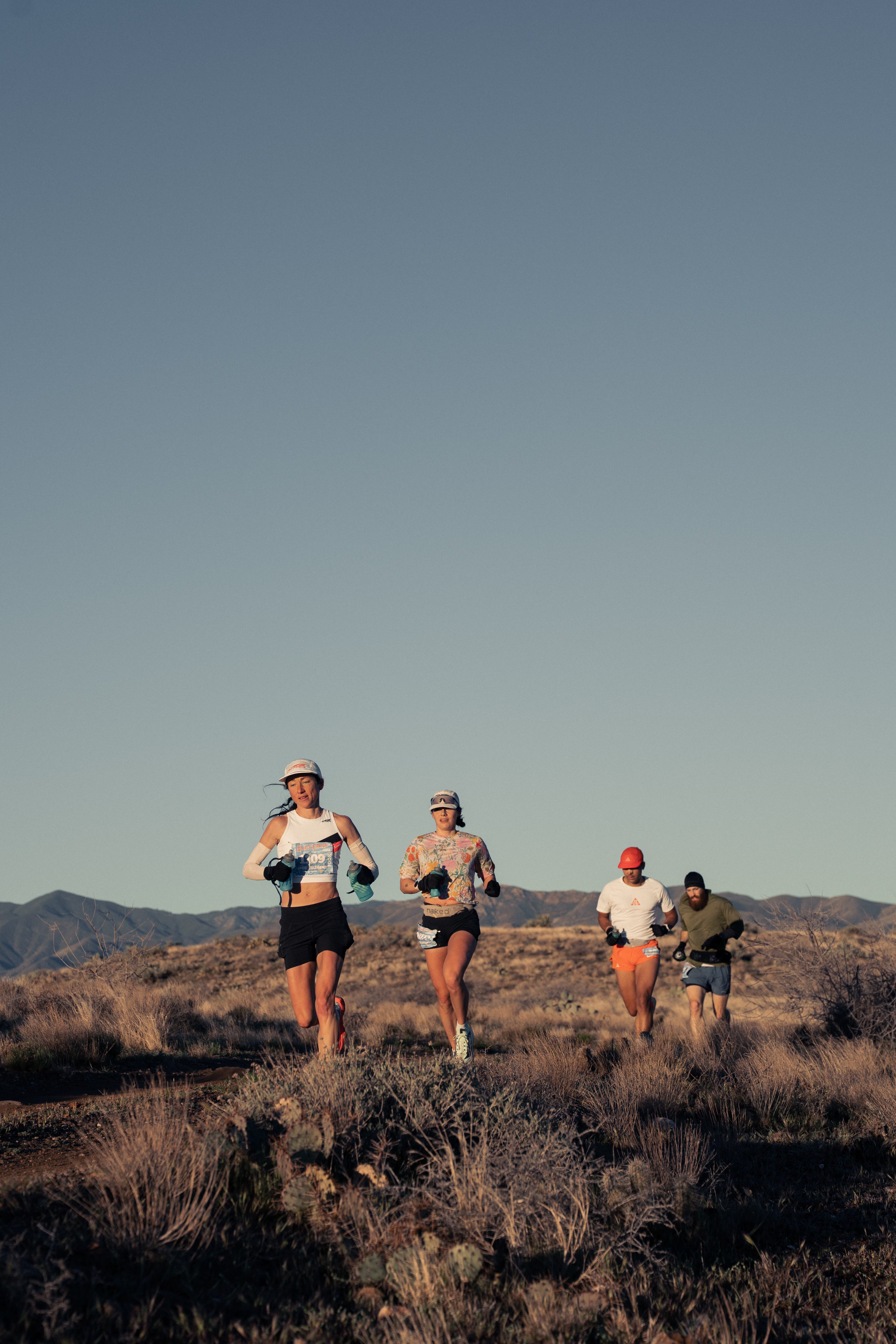
I lined up at the front, next to the friendly face of Shea Aquilano. In less than a minute we were off, running the loop around the Mayer High School track before being funneled onto singletrack as we headed through town.
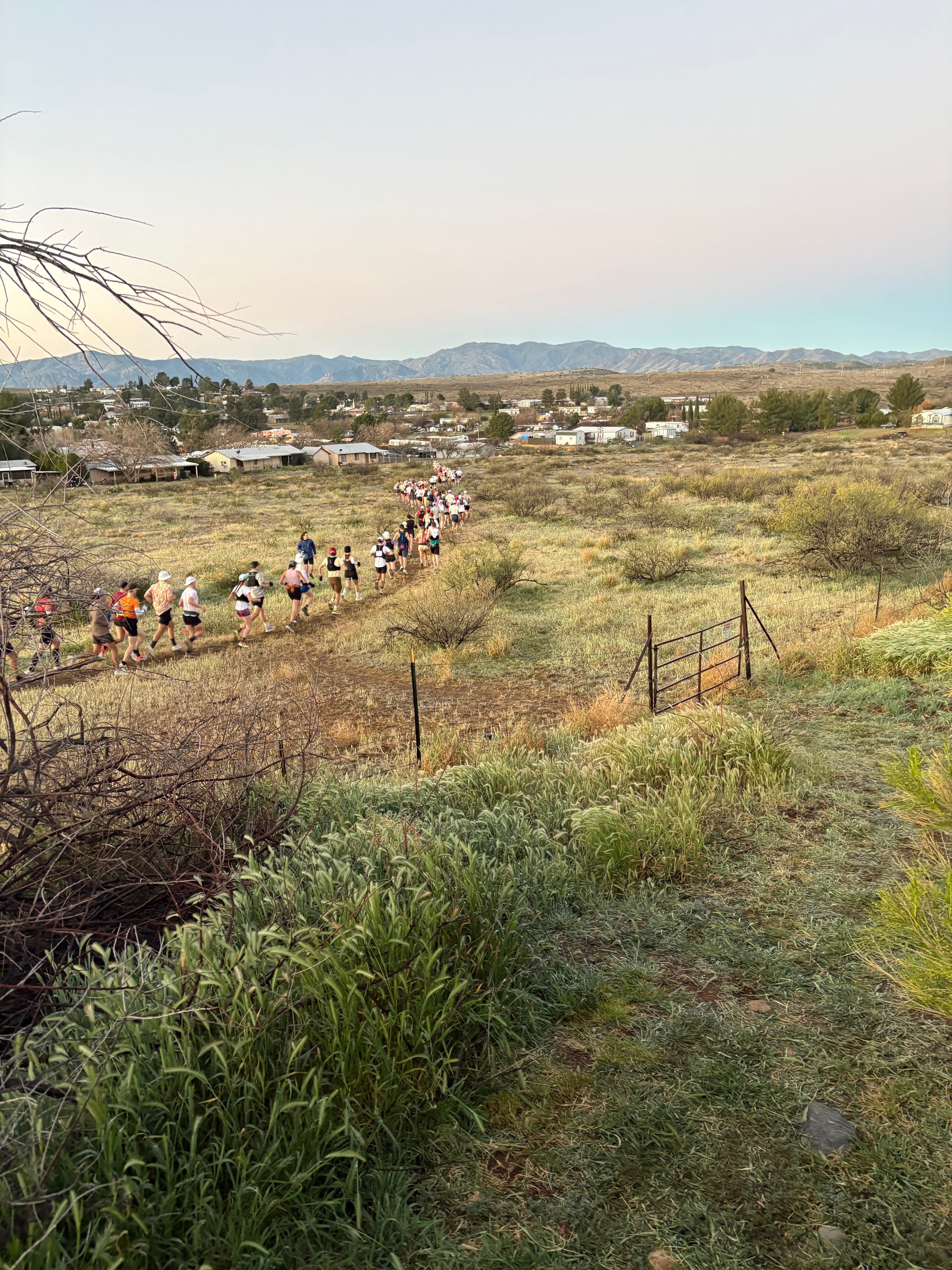
I wanted to stick with the front pack, whoever that ended up including. For the first few miles I ran just behind Jenn Lichter and Molly Seidel. Tara Dower was to my right, Abby Hall and Riley Brady to my left. I hadn’t looked at the entrants list so wasn’t sure who else was behind us.
We hit the first few miles very, very fast considering this was a 100K: 6:07, 6:53, 6:52 (converting to a GAP of 6:13 minute per mile pace.) I wasn’t concerned with the pace, but I was immediately worried about how I felt. My left hip was impeded, as though I was having to rely entirely on my right side for stability and power. I’ve run enough races to know what race nerves feel like, and this wasn’t that. The competition was incredibly deep and this would be a challenging 100K, but I was only concerned about how I was going to make it the next aid station.
As firewood gave way to technical singletrack, I let several women pass me. I was concerned about my stability; every left step felt as though I was willing my leg to hold me, for my foot to move where I wanted it to. Something between my brain and my leg just wouldn’t connect.
By mile five I knew I’d be dropping. By mile eleven, I was gaming out where that drop should occur. If I dropped at Hidden Treasure, I would have to wait for Nick to pick me up and I didn’t know when that would be. If I hung on until Bumblebee, he’d be there and I could explain the situation in person.
I lost the front pack around Hidden Treasure and found myself in 10th place. By the time I came into Bumblebee, I was in 13th but I didn’t care. My body wasn’t working right and I wasn’t going to put it through another 40 miles in this state.
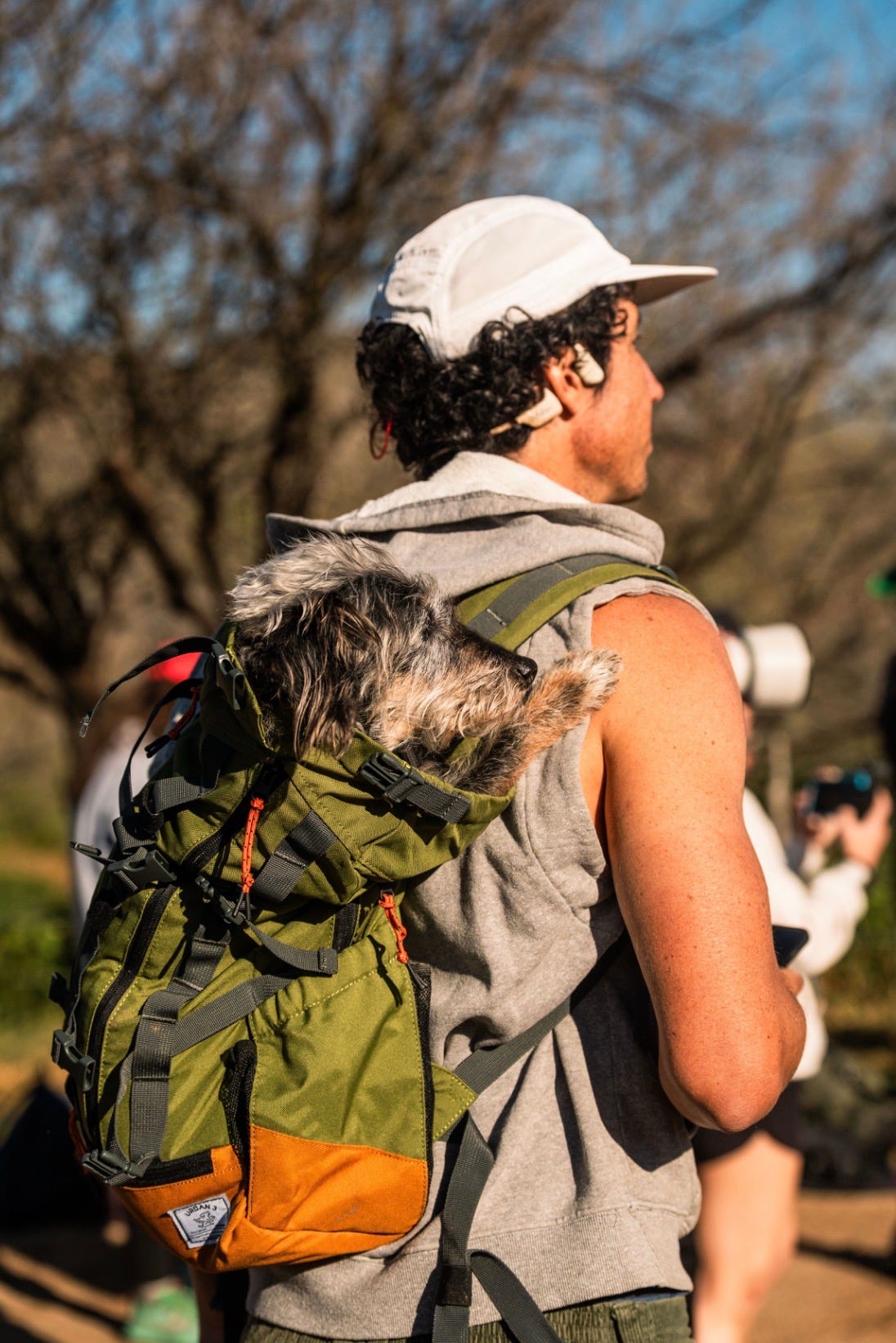
The cheers were loud and uplifting coming into Bumblebee, and I think I smiled though I wasn’t fully enjoying them. I figured I’d be dropping right there. But after finding Nick in the crowd and explaining the situation, he began working on my hip, trying to relax whatever was tightening.
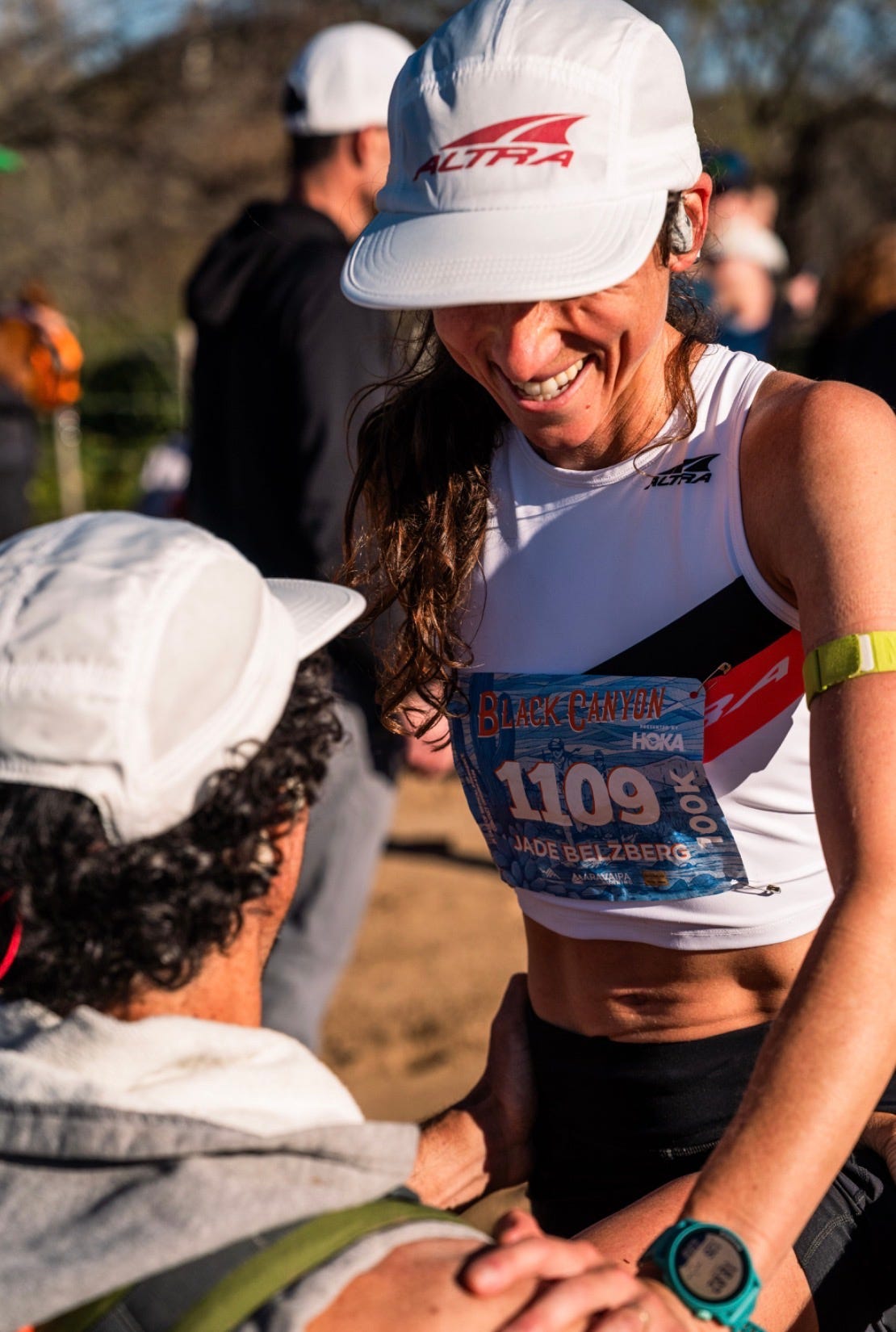
I decided to give it a try, hopeful that the pinning and stretching we did would help. For a few brief moments it did. My gait felt normal for half a mile as I ran through Bumblebee Ranch. As soon as I began the climb out, however, I could feel things locking back up. Once more it was as though I couldn’t trust my left leg to stabilize me let alone power me up anything. My pace slowed and though I ran all the way to Gloriana Mine, the next aid station at mile 23.5, I knew I was done.
Dropping was simple because I had already decided that was what needed to be done. I simply told the aid station captain I was stopping because something was wrong and I didn’t want to put my body through a 100K in that state. And then Nick picked me up.
A few days later, after we’d packed up and driven home, I spoke with my therapist. We talked about the race but also all of the training. Was it all for naught? Those two months away, the hundreds of miles of training...all of that effort just to DNF?
But my answer was no. Of course it wasn’t for nothing, especially because I had let go of an emotion I’d been carrying for a long time. As my therapist said, “Perhaps you needed all of that volume in order to be able to move what needed to be moved in your body.”
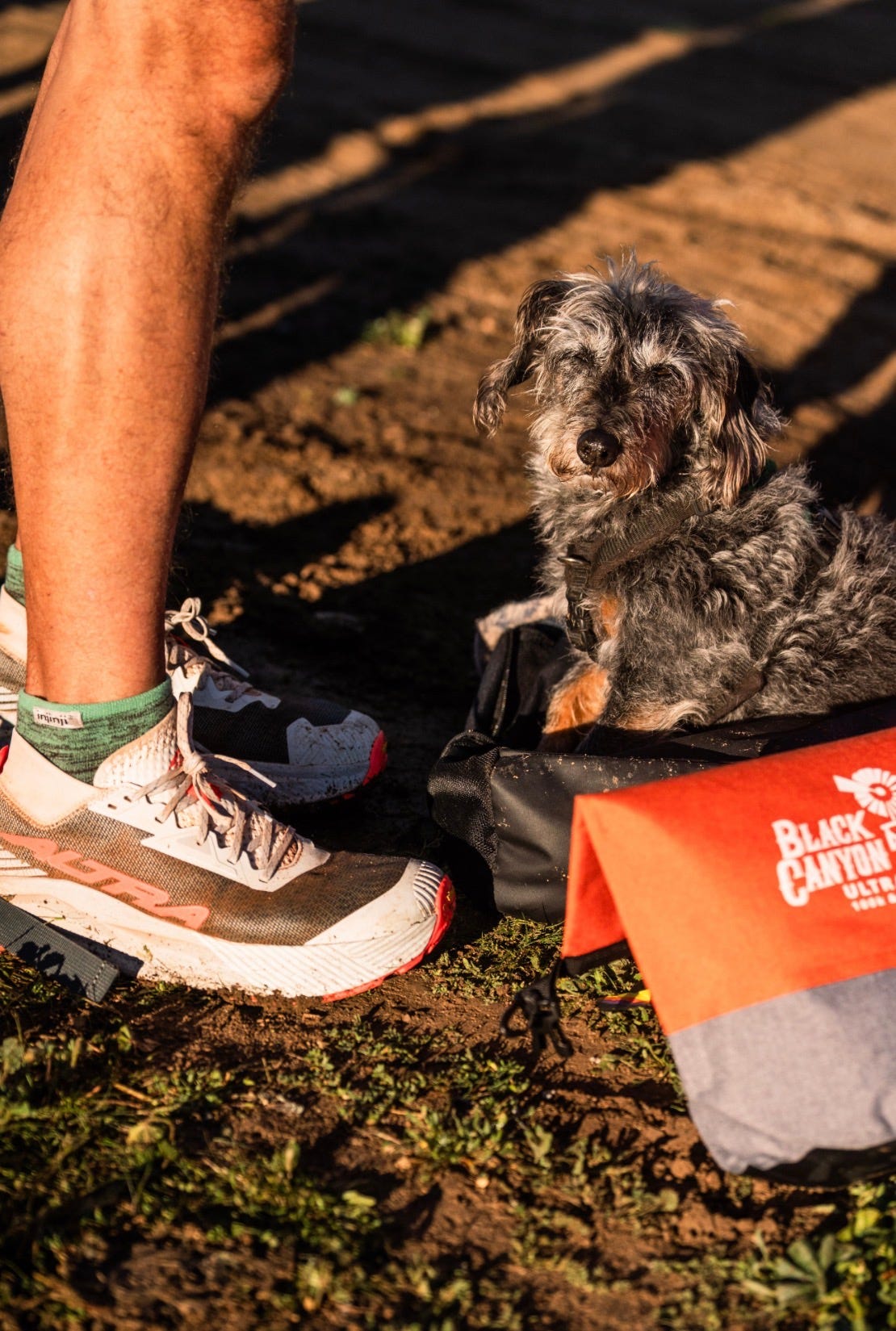
It didn’t cure my hip, of course, but it’s on the mend. I was able to run 60 miles this past week, all easy and flat, and each day I’ve felt more normal. My physio didn’t diagnose me with anything more than having extremely tight psoas and the x-ray to rule out any spinal compression came back clean. Maybe it’s the last of the anger moving out, or maybe my body just needed a reset and it came at what was a poor time in the moment (Black Canyon 100K race day) but will eventually be just another day, just another race in the desert. There’s always the next one.
And there will be. Stay tuned!
No posts
Comments
Nothing yet. Say the first thing.
Sign in to join the conversation.