
Often, we take the river near us for granted — the great New York valley, the estuary of restless tides, the palisades, mountains and northern peaks. F. Scott Fitzgerald had written that “for a transitory enchanted moment man must have held his breath in the presence of this continent.” That man was Henry Hudson.
Hudson himself was focused on something more domestic and more vital — he had to avoid having his ship go aground. During early September 1609, this English captain of the Dutch vessel Halve Maen (Half Moon) had crossed the mysterious sea laden with hope. Now afloat in the New World, he had to keep the “yacht” intact amid gales and shoals.
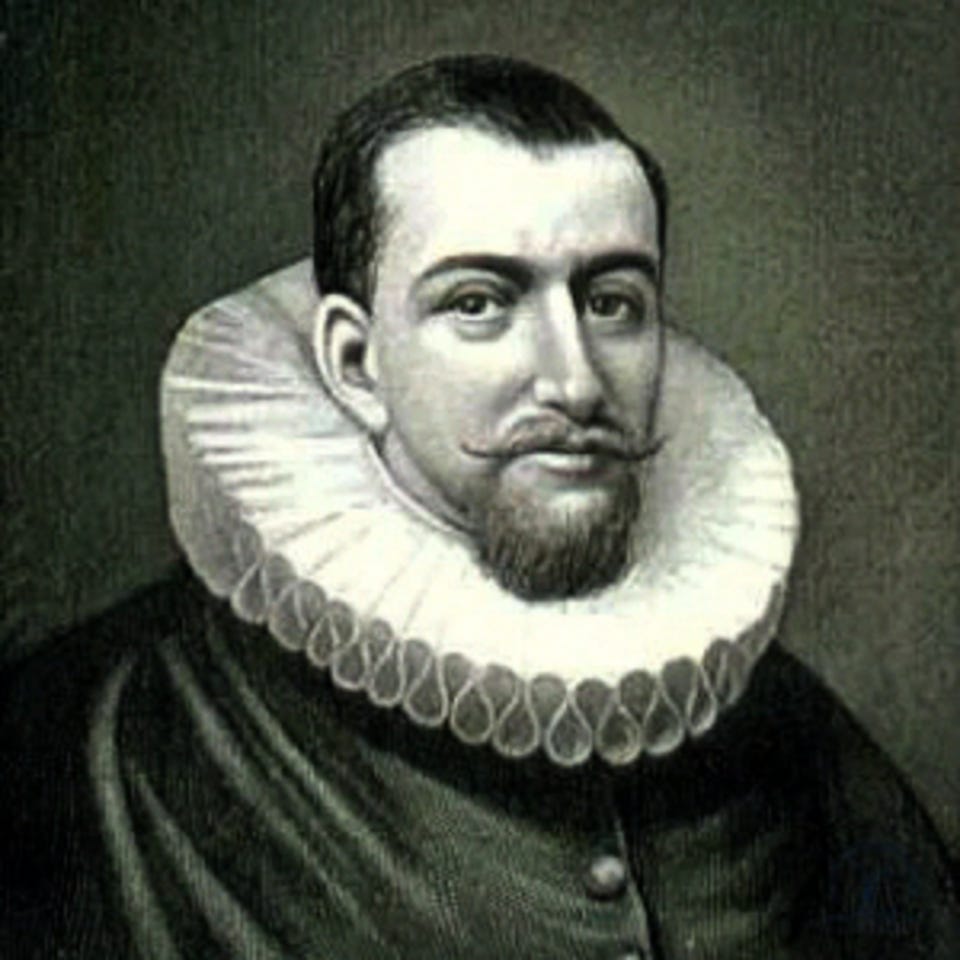
Little is known of the Englishman, Henry Hudson. His portraits are imaginary, the details of his education unknown. He was known to be a seaman — he had captained several ships of exploration before. He could read and chart the stars. But he also kept one foot in medieval time — his sailors had seen actual mermaids, “flowing hair and very beautiful,” and Hudson might have believed it.
Sixteen sailors, mostly Dutchmen, had sailed along with Hudson with his seventeen-year-old son John, and the two English mates, Robert Juet and John Coleman. In March, they had navigated northward along the Scandinavian coast and into the deadly Russian Arctic, hoping to cruise all the way to the Orient.
No luck. Bitter cold and pack ice blasted them along the eastward route. Hudson turned and headed south and west, looking for a gap through the continent of America. His eighty-five-foot craft had cruised south but found no opening along the coast. In August, having sailed as far as Chesapeake Bay, they reversed yet again. They crawled north until they found a promising entrance through the complicated tidal inlet, the harbor of today’s modern New York City.
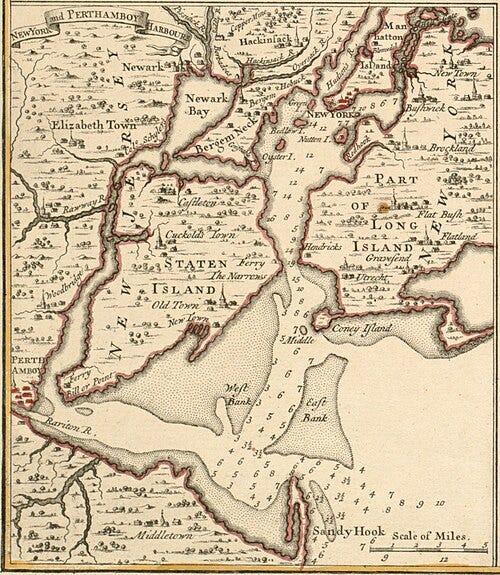
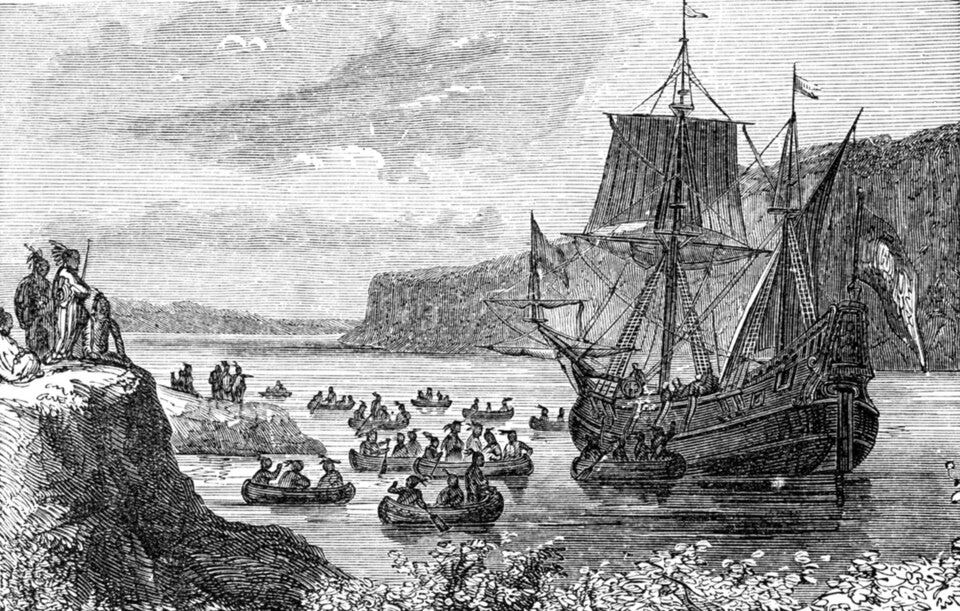
Anchored just below the lower harbor, Hudson spent some days looking for a channel that might break through the continent. In the meantime, two groups of humans tentatively approached each other. The men and women known as the Lenape paddled their dugout canoes toward the ship. They could not understand what to make of this thing. Was it a huge canoe or a floating house? Did it belong to the supreme being, Mannito? Did it bring welcome or danger?
The Native Americans came aboard “dressed in cloaks of feathers and furs.” Hudson said they sang and danced and that they were “seeming very glad of their coming.” Neither group could speak the language of the other, but each offered items of trade. The indigenous people brought green tobacco, hemp, and dried currents that Hudson found “excellent eating.” The captain in return gave them knives, beads, and trinkets.
The next morning, Hudson sent his second mate, John Coleman, to navigate a boat up the river and to scout toward the west. He and four sailors rowed along the channel “pleasant with grass and flowers.” They found no opening and finally turned back toward the ship. A hard rainstorm descended — a confrontation erupted and the native warriors attacked the small boat from their canoe. The sailors escaped in the fog and darkness, but three had been injured by arrows. Coleman, who had been hit in the neck, died.
Hudson defended the ship, but he also knew that time was limited. They would have to explore the river before autumn descended. He decided to send the ship north through the strait. Moving past the narrows, the white men now entered the great river for the first time.
What a sight! They saw the towering palisades and the wide “sea” of the broad river known as the Tappan Zee. They passed onward through the Highlands and farther up, past the blue Catskill Mountains to the west.
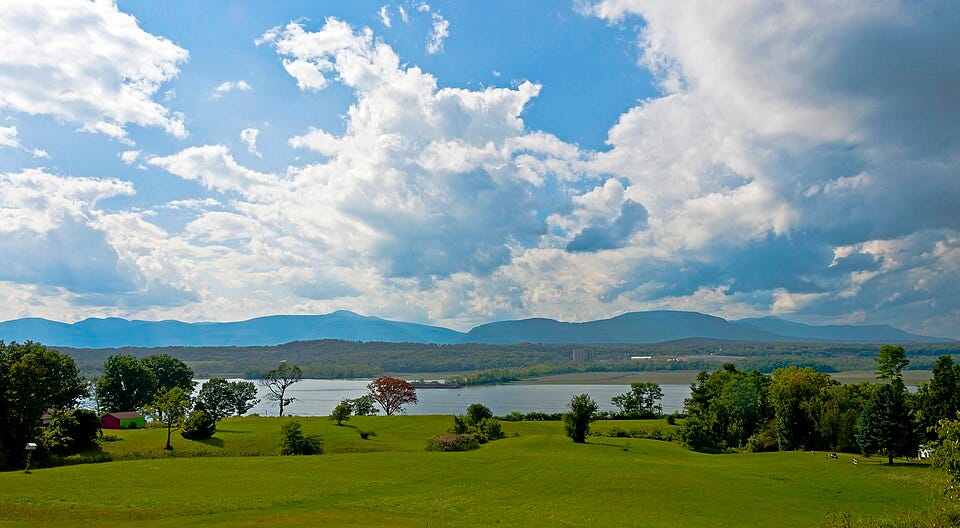
As they continued up the river, they encountered more Native Americans, some friendly, some watching suspiciously from the tree line. By September 18, the men reached what would later be known as the village of Catskill. Hudson was welcomed by an old chief and sixty members of his clan. He came ashore and they prepared a meal for the Europeans. Hudson wrote that they were “a very good people.”
The Europeans continued as far as Albany, accepting offers of beaver skins and venison, ripe grapes and pumpkins. Hudson dropped his anchor and sent his sailors to row farther north. They realized that this was a river, not a strait — there was no passage here to the Orient.
They returned. Passing back southward near what would be the town of Newburgh, Juet said this would be a “very pleasant place to build a town on.” It was the first suggestion that white men might come back to colonize, as indeed they would. Maybe the indigenous people sensed it, for the voyage back was marred now by violent skirmishes. By early October, Hudson emerged again into the open ocean. He began their return home.
Hudson would return in the spring of 1610 and would try yet again to find the Northwest Passage, this time starting further north. He stayed through the winter near the frozen Canadian expanses of James Bay. A bitter dispute erupted between Hudson and the disgruntled Robert Juet. It became a mutiny. Henry Hudson and young John, along with seven others, were cast into a small boat and left to die in the frigid north.
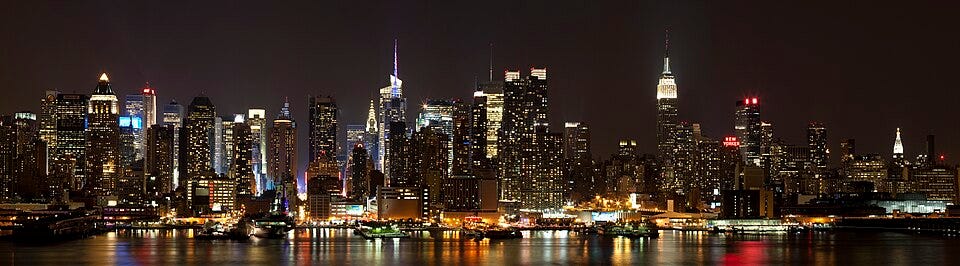
Today, the sparkling skyscrapers and the bustling towns along the valley have brought much that is new. Yet Fitzgerald’s “transitory enchanted moment” remains — the tides, the shoals, the ancient aroma of the changing seasons, still belong to the timeless river that carries his name: the Hudson.
Comments
Nothing yet. Say the first thing.
Sign in to join the conversation.