
Trigger Warning: This piece discusses Yo‑Yo Lubrin’s death, the contradictions at the scene, and the state’s rush to call it a suicide. It includes details that may be triggering, especially for Black readers who have seen this pattern before.
On September 28, 2023, Orlando police walked into a backyard, saw a Black woman hanging from a tree, and decided the entire damn narrative before touching a single piece of evidence. (If this still surprises you, you have not been paying attention to what I’ve been putting out.) Thirty‑one‑year‑old Yolna “Yo‑Yo” Lubrin was already gone when they arrived, but instead of asking how or why, they rushed to label it suicide. The department did not slow down long enough to consider anything outside their default “Black person hanging = suicide” script.
Not because the evidence pointed there (it never does), but because white supremacy has taught them they can. Because American law enforcement was literally built to track, capture, and control Black people. The earliest policing structures in this country were slave patrols, and everything that came after carried that same damn logic forward: surveillance, containment, and punishment of Black bodies. Jim Crow did not invent that violence; it just formalized it, and that shit ain’t never dissipated.
So when a Black woman is found dead, the system does what it was designed to do: dismiss, deflect, and move on.
No real investigation.
No pause to assess contradictions.
No curiosity about how a Black woman ends up hanging in a stranger’s backyard at sunrise.
Just a racist, negligent‑ass conclusion; the kind Black families have been forced to swallow for decades while racist policing structures protect themselves and the violence they not only enable but encourage.
A video taken before police even bothered to secure the damn area showed Yo‑Yo’s body in a position that does not align with suicide. Her chest was exposed. Her hand could reach the wall. Her posture suggested she could stand, much like Juliana Nzita.
Y’all, these ain’t small details. These are blaring red flags; the kind that should’ve stopped the investigation in its damn tracks and pivoted it straight into a homicide investigation. But that would require white effort, white empathy, white curiosity, and a white willingness to treat a Black woman’s death like it matters. And we all know the American policing system ain’t ever gonna extend that to us.
Another video showed her car torn apart: every door open, belongings thrown everywhere, windshield smashed. Y’all, that ain’t the scene of someone quietly preparing to take their own life. That is the scene of chaos, struggle, and violence. How the fuck can they ignore this?!
The men who filmed it did not bother to call 911.
They did not bother to speak to police.
They simply went to work while a Black woman hung in their backyard. And police accepted that silence without question.
This is what happens when racist white investigators walk in with a conclusion already in hand: evidence becomes optional. And when the system was built from slave‑patrol logic (surveillance, control, and dismissal of Black life), optional becomes the damn standard.
I have proven to you, in every case I’ve written, that they ain’t an isolated failure. It is a pattern; a repeated, predictable, historically backed pattern. The same system that failed Titi Gulley before Yolna, and failed Tonea Miller after her, didn’t miss a fucking beat. It swallowed Yolna’s name whole like it was nothing.
Y’all, this is how the system moves: Black women die under suspicious circumstances, and the investigation collapses before it even begins. The conclusion gets written first. The evidence gets ignored second. And the family gets told to accept whatever story racist ass law enforcement finds most convenient.
Yolna’s case is following the same fucking script:
✔️Quick ruling.
✔️Shallow investigation.
✔️Evidence at the scene contradicting the “cause of death.”
✔️A racist system that treats Black women’s deaths as nuisances instead of mysteries worth solving.
Yolna did not just fall into a tragedy, y’all. She fell into the white supremacist blueprint; the same one that has shaped how this country responds to Black death since 1619.
Yo‑Yo was not disposable. She was not invisible. She was not the caricature police narratives try to flatten Black women into.
She was brilliant, loving, and deeply rooted in her family. She cared for her disabled mother. She adored her nieces and nephews. She believed in unity and community. She was part of the LGBTQ community and carried herself with a heart that extended beyond her own circle.
She deserved a real investigation.
She deserved a system that did not treat her death as an inconvenience.
She deserved the same urgency, thoroughness, and respect routinely given to white victims.
Her life was full. Her death was suspicious. Her story deserves truth.
As of August 3, 2026, the family still has no answers. No timeline. No accountability. No transparency.
Just silence; the kind white institutions rely on when they hope a case will fade, when they hope the community will get tired, when they hope the family will stop asking questions.
But silence ain’t closure. Silence is strategy. Silence is how these cases disappear. And silence is exactly why we keep talking. Because when the system goes quiet, we get loud.
Public suicides are rare. Fewer than 10% of suicides in the U.S. occur in public or semi‑public spaces.
Source: CDC National Violent Death Reporting System (NVDRS), 2023.
Hanging from a tree is extremely uncommon. Among suicide deaths by hanging, the vast majority happen indoors: closets, rafters, door frames. Outdoor tree hangings make up well under 5% of hanging suicides.
Source: NVDRS method‑location cross‑tab analyses; American Journal of Public Health, 2021.
Black Americans are underrepresented in suicide by hanging in public spaces. Black people account for less than 10% of suicide deaths by hanging nationwide, and an even smaller percentage of outdoor hangings.
Source: CDC WISQARS, 2022; NVDRS demographic‑method data.
Black suicide deaths overwhelmingly occur in private spaces. NVDRS data shows Black Americans are significantly less likely to die by suicide in public or semi‑public locations compared to other groups.
Source: NVDRS location‑of‑injury tables, 2023.
Mental illness ≠ suicide. More than 90% of people living with depression, PTSD, bipolar disorder, or anxiety do not die by suicide.
Source: National Institute of Mental Health (NIMH), 2023.
The data does not align with the police investigations. Period.
If you want answers, you do not beg the same institution that ignored the evidence. You apply pressure where it actually lands: the offices that oversee them, fund them, and can force their hand.
407‑836‑9400 — Medical Examiner
This office determines the official cause of death. Tell them the scene contradicts suicide and demand an updated ruling and timeline.407‑246‑2221 — Orlando Mayor’s Office
The mayor can push for independent review. Tell them the investigation was negligent and you want external oversight.407‑836‑7350 — Orange County Commissioners
They control budgets and oversight committees. Tell them you expect a public inquiry into OPD’s handling of Yolna’s case.850‑410‑7000 — FDLE (State-Level Review)
FDLE can step in when local investigations fail. Tell them the contradictions and witness reports were ignored and request a state review.850‑224‑3745 — NAACP Florida
Civil rights advocates who can escalate this. Tell them you want support pushing for an independent investigation.786‑363‑2700 — ACLU of Florida
They track systemic negligence. Tell them this case fits a pattern of dismissing Black women’s deaths and needs legal attention.
These are the pressure points. Use them.
Writing these pieces takes work. Real work. Hours of digging, verifying, cross‑checking, and sitting with the same violent pattern that shows me, every damn day, how little this country values Black life. And that kind of work doesn’t just take time; it takes a toll.
Every article means reopening the wound. Reading the details. Holding the contradictions. Carrying the grief of Black families who will never get answers. It means watching law enforcement repeat the same script and knowing exactly how the story will be mishandled before the press release even drops. It means absorbing the trauma of a system that keeps disappearing Black people and expects us to simply endure it.
I keep these articles free because mainstream media ain’t talking about these stories, and they need to stay in the public eye. But free doesn’t mean I ain’t paying a cost. This work drains time, energy, and emotional bandwidth. It chips away at my mental health. It demands resilience that should not be required just to tell the truth about what is happening to our people.
If you want this to continue; if you want these stories visible, documented, and refused, make a donation to my academy so I can keep this activism fueled and this work sustainable.
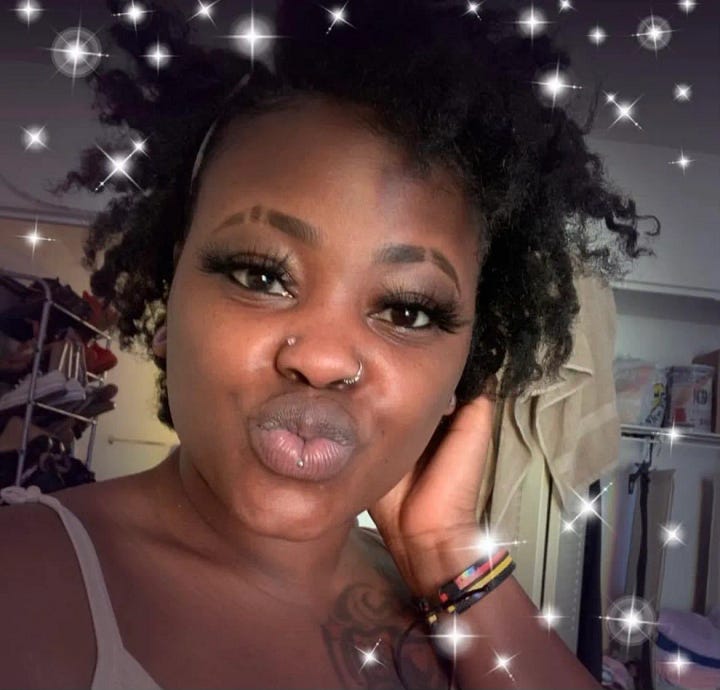
Yo‑Yo’s case has been sitting in silence since the morning she was found hanging from a tree in a stranger’s backyard; a “suicide” ruling that never matched her life, her family’s testimony, or the contradictions at the scene. Orlando is counting on time, on silence, on confusion, on the community getting tired. Sharing this refuses all of that.
Cases like Yo‑Yo’s only move when communities push, when we refuse to let the racist state’s paperwork overwrite the truth sitting in front of us. Visibility is pressure. And pressure is the only thing that will force Orlando to answer for what it ignored.

No posts
Comments
Nothing yet. Say the first thing.
Sign in to join the conversation.