
Trigger Warning
This article contains descriptions of violence committed against a young Black girl, including torture, sexual assault injuries, and a gunshot wound. The details are hard to read and were even harder to write, but they are necessary to understand the full extent of what was done to LaVena Johnson and how the Army erased her. Please take care of yourself while reading.
Let’s talk about what happened to PFC LaVena Johnson in 2005. Not the white sanitized version, not the “official” version, but the version that actually makes sense when you look at the human being and the investigative timeline the Army was supposed to follow.
Because the truth is simple: None of this shit adds up. And the way her case was handled is a masterclass in how institutions protect their own conclusions instead of the people they’re supposed to serve.
LaVena wasn’t some faceless soldier in a headline. She was a nineteen‑year‑old Black girl from Missouri who played violin, loved animals so much she became vegetarian at eleven, volunteered at shelters, and dreamed about film school in California. She was smart, compassionate, and building a life she was excited about.
Two days before she died, she called home talking about Christmas. She told her dad not to decorate the tree without her. That ain’t a girl who’s done with life. That’s a girl who’s planning her future.
And then the Army showed up at her parents’ door and told them she killed herself.
Just like that.
No hesitation.
No nuance.
No space for the fact that the story didn’t make sense.
When the Army labeled her death a suicide, that label didn’t just describe the conclusion; it controlled the entire fucking investigation. Once “suicide” was stamped on the file, everything else was forced to bend around it, even when the evidence was screaming in the opposite direction.
And the moment her family finally saw her body, the whole damn story fell apart. John, Linda, and all of LaVena’s siblings stood there staring at bruises and scratches across her face, a nose that looked broken, injuries that didn’t match a single thing they’d been told. And John wasn’t just a grieving father trying to make sense of the impossible; he was a military psychologist who had seen what an M16 suicide actually looks like. One of his own patients had died that way. He knew that weapon’s violence. He knew the size of an exit wound from an M16. And what he saw on his daughter wasn’t that. The exit wound was smaller than physics allows. Smaller in a way that looked more like a handgun. So how the hell does a father with professional expertise look at his daughter’s body and immediately see contradictions, and the Army still stamps “suicide” on the file like none of it matters?
Trigger warning: LaVena was found dead with a gunshot wound in her mouth on a military base in Balad, Iraq. Her body showed signs of torture, including loose teeth, lacerations, and burned genitals.
They minimized evidence that didn’t fit the narrative.
They treated contradictions like inconveniences instead of warnings.
But LaVena wasn’t a damn puzzle piece to be jammed into a predetermined shape. She was a daughter who had just talked about Christmas. She was a young woman with plans, with a future she was actively building.
A suicide classification should have been a hypothesis, a very loose fucking hypothesis. But instead, it became a fucking shield to cover up a murder.
Here’s what people need to understand: death investigations follow a required sequence. You don’t get to walk into a scene, glance around, and slap a label on it. There are steps. There are rules. There is a timeline designed to protect the truth. And in LaVena’s case, that timeline wasn’t just skipped; it was fucking bulldozed.
The classification came way too damn early. The Army told her family she died by suicide before the scene was fully documented, before contradictions were analyzed, before alternative hypotheses were tested. That ain’t an investigation. That’s a conclusion looking for evidence to justify itself. That is a cover-up in motion.
The scene was treated like a suicide scene, not an undetermined death. Protocol says every death starts as undetermined until evidence proves otherwise. But once “suicide” was assumed, the entire scene was interpreted through that lens. Evidence inconsistent with suicide wasn’t escalated. Injuries that raised questions weren’t treated as critical. They didn’t analyze the environment with homicide protocols in mind. They didn’t investigate the scene; they defended the classification.
Contradictions were ignored instead of escalated. Loose teeth. Burn injuries. Trauma that doesn’t align with the weapon they claimed she used. In any real investigation, those details automatically trigger a homicide review. Not optional. Not “if someone feels like it.” Mandatory. And if that wasn’t enough, the report showed the rifle didn’t even have her fingerprints on it. Not a single one. Explain to me how someone supposedly puts a gun in their mouth and pulls the trigger but leaves zero prints. And the M16 they found in the tent? It wasn’t even her fucking weapon. The serial number didn’t match the rifle she was assigned. So now we’ve got a gun she didn’t use, a gun she didn’t touch, and a gun that doesn’t behave like the weapon they claimed; but somehow the Army still wants everyone to swallow “suicide” like it’s the only possible answer. Absolutely not.
Evidence wasn’t tested against multiple hypotheses. Investigators are required to test suicide, homicide, accident, and undetermined. Only one hypothesis was ever considered. The others were dismissed without documentation, without analysis, without the rigor required by forensic standards.
The investigation followed the label, not the evidence. This is the core failure. The classification came first. Everything else bent around it. Contradictions weren’t treated as warnings; they were treated as fucking obstacles. Evidence wasn’t examined; it was explained away. The timeline wasn’t followed; it was ignored.
The process didn’t collapse by accident, y’all. It collapsed because they treated the conclusion as fact before the damn investigation even began. It collapsed because LaVena was a Black woman. It collapsed because the Army was protecting whoever murdered her.
Let me break down what should have happened the second investigators walked into that tent, because the way LaVena’s case was handled wasn’t just sloppy; it was a straight‑up violation of every rule meant to protect the truth. It was fucking disrespectful. And once you see the actual protocol, you realize just how wild it is that they still stamped “suicide” on her file.
First, they should’ve secured the damn scene. Lock it down. Nobody in, nobody out, nobody touching anything. You don’t classify a death before you even know what you’re fucking looking at, but that’s exactly what they did.
Then they should’ve documented everything, and I mean everything. Detailed notes. Full‑scene photography from wide to mid to close. A scaled sketch of the environment. This is what protects the truth. This is the part that makes contradictions impossible to ignore. And this is the part that clearly wasn’t done with the rigor required for a death involving a firearm.
Next comes the walk‑through; the moment investigators are supposed to actually use their eyes. This is where you notice what doesn’t make sense. Loose teeth. Burn injuries. Trauma that doesn’t match a self‑inflicted gunshot. This is the moment where any competent investigator says, “Hold up; this is not tracking.” But instead of pausing, they pushed forward with the conclusion they already had.
After that, they should’ve collected and preserved evidence properly. Every item collected, labeled, packaged, logged, preserved. Chain of custody starts here. And if the evidence contradicts the suicide narrative, investigators are required to stop and reassess. Required. Not optional.
Then comes hypothesis testing, and this is the part that makes me fucking furious. Investigators are supposed to test multiple possibilities: suicide, homicide, accident, undetermined. You don’t get to skip homicide because it’s inconvenient. You don’t get to skip “undetermined” because it complicates paperwork. You don’t get to force the evidence to match the story you already decided on. But that’s exactly what happened.
Only after all of that, after the scene is secured, documented, analyzed, and tested against multiple hypotheses, do you classify the death. Classification is supposed to be the last step. The conclusion that comes after the evidence has been examined with actual rigor.
But in LaVena’s case?
The classification came first.
The investigation bent around it.
The contradictions were treated like noise.
The evidence was treated like a problem to solve, not a truth to uncover.
Because if investigators had followed the actual timeline, they would’ve been forced to confront the contradictions. They would’ve been forced to acknowledge that her injuries didn’t align with the official story. They would’ve been forced to test homicide as a legitimate hypothesis instead of pretending it didn’t exist. They would’ve been forced to document the inconsistencies instead of burying them. They would’ve been forced to treat LaVena like a human being whose death deserved clarity; not a case file they needed to close and fucking bury.
If you’re building a community command center, the kind I’ve been telling y’all to set up, then LaVena Johnson’s case is exactly the kind of case you use to train your people, sharpen your protocols, and remind your community what institutional failure actually looks like. This ain’t just a story you read and get sad about. This is a blueprint for what happens when racist systems collapse, and Black families are left to fight alone. If you’re serious about community defense, community intelligence, and community response, treat this case like a lesson plan.
Start with investigative literacy. Most people don’t know the timeline for a death investigation. They don’t know the difference between “undetermined” and “suicide.” They don’t know how classification controls everything. Your command center should. Walk your people through the timeline. Show them where protocol broke. Make them understand how early assumptions contaminate entire investigations. This is how you build a community that can recognize bullshit when they see it.
Then build a contradiction archive. LaVena’s case is full of contradictions: injuries that don’t match the ruling, evidence that doesn’t align with the narrative, investigative steps that were skipped. Your command center needs a place to log, analyze, and teach contradictions. Because contradictions are how you train people to see when a system is lying. They ain’t “details.” They’re signals. They’re alarms. They’re the difference between truth and whatever story an institution is trying to sell.
Use her case to train escalation protocol. When something doesn’t make sense, you escalate. You don’t minimize. You don’t explain it away. You don’t bend the evidence to fit the conclusion. You escalate. Her case is a perfect example of what happens when escalation doesn’t happen. Build drills around it. Build scenarios around it. Teach your people how to respond when the official story doesn’t match the physical reality.
Make her case part of your community’s memory. Command centers ain’t just logistics hubs; they’re cultural archives. They hold the stories that remind people why the work matters. LaVena’s case belongs there. Not as trauma porn. Not as a conspiracy rabbit hole. But as a reminder of what happens when institutions fail Black women and expect everyone to shut up about it. Your command center should be a place where her name is said clearly, not with confusion.
Use her case to build your community’s institutional‑accountability wing. Every command center needs a team that can read official documents, analyze timelines, identify inconsistencies, and push back on narratives that don’t make sense. LaVena’s case is the perfect training ground. It teaches people how to ask the right questions, identify investigative shortcuts, and refuse premature conclusions.
And make her case part of your community’s response doctrine. When something happens in your community (a death, a disappearance, a violent incident), you need a doctrine that tells people what to do. Her case shows you exactly what not to do: don’t classify early, don’t ignore contradictions, don’t minimize injuries, don’t assume the official story is correct. Build your doctrine around the failures in her case so your community never repeats them.
Finally, honor her by building systems that don’t fail the next Black girl. That’s the real action item. Not hashtags. Not outrage. Infrastructure. Protocol. Literacy. Memory. Accountability. A command center that knows how to respond when the world tries to hand you a story that doesn’t make any damn sense.
LaVena deserved an investigation that followed the evidence. Your community deserves a command center that does the same.
Writing these pieces takes work. Real work. Hours of digging, verifying, cross‑checking, and sitting with the same violent pattern that shows me, every damn day, how little this country values Black life. And that kind of work doesn’t just take time; it takes a toll.
Every article means reopening the wound. Reading the details. Holding the contradictions. Carrying the grief of Black families who will never get answers. It means watching law enforcement repeat the same script and knowing exactly how the story will be mishandled before the press release even drops. It means absorbing the trauma of a system that keeps disappearing Black people and expects us to simply endure it.
I keep these articles free because mainstream media ain’t talking about these stories, and they need to stay in the public eye. But free doesn’t mean I ain’t paying a cost. This work drains time, energy, and emotional bandwidth. It chips away at my mental health. It demands resilience that should not be required just to tell the truth about what is happening to our people.
If you want this to continue; if you want these stories visible, documented, and refused, make a donation to my academy so I can keep this activism fueled and this work sustainable.
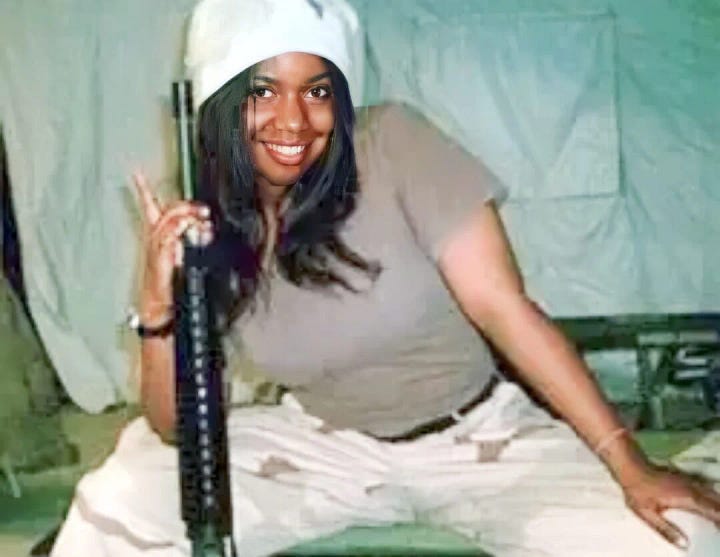
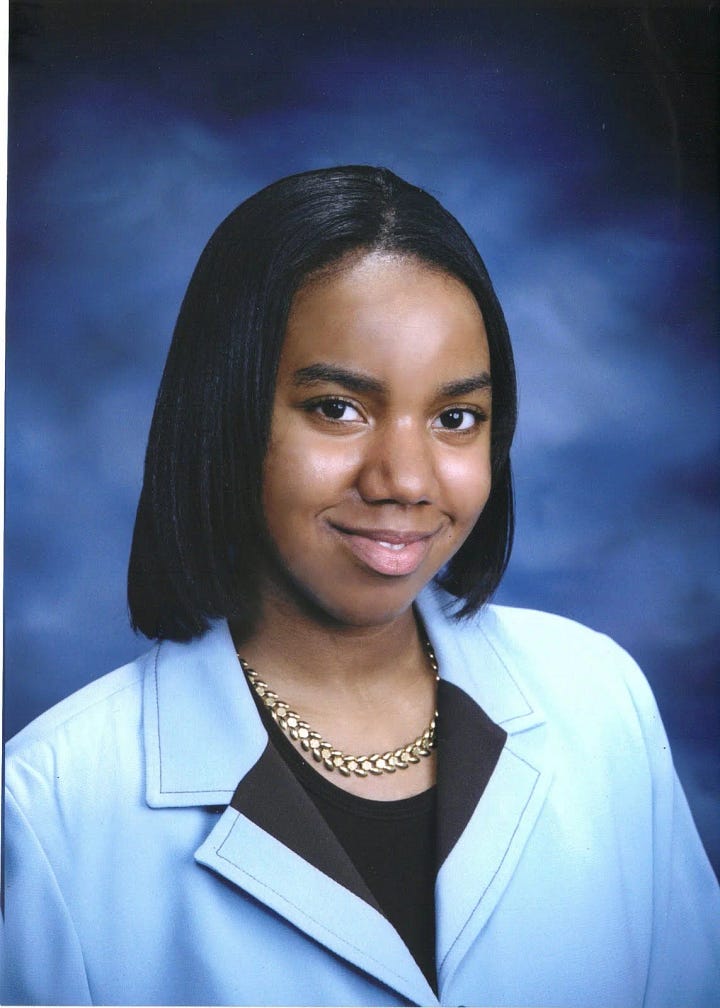
The Army erased LaVena Johnson the second they stamped “suicide” on her file in 2005; turned a tortured nineteen‑year‑old Black girl into paperwork, buried contradictions under classification, and walked away like the case was settled.
They didn’t “struggle” with the conclusion.
They didn’t “debate” it.
They didn’t “investigate” a damn thing.
They erased her. Flat‑out.
Your job now is simple: drag this case back into the light. Push her name. Push the contradictions. Push the timeline they violated. Push the evidence they ignored because acknowledging it would expose the pattern they’ve been running on Black women for decades.
Institutional silence is how the Army disappears Black girls.
Visibility is how you break their grip.
They already erased LaVena.
Don’t let them keep her gone.

No posts
Comments
Nothing yet. Say the first thing.
Sign in to join the conversation.