
As I was trying to figure out what to write about this week, I kept coming back to an idea that I wrote about over two years ago and yet seems even more pressing now. So, I am revising the content from that post and resharing it here since the vast majority of my subscribers have joined on since it was originally made available. I do hope that it speaks to you wherever you are. I am really struggling to figure out how not to give up in the face of just incompetence, ignorance, and willed disregard of human dignity and democratic norms. So, even if none of you needed this content this week, I sure did. I often say that I write to figure out what I think, but in this case, I have thoroughly enjoyed revisiting these ideas and finding ways for them to give me the energy for continued movement down the trails of life.

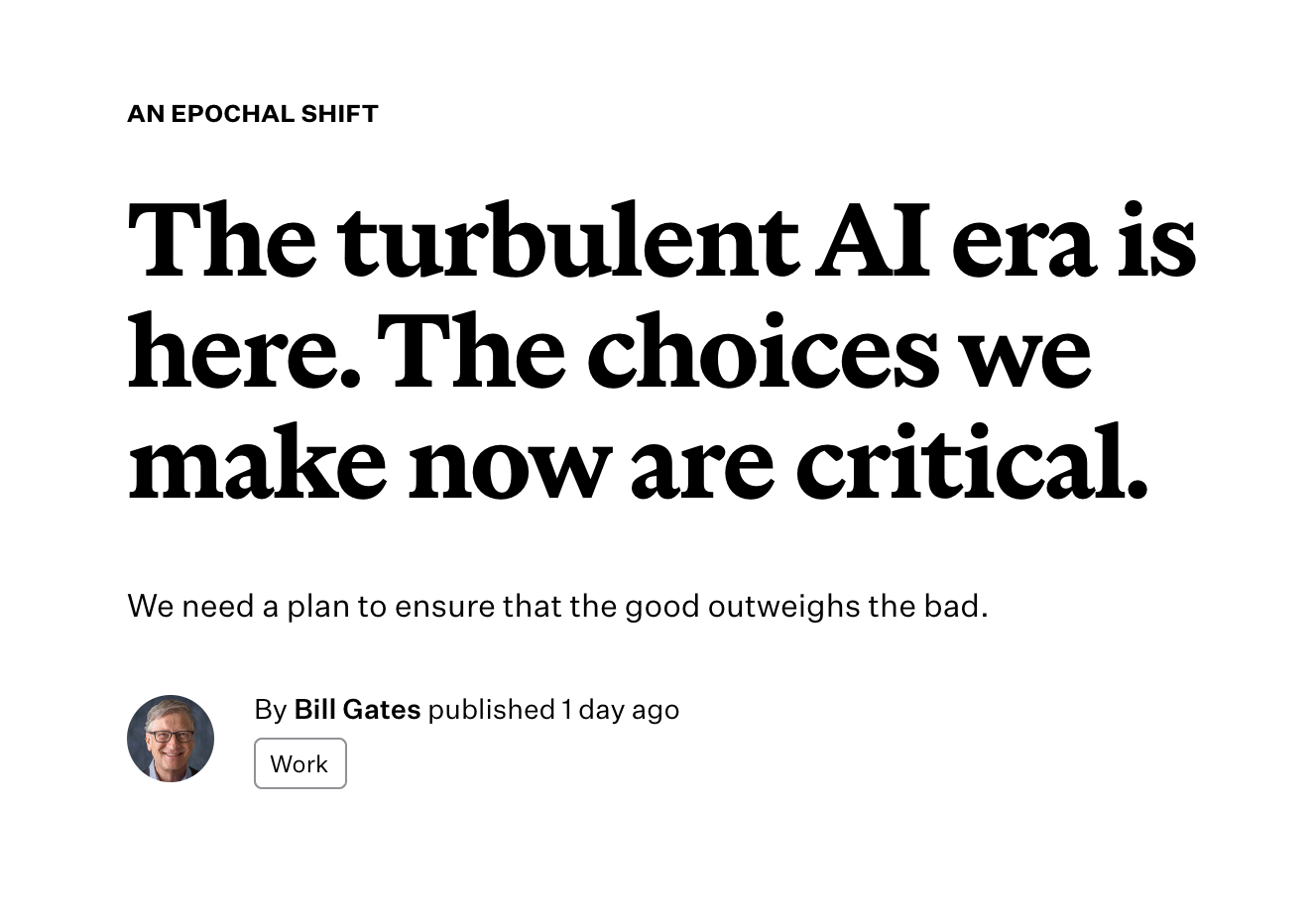
This week, classes started at my university and so I am back in front of students inviting them to think deeply about things worth thinking about. And yet, every year this task gets increasingly difficult. As the world grows more and more divided, it is easy to see the task of thinking as an outmoded remnant of a bygone time. Indeed, just this week we saw Bill Gates write a staggering Op Ed about the dangerous future that AI might inaugurate if we allow human thinking to be replaced by algorithms.
Moreover, we also saw a settlement reached in the case against META regarding their intentional strategy of making social media addictive to minors.

Although the settlement is ridiculously low given the social consequences of such corporate behavior on human existence, this settlement, when taken alongside Gates’s staggering warning, should give us significant pause about the epistemic health of our social community. We are quickly becoming thoughtless as a result of very intentional bad actors who are holding the political, economic, and social power to shape the world in their own self-absorbed image. And yet, the very critical thinking that would be required to challenge such a devastating cultural trajectory has been undermined by their actions and their assault on the humanistic education that presents a direct threat to their continued dominance. When humans think well, they tend to oppose vicious people. When humans stop thinking, and become thoughtless, they tend to be inspired by those vicious people without being able to see the corrupting influence for what it is.
It is with that general context in place that I think we need to revisit the work of Martin Heidegger (1889-1976). Now, crucially, having just talked about bad actors in human society, it is important to acknowledge that the relation of a philosopher’s work to their lives is a complicated matter. When it comes to Heidegger, this relationship is especially fraught.
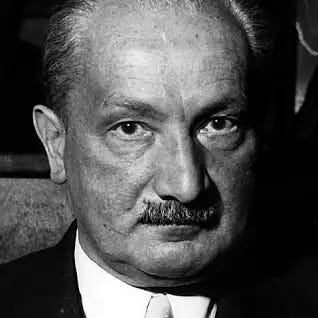
Perhaps one of the most original and striking thinkers of the 20th Century, and deeply influential on almost all threads of continental philosophy that follow, Heidegger was also a member of National Socialist party and displayed a callus anti-Semitism in a variety of ways (which is unbelievably hard to understand in any case, but especially considering that his philosophical mentor, Edmund Husserl, and famous students like Hannah Arendt were Jewish).
His personal decisions in this respect are horrifying and condemnable. Full stop.
His philosophy, however, can be read as offering profound resources for challenging his actions. Sometimes, it seems, philosophers can think better than they live. But, as I see it, the goal of thinking well is finding ways to live meaningfully. Accordingly, without in any way wanting to ignore or minimize the active vice that characterizes Heidegger’s life, I do want to draw on an idea that he develops in his later work to suggest that it can speak to where we are today—in a world where dismissiveness, arrogance, hatred, and division are so deeply part of our own social context.
The idea that I want to consider, however briefly, is Heidegger’s distinction between two modes of thinking: calculative and meditative.
Although Heidegger develops this distinction throughout his later work, I will focus just on the “Memorial Address” (originally delivered as a speech in 1955) in his book Gelassenheit (published in English as Discourse on Thinking). Therein, Heidegger writes the following:
“Thoughtlessness is a uncanny visitor who comes and goes everywhere in today’s world. For nowadays we take in everything in the quickest and cheapest way, only to forget it just as quickly, instantly.”
Deepening his characterization of our contemporary world as a thoughtless age, he claims that people “today [are] in flight from thinking.” But, rather than admitting this fact and then working together to try to correct the situation, “part of this flight is that [people] will neither see it nor admit it.” Indeed, he continues, we “will assert the opposite.”
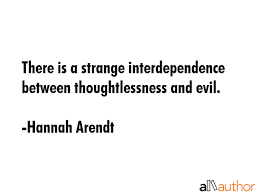
I find this diagnosis deeply compelling because in the 70 years since he first spoke these words, things have only gotten worse. We now live in a world where leaders offer “alternative facts,” where conspiracy theories have taken over good judgment and conspiracy theorists now lead the Department of Health and Human Services (sigh), attention spans have reduced to just a few seconds, “post-truth” and “bullshit” are common descriptors used for our social discourse, and experts are viewed with suspicion through a lens of political and economic power.
A thoughtless age. Yep. That about sums it up.
In his characteristic phenomenological fashion, though, Heidegger offers this diagnosis and then calls us to interrogate what it actually reveals to us about the meaning of our existence.
In other words, he calls us to think deeply about our very thoughtlessness.
Thoughtlessness, he contends, is not a failure to think, but instead results from assuming that all thinking is reducible to “calculation.” As he explains:
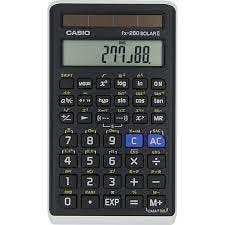
“Whenever we plan, research, and organize, we always reckon with conditions that are given. We take them into account with the calculated intention of their serving specific purposes. Thus we can count on definite results. This calculation is the mark of all thinking that plans and investigates. Such thinking remains calculation even if it neither works with numbers nor uses an adding machine or computer. Calculative thinking computes.”
Notice, here, that for Heidegger calculative thinking is essentially instrumental. It is always conducted with an eye toward outcomes and predicability. Moreover, it is a mode of thinking that does not begin with questions, with wonder, with mystery, but with accepting as “given” a particular understanding of what we would now call “the real world.” In this way, calculative thinking is motivated by profit and always serves to reinforce the status quo.
But, even though such calculative thinking does have its merit in some specific spaces in our social lives, Heidegger seeks to remind us that despite the rise of AI and our unthinking dependence on it, we are not just calculators!
Indeed, if we allow ourselves to think that everything that matters can be understood via calculation, then we will increasingly separate ourselves from our very “human” being. We will slide more and more toward just being, as Simone Weil would put it, “things.”
The sort of thinking that should define us most deeply is not calculative, but what Heidegger terms “meditative.”
“Meditative thinking demands of us not to cling one-sidedly to a single idea, nor to run down a one-track course of ideas. Meditative thinking demands of us that we engage ourselves with what at first sight does not go together at all.”
His point here is that meditative thinking invests us in the meaning of the world, not just being the most successful at benefiting from its current form of functioning. Meditative thinking is not just about predicting, but about exploring possibility. It reminds us that there is no “real world” but only ever the world that we have allowed to become real as a result of our decisions, our actions, and our unwillingness to imagine things otherwise.
Whereas calculative thinking insulates us in protective self-absorption, meditative thinking stands as what he terms “openness to the mystery.”
When we are open in this way, we pay attention not only to what is going on, but what is at going on in what’s going on. That is, we “meditate” on the meaning of what we take as “given” instead of just operating as if things were obvious.
Interestingly, and perhaps almost prophetically, Heidegger provides a causal account of what has led to such calculative thinking as the only game in town. He says that we have allowed technology to move from being a tool used by humanity to create worlds of possibility to being a master that has enslaved our spirits. As he puts it, “we fall in bondage to” these technological devices.
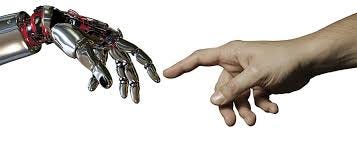
Not only our self-conception, but also our relation to the natural world gets distorted due to this technological idolatry:
“The world now appears as an object open to the attacks of calculative thought, attacks that nothing is believed able any longer to resist. Nature becomes a gigantic gasoline station, an energy source for modern technology and industry.”
Watching my students (and my own family for that matter) unable to put their phones down for very long at all makes me think that Heidegger was definitely onto something here. In fact, we might say that the technology has actually usurped the task of meaning-making definitive of selfhood. It has, instead, become the source of meaning for the selves that we are becoming. We stop being meaning-makers, world-creators, poets, and artists. Instead, we are reduced to things—to calculators. An economic logic overrides everything else. The task is no longer to “think” but simply to calculate what will make money, what will gain power, what will achieve status, what will secure the most followers.
But, Heidegger points out so forcefully, “we can act otherwise.” He continues:
“We can affirm the unavoidable use of technical devices, and also deny them the right to dominate us, and so to warm, confuse, and lay waste to our nature.”
That’s the key.
We don’t have to be luddites who refuse to use technology to facilitate meaningful life, but we should be people who reject technology, and the cold instrumental logic of success that underwrites the value theory by which it operates, as definitive of what counts as meaningful.
When we genuinely, that is, meditatively, think, then we almost necessarily begin to see each other differently. You are now not my competition in the calculation of supremacy. You are, instead, my partner in thinking well. You are the one with whom I shape how the world will look. We don’t reduce each other to things.
Imagine how things could be if we really tried thinking together.
In 1955 Heidegger warned of the dehumanizing impacts of a technological age. Today we live in the age he predicted would inevitably come if we did not actively work to prevent it.
And yet, we still can do otherwise. All is not lost. Hope remains.
The power-brokers of a world defined by calculation hold no power unless we continue to cede meaning to their instrumental partitioning of the world as simply something to be used and used-up.
Thinking well matters because living meaningfully does. Only if we do the former do we have a chance at the latter.
Thanks for reading Philosophy in the Wild ! This post is public so feel free to share it.
Comments
Nothing yet. Say the first thing.
Sign in to join the conversation.