
“Atticus, make sure to put on hiking shoes, it is a mile or so from the truck down a trail to the lake where we are going to fish.”
He ignored me and came down the stairs ready to go wearing flip-flops and looking like we were getting ready to head out for a day fishing from a sailboat in the Caribbean.
“Dude, go change shoes. We have a short hike from the truck and so you need something that protects your toes, man.”
He fussed and said some things under his breath about me being old and then came down the stairs again, this time wearing crocs. Ugh.
“Son, you are going to regret that choice, but you having to deal with the implications of your decisions, so whatever. Let’s go.”
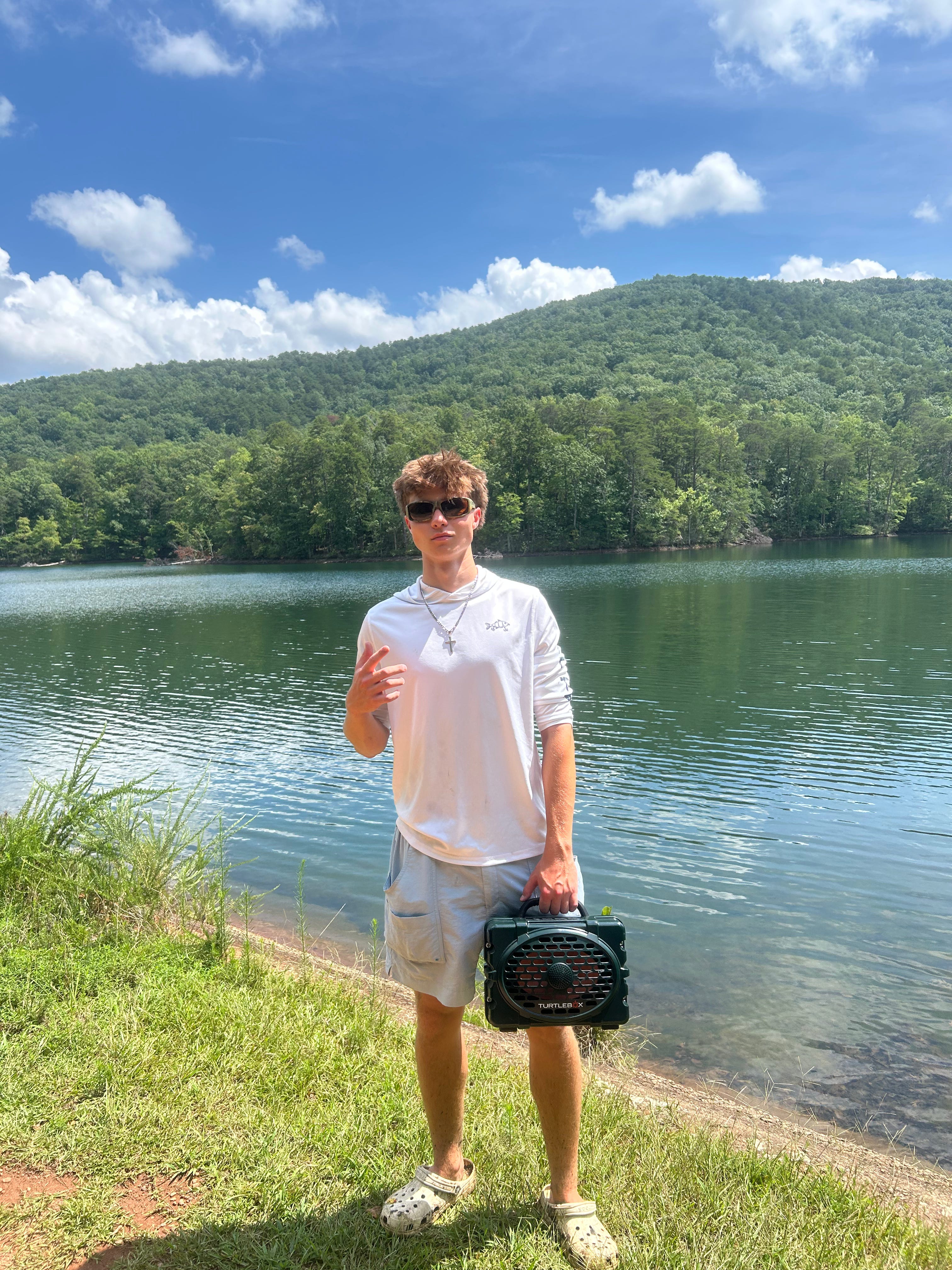
He gets in the truck having not actually packed his rod or gear, but he did have his Turtlebox speaker to carry with him the whole way so that the trip had a soundtrack.
Blergh.
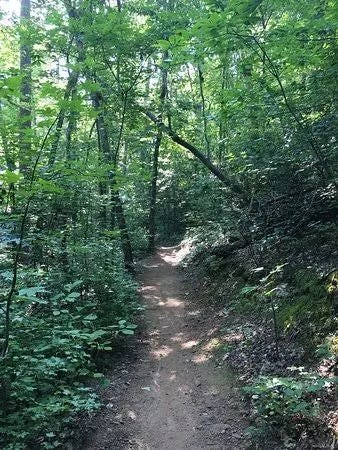
So started the fishing trip yesterday with my son. Atticus loves fishing (as do I), but he sees it as more of an opportunity to occupy a YouTube stereotype of what it “looks like” to engage in such activities, than he does an opportunity to develop the actual skill set of faithfully navigating the challenges of the outdoors. But he is 16 and so that is understandable, I guess. It takes a long time to get to the point where we are not primarily navigating our own selfhood through the lens of the perspective other folks. Shoot, I am not sure if we ever really get over that temptation. It is hard to be comfortable with who you are becoming, and so it is much easier to be comfortable with who you are when other people seem to like who that person is.
Anyway, here he is in a picture he asked me to take “with his speaker” (yeah, I don’t understand either).
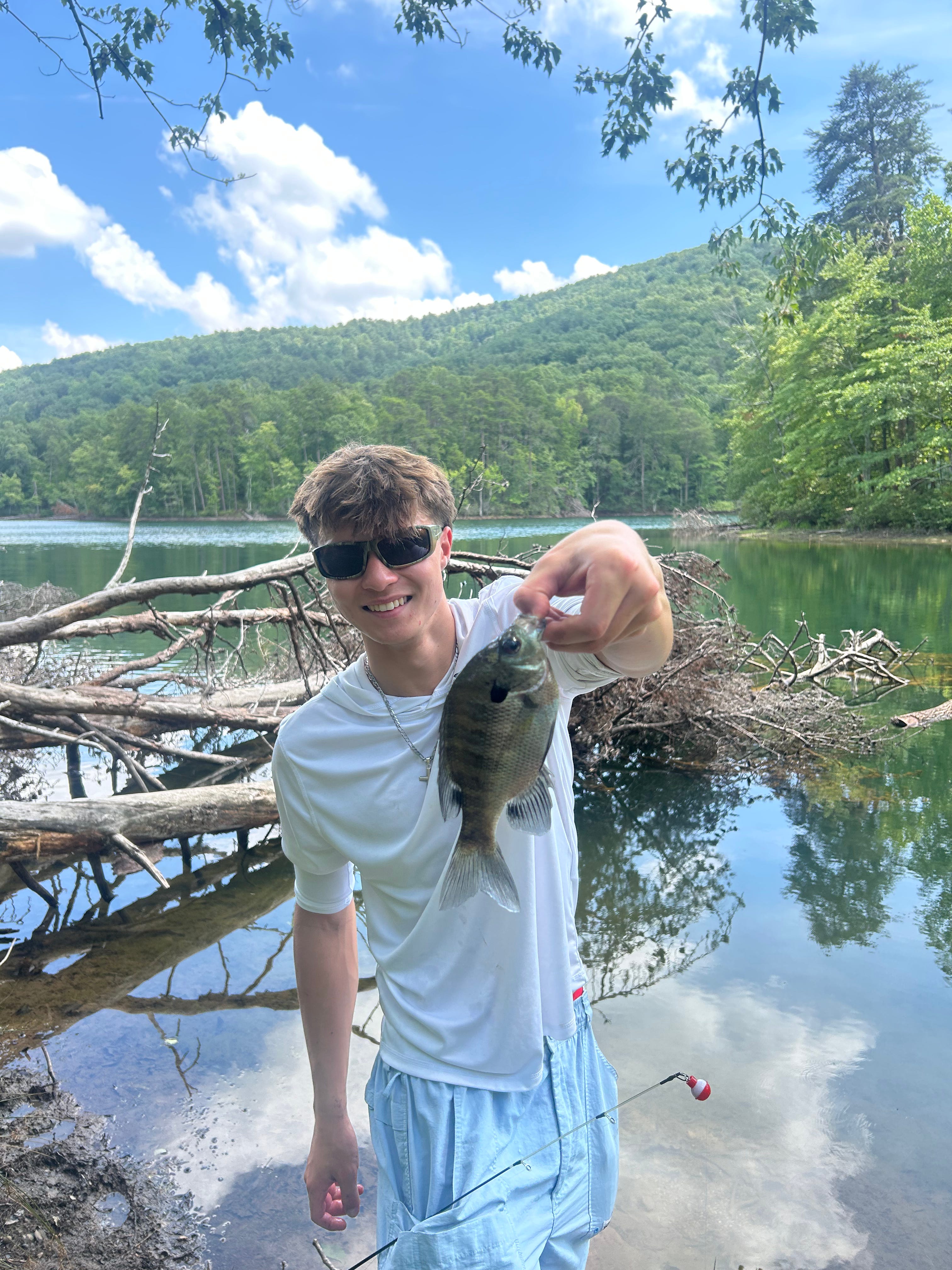
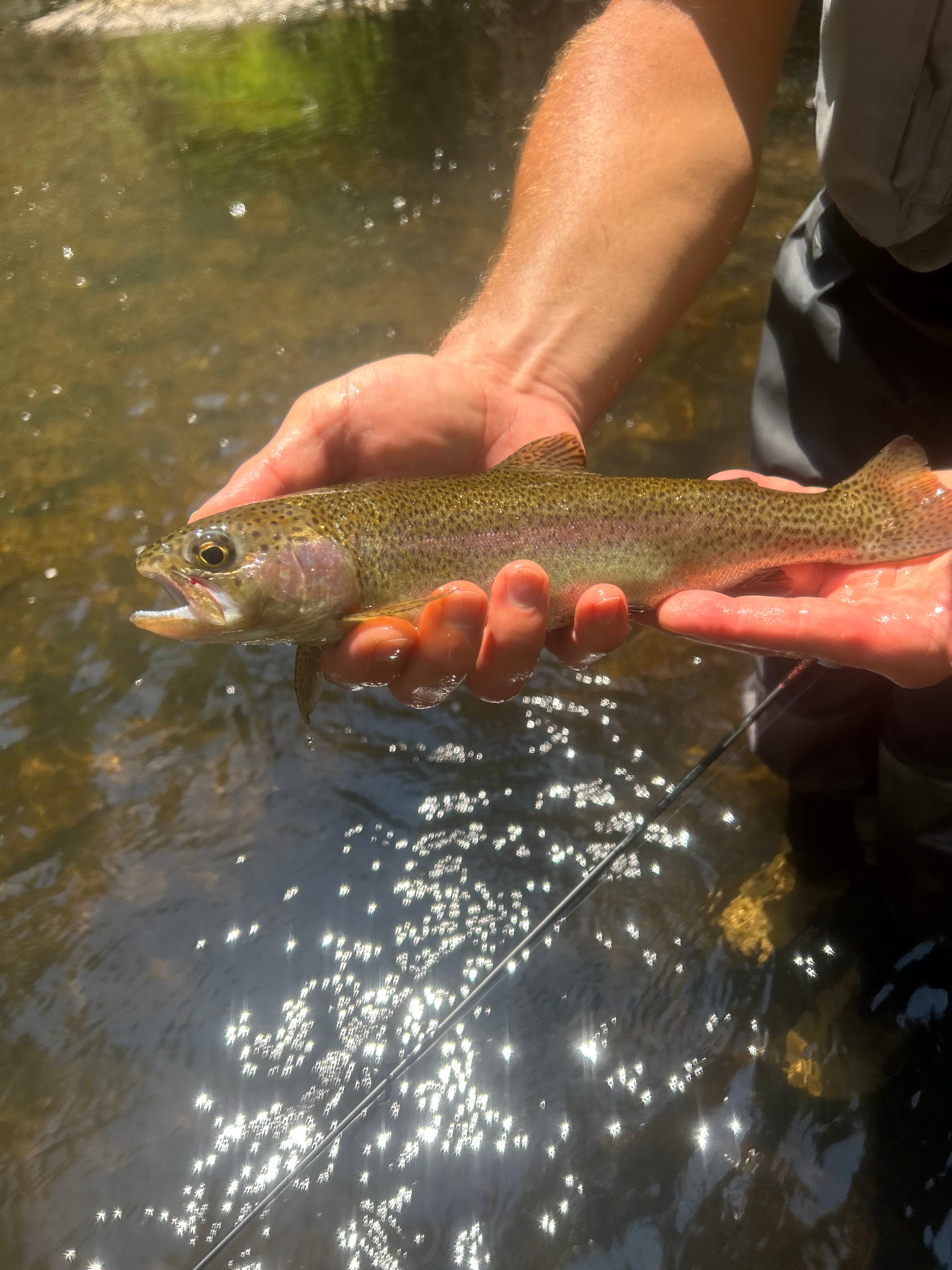
Once we got to the lake, we had a lovely time and Atticus even caught a few fish. I didn’t catch anything and so that made him ridiculously happy.
Despite a few fish and good weather, we were under a bit of a time crunch. Atticus had an event at his high school that evening and so when we left the truck to head down to the lake, we knew that we needed to be back to the truck in about three hours.
Plenty of time, I told him! I have been to that lake probably a hundred times and know those trails like the back of my hand.
However, all of that familiarity was gained through experience riding those trails on my mountain bike. I had actually not hiked those trails in a very long time. So, even though I should have known exactly how many miles and then done the quick calculus about the time it would take to hike them (the average hiker moves at about 2 miles an hour, etc.), I didn’t.
That was a mistake.
What normally takes me about 15 minutes to ride somehow I had allowed myself to think would take about 30 minutes to hike. I was wrong. It turned out to be a little over 3 miles down to the lake - which if you do the math means that it would take about an hour and a half (ish) to hike. And, on the way back to the truck, the whole thing is uphill which makes it even slower.
If that was the only thing that presented a challenge, we still would have been fine, but problems often compound, however. Remember that shoe choice? yeah, crocs don’t allow for much speed while hiking.
“Atticus, you have to move faster or we won’t have time actually to fish.”
Ignoring me, Atticus continues to sing at the top of his lungs to the song playing on his Turtlebox while meandering down the trail.
About 15 minutes down the trail, I asked him if he had gotten the worms from the truck (which was his responsibility). His silence was not reassuring.
Turn around.
Back to the truck.
Get the worms.
Start again.
Still moving slow . . . . crocks and singing.
Increased confusion on my end at his musical stroll through the woods given our time constraints.
About an hour in he notes that I have grossly miscalculated the distance and the time it is taking to get to the lake. Not wanting to tell him that he is right, I just told him to move a little faster.
Once we got to the lake, we only had about 45 minutes to fish before we had to turn around and hike back out the 3+ miles to the truck in order to get him to his event a the high school.
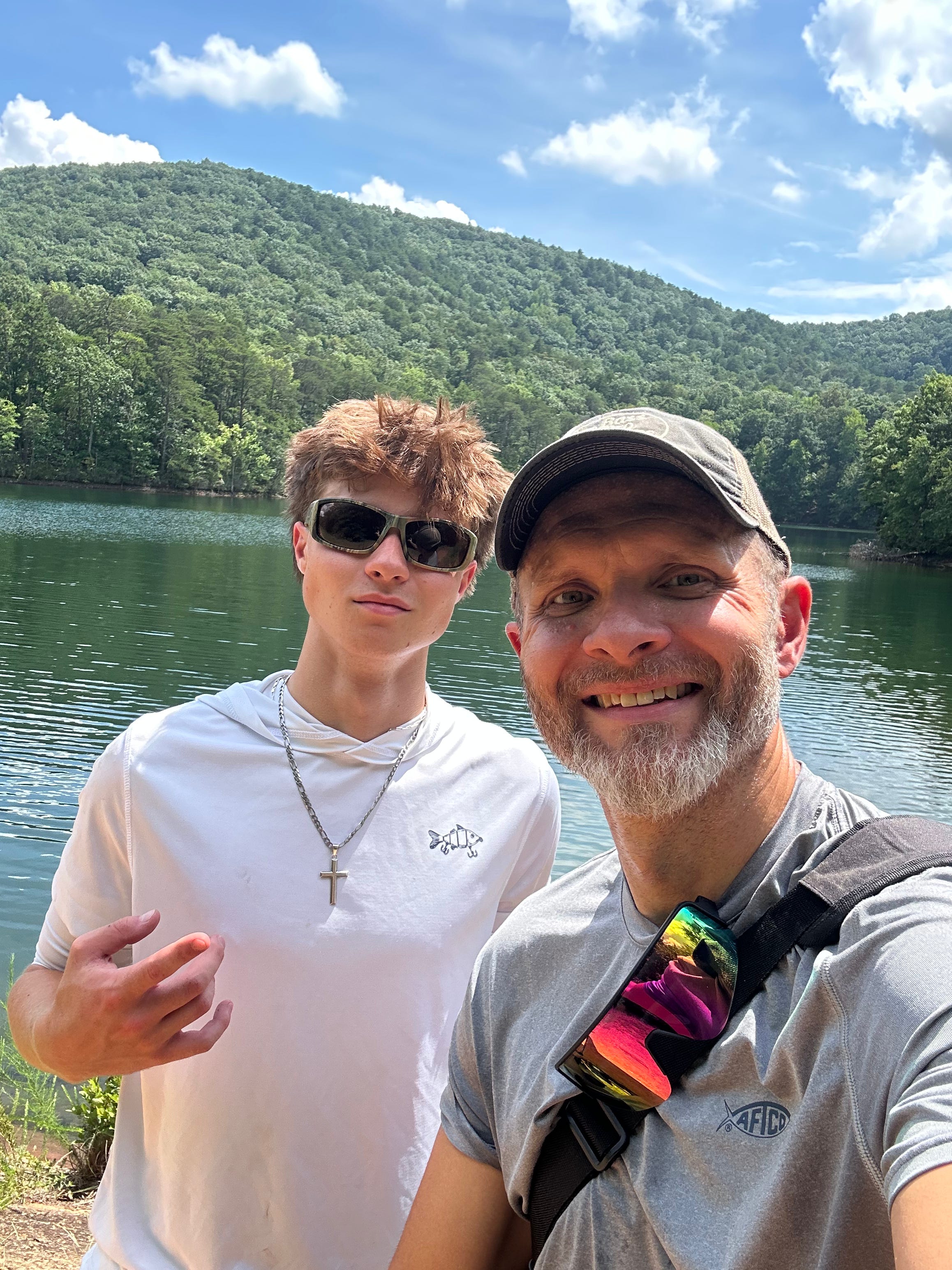
As you can imagine, if you have literally any familiarity with teenage boys, despite my best efforts to express to him the importance of really hustling on the hike back out, he found it much more compelling to stop and find a stick on which he could carry the speaker over his shoulder like a postmodern version of a scene out of Huckleberry Finn or something.
In case you were wondering, we did make it to his event on time (barely) and so crisis averted and fish caught along the way, so overall a nice day. (I could not get him out of bed this morning to go mountain bike with me though. (Apparently he thinks one day with his dad is entirely sufficient for a while, ha!).
In light of our adventure, I want to offer three philosophical points that I think might speak to us all no matter where we find ourselves today.
I have the distinctive opportunity to have spent my life working with college students. One of the things that tends to characterize their experience of the world is the assumption that everything else in their entire life depends on what happens in the next three months. If this internship doesn’t come through, then their career will be a mess. If this study away doesn’t happen, then they just don’t know what to do with themselves. If, if, if, if . . . The point is that they are very short sighted regarding the trails of life because they seem to assume that if there is not an amazing waterfall half a mile away, then there just isn’t any reason to start the hike in the first place.
Their general sense of things is understandable given that they don’t have an enormous amount of prior experience upon which to draw in narrating where they find themselves. And, let’s be honest, there is something endearing about seeing the world as such an immediate space of opportunity and meaning (I am often nostalgic for that sense of things).
However, it is also a deeply dangerous way to see the world because it can reduce all effort to a matter of instrumental outcomes. Doing this or that only matters if it results in a quick payoff. According to this existential frame, patience is not a virtue, but actually an obstacle to timely success.
Tragically, I see such a short sighted instrumentalism to be pervasive in today’s culture and yet also corrosive of the deepest parts of our shared humanity. When the stock market is not about long term flourishing, but about short term gains; when politics is not about long term justice, but about short term new cycles; when effort is not about long term persistence in a direction that matters, but about short term actions meant to outpace others in a zero-sum game of competition, then our relationship to our embodied existence is off-kilter. We are beings who like immediate gratification and also beings who are almost always made worse when our gratification is so immediate.
Life is longer than we tend to act like. And yet, somehow we also think we have forever and so can always make things better later. “Next year” we will rearrange our priorities, make more time for what matters, and unplug from the hustle . . . or so we tell ourselves. But, as Donovan Woods rightly reminds us, “there ain’t no next year.” His point is basically the key insight of existential philosophy:
You are who you are becoming.
The trails of life are probably longer than you think, but unless you are moving in the right direction now, you will just get further off course. In fact, these two points are connected. If you only have 10 minutes, it is hard to get very far from the trail. If you have several hours, you can get miles away from where you need to be. And yet, getting lost doesn’t take long at all. Indeed, the average lost hiker is found less than 200 feet from a trail!
Think about that.
Just little missteps can lead to catastrophe. Existential awareness is a matter of paying attention to where are in relation to where you are hoping to go. Going slowly is a very good way to ensure that you don’t get off course.
Sure, sometimes you have an event at the high school and need to hustle, but notice that our hurry was occasioned by my mistake in judgment at the beginning of the journey.
You probably have more time than you think. Slow down and let your feet fall on the trail on purpose. You will probably get where you are trying to go and almost certainly have more energy once you get there.
Short term achievement is often a distraction from the existential significance of our lives.
Yes, I should have checked the mileage more precisely. Yes, I should have made sure that I had the worms before leaving the truck. Yes, things would have been a bit easier had Atticus worn appropriate shoes. But, sometimes we can make the mistake of thinking that if we just have everything “right” then all that follows will be perfect. With a nod to Whitehead, let’s term this the fallacy of misplaced effort.
Often we tell ourselves that if we just get the right degree, the right experience, the right look, the right relationships, etc., then everything else will work out. Sometimes that is true, but not always. And, more often than not, it is only by hiking that we learn how to hike. It is only by swimming that we learn to swim. It is only by biking that we learn to bike. Similarly, it is only by living that we learn to live.
I am glad that Atticus got to his event on time. But if he had been late, that would not have been a crisis. If he had entirely missed it, his absence would have inconvenienced the people counting on him to be there, but they would have figured it out and still no crisis.
If you spend a lot of time in the outdoors, you get pretty good at knowing the difference between complications that require innovation and adjustment and crises that require immediate attention and intervention.
A blister needs addressed because it is a complication that can become a crisis. A poisonous snake bite is a crisis that changes everything.
A piece of gear that breaks is a complication that can become a crisis. A fall that breaks a bone is a crisis that requires radical intervention.
The point is that far too often our instrumentalist short-sighted sense of the world whereby outcomes are assumed as guarantees given our resume, leads us to believe that if things don’t go exactly to plan that everything is over and despair is unavoidable.
Navigating despair is a matter of being present where you are in order to keep moving toward where you hope to go. But, we should expect changes of course. We should anticipate that we can’t anticipate everything. We should be okay when lots of stuff isn’t.
That adaptability is ultimately just existential maturity.
Walk trails with folks who know what they are doing (and those folks are almost always the ones who are quickest to admit that they don’t know everything).
Life is probably longer than you think. Take your time.
Life is probably way more interesting than you realize. Be present where you are.
Life is probably more complicated than you will expect. Adapt and keep moving.
You’re okay.
Oh, and as someone who doesn’t really love hiking (biking has basically ruined it for me), as you navigate the trails of life, don’t forget your fishing rod. Being able to fish along the way makes it all way more fun.
Thanks for reading Philosophy in the Wild ! This post is public so feel free to share it.
Comments
Nothing yet. Say the first thing.
Sign in to join the conversation.