

We’re back with another monthly orbit through the weird, useful, nostalgic and mildly cursed corners of creative culture. Grab a coffee, open too many tabs, and let’s dive in.
Cannes ads that actually fixed things
KFC’s Bucketverse
TikTok pineapples
Scientology speedrunning
cereal box CD-ROMs
Be Kind, Rewind.

At Cannes Lions 2026, advertising seemed to get a new memo: stop just saying meaningful things and start doing useful things. The big shift was from purpose-driven campaigns full of nice messages to brand ideas that actually help people in real life.
Ogilvy, LePub Milan and Heineken took top honors: Ogilvy won Network of the Year, LePub Milan took Agency of the Year and Heineken was named Brand of the Year at Cannes Lions 2026. A very European final scoreboard.
The biggest Cannes Lions 2026 winners had one thing in common: they didn’t just make ads, they fixed stuff. AXA changed insurance contracts to help domestic abuse victims, BCP turned shop payment terminals into emergency bank-card blockers, Kenya’s “Paid Sick Leave for Cows” kept unsafe milk out of the supply chain, and “Nigrum Corpus” exposed racial bias in healthcare. Basically: less shiny brand purpose, more useful brand plumbing.
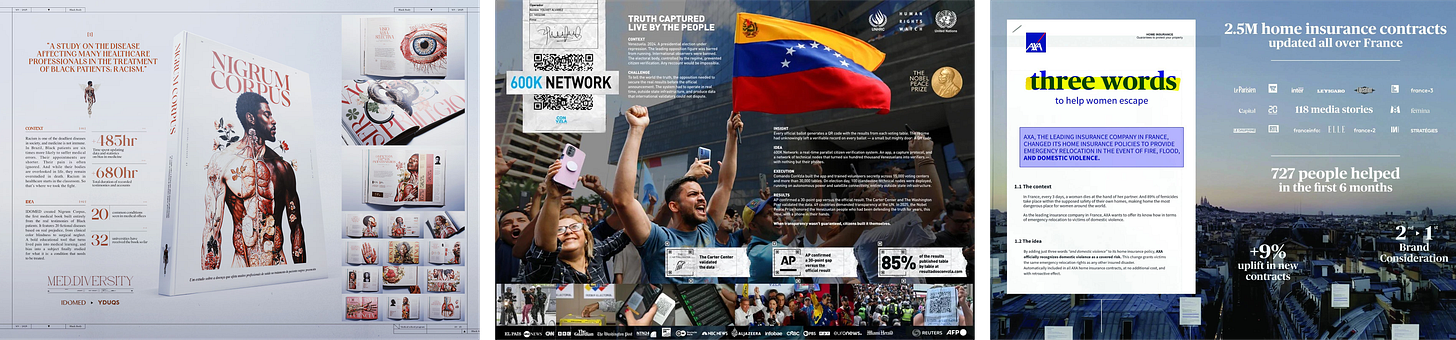
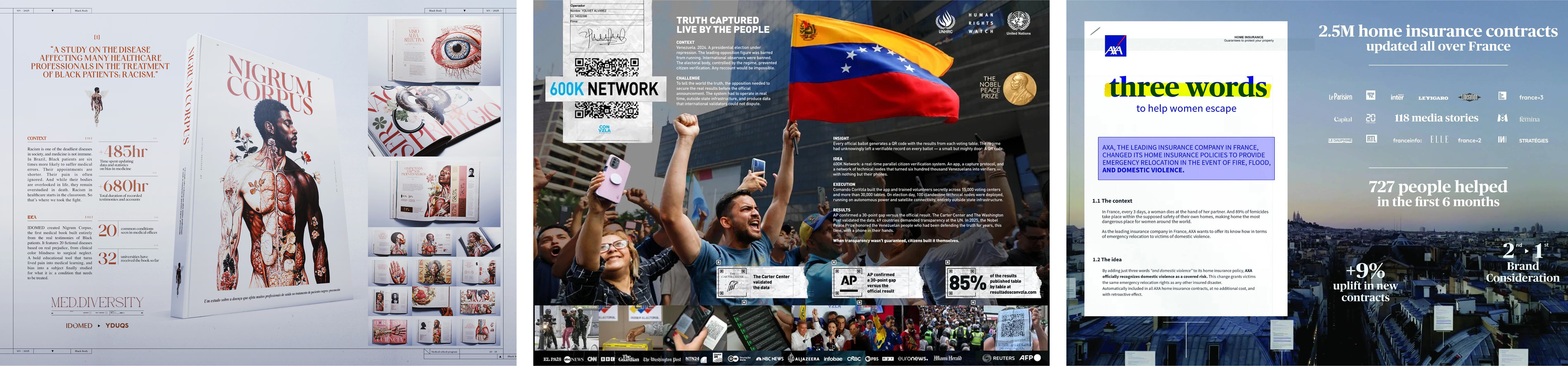
Cannes 2026 also proved that people would rather play with a brand than just watch it talk. Clash Royale rewarded players from copycat games, Uber Eats let fans build their own Super Bowl ads for food deals, KitKat turned stolen chocolate into a “contraband” hunt, and Wisła Kraków used AI to tell fans how lucky they were for the team. Basically: the best ads didn’t just tell stories—they gave people buttons to press.
KFC dropped a whole ‘Bucketverse’: KFC’s biggest global rebrand in years, done with JKR, went live in the UK and Ireland in June: new logo, packaging, restaurants, app, tone of voice, even open-concept ‘quick-experience’ stores in McKinney, TX and Dubai. Yes, they called it a Bucketverse. Yes, they meant it.
Big-brand parade sponsorships thinned out: Multiple Pride parades pivoted to hyper-local and grassroots funding as major sponsors quietly walked away, spooked by political and consumer backlash. Community orgs picked up the slack.
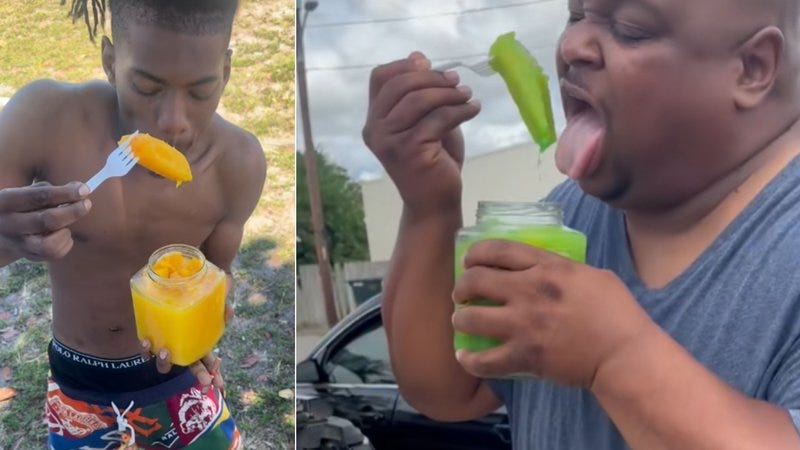
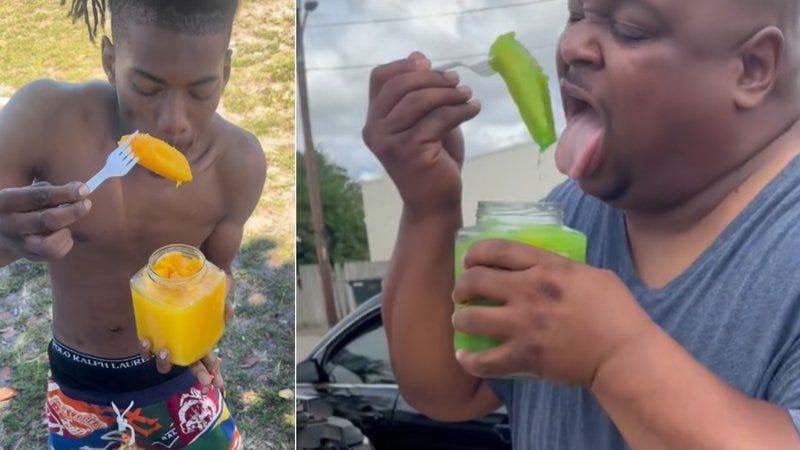
Kool-Aid Pineapples took over TikTok: The trend — soaking pineapple spears in Kool-Aid mix — went fully mainstream in June, mostly thanks to ‘Silly Willie’ in Pompano Beach, FL, who sells ‘Pineapple Dreamz’ out of his trunk. Multiple Facebook Marketplace copycats immediately followed.
Scientology Speedrunning became a legitimate genre: The bizarre TikTok trend of ‘speedrunning’: running as deep into Scientology facilities as possible before being escorted out - kept escalating through June. Videos got removed en masse; three teens got charged with second-degree burglary in Seattle for taking it too far. Source: Wikipedia — Scientology Speedrunning
‘2026 is the new 2016’ hit peak: The nostalgia trend continued to eat social media whole—TikTok searches for ‘2016’ rose 452%, Spotify’s ‘special 2016’ playlist stats spiked 71%. Selena Gomez, Ananya Panday, Kylie Jenner and dozens of celebs joined in.
Everyone can reorganize their grid now: Instagram rolled out grid-reorganization for all users. Every millennial’s 2015 aesthetic just got another shot at redemption.
Threads introduced ‘Your Algo’: ‘Your Algo’ lets you privately steer feed algorithm—‘more of this,’ ‘less of that,’ choose the duration (1, 3 or 7 days). Meta finally admitted control is a feature, not a threat.
Claude showed up inside iPhones for the first time: Apple’s new multi-AI Extensions system officially made Claude an iPhone option alongside Gemini. Anthropic’s model quietly walked onto every future iPhone.
Bulgaria won Eurovision—for the first time: Bulgaria’s Dara took Eurovision 2026 in Vienna (May 16) with ‘Bangaranga,’ scoring 516 total points and winning both jury and public votes. It was Bulgaria’s first-ever win and set a record 173-point margin.
Spielberg dropped ‘Disclosure Day’ on June 12: Steven Spielberg’s sci-fi ‘Disclosure Day’ released June 12—a UFO drama that everyone immediately assumed was a metaphor for something. He may have said it was.
Splatoon Raiders and The Duskbloods got dated: Splatoon Raiders (single-player treasure-hunt splat game) and The Duskbloods (a new multiplayer action title) both got 2026 Switch 2 dates in the Nintendo Direct. FromSoftware fans specifically felt seen.
Summer 2026 is officially Y2K summer: Rhinestone velour, micro-minis, lace-trim camis, ultra-low-rise denim—Y2K remains the defining summer trend, only styled less ironically than in 2023. Fashion editors have accepted their fate.
Anthony Head died at 72: Actor Anthony Head, forever Giles from Buffy and beloved as Rupert Mannion on Ted Lasso, died June 5 at 72. Two entire generations quietly rewatched.
IKEA’s team gave the reactive-marketing masterclass: IKEA’s whole June was proof that being fast and human beats being clever. Rebranding a plush toy as ‘Punch’s Comfort Orangutan’ didn’t need a $2M brief — just an alert set to ‘macaque.’
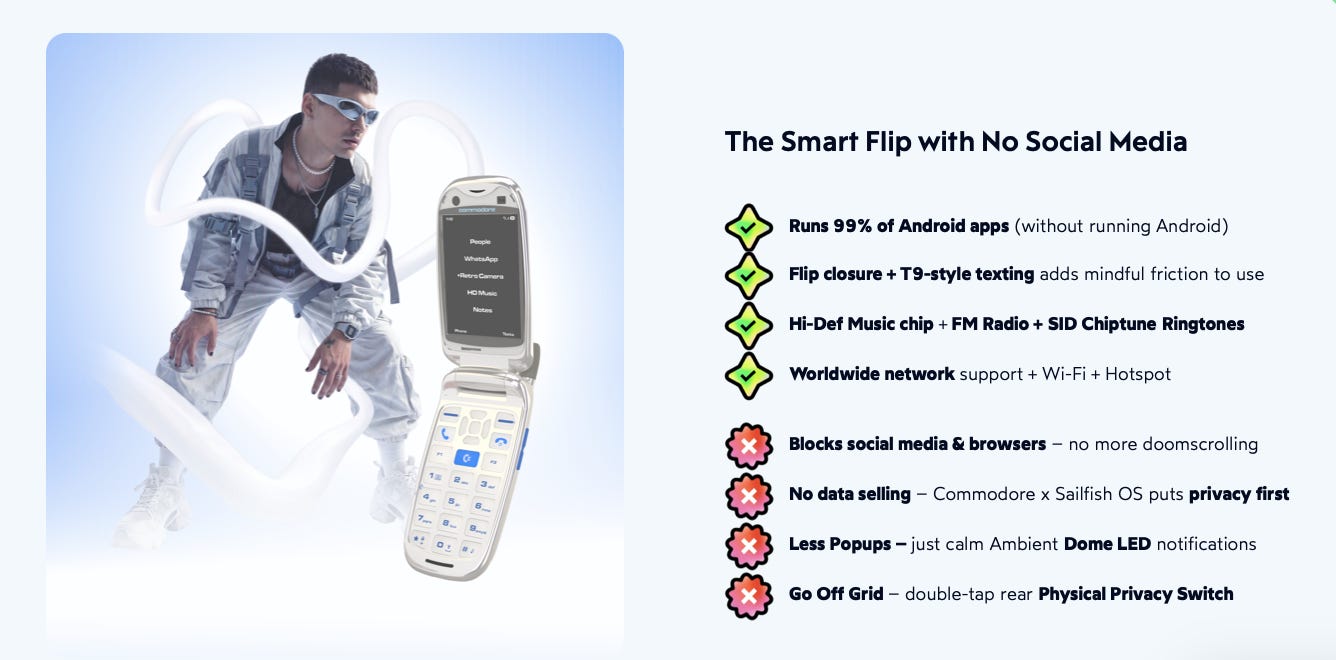
The latest comeback isn’t trying to outsmart your iPhone.
It’s trying to out-ignore it. The Commodore Callback 8020 is a modern flip phone that keeps the useful parts—calls, messages, maps, music, Built-in FM radio—while trying to remove the infinite feed.
No browser. No social media. No algorithm waiting behind your lock screen.
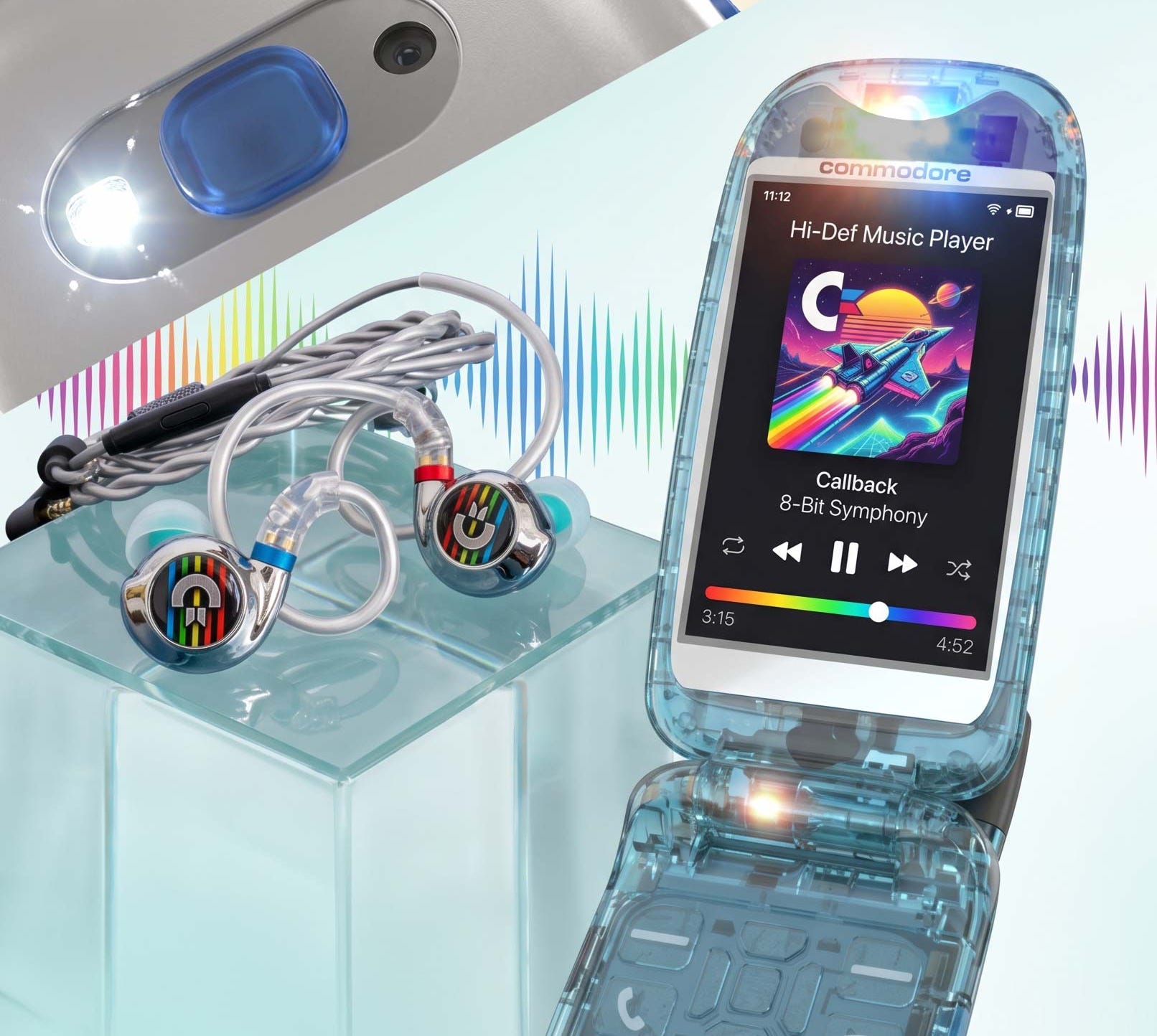
Claims to be Smart Where It Counts
Designed to reduce screen time, but still work as your main phone
48MP Sony rear camera with flash and intelligent autofocus
Autofocus front-facing camera for video calls
HD audio and lossless music support
Optional hi-def IEM earphones
ESS & Cirrus Logic DAC sound chips
Built-in FM radio (Yes, you heard right!!)
Whether anyone actually wants to text on T9 again is another question.
Artist Kleinian basically printed a weather app on a rock.
Also Spotify playlists, Bitcoin charts, Alarm Settings, Call of Duty, GTA and GPS routes. His “Rocks” series turns screen life into geological debris and it feels is something very eerie about seeing a weather app fossilized.
All that real-time urgency. All that refreshing. All that “partly cloudy.” Now it just looks like an ancient carving of something people once checked constantly instead of stepping outside to see for themselves.
For its Stan Smith residency in Paris, Adidas turned the shoe’s little green accent into an entire world and then let people just take pieces of it…home.
Set designer Mathilde Vallantin Dulac curated a courtyard full of random green objects: chairs, books, furniture, crates, rugs, balls, lamps, random beautiful junk.
The concept is straightforward: focus on a single visual idea, build an environment around it and invite people to interact with it in a tangible way.
🔗 Adidas Stan Smith residency (Check the comment section)
Richard Nadler is a contemporary digital artist based in Munich, Germany. He creates worlds that look like someone zoomed out and found an entire civilization stacked inside the pixels.
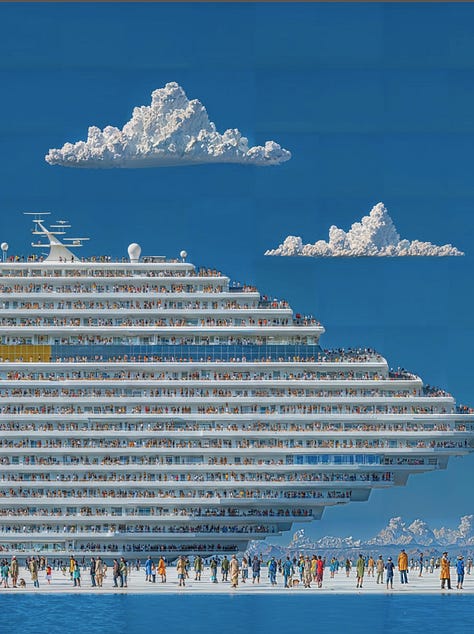
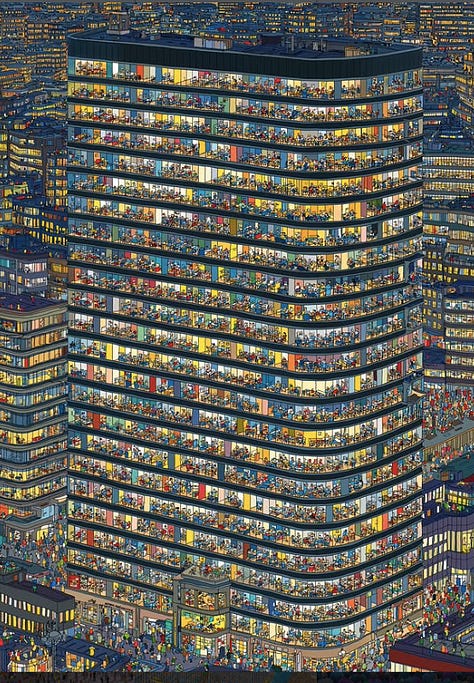
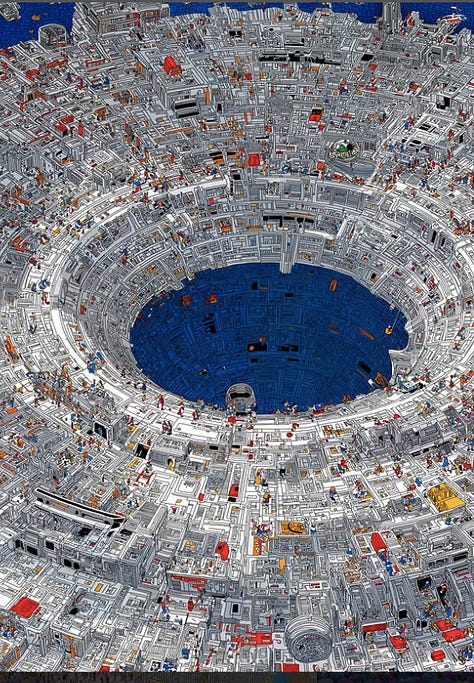
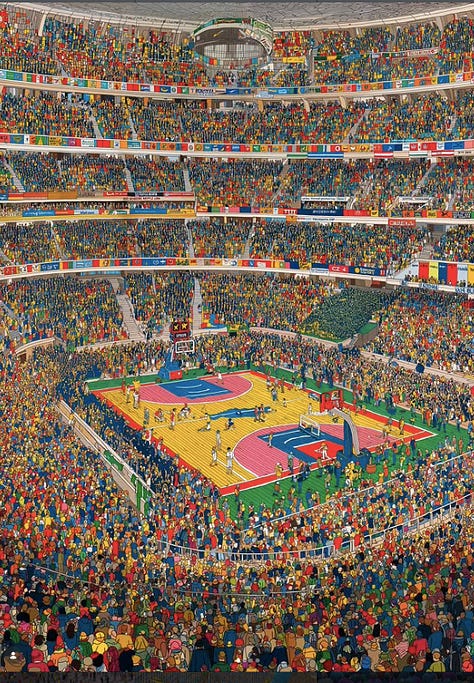
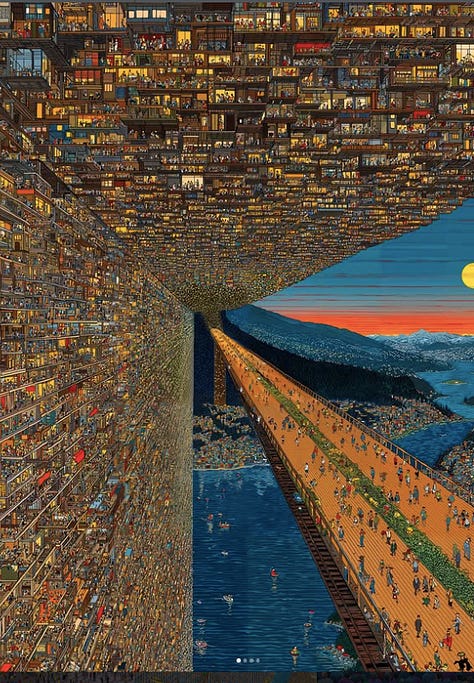
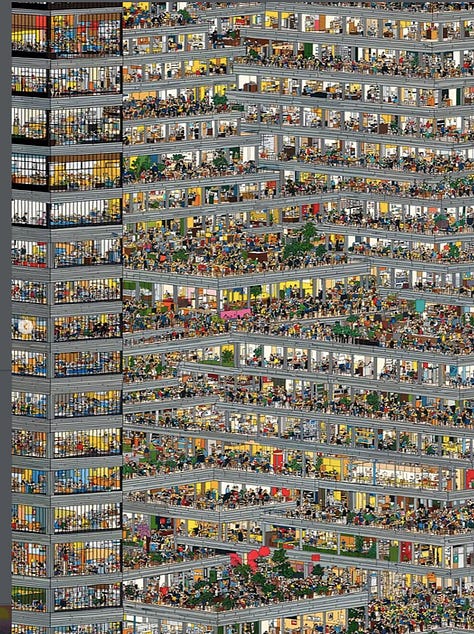
His vertical worlds are packed with tiny lives, glowing windows, terraces, pools, plants, cruise-ship buildings and impossible balconies. From far away, they look like utopia. Up close, they feel like urban planning by a browser with 400 tabs open.
Beautiful. Exhausting. Probably the future, unfortunately.
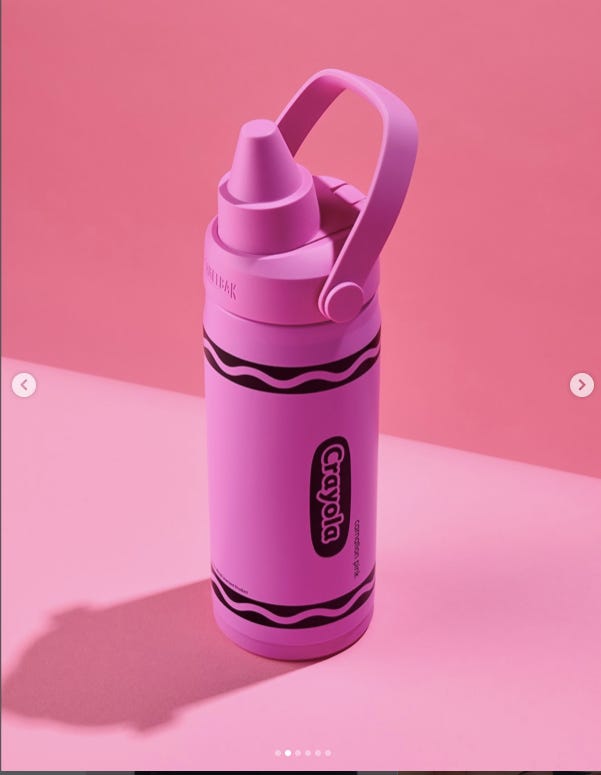
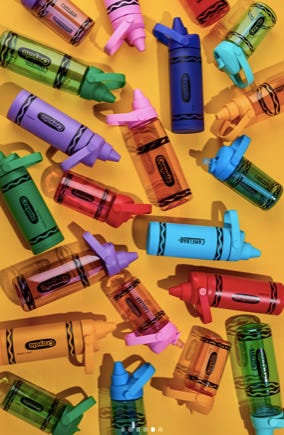
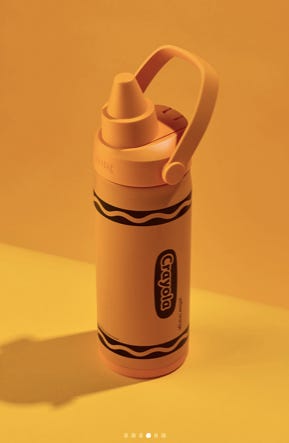
If your inner seven-year-old had a product design brief, it would probably look something like this.
CamelBak and Crayola came up with water bottles that look like giant crayons, which is exactly the kind of object that makes adults say, “I don’t need this,” while immediately deciding which color they will go for.
The bottles come in Crayola-inspired shades with lids that nod to crayon tips.
🔗 See the Crayola x CamelBak collection
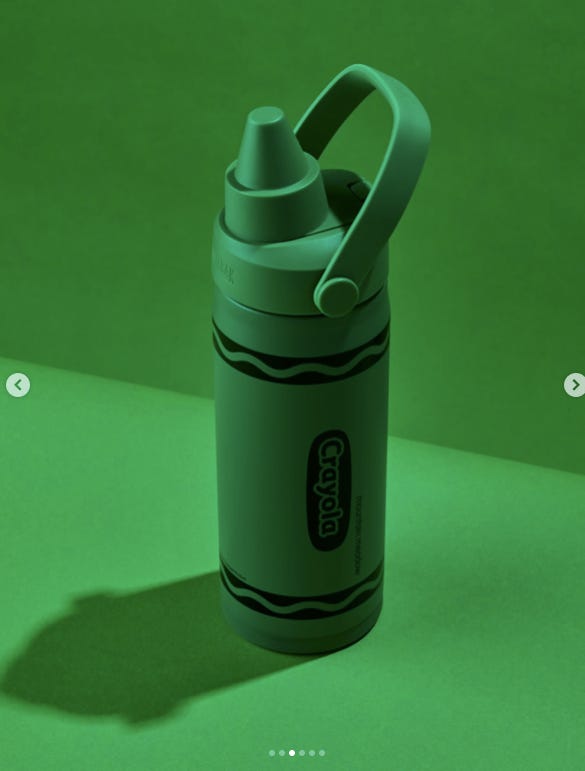
Cereal Box CD-ROMs
A strange golden age when breakfast came with software. Free games, AOL trials, screensavers, encyclopedia demos, and weird mascot mini-worlds attached to the front of a sugar box.
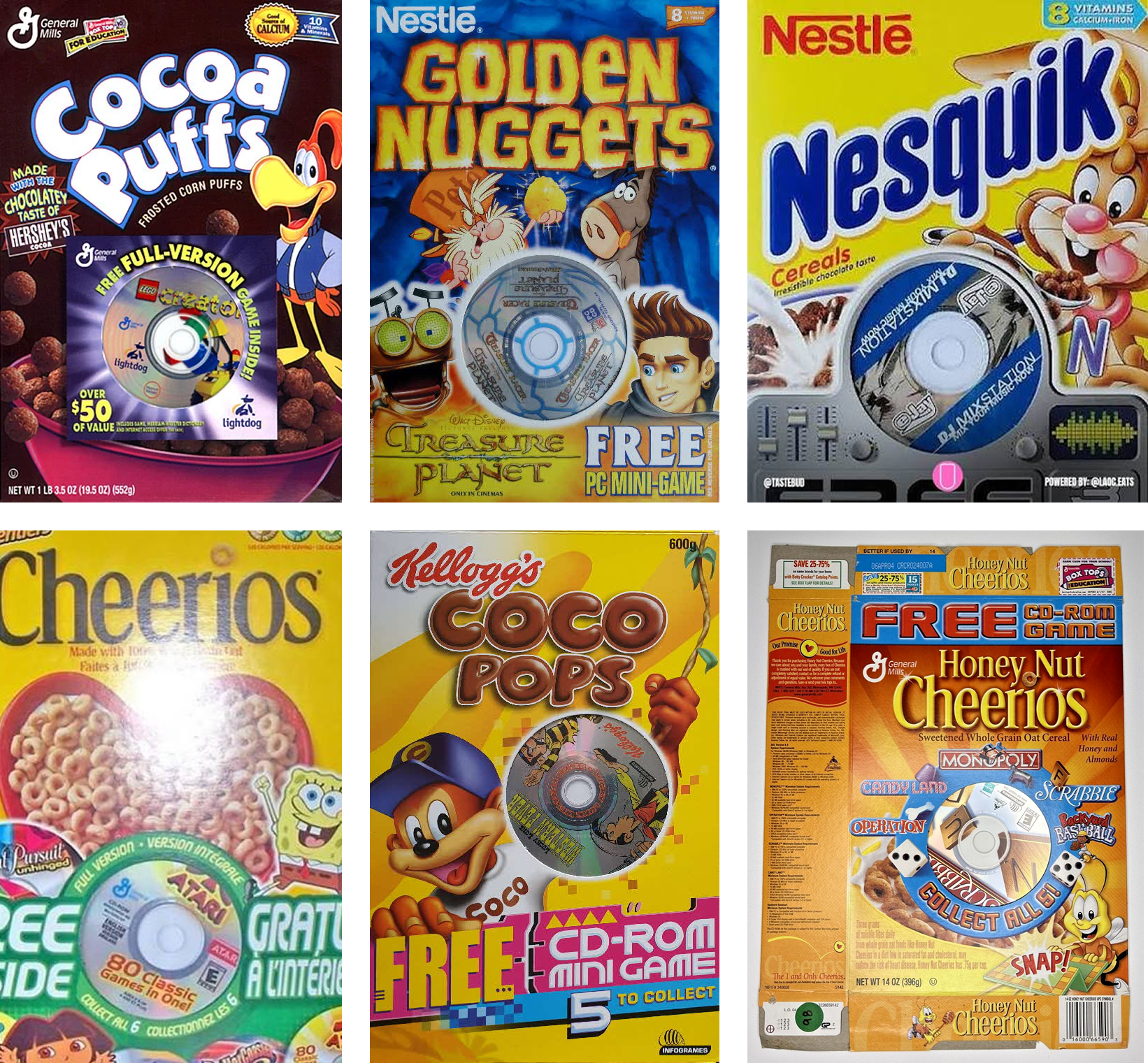
The VHS Rewind Sticker
Before streaming turned movies into a bottomless couch-hole, renting a VHS came with a tiny code of conduct: be kind, rewind. It was a sticker, a reminder, and a small moral test stuck to the side of a plastic rectangle. You didn’t just watch the movie: you returned it ready for the next stranger. That’s what made the phrase so charmingly weird: it turned a boring technical chore into community etiquette. Video stores depended on customers rewinding tapes before bringing them back, because nobody wanted to press play on Jurassic Park and land straight in the credits. In some stores, not rewinding could even mean extra fees or extra work for staff.
The sticker now feels like a tiny artifact from a more physical internet-before-the-internet world: movie nights had deadlines, late fees, plastic cases, drop boxes, and consequences. Streaming removed the rewind problem, but also the ritual. Now Netflix just watches us half-asleep and asks, “Are you still watching?” Physical media had manners. Streaming has abandonment issues.
A giant artificial wave in the middle of Paris made for a striking runway. It also arrived during one of France’s most severe heatwaves.
As an image, it was dramatic. Sand. Surfboards. Models emerging from behind a huge water installation. Pharrell doing Pharrell-scale spectacle.
The Timing was less than ideal. The show landed with temperatures pushing past 40°C in parts of the country.
LVMH claimed the water was reused in a closed-loop system and the sand and other parts of the setup would be repurposed. That may be true but it still feels like a black mirror episode and is tone-deaf.
🛸 – The Orbit Team

You’ve unlocked Coupon #032. Keep collecting. There is no prize, only perspective.
This Substack is reader-supported. To receive new posts and support our work, consider becoming a free or paid subscriber.
Comments
Nothing yet. Say the first thing.
Sign in to join the conversation.