
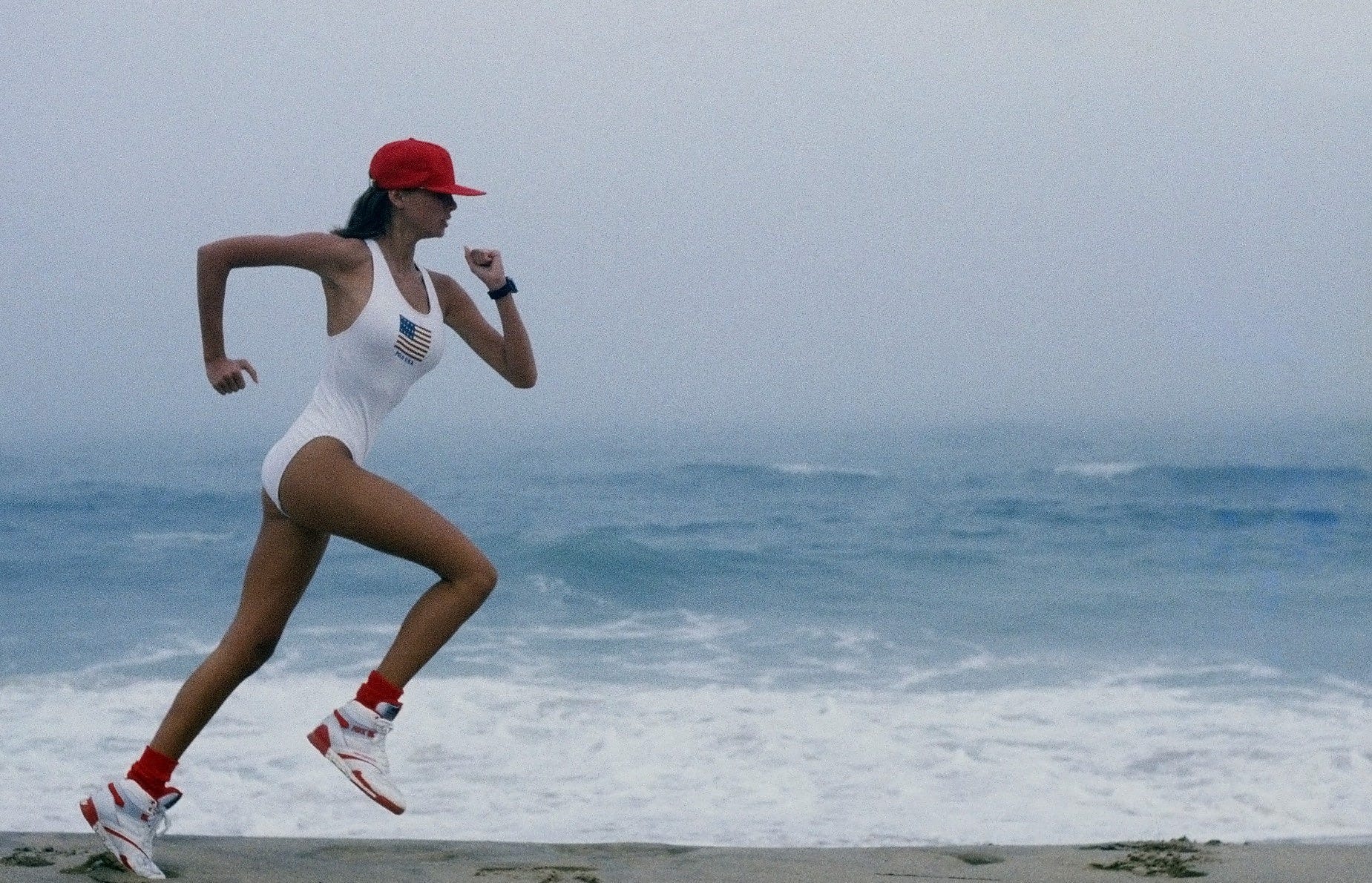
As a privileged American with an obvious interest in health and wellness, I spend a lot of time thinking about the wider landscape of privileged Americans who are also interested in health and wellness.
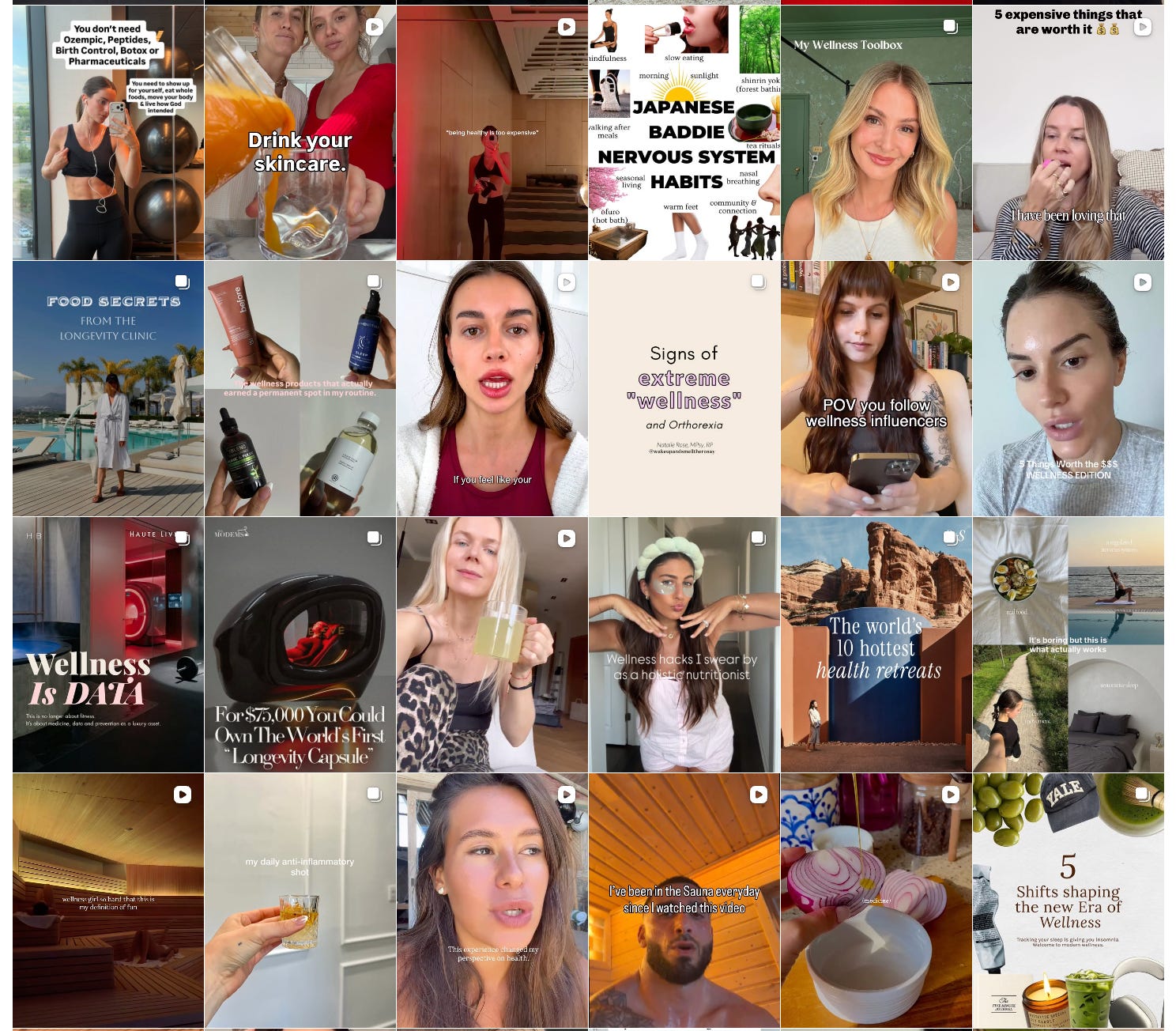
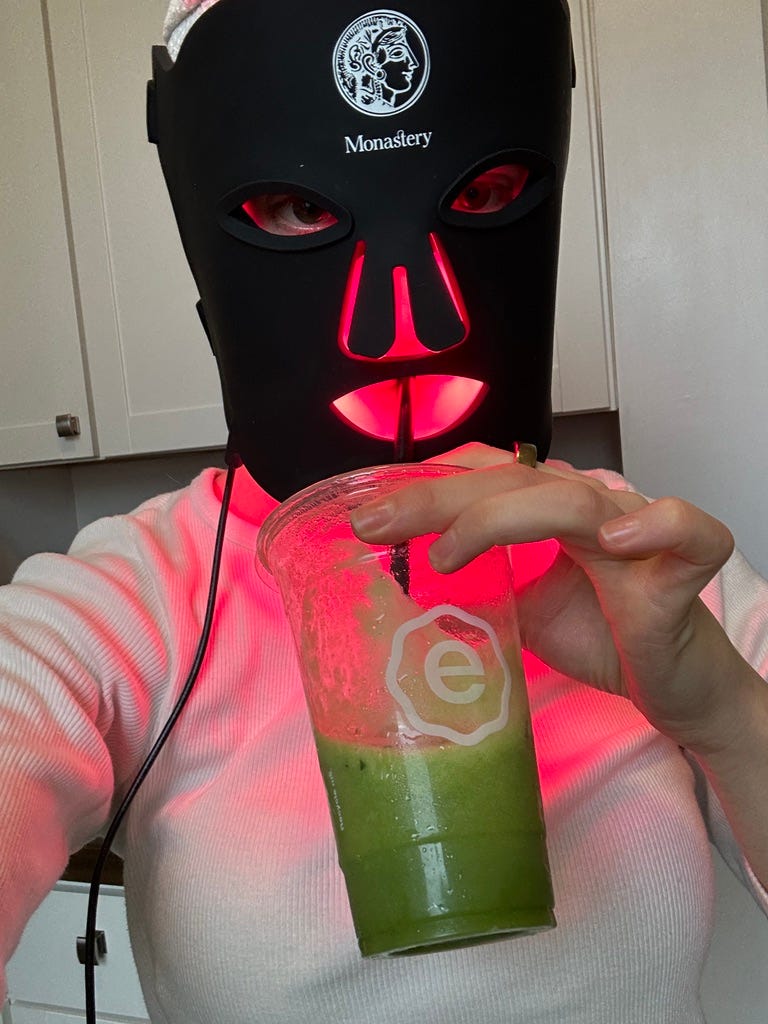
I sit, armored by my red light mask, scrolling through social media, where I’m subjected to videos of mothers yelling about red dye 40 in their children’s lunches, bros giving us their “banya” routines, rather unserious-looking men mansplaining the benefits of GLP-1s for women with endometriosis, and women who preach the benefits of feminine biohacking. These are the extremes, and of course, they’re loudest on social media. But they all exist on a wide spectrum of beliefs that we all know by now is shaped less like a line and more like a horseshoe. The cold-plunging venture capitalists and the all-natural trad wives converge at a central thesis, whether they know it or not: Wellness is more than an interest, it’s an identity that can be distilled down to consumer behavior (or lack thereof), and dedication to the input makes for a prosperous, goal-achieving output.
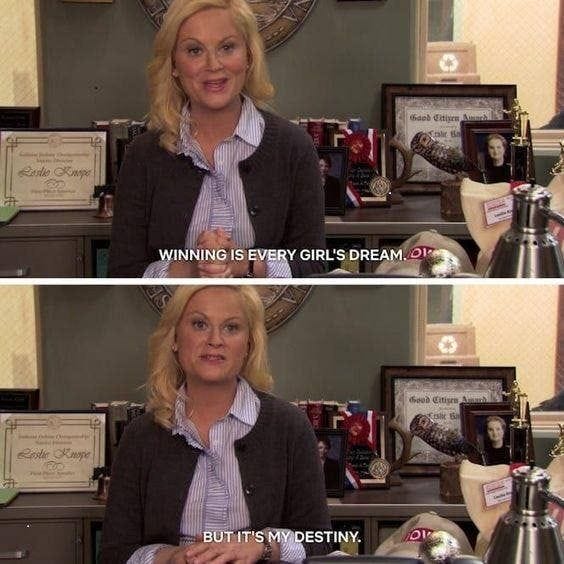
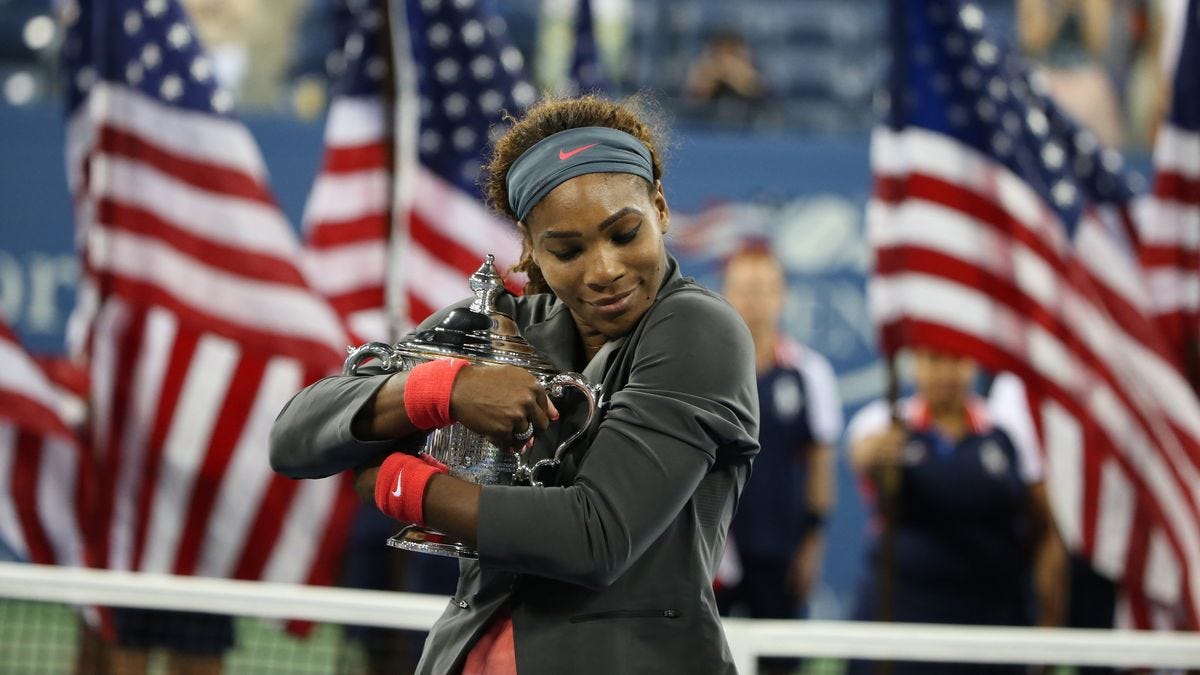
You see, wellness, in the American sense, is two-pronged. First and foremost, it’s a pursuit. There’s a goal, a finite achievement: the best biometric data, the most regulated nervous system, the smoothest skin, the best physique. We want to win, and while that’s not always a bad thing, it’s a rather ambitious quest to embark upon.
This obsession with achieving the best health (don’t reread this clause in Trump’s voice) is a pretty apt parable for manifest destiny. Americans are hellbent on conquering what they believe is their rightful possession—land, longevity, etc—at whatever cost—people’s lives, money, a social life. (I should say, I’m obviously flattening the gravity of the former for metaphorical impact. I would hope you know that, but just keep it in mind as you keep reading.) The times in my life in which I’ve been the most, uh, physically supreme have also required the highest price tag and the deepest feelings of loneliness. On the flip side, when I’ve felt peak emotional fulfillment, I’ve neglected my ideal nutritional intake and would imagine my muscle mass (…) suffered too.
The second prong to this notion of wellness is, of course, the industrial sense. There’s nothing more American than bottling up an interest, a passion, an element of an external culture—and mass-producing it to turn a profit. Sure, #notallbusinesspeople. I know there are entrepreneurs who are interested in helping people—using their own struggles to create a solution for the larger public. But it only makes sense that the “wellness” Americans think of can be boiled down into physical goods and services: fun gadgets, healthy snacks, fitness fads.
At its best, this looks like refillable water bottles, blenders, even sports bras—all results of innovation and creative thinking that have proven beneficial to our quality of life. Positive capitalism. At its worst, it’s a fasting app that you literally pay for to help you not consume things. We’ve actually found a way to capitalize off an absence of behavior. Dark capitalism.
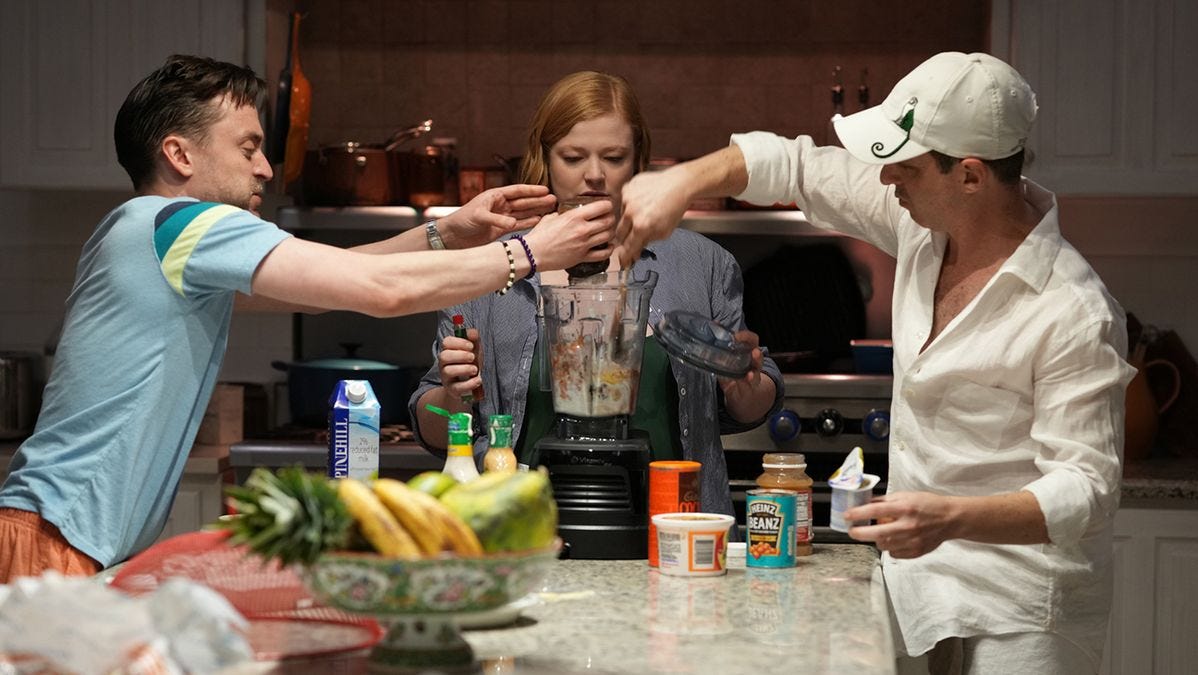
These two prongs—pursuit and industry—could not exist without each other. In fact, they’re glorified nicknames for supply and demand. The more devoted we as a society become in this quest for good health, the greater an opportunity there is for some to capitalize off of it. I won’t and wouldn’t claim moral superiority over any of this—I want to feel good in my body, and I’m willing to use the tools and pay the fees to a healthy (pun intended) extent. We famously only live once, so c’est la vie, and any other cliché you’d like to use to justify acting without inhibitions.
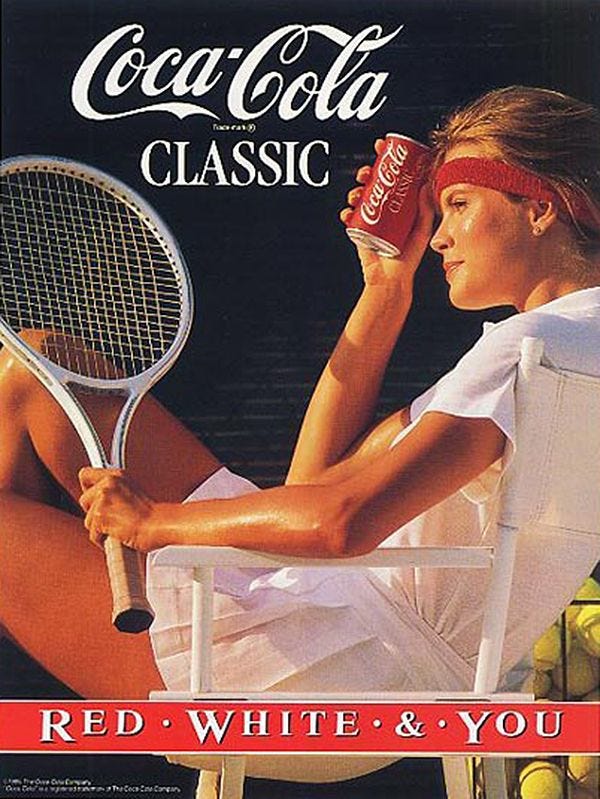
This is all yet another incarnation of the American Dream: good health is achievable with enough hard work, dedication, and cold hard cash. We might be the only country that’s turned being well into a purchasable project, one that’s distinct from the rest of our lives. The practices we carve out time in our schedules for—healthy meals, bathing, fitness, rest—are simply facts of life everywhere else.
Part of this comes from our relatively recent history. Other cultures have had centuries upon centuries to develop a way of living that relies on their natural resources, shared values, and millennia of experience that we can’t come close to competing with. Instead, we’ve found shortcuts—treadmills, social media, protein powder—to replicate the physical activity, community gatherings, and nutrient-dense diets that have been nourishing generations of people before America was even an idea. Though for all of the health practices we’ve adopted from the Japanese (elements of their cuisine, saunas, time in nature, etc), their loneliness epidemic is perhaps even more severe than ours…
Americans have always been ones to seek and uphold the customs of international success stories for “democratic”1 use. Sometimes these originate from immigrants trying to share their cultural norm with the masses in an attempt to a) turn a profit (can’t blame them, capitalism) and b) spread the good word. Sometimes these originate from a well (or malicious) meaning (white) person who experienced the life-changing effects of a foreign people’s practices and decided that their friends, family, and fellow patriots needed to do the same. Now whose practices are we actually appreciating and/or appropriating? And is it another example of American colonization? Or America as the famed melting pot? An essay for another time, I suppose.
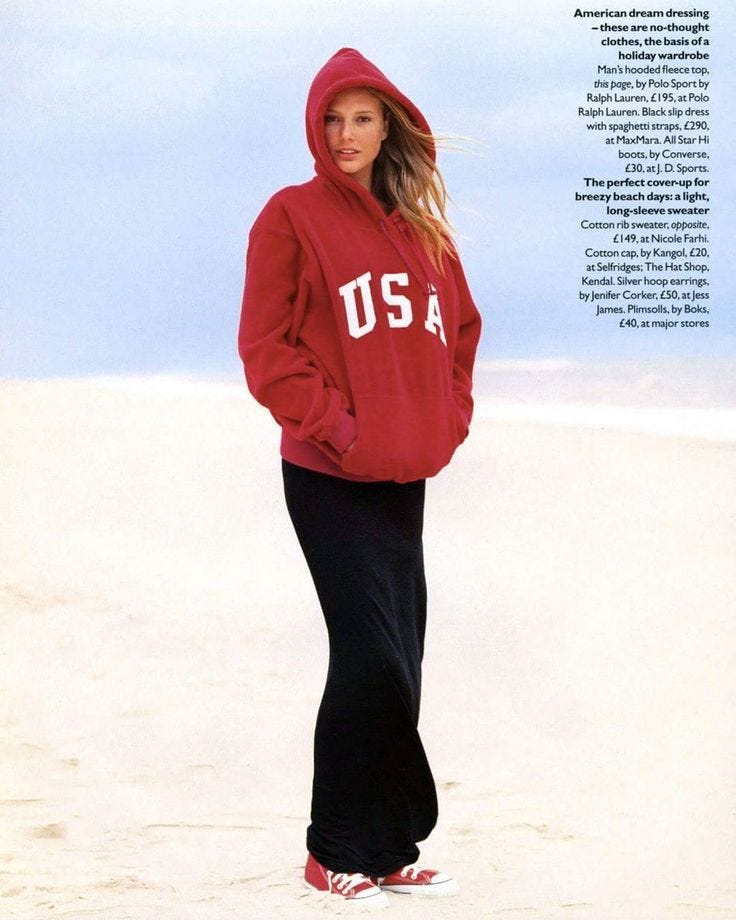
Embarking on any odyssey is not without its costs, and the quest for perfect health is not exempt. It’s hard to come up with a better example than the story of Narcissus, the man so vainly enamored with his own reflection that he was unable to walk away from it, eventually starving and dying. I bring him up because a) his story is incredibly dramatic2 and b) vanity in this case is, I’d argue, spiritually connected to excessive interest in vitality. When we’re so laser-focused on this pursuit of ideal well-being, we’re disconnected from the world around us. Trade-offs are being made, whether we’re aware of them or not. Inevitably, the more time, energy, and money we spend dedicated to our personal projects, the less of these resources we’re able to devote to friends, family, and our other extracurriculars.
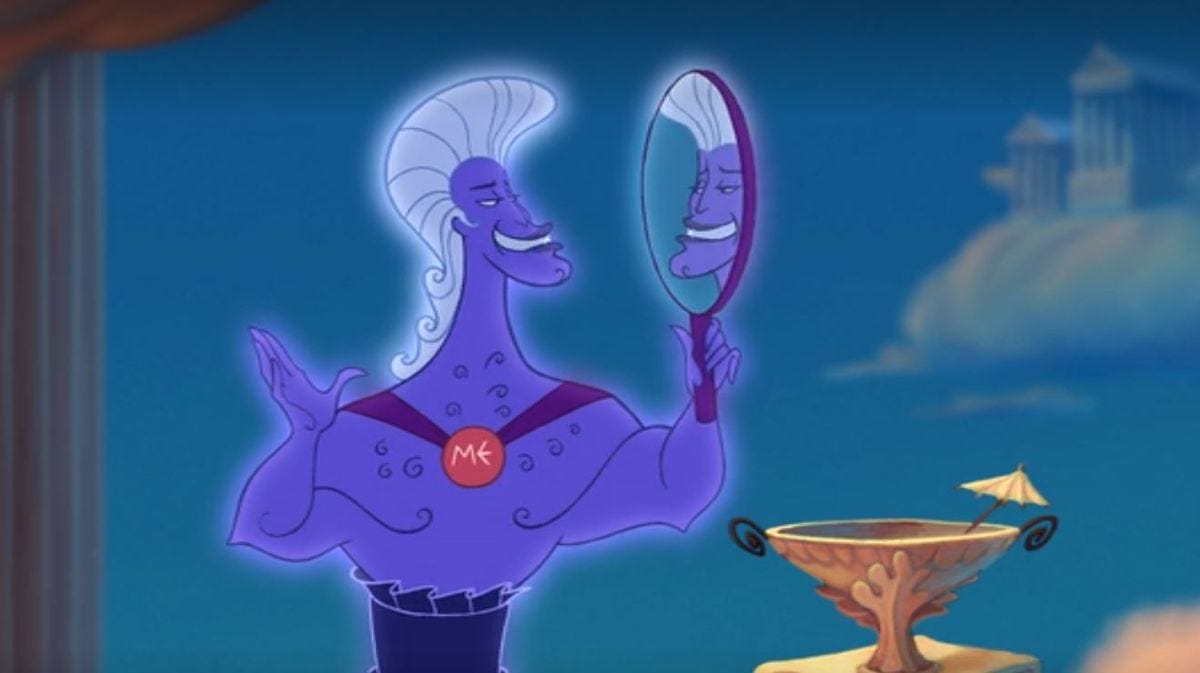
And notice I say ideal well-being and not optimization—this dynamic exists outside the realm of ‘biohacking,’ though, of course, less apparent. A purity complex around “clean food,” a lifetime of training for fitness event after fitness event, a never-ending need for “balanced hormones”—all of these are the same pursuit in a different expression. Back to the moral of Narcissus’s story: a disproportionate focus on our health is a disproportionate focus on our selves, and this American pursuit of perfect health is marked by only the most American value of them all: individualism.
My own approach to wellness is a product of the American ideal—how could it not be given that I am, after all, American—but I like to think it has some personal flair. I work out, I drink my bone broth, I do a few face masks a week, and treat myself to a massage now and again. Like every true American wellness warrior, I spend time in a Finnish sauna and I eat Japanese-inspired macrobiotic plates for dinner most nights. If left to my own devices, I’ll try to make the choices that will create the greatest health output.
But I try equally as hard to not be left to my own devices—to spend time with my friends, among strangers in public3, and in communal spaces that detach me from the self-centered thought patterns that are only natural in one’s own brain. After all, to be well the American way is to be full of contradictions. And in my culture specifically, it’s also custom to psychoanalyze yourself and the society you find yourself in to a point of sickening excess. It’s only healthy.
I’d like to nominate Kat Chan’s wonderful piece about health being a byproduct as a great companion to this train of thought, if I may be so bold. Also, I’m officially done loudly identifying as American for the time being.
in quotes for obvious reasons
Aside from airports. I am not volunteering to be near other people there.
Comments
Nothing yet. Say the first thing.
Sign in to join the conversation.