
Let’s address one of the questions I get asked the most is:
A month? Six months? A year?
This is important because whenever someone tells me...
“I’ve been applying for over a year.”
...I immediately know one thing.
I’ve been working remotely since 2015. My first ever remote job was in HR and I’ve been helping people get remote jobs since 2019. When it comes to the remote jobs search, I’ve seen it all at this point.
So when I hear that, I know you must stop your search ASAP.
Why? Well, something is clearly off with your foundation of your remote job search.
Not with you. Not with your skillset. With how you’re addressing the remote job search.
And, you know what? That’s much better than YOU being the problem. LOL. You’re not the problem. Its just how you’re doing stuff, and that’s a much quicker fix.
“Oh but the job market…”
“Companies aren’t hiring anymore.”
“There aren’t remote jobs for people like me.”
“I don’t think I have the skills to get a remote.”
Nope, nope. Let me stop you right there.

The first steps of the remote job search are about making sure you’re working on the right things.
Think about it like going to the gym.
If you’ve never worked out before and you spend six months doing random exercises you found on TikTok...
You’ll probably make some progress. Probably not. What I definitely know is that you’ll also waste a lot of time.
Someone who gives them a routine. Shows them proper form/technique. How not to get injured. What to not waste time on. What to focus on. The coach tells them what to do each week. Actually knowing what to do with the gym equipment. No guessing.
Exactly. When you have guidance and support, you’ll see more progress… whether you’re trying to get fit or get a remote job.
That’s the best way I can explain it… because a lot of things in life, including the remote job search is less overwhelming when you have a plan.
They Google “remote jobs.”
Click the first job board that pops up (which might be some random sponsored job board with fake listings or that makes you pay to see open positions).
Apply to a few jobs.
Get ghosted.
Repeat.
Six months later they decide the remote job market is impossible. “No good opportunities.” “Full of scams!” “Remote jobs don’t pay well.” “Too much competition.”
But why do they think that? Because jumping into applying is never the first step.
Before you send a single application... there are 4 things I think you should have figured out.
The first one is actually super simple.
Notice I didn’t ask whether you have the skills or if they’re advanced and in-demand. I asked whether you know what skills you already have.
So many people tell me they aren’t qualified for remote work.
They tell me things like this as soon as we start the remote job search process together:

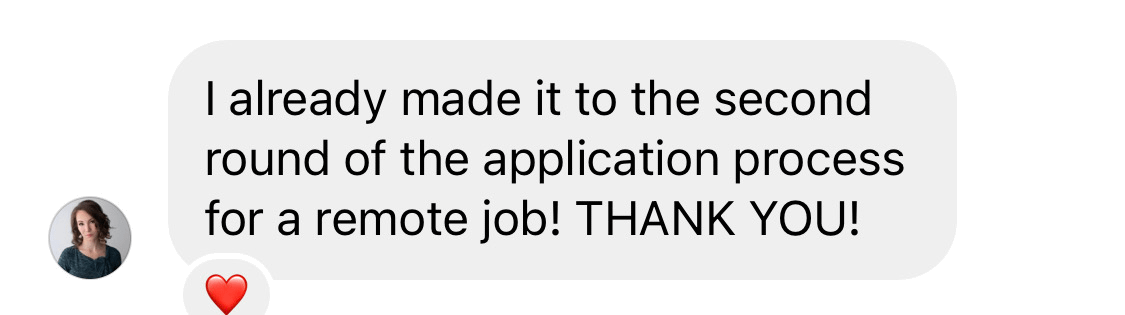
This person who wrote this when they first started working with me got a remote job within 2 MONTHS!
That means that they had the skills all along. They just didn’t know what those skills actually were and they were just generally overwhelmed.
And suddenly they’ve managed projects. Worked with customers virtually. Used digital tools. Communicated with teams in different places. Solved problems on their own using the internet or AI. Organized virtual events. Trained people via Zoom.
So, they already had valuable skills. They just never thought about them through the lens of remote work.
Once you know what those skills are everything else becomes easier. We start to know which jobs actually make sense for you. What to highlight on your resume and what to focus on in your cover letter.
Without this very first step, you’re basically guessing, and that’s not a good strategy.
The second thing I see all the time is people using the exact same resume they use for in-office, in-person jobs.
If you’re applying for remote jobs...
Your resume should actually look like it’s meant for remote jobs.
Remote companies want people who can communicate well virtually, work independently, collaborate online and feel comfortable using digital tools.
If your resume never mentions any of that...
How is a recruiter or employer supposed to know you’d be a good candidate?
Even if you’ve never officially worked remotely before, you’ve probably done personal projects using skills that are valuable for remote work, organized something virtually, studied online or used tools that remote teams use every day.
That belongs on your resume, and that’s why I always talk about the importance of why you should ‘Remotify Your Resume.’
Let’s talk about cover letters when you apply for remote jobs. I know a lot of you don’t like to write those… but, they’re a requirement in most applications.
So, whether you like it or not, you need to have a good cover letter.
And this always makes me laugh a little.
I’ve seen people write things like...
“I want a remote job because I want to travel.”
“I want to stay home with my kids.”
And look...
Those might be your reasons. Totally valid reasons.
But, they’re just not the reasons a company hires someone. And I’m not saying lie or don’t tell the employer your true intentions and what you desire.
However, we can’t do that in the cover letter… that’s your very first impression and it isn’t there to convince the employer why remote work would improve your life.
It’s there to explain how hiring you will improve their business, what you bring to the table and how it benefits THEM.
See how this is the last step of the remote job search foundation? Because without the previous steps, there’s no use in knowing where to look.
But, once you do have the previous steps figured out, yes… you need to know where you’re actually looking.
If you’re just typing “remote jobs” into Google every day... and then you’re wondering why you don’t see the good opportunities, don’t be surprised.
Some of the biggest job boards are full of outdated listings, hybrid jobs labeled as remote or even worse… scams.
Knowing where to look is part of the strategy too.
Let’s say you skip every single thing I just talked about.
You don’t identify your skills. Your resume isn’t built for remote jobs. Your cover letter focuses on the wrong things. You’re applying on websites full of junk.
Then you spend six months applying.
Is the problem really the remote job market?
Or did you build your entire job search on a shaky foundation?
That’s why I always say the first month of your remote job search needs to be super intentional… otherwise, you’ll end up wasting time and discouraged thinking remote work isn’t for you.
So, I’d spend that first month getting the foundation right.
After that...
It’s time to apply.
And yuppp, you’re probably going to have to apply to more than five jobs.
I’m always a bit concerned when someone tells me how crazy it is that they haven’t gotten any callbacks or interviews telling me...
“I applied to five remote jobs.”
Five, señorita?
Five isn’t a remote job search. It’s only the start. And we are very realistic around here. You’re going to have to do a lot more than that.
The remote job search is a numbers game.
Once your foundation is solid, your job becomes staying consistent with your applications.
You’ll have to keep applying for weeks. And that’s how you keep improving. You get a little better at finding legit remote jobs and faster at sending that application.
That’s when people start getting interview invitations, and your might not nail it on the first interview. Maybe you were nervous. So, again, it’s not YOU… it’s just that you need a bit more practice.
So, that’s why I genuinely believe that for most people...
Because once you stop wasting time improvising the remote job search, and actually fixing the foundation...
You can finally start seeing results!
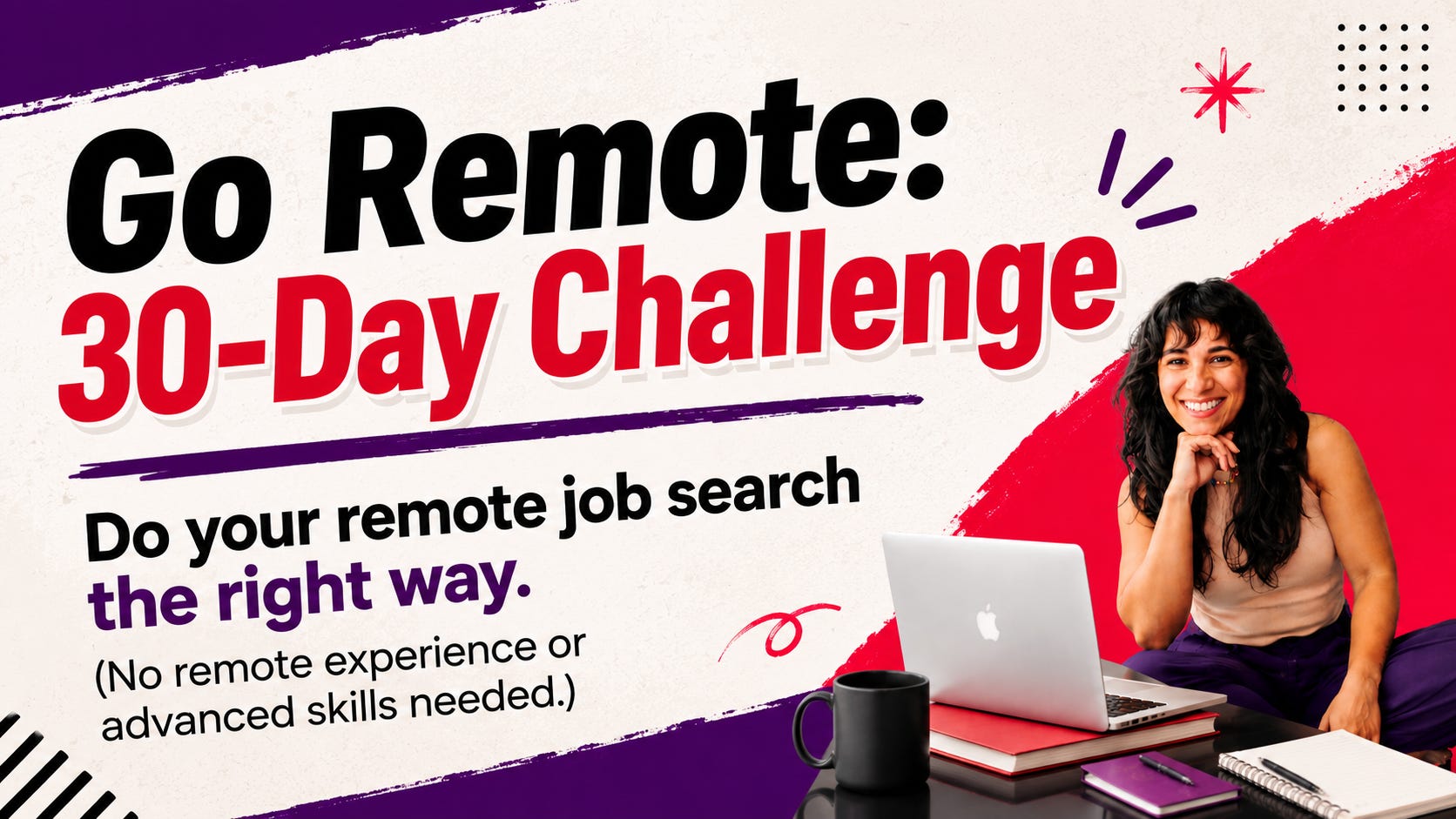
That’s exactly why I created Go Remote: 30-Day Challenge.
Over 30 days, I’ll guide you through the whole foundation of your remote job search which I explained in this article. That way you can stop guessing... & finally start making real progress to actually start getting callbacks, interviews & eventually that first remote job offer!
💜 Figure out the remote skills you already have (yupp… you probably have more than you think).
💜 Build a resume specifically made for remote jobs.
💜 Write a cover letter that focuses on what companies care about.
💜 Learn where to find legit remote jobs (including out of the box search hacks)
💜 Submit your first remote job applications with much more confidence.
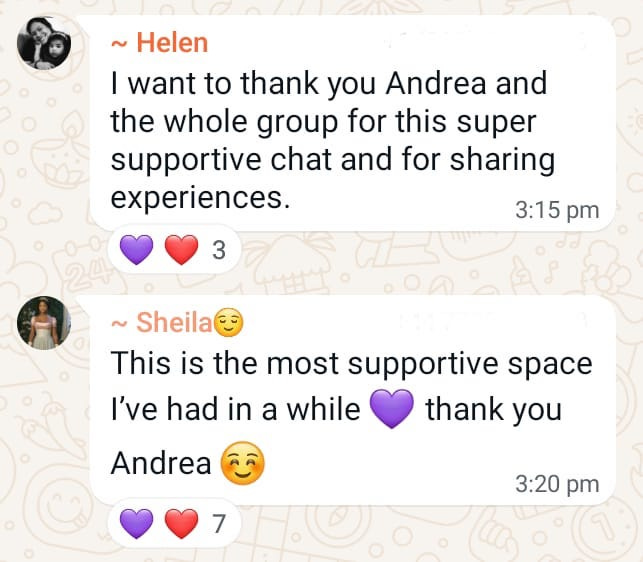
💜 Stay accountable with a private WhatsApp community. Of course, I’ll be in there every single day answering questions, checking in & cheering you all on for the 30 days.
For the first time ever, we’ll all be working through it together.
Instead of buying another course you’ll “get to someday, “we’ll actually do the work at the same time. So make sure September is a good month for you to devote some time to this.
Save your spot in the challenge
You’ve been wanting a remote job for a while but don’t know where to start.
You’ve been applying for months but aren’t getting interviews.
You’re overwhelmed by the advice online & just want someone to tell you what to do.
You’ve tried looking for remote jobs & just don’t know where to go.
You’re tired of saying “I’ll work on my resume next weekend” or “I’ll stay consistent with my applications next month.”
A clear remote job search strategy.
A remotified resume.
A compelling cover letter that says the right thing.
A list of legitimate remote jobs to apply for.
The confidence to know you’re applying the right way.
Your first remote job applications submitted.
A private WhatsApp community where everybody is on the same boat.
Weekly goals.
Daily accountability & support from me.
And this super cool bonus: An extra 30 bonus days in the community after the challenge ends so everyone can continue supporting each other & stay motivated while you’re applying for remote jobs. How about thaaat?!
If you’ve been telling yourself “yeaahhh, I’ll start looking for a remote job next month.”
...consider this your sign to stop procrastinating & actually make it happen now that you have a support system & a plan you’ll be motivated to follow.
The first-ever Go Remote: 30-Day Challenge begins September 1, and I’d love to help you spend the next 30 days building the foundation that could completely change your remote job search.
I’ve been helping people get remote jobs since 2019, and if there’s one thing I’ve learned, it’s that getting a remote job isn’t about getting lucky.
It’s about having the right strategy, avoiding the common mistakes & staying consistent. I’d love to help you do exactly that.
See you inside the challenge!
💜
Andrea Valeria
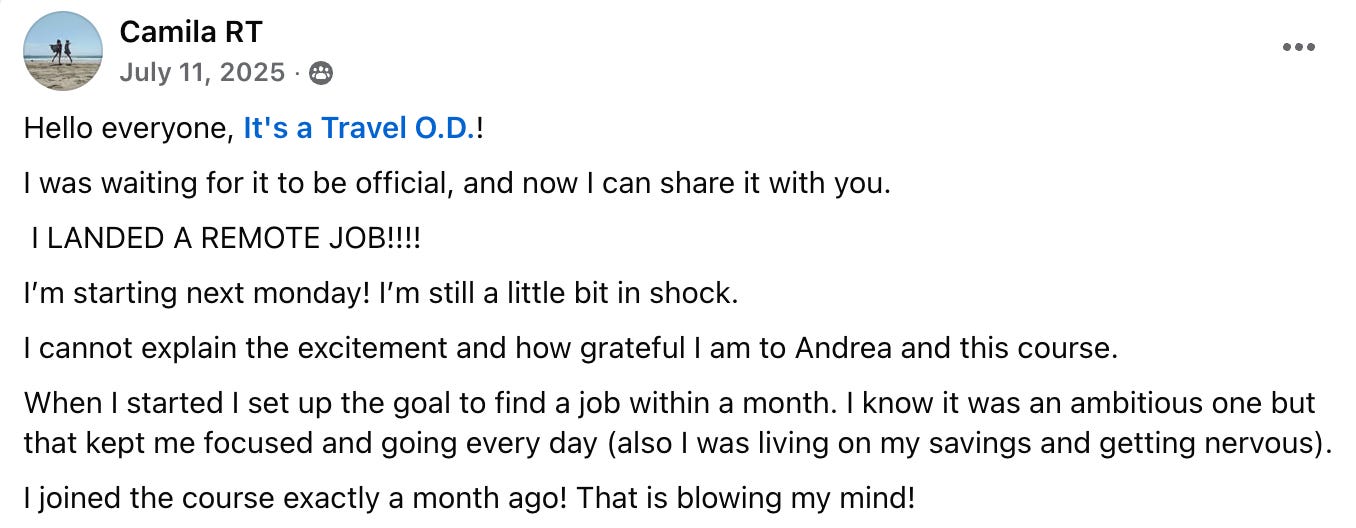
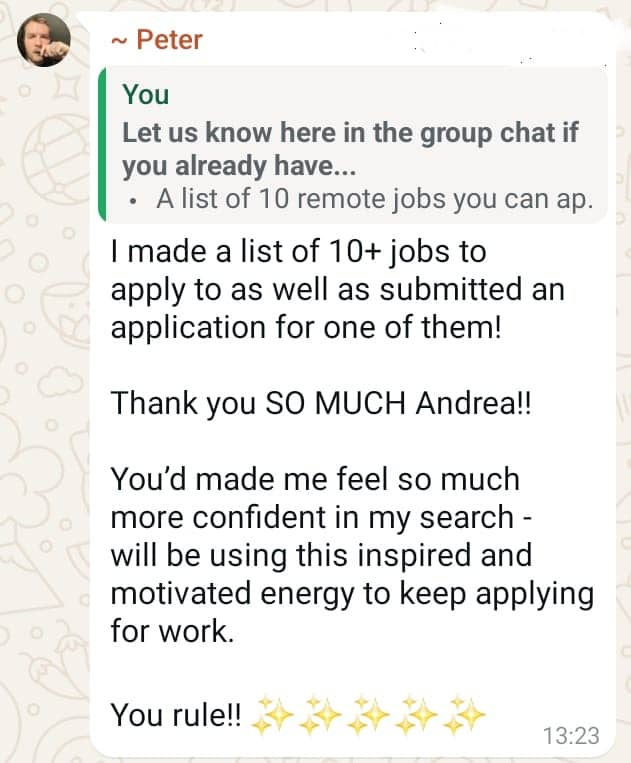
Look at Camila making it happen in only 1 month because she followed my plan… and this time, you get even more support than she did because we have the daily check-ins & the group chat for 30 days.
This is different from the challenge. It’s a written article explaining what you should do the first 30 days. This roadmap is a better option for you if you prefer reading articles, if you prefer working on your own or if you’re not available the month of September to devote to the challenge.
Comments
Nothing yet. Say the first thing.
Sign in to join the conversation.