
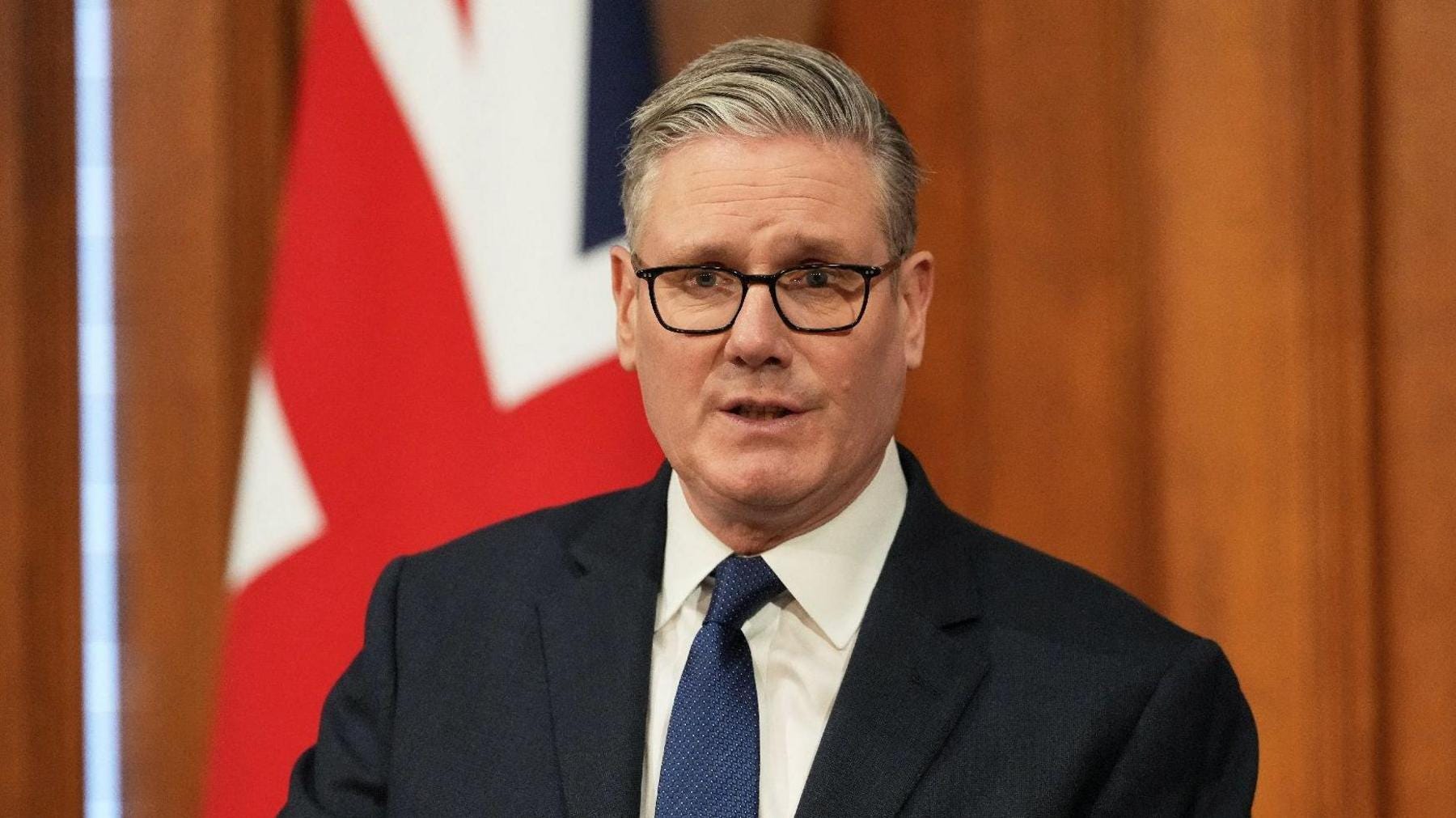
There has been a question that has been bugging me for some time that has come to the foreground with Sir Keir Starmer’s announcement he is seeking a closer relationship with the European Union and this time he really, really means. And that question is would Brexit have been more durable if it had been a bit softer?
It’s worth being clear that I’m not meaning a “soft” Brexit for the simple reason that Britain never asked for it and the Europeans never offered it. For all the talk of Norway during the Brexit negotiations we would never have accepted the continuation of Freedom of Movement or being a rule-taker on services whilst they would have wanted more safeguards against being troublesome than apply to the smaller, better-behaved Norway and would drive a harder bargain on fish than they did in the 1970s. And a Norwegian-style deal wouldn’t have solved the issue of the Irish Border.
No by soft we basically mean something like Theresa May’s backstop or as I liked to call it at the time a Super Jersey Brexit; in the Customs Union and Single Market for Goods but otherwise pretty much free to chart our course.
The obvious advantage of that deal, which is why I advocated it at the time, is that it minimises the economic disruption of Brexit. Unlike services where the internet and global spread of the English language mean they operate on a more global basis, the bulk of physical goods means that basic geography has greater pull. And the Brussels Effect means that even British manufacturers would rather build one model that they can sell to us and the Europeans, rather than spend the money and time building slightly different variants for Britain and Europe. And staying in the Customs Union would not only solve the problems caused across the three Irish borders (the Northern Ireland/Ireland border and their borders with Great Britain) but remove the need for investment in large, expensive facilities at the border.
Not for nothing did Michael Gove say at the time, that if Britain was to enter the backstop, it might be the Europeans who would end up agitating to get us out.
Given that there was a fairly large leave-curious vote in 2016 that was successfully limited to just 52% of the voters by David Cameron and George Osborne’s warning of the economic consequences of Brexit, such a deal would undoubtedly be popular with the public. Whilst the implementation of the Northern Ireland Protocol showed how they’d undoubtedly be gremlins in the details as British and European officials clashed on the interpretation of the deal, we would basically have succeeded in cherry picking. There is after all, a good reason why the European Union doesn’t seem interested in offering us that deal again.
So, it’s simple right? A Brexit that didn’t cause tremendous economic disruption would undoubtedly be popular? Even better this means I was right, and both Remainers and the Tory Brexit Ultras were wrong, which would be rather gratifying.
But there is just this nagging thought in the back of my mind that this isn’t the case, and it’s how after nearly two years of promising to get closer to Europe, this Government still hasn’t achieved anything as significant as Rishi Sunak taking us back into Horizon Europe or coming to terms with the Europeans on the Northern Ireland Protocol. Indeed, with our behaviour over trade with the Americans, we’ve arguably even further away from the Europeans as rather than negotiating as a collective, Starmer rushed to do a deal with the Americans, then bragged about having beating the Europeans to the punch. And I fear we’ll be paying for European resentment at the humiliation of having to finalise their free trade deal with the Americans at his Scottish golf course long after Donald Trump ceases to be President.
Labour ministers and backbenchers visibly enjoyed being able to claim that their quick intervention had helped saved industries such as British carmakers from the damage caused by increased tariffs with a major market (…pauses for Europhile readers to choke on their own bile…) and it wasn’t unknown for some to explicitly argue that such free trade deals were why it would be a disaster to rejoin the Customs’ Union (seriously, could I get you guys a glass of water).
And this talks to what Brexiters gained by going for such a hard Brexit, they created facts on the ground. By moving so far away from the European Union, our economies’ natural inclination to diverge for historical and geographical reasons is being exacerbated by different regulatory regimes. And for all the focus on the losers these changes create, it also creates winners. A good example of this is the arguments over the youth migration deal that Britain and Europe are currently negotiating, with one of the key sticking points is a return to the European students paying home fees to study at British universities. The British universities are vehemently opposed because they’ve become used to relying on the inflated overseas fees they can now charge such students. As someone who worked for a university at the time of Brexit, that higher education is arguing against further European integration is genuinely bemusing; like many universities, my employer wrote to all staff urging us to vote Remain and even I accepted that I was voting against their economic interests.
And part of this is loss aversion, with universities clearly deciding that whatever damage Brexit caused has been done, and so going back would lumber them with the worst of both worlds i.e. lower funding from European research programmes and now having to charge lower fees to European students. And one can see this attitude replicate itself across the economy; for example, would the City of London believe that reintegration with Europe allows it to reclaim lost trade from European financial centres, or would it worry that it would just lose the overseas business it’s built up to compensate for those losses?
And then of course there’s the role of the Government. It’s not a coincidence that the only meaningful step back towards Europe we’ve made since Brexit involved Rishi Sunak agreeing to pay nearly £3billion a year to regain access to European research funding. Contrast that with Sir Keir Starmer refusing to pay £1billion to gain access to Security Action for Europe’s lending for defence-related projects or the Government’s redline that the aforementioned youth migration deal must not involve European youth gaining access to British public funds. For all their change in tone, the Government too has gotten used to the facts on the ground created by Brexit.
So despite the fact that the public hate it and even I think its suboptimal, I fear that the Brexit Ultras were actually right to go for the hardest possible deal. They successfully turned the Channel into a chasm, that swallows any efforts to meaningfully move closer. And that they’ve succeeded by passing something that is less popular, less optimal raises real questions about how politics secures the common good when it increasingly incentivises wrecking tactics.
No posts
Comments
Nothing yet. Say the first thing.
Sign in to join the conversation.