
Sometimes odd thoughts hit at 2am. Within a week, I’d had an unusual juxtaposition of experiences. It took several days for my subconscious to pop out with a realization that made me pause.
The first experience was returning to a place I find deeply meaningful, a valley with two caves in the Dordogne region of France where you can still see original Cro-Magnon cave art. I’ve been several times over the decades and each time I am overwhelmed anew. It is difficult to arrange a visit, as it should be, with limited access to very small guided tours, allowed entry for short periods. Even with that, they probably shouldn’t be open to the public at all, and every time I go I feel a bit guilty and expect that visit will be my last.
I entered Les Combarelles cave through a door in the rock face at ground level. Our guide pointed out a much smaller opening in the cliff above us which was the original, much more difficult to reach, entrance. A hundred years ago, the cave had been made more accessible by creating a new entrance and enlarging the original passage that had only allowed crawling. I could walk easily with only one or two points where I needed to duck. We walked for what seemed like a long time, covering 120 meters (about 400 feet) before the art began. This is the halfway point of what is open to the public—the art continues far deeper into the mountain in parts of the cave that are very unstable.
And suddenly, the engravings began. Combarelles is famous for its wall carvings. There are about 800 of them, some lost in time through calcification. This is a “wet” cave, which was apparent by the drips on my head. All of these engravings will be covered over with calcification at some point in the future if left in place.
I saw nothing remarkable in the dim light, but then our guide turned on his flashlight, focused it at certain angles, and suddenly dancing, pouncing, stalking, hunting, grazing animals were everywhere. We continued to walk as they unfolded all around us. What made them so remarkable is that they used the contours and defects in the cave wall to enhance the engravings, making them at times three dimensional. That hole in the rock was used as an eye, that ridge a cheekbone or jaw, that hollow the indentation of an abdomen below a rib cage. Now they are mere echoes, but would have originally been outlined with charcoal (maybe even painted), making them pop.
In addition to many horses, deer, ibex, and other grazing animals, woolly mammoths were there, and cave bears too. A woolly rhino. All long extinct. There was a cave lion that was unmistakable. As our guide pointed out, these were not created from second-hand reports, but from the artists' own observations, gained from a lifetime living intimately beside them.
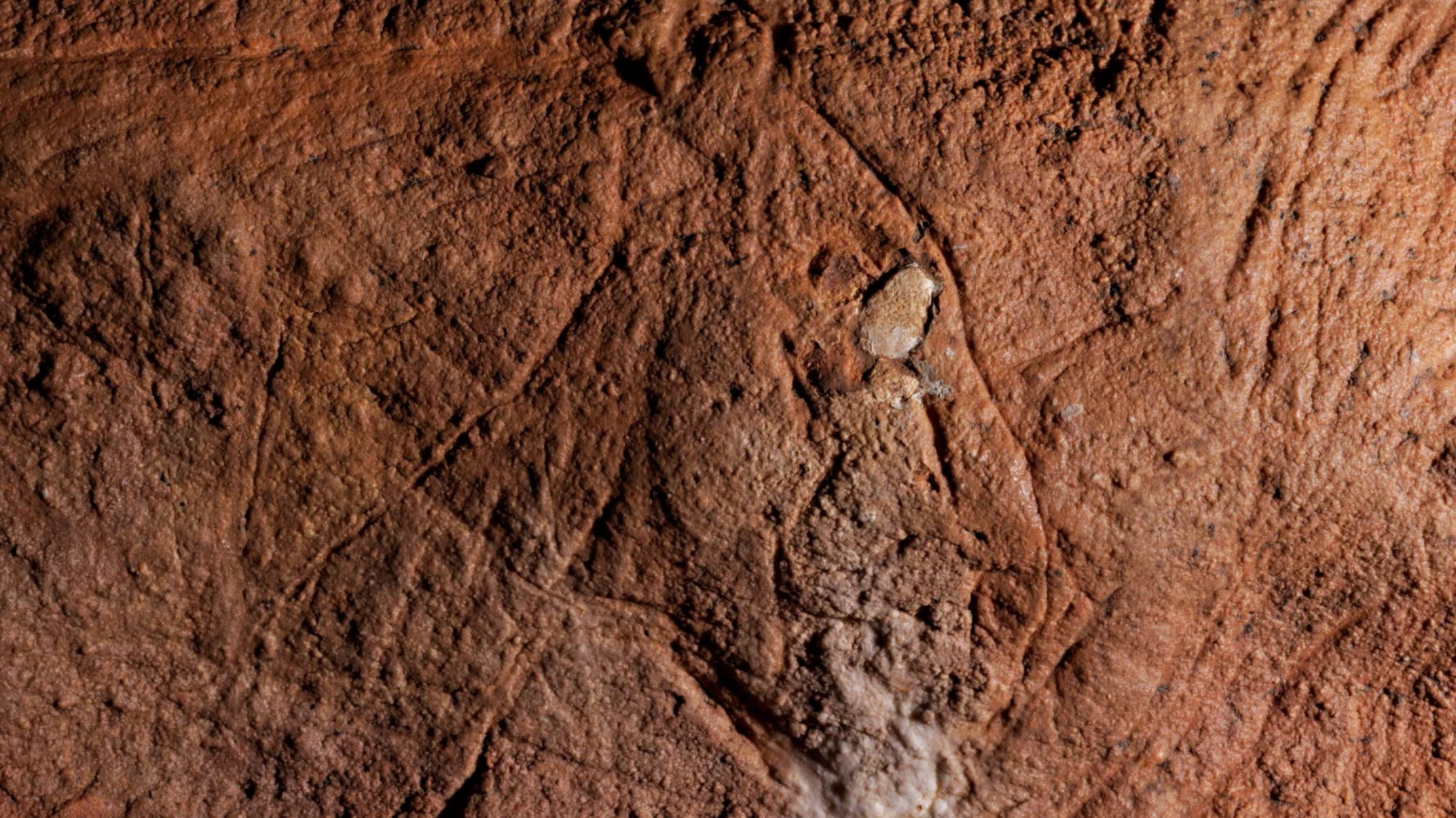
These were some interesting juxtapositions, layers of carvings that incorporated part of one animal that when lit from a different direction became another animal, often at a different scale. There are some rough carvings of people, more stylized than the animals.
The moment that took my breath away was a reindeer that was carved kneeling to drink with its tongue out to lap water. It was positioned next to a crevasse in the rock through which archeologists believe that water once flowed. It was imaginative, poetic, and just beautiful. I could imagine the delight when the artist got a flash of inspiration for this placement.
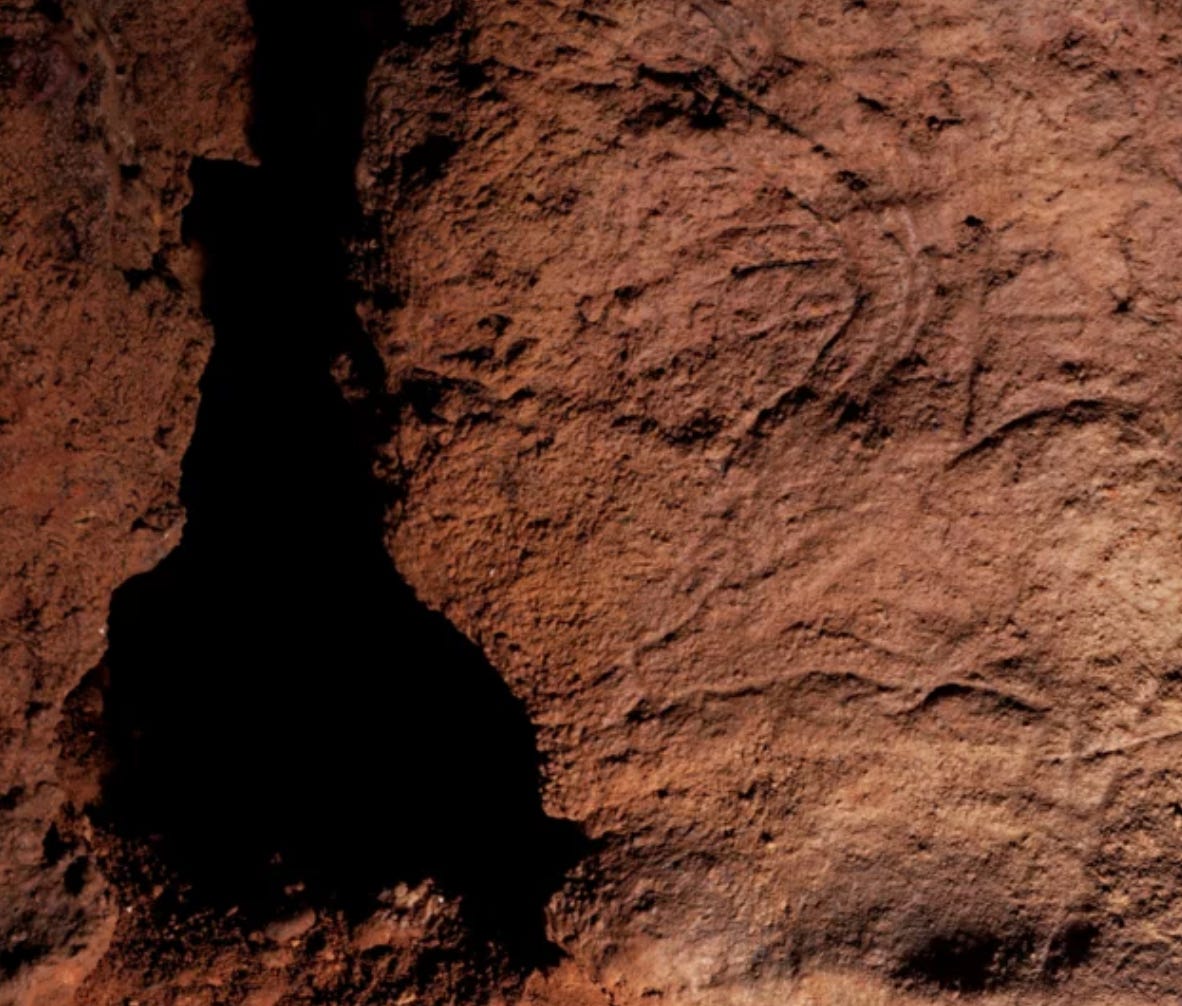
Scientists don’t know why these, or art in other caves, were created, but our guide pointed out that it was unlikely to have been just for fun—the long path into the cave navigated on hands and knees, and sometimes crawling along on the stomach, would have been grueling. For light they used hollowed out stones with handles, like a prehistoric Aladdin’s lamp, burning reindeer fat, which lit cleanly and evenly. In addition to themselves, they would have hauled lamps, replacement fuel, food and water into the cave. For me, the reason they were carved really doesn’t matter, but the result did, and how it made me feel across the millennia.
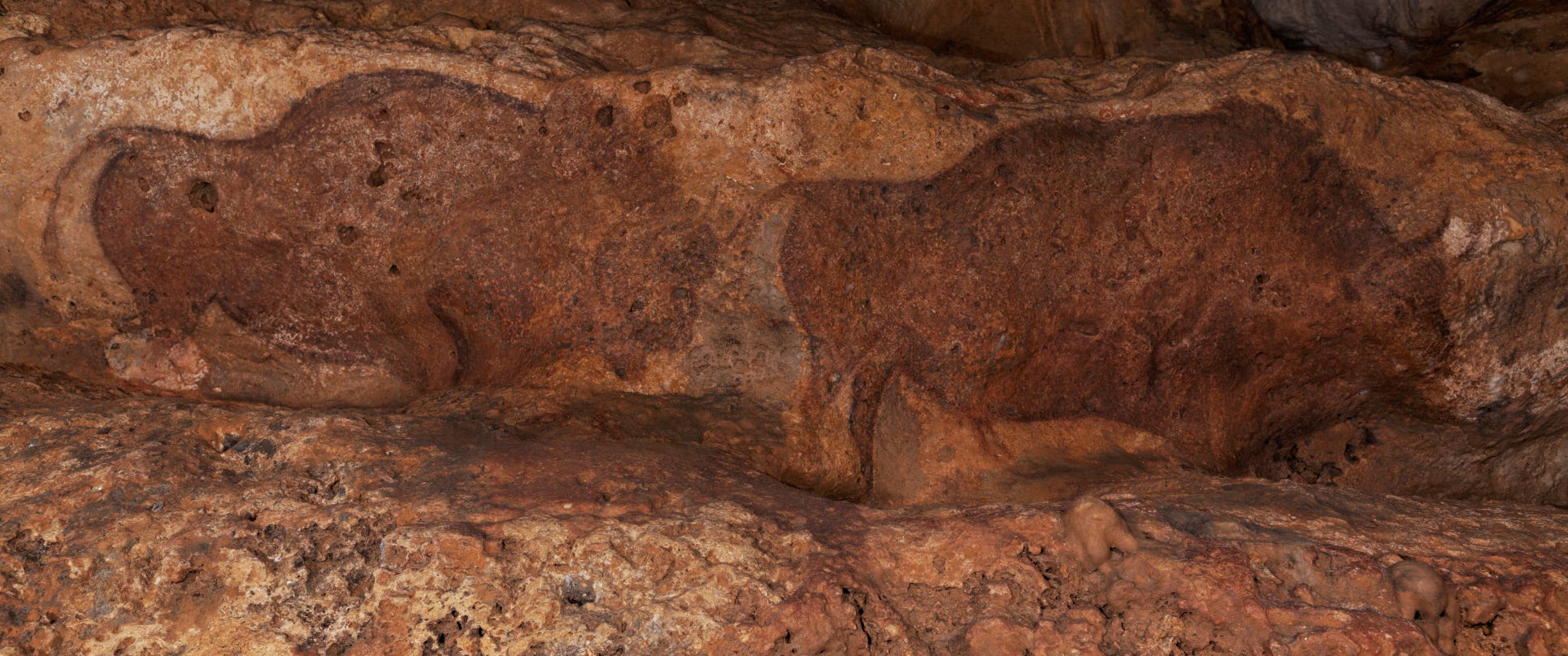
Less than a two-minute drive away is the more famous La Grotte de Font-de-Gaume. These are polychrome paintings (like the one at the top of this article) that are breathtaking, but I wanted to concentrate on just one cave. It’s easy to visit both in one day, and we had an excellent lunch at Les Glycines in between visits.
This area of France is simply crawling with prehistory. Looking around it’s easy to see why—the limestone cliffs are peppered with caves, a river runs across the valley, and valley grasses would have provided abundant game. According to our guides, even though the climate has shifted through the millennia it’s apparent from the art of the walls that these early human-friendly qualities were present when our artists worked. From 400,000 years ago, this area supported Homo erectus, Neanderthals, and finally, Cro-Magnons/Homo sapiens who started making art there 40,000 years ago. An interesting footnote is that Cro-Magnon man is actually named after the rock formation a couple of miles from the cave where the first remains were found in 1868, called the Abri Cro-Magnon.
A week later, back in Paris, I walked into a modernist masterpiece and felt a different set of emotions. We went on a guided tour to the house and studio of the artist Jean Lurçat, designed by his architect brother André Lurçat. It was the first of eight houses by André on a small dead-end street in the 14th arrondissement, near where we live. Built between 1925 and 1928 all the elements, including the furniture, were designed by André. Many think that the houses are modernist masterpieces, and Jean’s house was listed as a historic monument in 2018. Jean showed his paintings alongside Matisse, Picasso, Braque, Derain and Raoul Dufy, but is most famous for his huge tapestries, several of which hang at the house, which helped to reinvent the art of making tapestries for the modern era.
Every surface was as carefully considered as the walls of the cave. There is no trim, and all pipes and conduits for wiring are exposed. The flow led from room to room, essentially turning most into large corridors, which is (from experience) unsettling to live in. Consider a moment the master bedroom, all the furniture custom-designed and built, including a gap in the furniture in the corner to accommodate the pipes.
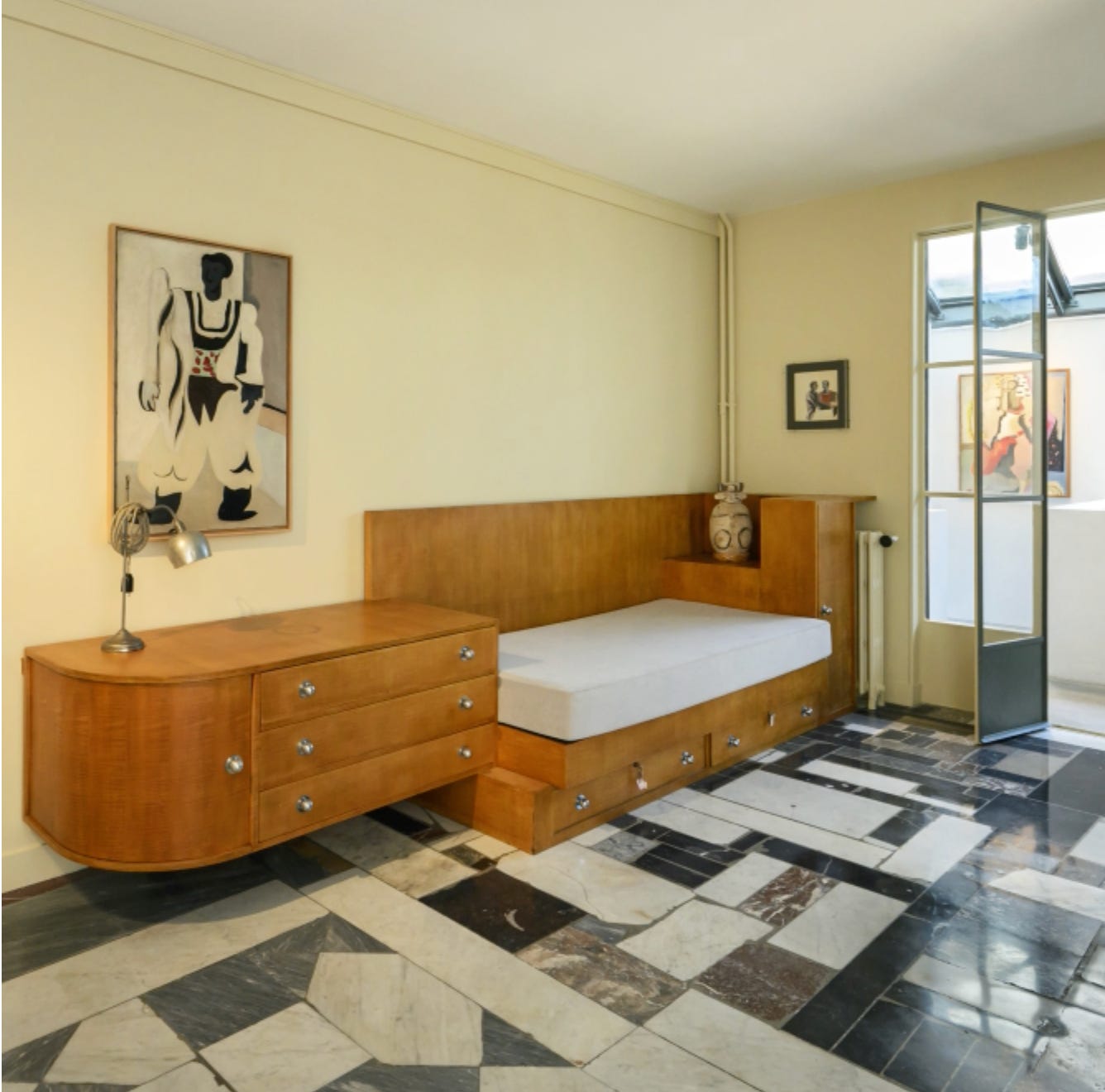
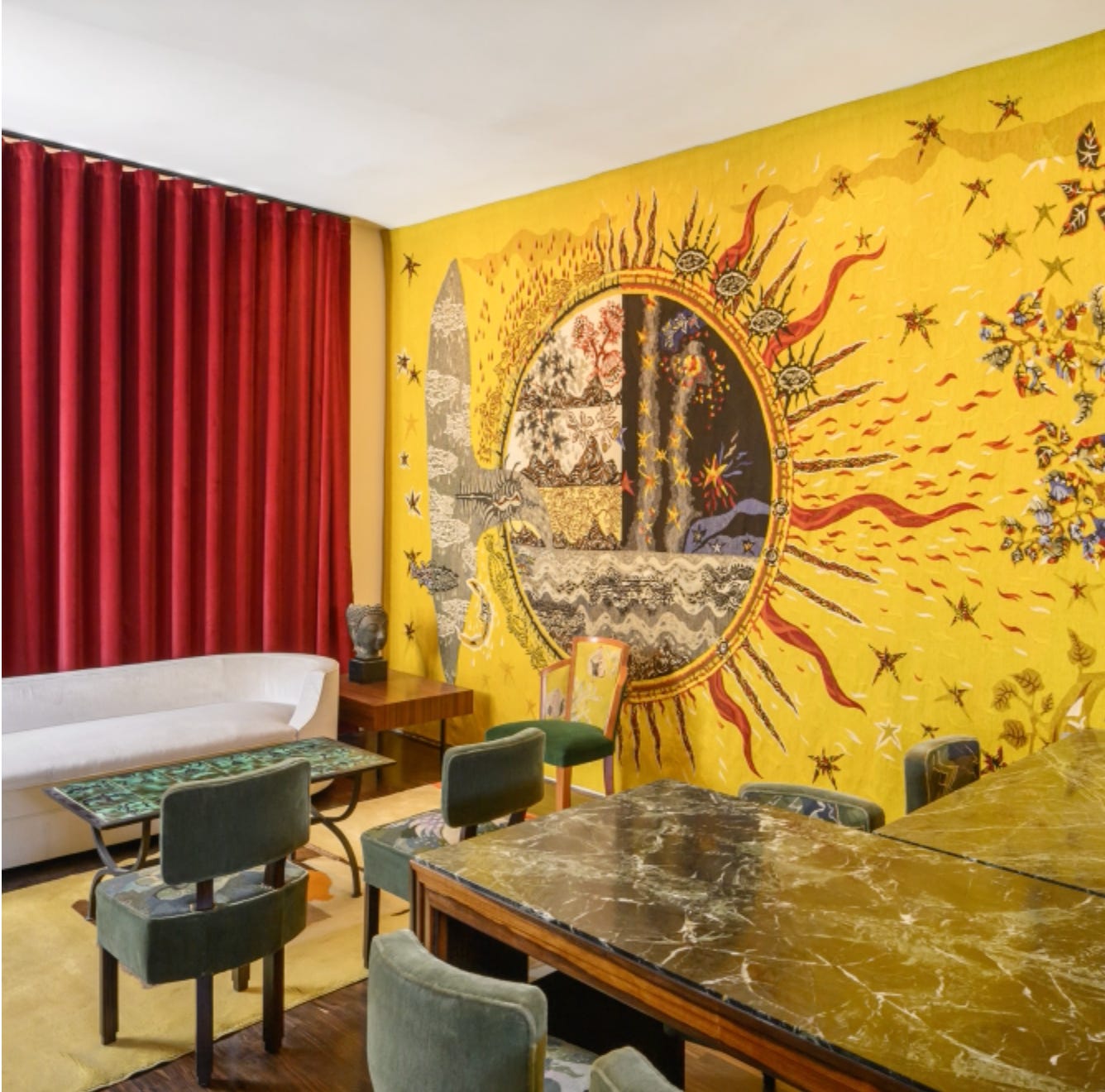
My middle-of-the-night thought was about how much more I related to the humanity of the cave artists than I did the far more recent creations of the Lurçat brothers—both in the architecture and art. For me, the house felt intellectual and precious, a world apart from deeper human instincts like dreams, hopes, fears, connection to nature, and playfulness. The brothers broke rules, were deeply creative, and helped to further a new style of architecture, but somehow, to me, the cave was more surprising, delightful, and startling than this temple to modernism.
If there’s something more to this than just my taste, maybe the studio/house got to a point where the intellectual ideal superseded the human experience. Granted I am comparing apples to oranges—the creation of an entire house and furniture to discrete engravings created for clearly important purposes we will never know—but I do know that in one experience I felt grateful to be a part of this tribe we call human, and in the other I just would have wanted to avoid having these people at a dinner party. It seems to me that the further we move toward a world of intellectual abstraction the more we lose.
Let’s just come back to that bed!
Comments
Nothing yet. Say the first thing.
Sign in to join the conversation.