
Israel at War - Day 315 of Trump Gaza Ceasefire, Day 135 of Israel/US Iran Ceasefire, Day 171 of the Israel-Lebanon War
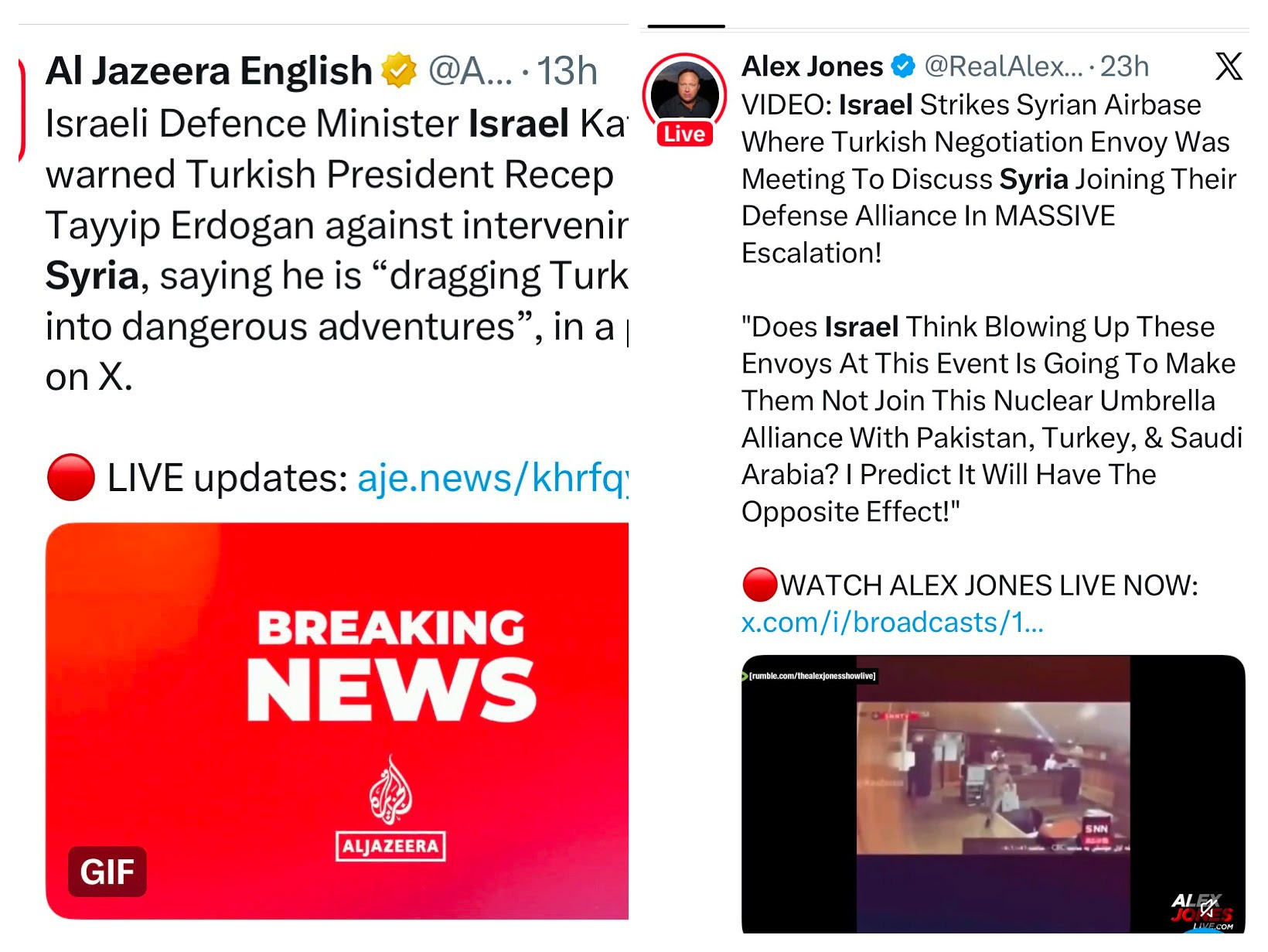
Israel confirmed it carried out airstrikes against the Abu al-Duhur military airbase in Northwestern Syria, after intelligence indicated that Turkey planned to deploy troops there.
Explaining the rationale behind the military action, Prime Minister Benjamin Netanyahu’s office released a statement asserting that “Israel and Syria agreed to a status quo in security matters, which Syria was on the verge of breaching by permitting Turkish troops to deploy at an airbase near Aleppo”. Netanyahu further elaborated during an interview on his warning to Ankara, stating, “Don’t. The message was conveyed but apparently they didn’t hear it, so we made sure they understood it more clearly.”
In response, Turkey’s communications directorate issued a firm rebuke under President Recep Tayyip Erdoğan’s leadership, declaring that “the untenable allegations put forward by the Israeli Prime Minister’s Office are intended to legitimize Israel’s unlawful airstrikes targeting Syria’s sovereignty and territorial integrity”. Ankara added that it would “resolutely continue to cooperate with the Syrian Government on a legitimate basis for the establishment of peace, stability, and prosperity in Syria”. Later, President Erdogan stated that Turkey is not interested in escalation, but Netanyahu is.
U.S. special envoy Tom Barrack characterized the operation as an “unnecessary escalation” that risked direct military miscommunication, underscoring the urgent need for a robust trilateral deconfliction mechanism.
Geopolitical analysts have noted that the strike closely follows the signing of the Mecca defense agreement between Turkey, Saudi Arabia, and Pakistan. Geo-political analysts and commentators suggest the timing reflects both strategic pushback against Turkish military expansion and domestic political pressures in Israel.
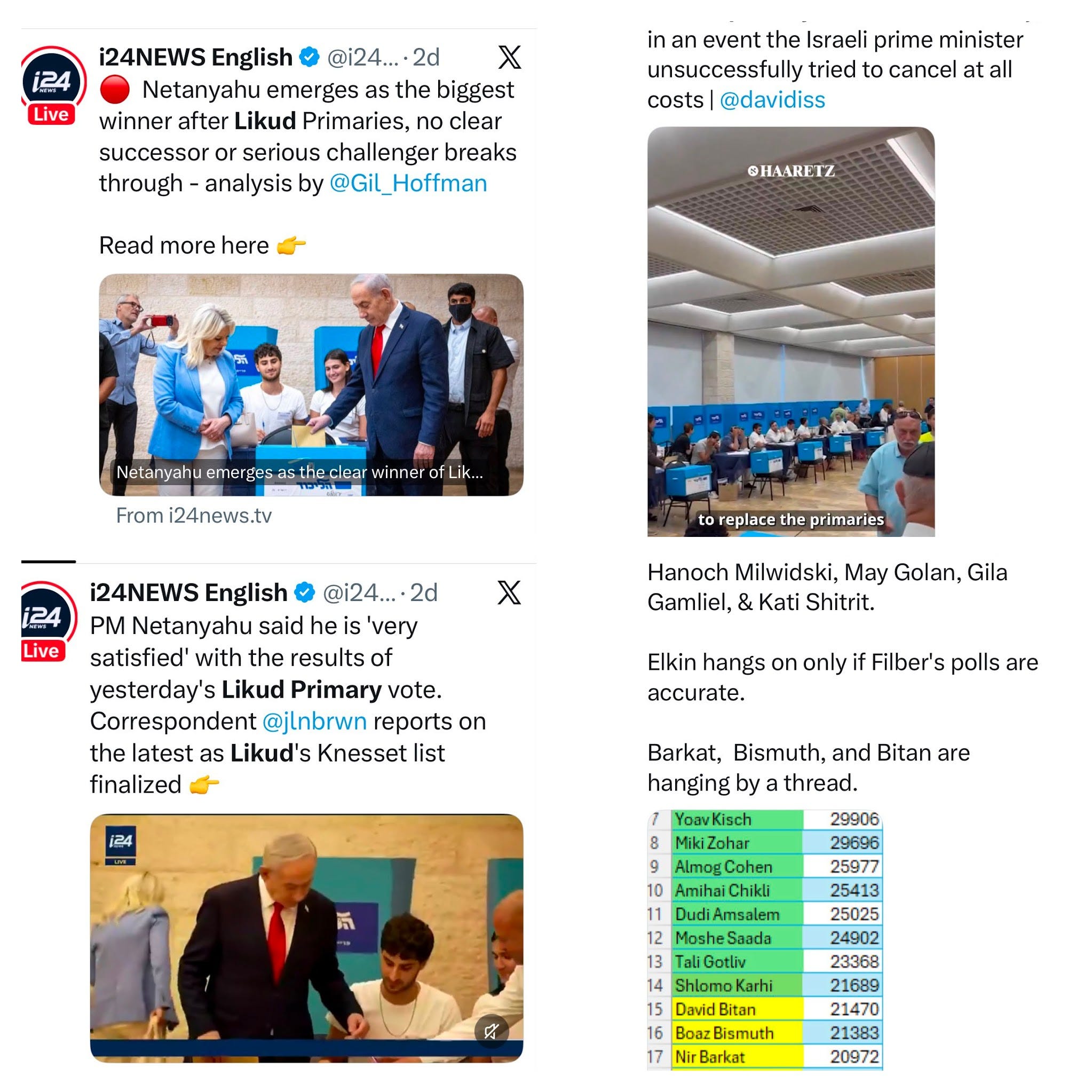
With a relatively low turnout, of 53% of registered members, the Likud Party held its’ primaries. According to most public opinion polls Likud, now the ruling party in the government, is expected to have only 20-24 seats in the next Knesset (out of 120), down from 32 today. But the primaries was not the sole mechanism to choose the candidates. Earlier this month, PM Netanyahu, the chair of Likud, got approval from the party institutions and members to save 8 spots in the first 20 places. Netanyahu argued that he wants to reshape the list to be more attractive. That left only 12 places that are considered safe in terms of the polls. Before the primaries, Netanyahu decided to save spots for Israel Katz, minister of defense, who is considered to be a strong rival, foreign minister, Gideon Sa’ar, that ran against Netanyahu a few years ago, left the party and returned - due to an agreement between the two when Sa’ar returned to Likud - and the secretary of the party. The rest are still unknown. In addition, PM Netanyahu tried to endorse others, and succeeded only partially, and mainly tried to block members that he did not want on the list, arguing that they will alienate voters.
Analyzing the list, one can say that the most popular members are ones that strongly support the judicial overhaul, there are only two women in the first 20, most of the members are considered very conservative. There was a phenomena of thousands of Haredim that joined the party to influence the list. Some analysts say that looking at the list it seems like there is not much difference between the Likud, led by Netanyahu and Otzma Yehudit (Jewish Power) led by Itamar Ben Gvir.
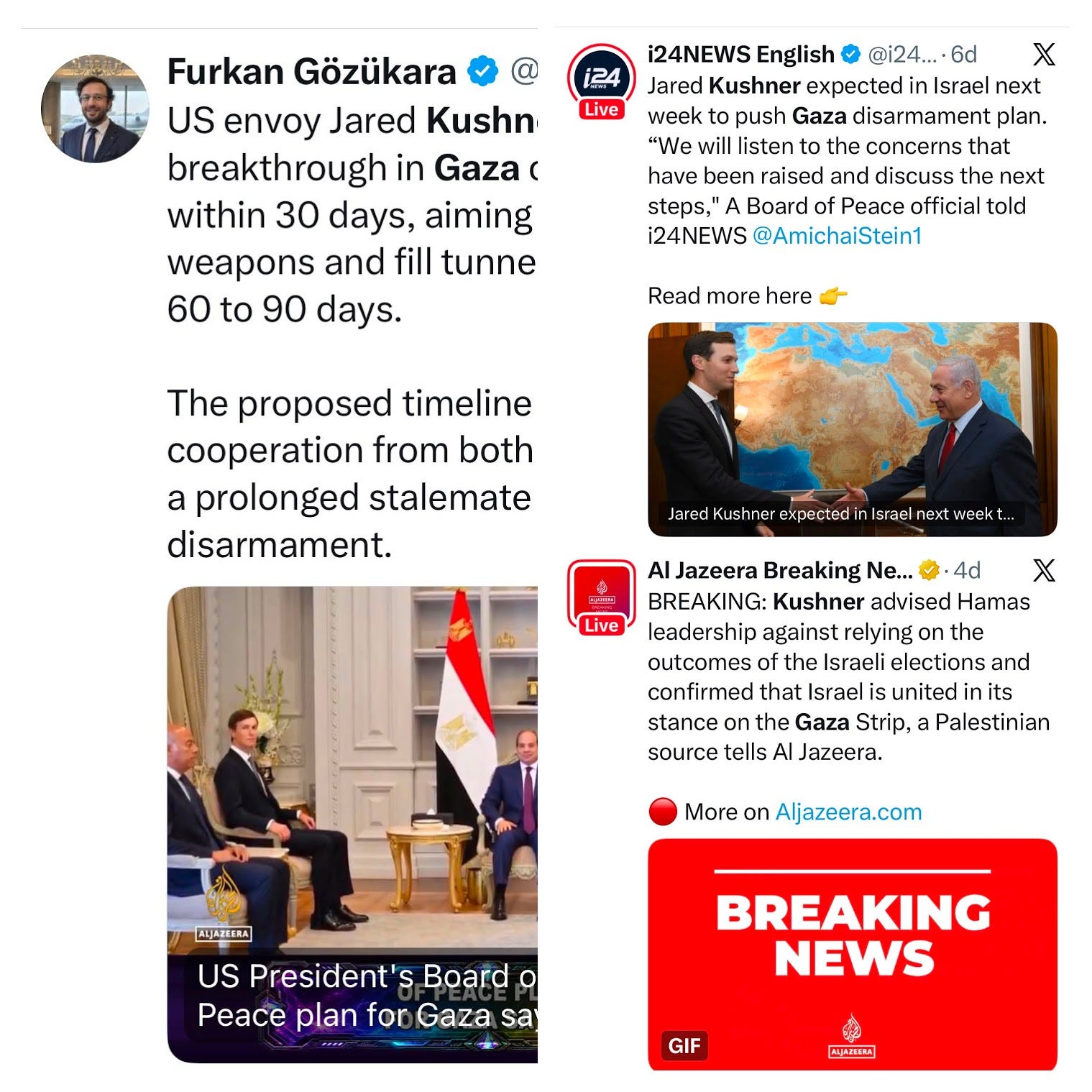
Following the multi-day diplomatic push, the official statements released by Prime Minister Benjamin Netanyahu’s office regarding the meeting were issued primarily in English for international audiences and the U.S.-led Board of Peace, characterizing the discussions as “deep and constructive”. However, parallel briefings and reporting from Hebrew-language outlets and diplomatic sources highlighted that internal Israeli communications emphasized stark policy disagreements and deep scepticism regarding whether Hamas would genuinely fulfill disarmament commitments.
Israeli politicians and regional analysts offered divided reactions to the summit and its ensuing announcements. Some political figures expressed cautious optimism regarding the establishment of joint working groups for security and sanitation. Veteran commentators and security analysts noted that the meetings failed to resolve the fundamental sequencing deadlock. Analysts cautioned that Jerusalem’s rigid stance—requiring complete demilitarization before any military withdrawal or reconstruction—alongside ongoing friction over Israel’s targeted military operations and eliminations of Hamas operatives leading to the deaths of innocent civilians - continues to test the limits of Washington’s roadmap. Hamas refuses to disarm before Israeli forces withdraw.
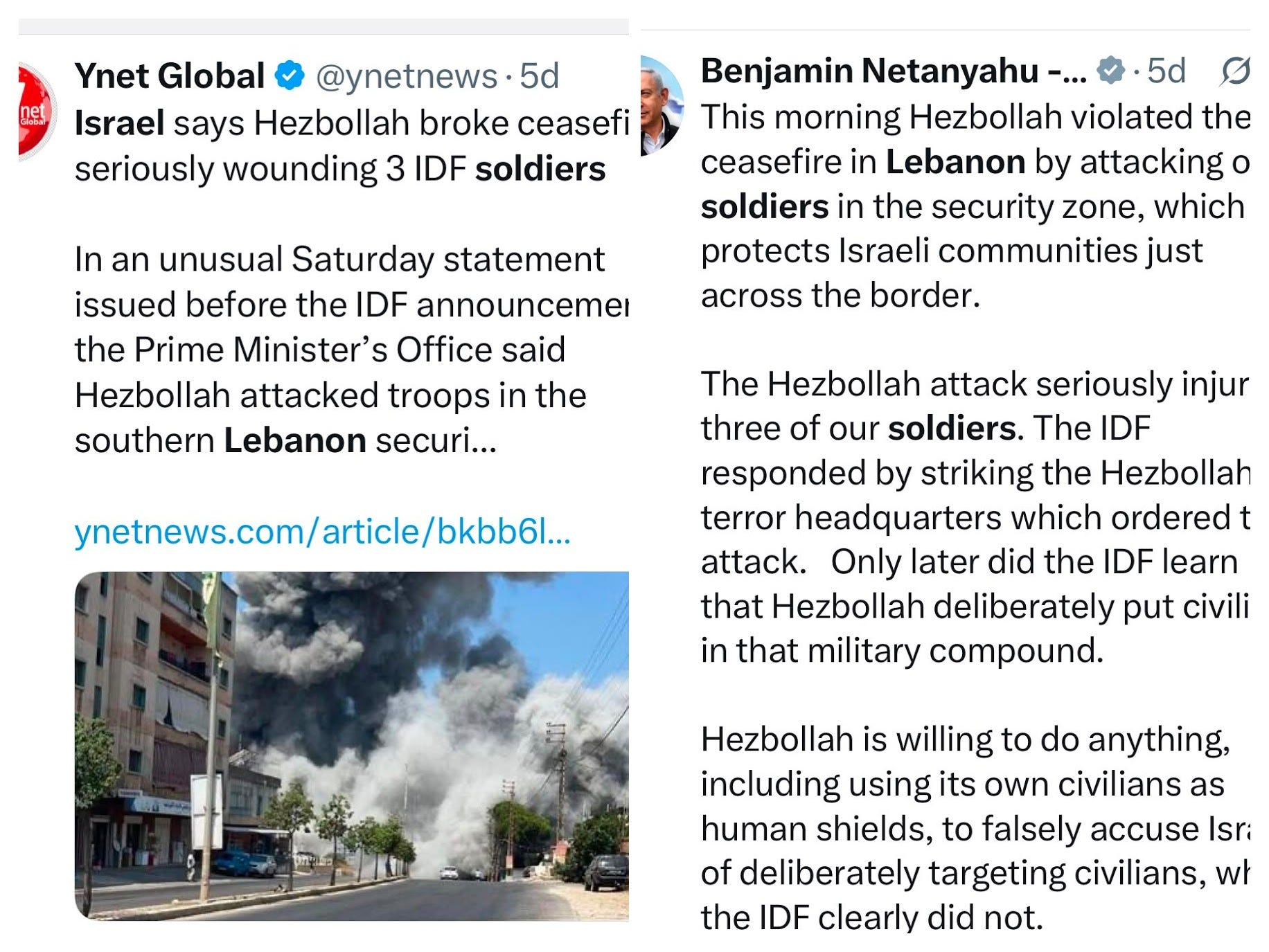
Three Israeli soldiers, including an officer from military combat engineering units, were seriously wounded in southern Lebanon when an explosive drone struck their position on the Ali al-Taher Ridge. According to Israeli media, Prime Minister Benjamin Netanyahu’s office issued a statement asserting that the Hezbollah attack constituted a direct violation of the existing ceasefire. Top security officials and military spokespersons emphasized that the wounded personnel were evacuated for emergency hospital treatment while the Israel Defense Forces executed retaliatory airstrikes targeting a Hezbollah command structure.
The exchange triggered some of the heaviest cross-border fire in the area since the June framework agreement. Meanwhile, diplomatic channels and ongoing talks between Israeli and Lebanese authorities continue to navigate the fragile security arrangement, with Lebanese officials criticizing the military escalation as an obstacle to the peace process.
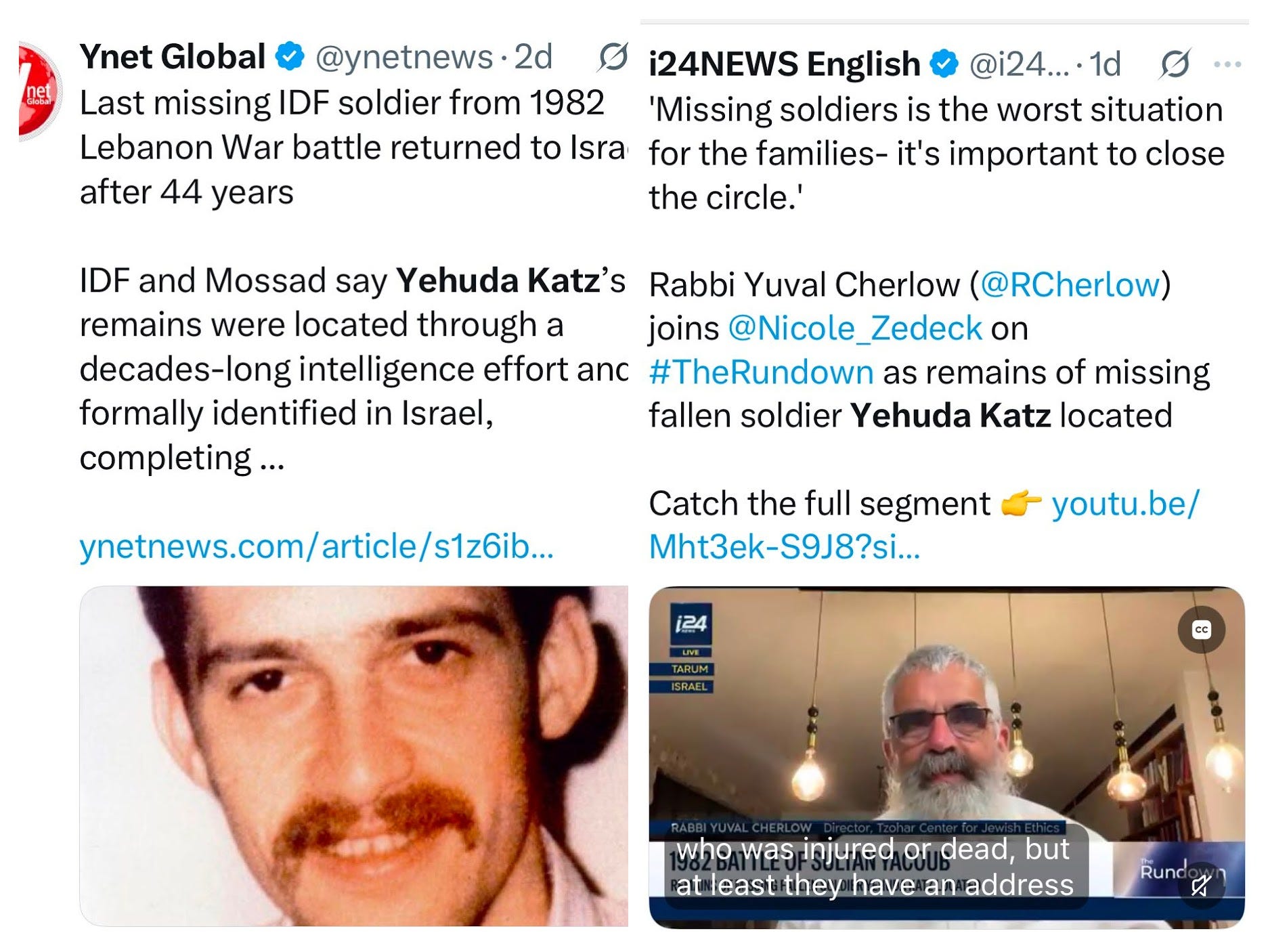
Israeli troops managed to locate and rescue the remains of Yehuda Katz, who fell in combat in southern Lebanon back in 1982, 44 years ago. Katz served in an armored battalion when Israel invaded Lebanon. His battalion was sent to an area that was a Syrian trap, at Sultan Yacoub in southern Lebanon. His tank lost communication with the rest of the unit. 20 soldiers died in that deadly battle, 40 were wounded while two of the soldiers were captured as prisoners of war and three were lost. Israel tried for 44 years to locate the lost soldiers, using advanced intelligence methods. Initially, Israeli intelligence could not determine whether any of the five missing soldiers were dead or alive. It took years to understand what happened to them. It took years to understand that two of the soldiers are alive and to manage to return them to Israel. They could possibly add more details on the whereabouts of their other missing tank mates. The remains of the two of the soldiers who died were found in a cemetery in Damascus, Syria. But Katz was not among them. He was seriously injured during the battle, and nobody could tell if he survived.
The story of the battle at Sultan Yacoub left a sore and open wound in Israel. Israel sees itself as a nation that cares a lot about its’ soldiers in particular and citizens in general, and a country that will do everything in its’ power to bring each and every one home, dead or alive. (This high standard does not reflect the hostages of October 7, and many thought that the government did not do all it can to bring the hostages home as son as possible).
Bringing back the remains of Yehuda Katz is closure for the 1982 painful battle at Sultan Yacoub.
No posts
Comments
Nothing yet. Say the first thing.
Sign in to join the conversation.