
Israel at War - Day 259 of Trump Gaza Ceasefire, Day 79 of Israel/US Iran Ceasefire, Day 115 of the Israel-Lebanon War
Israeli and Lebanese representatives, at the ambassador level, held follow-up meetings earlier this week in Washington DC, negotiating a prospect peace deal, under the supervision and moderation of the State Department. Many feel that these talks have no grounds, since the determinative decisions are happening elsewhere - in Switzerland between the US and Iran.
On the ground, in southern Lebanon, there is less violence, but no real truce between Israel and Hizbollah. PM Netanyahu and his cabinet refuse to comply with the ceasefire that was decided above their heads, between President Trump and the Iranian officials, as part of the bigger deal between the two countries. Israeli officials are frustrated that these deals did not take into consideration Israel’s needs and did not insist on the disarmament of Hizbollah as a precondition to confirming the deal. The Lebanese government which is represented in the Washington DC talks, has no power and no leverage over Hizbollah, and is unable to disarm the Islamic organization, which is a proxy of Iran and supported by it. On the other hand, the Trump administration insists that Israel has to comply with the ceasefire, and that if it does not, it might jeopardize the entire US Iran deal.
One of the senior Israeli cabinet members, Minister of National Security, Itamar Ben-Gvir, also the hawkish link in the cabinet, posted on X social network a tweet that went viral. The tweet was a reaction to the five Israeli soldiers who fell in combat in Lebanon and it read: “For every tear of an Israeli mother, a thousand Lebanese mothers must weep. All of Lebanon must burn! With all due respect to the Americans, Israel must make it clear to the entire world that the blood of our sons and the security of our citizens are not forfeit. All of Lebanon must burn. Our supreme duty is to protect the citizens of Israel and the soldiers of the IDF, and this commitment takes precedence over every other consideration. I told the Prime Minister, even in our private meetings: For every tear of an Israeli mother, a thousand Lebanese mothers must weep. Enough with the ping-pong. In the Middle East, you don’t win with measured responses and restraint-you need to go berserk. To obliterate. To crush the terror.” Many criticized Israel for encouraging mass killings, that these kinds of talks strengthen anti-Israeli trends and even antisemitism. Ben Gvir refused to delete the tweet or apologise, neither did PM Netanyahu comment on the Ben Gvir tweet.
It is still unclear if the US will force Israel to withdraw from all the territories in Lebanon that it occupied over the last few months, and if the US will allow Israel to retaliate against attacks and to act to prevent threats.
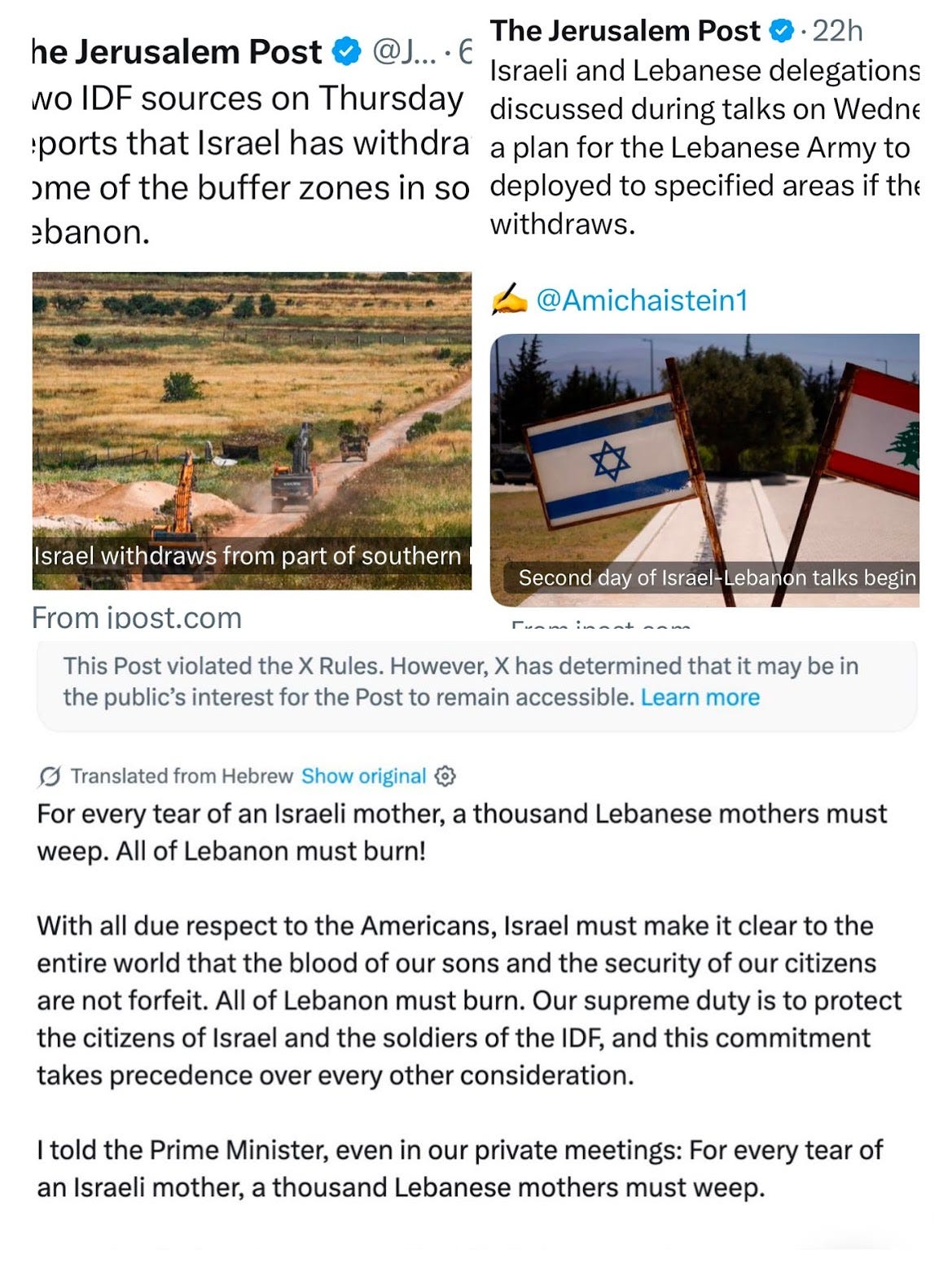
In the middle of Pride Month, the new director of the Shin Bet, David Zini, decided to dismantle the internal employer LGBT forum in the organization. The forum learned about the decision when they sent invitations for the annual event for Pride month. The head of the Shin Bet ordered that the internal event not be approved, to cancel all invitations that had already been sent out, and to tear down all signs of Pride that were already on display.
The decision shook the organization. The directive included the take down of the pride banner on the building, that is usually displayed during pride month, and other signs that are used in the organization annually. In addition, the instruction was to cut all budgets that were previously allocated to promote Pride month in the organization. Many in the organization fear that these measures will be followed by a homophobic approach in the Shin Bet. It may be important to say in this context that Zini comes not only from an orthodox Judaism educational background, but also from a Messianic background, that bans LGBTQ expression,and often tries impose to conversion treatments on members of the community. This directive may indicate the direction he is taking for the Shin Bet.
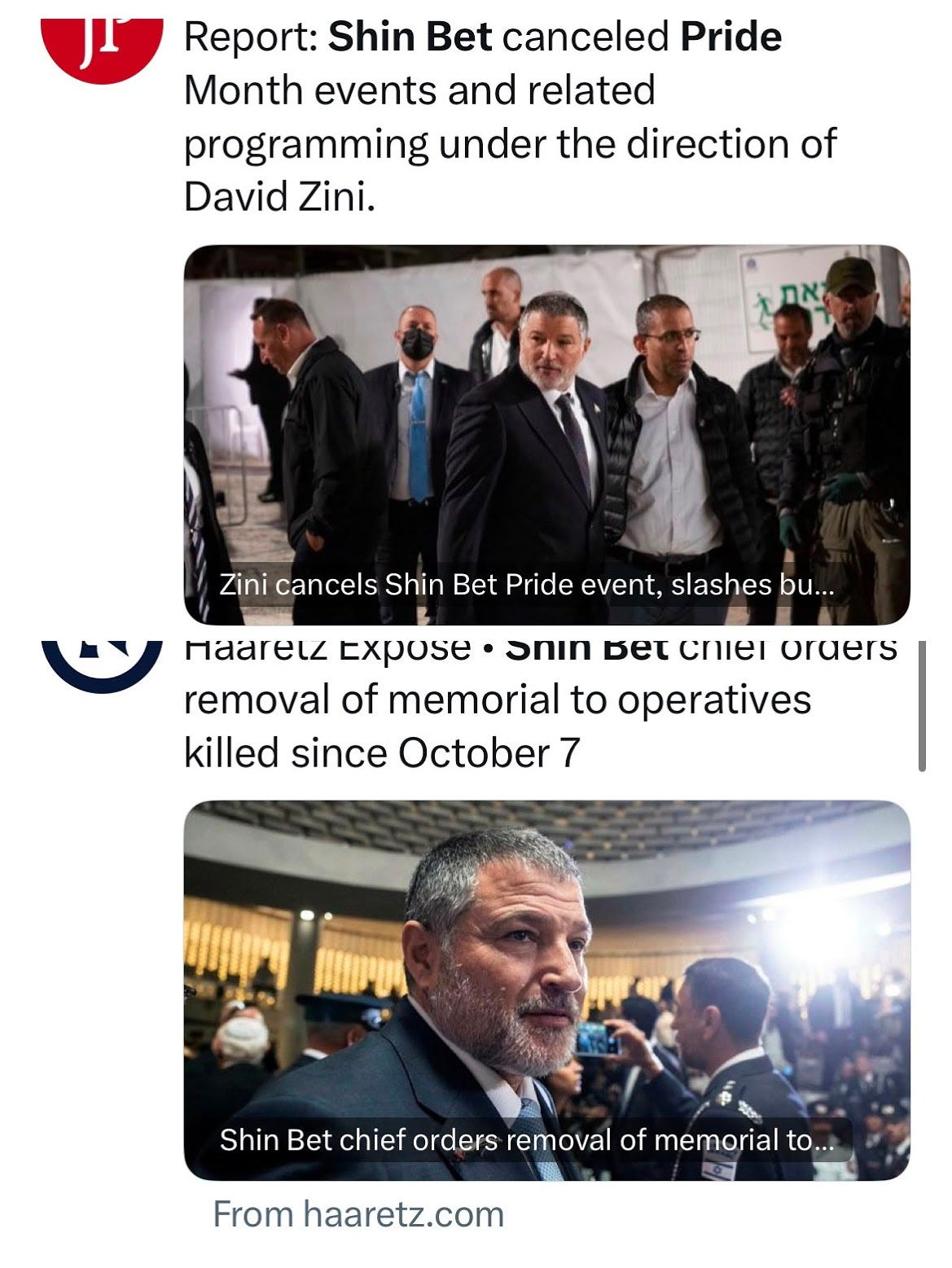
This week, the Health Ministry ruled out concerns regarding the Ebola virus, after laboratory tests for two suspected patients came back negative.
The scare began when two separate individuals, who recently returned from the Democratic Republic of the Congo (DRC)—where an active outbreak of the Bundibugyo strain of Ebola has been reported—were placed in strict isolation after developing symptoms. The first patient was admitted to Rambam Medical Center in Haifa, followed days later by a second individual at Sheba Medical Center near Tel Aviv.
The Health Ministry confirmed that both patients tested negative for the virus. Officials and infectious disease experts noted that while any post-travel fever from affected regions warrants immediate isolation and assessment, the overall risk of the current strain spreading to Israel remains very low. The health system remains on alert, with five designated hospitals equipped with personal protective equipment and specialized diagnostic systems to handle potential cases if necessary. To date, there has never been a confirmed case of Ebola in Israel.
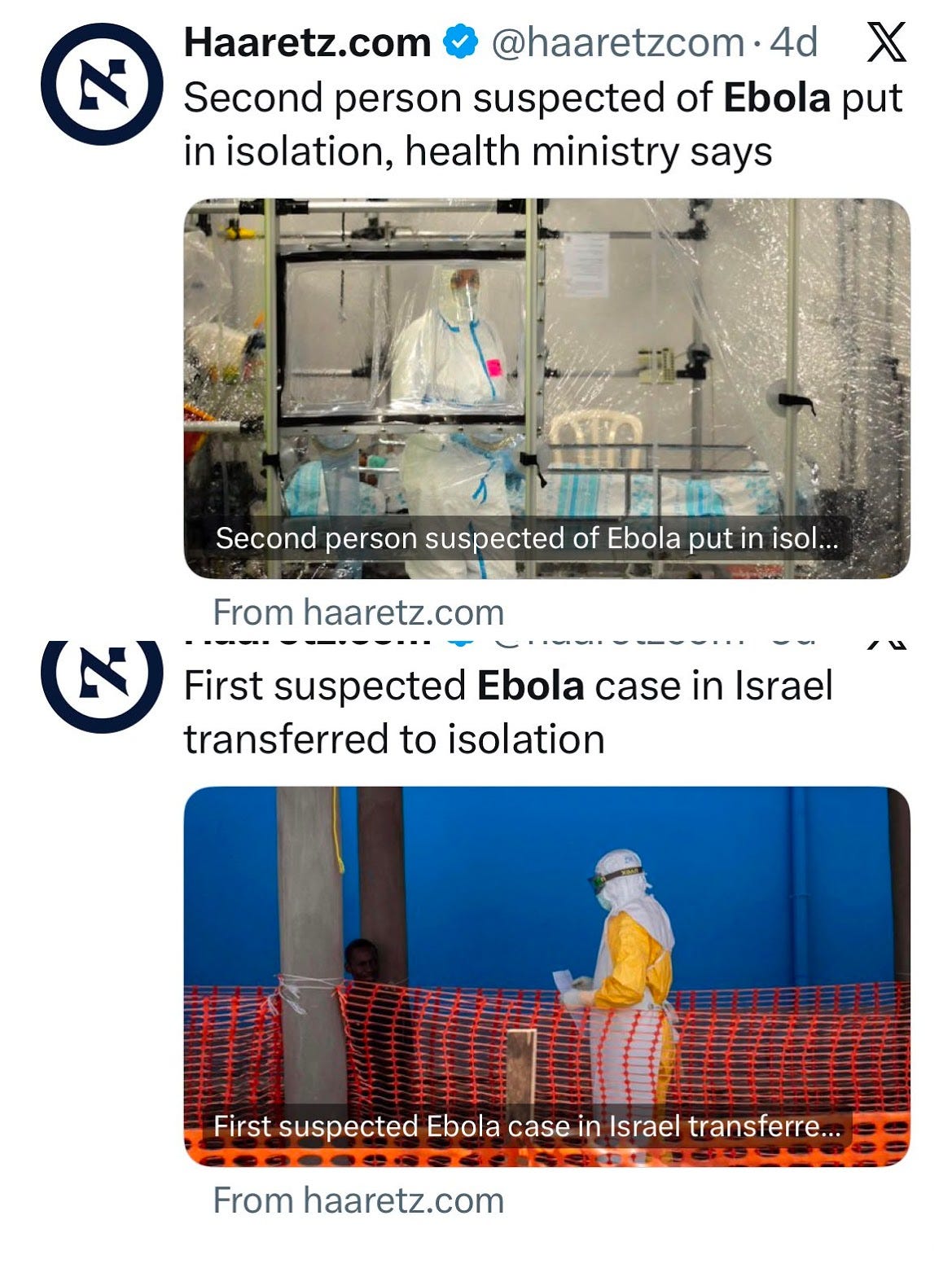
Protests involving thousands of ultra-Orthodox (Haredi) men triggered widespread disruption across Israel. The protestors were opposing the mandatory military draft of yeshiva students and the recent arrests of draft defectors by military police. Protest convoys and flash demonstrations blocked key national transportation arteries, including Highways 1, 4, and 6, paralyzing traffic and shitting down major road junctions across central Israel and Jerusalem. The protests have escalated into violent altercations, with physical clashes breaking out between demonstrators and frustrated commuters, accompanied by violent confrontations with law enforcement. Police have utilized stun grenades, mounted units, and water cannons to disperse the crowds, resulting in injuries and the arrests of multiple individuals.
In response to the law enforcement crackdowns, Haredi members of the government have issued sharp statements condemning the police. Shas party leader Aryeh Deri and other ultra-Orthodox officials have accused authorities of using excessive force and employing a double standard compared to other political protests, while demanding an immediate halt to the arrests of religious students. Against this backdrop of political friction, Prime Minister Benjamin Netanyahu has been actively attempting to advance fast-track legislation that would effectively freeze or ban the arrest of draft defectors and restore state daycare subsidies to their families. These legislative efforts are part of a broader political trade-off in which Netanyahu seeks to secure the Haredi parties’ critical support for a series of highly controversial government initiatives—including measures to overhaul the judiciary, restrict the powers of the Attorney General, and establish a political committee of inquiry into the October 7 attacks.
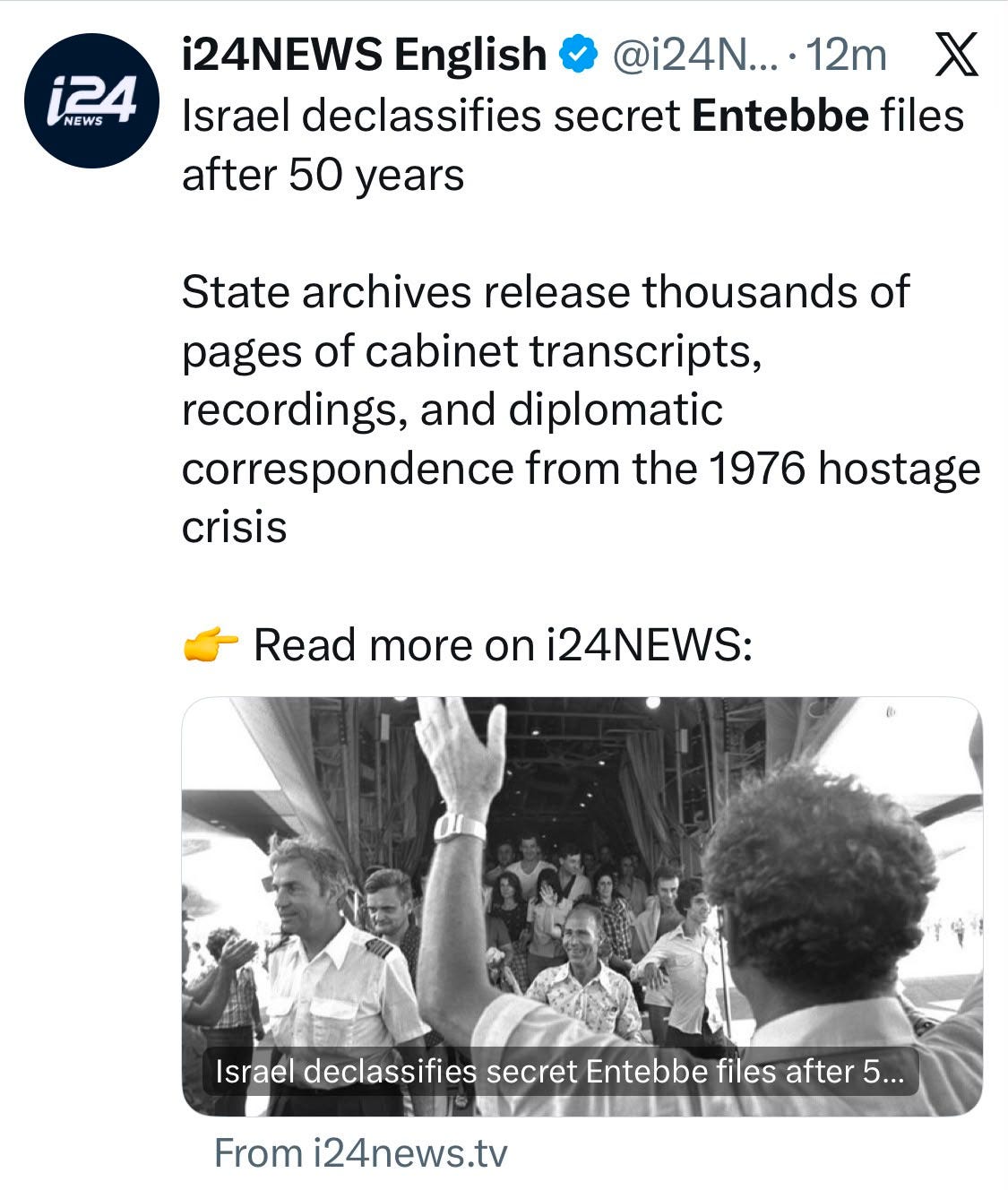
The Israel State Archive has officially released a trove of previously classified protocols and cabinet minutes detailing the dramatic government deliberations during the 1976 Entebbe hostage crisis. This extensive historical disclosure reveals the choices faced by Prime Minister Yitzhak Rabin and Defense Minister Shimon Peres as they weighed a high-risk military intervention against the prospect of capitulating to terrorist demands.
The crisis originally began on June 27, 1976, when an Air France flight from Tel Aviv to Paris was hijacked by members of the Popular Front for the Liberation of Palestine and German left-wing militants. The hijackers forced the plane to land at Entebbe Airport in Uganda and held approximately 100 Israeli and Jewish passengers hostage under an ultimatum that they would execute them unless dozens of imprisoned militants worldwide were freed.
According to the newly unsealed protocols, the Israeli leadership was initially highly pessimistic about a military solution and heavily favored a prisoner exchange deal to save lives. On June 30, Prime Minister Rabin explicitly dismissed military action as impossible due to the lack of international backing and the immense distance of 4,000 kilometres (2,500 miles) from Israel. The documents show that officials were even prepared to release high-profile convicts like Kozo Okamoto, the Japanese terrorist behind the 1972 Lod Airport massacre, while IDF Chief of Staff Motta Gur advised in writing that the military would recommend compliance if all operational avenues failed. It was only on July 3, once a concrete military plan was finalized in a race against time, that the cabinet voted unanimously to launch the raid, fully recognizing the high risk of significant casualties.
The daring rescue mission, retroactively named “Operation Jonathan,” succeeded in bringing home almost all the hostages but resulted in the tragic deaths of three captives and the assault force commander, Lt. Col. Yonatan Netanyahu, brother of PM Netanyahu. An elderly hostage, Dora Bloch, who had been evacuated to a Kampala hospital after falling ill, was later murdered by Ugandan forces. The protocols extensively document Ugandan President Idi Amin’s active complicity with the hijackers, with Defense Minister Shimon Peres noting at the time that it was the first instance of a sovereign state and its leader explicitly siding with terrorists against Israel.
No posts
Comments
Nothing yet. Say the first thing.
Sign in to join the conversation.