
Israel at War - Day 301 of Trump Gaza Ceasefire, Day 121 of Israel/US Iran Ceasefire, Day 157 of the Israel-Lebanon War
Since last weekend Israel, like Iran, went into red alert mode, following closely all President Trump’s announcements. During the last weekend, American citizens in the Middle East were warned that war may start again and they were advised to leave or take into consideration that, if and when the war breaks out, some international flights may not operate. President Trump increased his rhetoric against Iran, threatening that “all hell will break loose”, and shortly after he or somebody else stated that a deal is close. Some mayors in Israel decided to open the city bomb shelters, which raised the level of tension for many. It is important to say that it is the high season for vacation, since the schools are closed, and many take leave to travel out of the country with their families. Ben Gurion Airport is busy, and the mere thought that a war might cause flight cancellations was horrifying for many.
Listening to President Trump over last week was like traveling in an extreme rollercoaster without stopping.
It is no secret that PM Netanyahu is eager to strike Iran and finish what was still unresolved after the last offensive. Right now Irans nuclear plans and the enriched Uranium are still untouched. It seems that Israel is not involved in the American decision-making process and it is unclear what and if there is any leverage that Trump has against Iran and everything is still undecided.

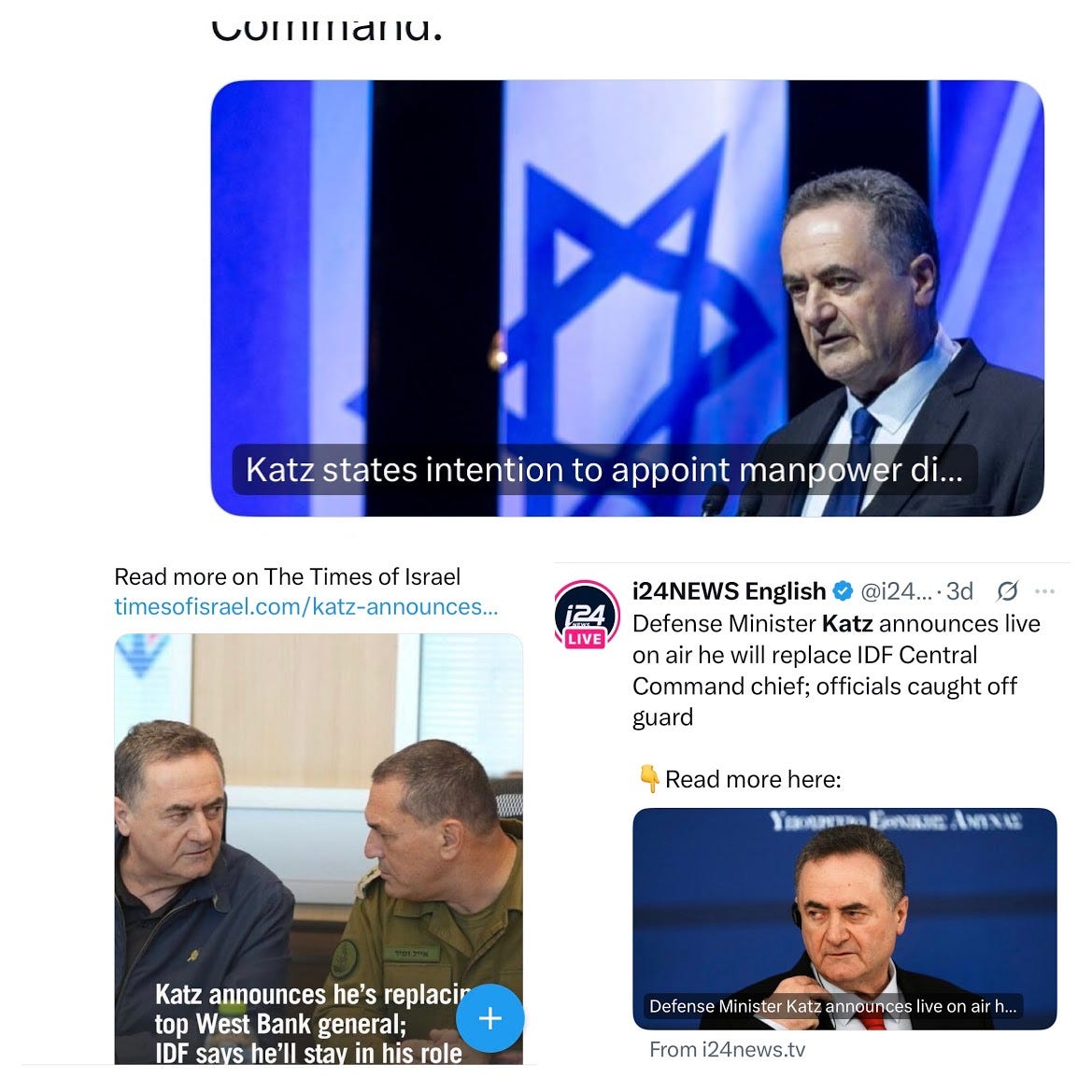
As a primary ugly political act, Minister of Defense Israel Katz, announced that he intends to fire General Avi Blut, because he appealed, together with the army prosecutor, against the release of a right-wing activist in the West Bank, who was suspected of violent actions against Palestinians.
Katz looked arrogant and almost cheerful when he answered a provocative question by one of the panelists, as to why he doesn’t fire the general if he is not satisfied with his command. Later Katz said that he did not fire him, and that he just made public something that was already decided.
The IDF spokesperson had to issue a strong and almost unprecedented statement, in support of general Blut. Many of the right-wing mayors also stood by Blut. Blut is in charge of the West Bank, and actually, according to International Law, he is the sole ruler of the West Bank, as it is defined as an occupied territory according to International Law. Blut comes from the circles of the religious nationalists, he is considered to be extremely friendly with and sympathetic to the Jewish settlers. During his term of command Jewish terrorism grew rapidly. Palestinians were exposed to more violence. Some Palestinian communities were expelled, terrorised, intimidated by Jewish settlers, and the army, that is supposed to protect them, did nothing.
On the other hand, it is not within the authority of the Minister of Defense to nominate or fire any general. This is the prerogative of the army chief of staff. It is no secret that relations between the chief of staff - Eyal Zamir - and the Minister of Defense, Katz, are not smooth. In addition, this is part of Katz's election campaign where he is doing all he can to gain attention and support. Public opinion polls show that his party, Likud, is losing power.
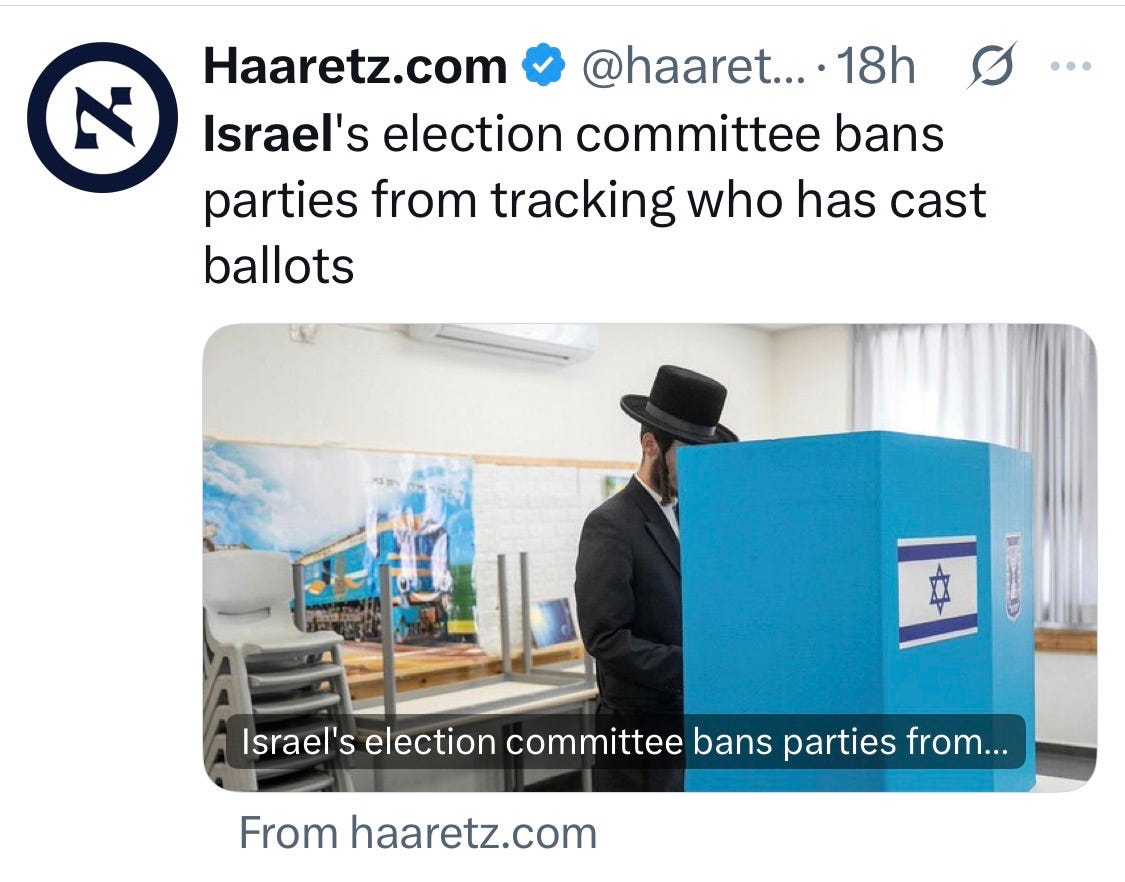
Deputy Supreme Court President and Central Elections Committee head Noam Sohlberg issued a ruling prohibiting polling station workers and party observers from sharing real-time information regarding who has cast a ballot, effectively banning the use of voter-tracking applications ahead of the upcoming national elections scheduled for October 27th. The decision stems from a petition filed by anti-corruption activist Shahar Ben Meir challenging the practice, which has evolved significantly over recent election cycles. According to media reports from, Sohlberg based his ruling on privacy and election secrecy concerns, determining that tracking voter turnout data and transferring it to political entities violates the Privacy Protection Law in the absence of explicit legislative authorization.
Political analysts note that this restriction will heavily impact right-wing factions and ultra-Orthodox parties, particularly Likud and Haredi parties, which have historically utilized dedicated campaign software like the Elector app to monitor turnout and aggressively mobilize voters who had not yet visited the polls. In previous elections, these parties relied heavily on polling station observers to feed live data back into centralized databases to coordinate targeted get-out-the-vote efforts. Following the decision, senior Likud officials criticized the ruling as an attempt to disadvantage the political right, while legal experts and privacy advocates defended the measure as a vital safeguard for voter confidentiality and electoral integrity.
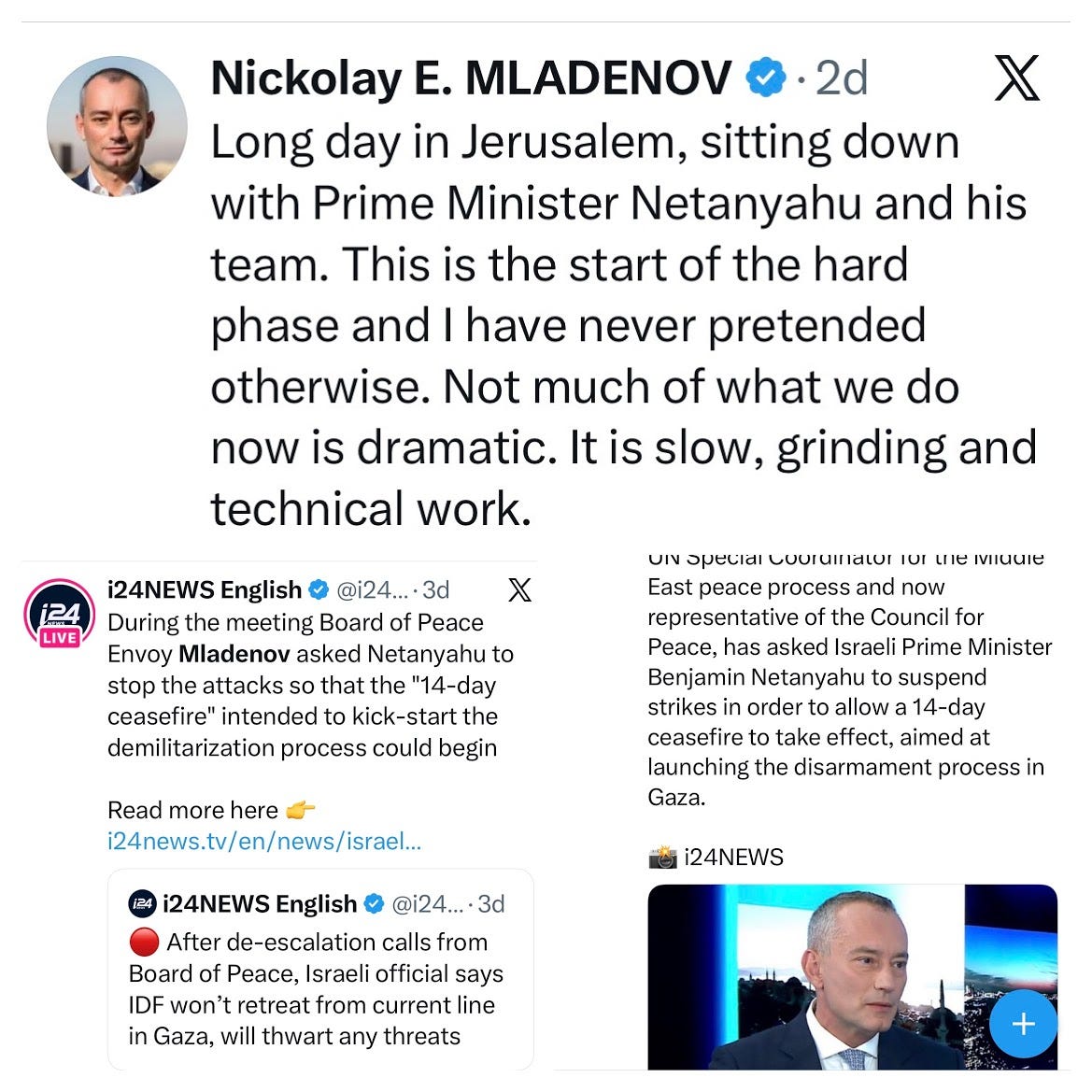
This week, Board of Peace High Representative for Gaza Nickolay Mladenov held talks in Jerusalem with Israeli Prime Minister Benjamin Netanyahu, during which the envoy pressed for a temporary halt to military strikes and targeted eliminations of Hamas operatives. According to media reports, the proposed pause aims to clear the path for a fourteen-day negotiation window to implement the next phase of a U.S.-backed disarmament and postwar governance framework for the Gaza Strip.
The diplomatic push immediately ignited backlash within domestic Israeli politics, drawing sharp criticism from right-wing political circles and governing coalition members. Critics voiced intense security reservations, arguing that suspending targeted operations or military pressure would give militant factions an opportunity to regroup. Meanwhile, foreign media outlets noted that while international mediators continue to advocate for a complete decommissioning of weapons in the enclave, Israeli officials maintain strict security conditions regarding any operational standdowns.
According to media reports citing Gaza's Health Ministry, 152 Palestinians were killed during the month of July, marking the highest monthly death toll recorded in the enclave for the year. The casualties included 21 children, 14 women, and four elderly individuals, highlighting the ongoing human toll as international mediators attempt to secure lasting operational pauses and disarmament agreements.
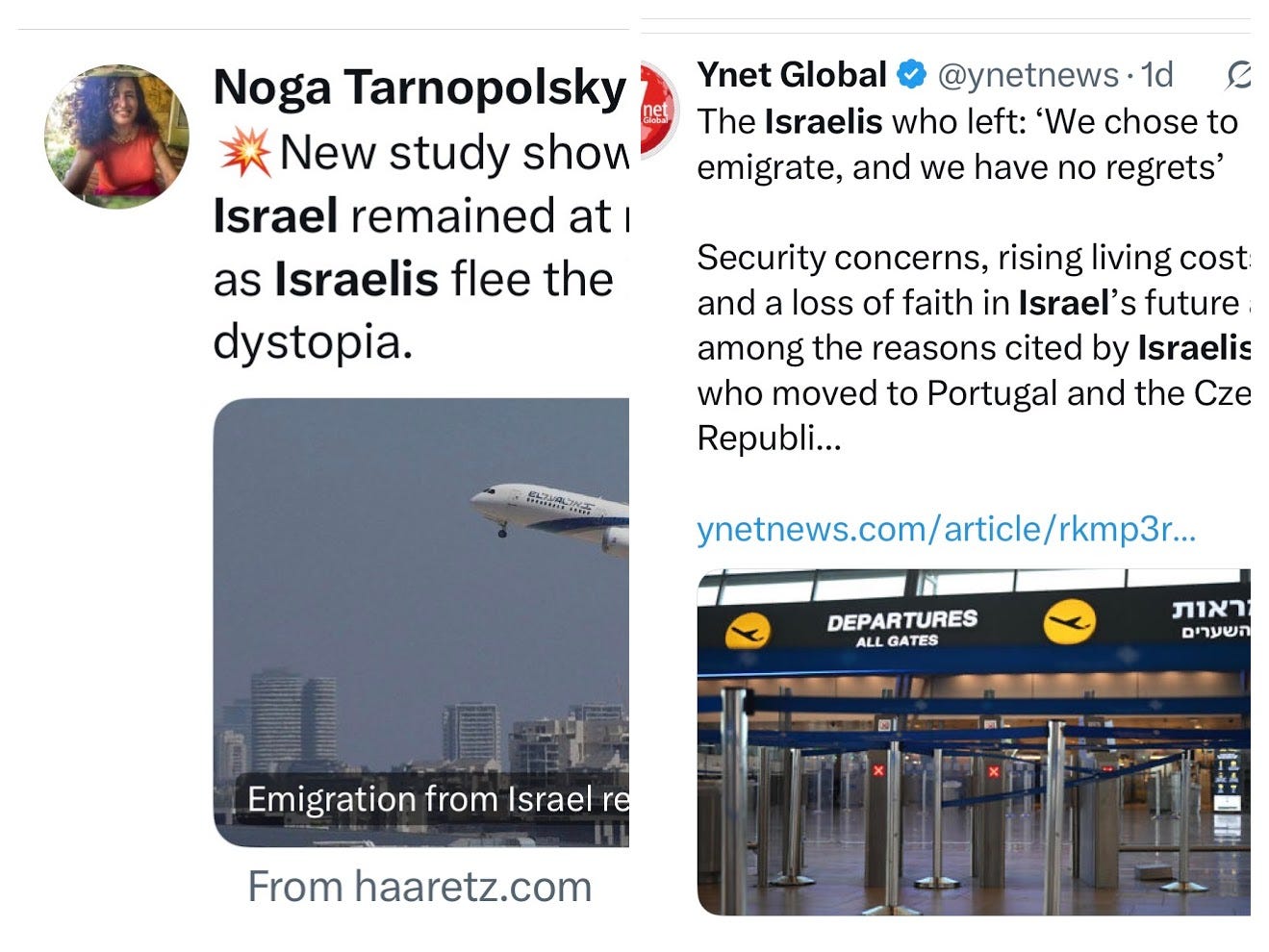
For three years in a row more Israelis have left the country, or relocated their families outside the country, than Jews that have made Aliya (go up - immigrate to Israel), and Israelis that have lived abroad and are returning to Israel. In Hebrew emigrants from Israel are called “Yordim“, going down, whereas immigrants to Israel are called “Olim”, going up.
The topic of Israelis leaving the country is a sensitive issue in the public discourse ever since the creation of the state. In some circles it is even considered close to betraying the country. In Israel patriotic sentiments include strong ties to the land, to the country, and to the state. It is the core of Israeli identity. The popular consensus has been one of strong sentiment - giving back to the country, especially when it is hard. And the last three years - since October 7th - were extremely hard and challenging. Many - mainly men - had to volunteer or join the reserve units in the army, and had to serve hundreds of days fighting in at least four active fronts: Gaza, Lebanon, the West Bank and Iran (only the air force).
The Israeli population census weighs those figures every year. There is the issue of a brain drain of intellectuals, academics, high-tech entrepreneurs, and senior professionals. Many of those people started leaving the country during the judicial overhaul that started when this government took office and announced the “reforms” on January 4th 2023. Some said they do not want to live in a plutocracy. Others leave because of the ongoing wars, and searched for safe place for their families. Usually the balance between those Israelis who left and those who returned was in favor of those who come back to live in Israel. This has changed in the last three years with emigrants exceeding returnees.
No posts
Comments
Nothing yet. Say the first thing.
Sign in to join the conversation.