
Welcome to “Islam Today,” a Substack series by human rights lawyer, author, and podcaster Qasim Rashid. This series offers a detailed, evidence-based, and accessible exploration of the life of Prophet Muhammad (sa)—who he was, what he taught, and why his life and legacy matter today. If you’re joining us midway through, we warmly invite you to start from Chapter 1 and follow along. Each installment builds on the last, and the full picture is worth the journey.
They had only been married a few short weeks when he was called away.
It was a lengthy caravan trip north to Syria — a journey that, in those days, measured itself in months, not days. They were newlyweds. Their marriage had brought joy to both of their families, two noble clans of the Quraysh, each well known for their piety, courage, and righteousness. And now, mere weeks after their wedding, he had to go.
She was heartbroken. She loved her husband, and she missed him terribly. But nothing could have prepared her for what happened next.
The caravan returned after several months. Her husband was not with it. He had fallen ill and remained behind in Medina. She was expecting their first child — due in just a few more months. His family immediately dispatched his eldest brother to find him and bring him home.
What they found instead would shatter everyone who loved him.
We’ll come back to that in a moment.
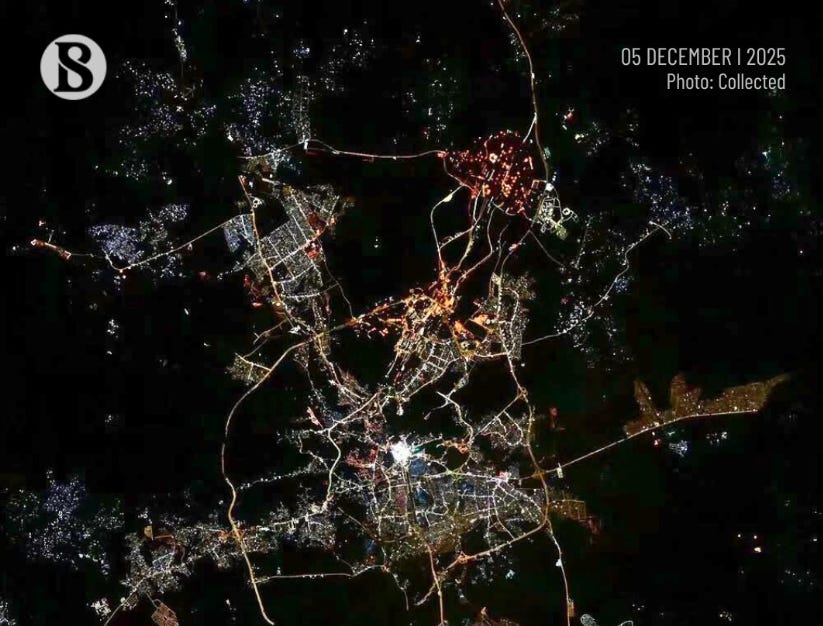
To understand the birth of Muhammad (sa), we have to understand the world into which he was born — and the extraordinary chain of events, spanning generations, that prepared it for him.
We’ve spoken in earlier chapters about Qusayy, the remarkable leader who reunified the scattered clans of the Quraysh and established them around the Ka’aba. But his contribution to history deserves a fuller appreciation. Before Qusayy, Mecca was little more than a collection of tents. He persuaded the Quraysh to build permanent houses around the Ka’aba, leaving enough space for pilgrims to walk around the ancient structure. He established specific duties for each clan in service of the Ka’aba and the administration of the city. And he erected a building directly opposite the Ka’aba called the Dar al-Nadwa — the House of Consultation — where tribal leaders gathered to deliberate on matters of importance and where policies were debated in public. Marriage ceremonies were held there as well.
In founding the House of Consultation, Qusayy gave Mecca something that pre-Islamic Arabia almost entirely lacked: a democratic form of governance. He was, in the truest sense, the founder of the city of Mecca as a functioning urban civilization.
By the sixth century, the Quraysh had built on that foundation to become the dominant trading force in Arabia. Their caravans traveled as far as Syria, Egypt, Palestine, Iraq, and Persia in the north, and to Yemen and Abyssinia in the south. Some even traded as far as India and China — a reminder that Islam, from its very roots, was never a parochial or narrow tradition. Caravans of a thousand camels carried luxury goods: pearls, ivory, diamonds, silks, weapons, dyes, and pepper. Mecca had become a prosperous, cosmopolitan city drawing merchants, artisans, craftsmen, guards, and workers of every kind. A true urban society was emerging.
It was onto this stage — piece by piece, generation by generation, as if being built for a specific arrival — that the father of Muhammad (sa) was born.
Abdullah ibn Abdul Muttalib was eighteen years old when his father began searching for a suitable match. This was, of course, the same Abdullah we met in our last chapter — the boy who had nearly been sacrificed, whose survival had set the blood money of an innocent life at one hundred camels. Now he was a young man, and his father Abdul Muttalib turned his attention to finding him a wife.
After much consideration, he settled on Aminah — the orphaned daughter of Wahb, who had been the chief of the Zuhra clan of the Quraysh. Upon her father’s death, her paternal uncle Wuhayb had become the new chieftain and had cared for her. She was of noble birth, known throughout the community for her honorable and endearing character, her intelligence, and her grace. She and Abdullah’s sister Halah had grown up together like sisters — which meant, in a way, this marriage was already written in the fabric of the two families long before it was formalized.
The wedding was celebrated with great joy. As the bridal procession made its way through the streets of Mecca, people came out of their homes to greet them and wish them well. Abdullah, always handsome, was described that day as looking more radiant than anyone had ever seen him — dressed for the occasion, luminous with the happiness of the moment.
But something unusual happened on the way to the celebration.
As the procession passed through the quarter of the Bani Asad, a woman named Kutaylah called out to Abdullah and asked to speak with him. She had noticed something about him that she could not explain — a radiant light on his face, unlike anything she had ever seen before. In an astonishing breach of all custom and convention, she essentially proposed to him on the spot, asking him to come to her instead of continuing to his wedding.
Abdullah, understandably stunned, declined without hesitation and continued on his way.
The story does not end there. A few days later, after the customary period in which a new husband stays with the bride’s family, Abdullah returned home — and encountered Kutaylah again. This time, she would not even look at him. He was perplexed. He went to her: a few days ago you invited me to your home, and now you won’t even meet my eyes. What changed?
Her answer was simple. The light she had seen on his face — that extraordinary radiance — was gone. She had no further interest.
That light, those who came after would say, had passed to where it was always meant to go.
Aminah conceived on the first night of their marriage.
The joy of those early weeks was not to last. Just two weeks after the wedding, Abdul Muttalib came to the couple’s home and instructed Abdullah to join a trading caravan departing for Syria. Aminah was devastated. She was newly married, newly pregnant, and now her husband was leaving for months.
But she carried her grief with extraordinary dignity. And in those months while Abdullah was away, something remarkable happened. Aminah’s servant Barakah — also known as Umm Ayman — recalled being summoned by Aminah early one morning, her face radiant with an unusual joy.
“I have seen a strange dream,” Aminah told her.
“Something good, my lady,” Barakah replied.
“I saw lights coming from my abdomen, lighting up the mountains, the hills, and the valleys around Mecca.”
Barakah asked if she felt pregnant. Aminah said yes — but added something that struck her deeply: she felt none of the discomfort that other women described. “You shall give birth to a blessed child who will bring goodness,” Barakah told her.
Even as Aminah’s anticipation grew, her worry deepened. The months passed without word from Abdullah. Then the first part of the caravan from Syria returned — joyously welcomed by the trading families of Mecca. But Abdullah was not with it. Word came that he had fallen ill on the journey home and had stopped to rest in Medina, where his maternal uncles lived, intending to join the next caravan back.
Abdul Muttalib immediately sent his eldest son al-Harith to Medina to bring his brother home.
Al-Harith arrived to find that Abdullah had already died. He had been buried in Medina. He would never see his wife again. He would never see the child she carried.
Al-Harith returned to Mecca with the news. The grief that fell over the family was immense. Abdul Muttalib, who had loved his son enough to ransom him with a hundred camels, was devastated. Aminah — pregnant, newly widowed, still young — bore a loss that would have broken most people.
She bore it with the same quiet, unshakeable faith that had defined her from the beginning.
Four months after Abdullah died, as the time of birth drew near, Aminah experienced another dream. She saw herself give birth to a boy, and with his arrival, a magnificent light spread out from her and enveloped the entire earth — stretching all the way to Busra in Syria. And she heard herself in the dream saying: “I seek refuge in God the One from the evil of every envier.”
On a Monday, the 12th of Rabi al-Awwal — fifty days after the Year of the Elephant, the year Abraha’s army had marched on the Ka’aba and been destroyed — Aminah gave birth to a healthy baby boy.
The family named him The Praised One.
In Arabic: Muhammad.
Fourteen and a half billion years after the Big Bang. Six thousand years after Adam first proclaimed the Unity of God. Thousands of years after Abraham and Ishmael raised the walls of the Ka’aba and prayed for a messenger to come from among their descendants. Centuries of prophetic history — Moses and Jesus, each one pointing toward something still ahead.
And now, in a city that had been built piece by piece as if in preparation for exactly this moment, born to a mother whose grief was as vast as her faith, a child entered the world without a father.
He would soon be known as the Seal of the Prophets. The Mercy for all of Creation. The man whose life would reshape human history.
But first, he was simply a baby boy whose mother had never stopped loving his father, and whose grandfather wept with grief and joy at the same time.
He would grow up an orphan — a child who knew loss before he knew almost anything else. His father was already gone. And his mother’s time with him, though neither of them could know it, was almost unbearably short.
Not enough time.
Never enough time.
But the light had arrived. And no darkness — not grief, not loss, not the cruelty of the world that awaited him — would ever put it out.
Next: Chapter 7 — Who Speaks for Islam?
If you found this valuable, please share it with someone who might benefit. And if you’re new here, start from Chapter 1 and follow the full journey at Islam Today on Substack.
Comments
Nothing yet. Say the first thing.
Sign in to join the conversation.