
Chuck Palahniuk, a self-proclaimed transgressional fiction artist and prominent author of Fight Club (clearly, I’m here to break a few rules), penned a quote in his slightly-less-well-known novel Invisible Monsters, providing the following:
“Nothing of me is original. I am the combined effort of everyone I’ve ever known”.
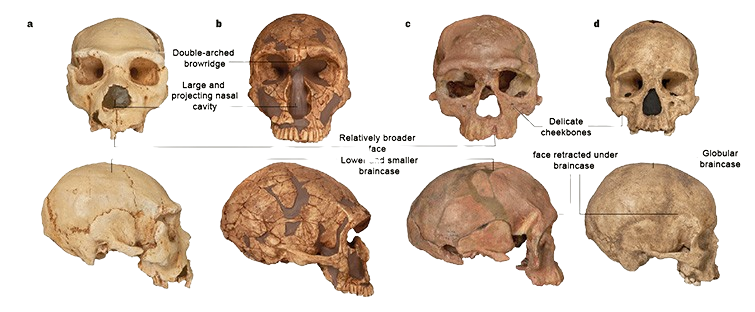
And indeed, nothing within us is inherently individual or unique. Our genetic code is borrowed from our parents, their parents, their parent’s parents, and so on, all eventually dating back to the (now) earliest Homo sapiens fossils found in Jebel Irhoud, Morocco.
Rather, what sets us apart from each other is our experiences, and what we choose to do with the life we’ve been given. The combination of these events, with how we choose to color them in, is what makes us who we are, and differentiates us from our methods of socialization - our family, friends, and environment.
It’s quite quaint, don’t you think? It’s nice to think that we’ve made an impact on so many of the same people that have made an impact on us. Even if we have differing levels of impact, it’s nice to know that some of my fondest memories might be someone else’s fondest memory too - dancing in a Christopher Street festival in Frankfurt, attending minor league ice hockey games, and the egregious amount of people I’ve shared Cloud IX with, that have believed in it as much as I have.
But what does that mean when we experience something that has the potential to be life changing? That takes us out of our routines, that makes our skin crawl, that makes existing itself a chore? It feels wrong to owe a bit of myself to someone who, admittedly, didn’t care at all about me or my boundaries, and the sick, ooze of satisfaction I feel when I think about the converse of that doesn’t really make up for it.
My mosaic felt contaminated - by the way I hated the feeling of being touched, by the jump I got every time I saw someone wearing a hat, by the amount of skirting around the subject I did. I remember thinking to myself, “This can’t be all there is”.
Is it?
Now, I’m no existential philosopher, but when ascribing my own perspectives on freedom and self-actualization, it’s hard to overlook the work of Jean-Paul Sartre, French Philosopher and author of Being and Nothingness. Sartre divides our existence two parts: the being-in-itself, and the being-for-itself. The former refers to events, objects, and other fixed objects that lack the freedoms of the latter - the intentionality and consciousness behind why we live, and the definitions we choose to ascribe from our lived events. Maurice Merleau-Ponty emphasizes a similar point in the Phenomenology of Perception, as does Viktor Frankl in Man’s Search for Meaning. These intelligent, albeit very 1940s-educated men establish a boundary between ourselves and our suffering - trauma occurs to a person, yes, but it doesn’t determine or otherwise adhere a label to who we are. To quote Viktor Frankl,
“Between stimulus and response there is a space. In that space is our power to choose our response. [And] In our response, lies our growth and our freedom.”
A single tile doesn’t have to determine the image. It adds texture, sure, but that doesn’t detract from the beauty of the picture or the validity of other tiles.

Allow me to go a step further. While we have sovereignty over our image of the self, our nervous system has the ability to reorganize itself and adapt through neural network plasticity.
And trust me, that adaptation can be relentless.
Our amygdala is the fear center of your brain, and works with your prefrontal cortex to modulate and respond to threat. If you’ve had the pleasure of seeing the box-office-Pixar-hit Inside Out, you’ll recognize Fear’s input here. Under the Hebbian learning theory, sensory input (including touch, sound, smell) encodes to threat detection networks in both the amygdala and hippocampus. This is an evolutionary behavior pattern: you are trying to protect future you from repeated trauma.
Gradually, however, as the threat goes away, your ventromedial prefrontal cortex (vmPFC) engages in the opposite: extinction learning.
I’m going to riff for a bit here: Harvard professor and all-around-girlboss Dr. Elizabeth Phelps conducted a study in 2019 on clinical interventions into novelty-facilitated extinction events. In both mouse and human models, the participants were exposed to a conditioned stimuli (CS; in this case it was two angry faces), and then shortly after, an unconditioned stimuli (US; a shock to the wrist). Hello Pavlov!!
Extinction response was tested via skin conductance responses; neural activation through both MRI and computational modeling.
Her findings supported a new way of reducing the potency of our trauma - rather than ignoring the fear reaction, if we start to see the threat as something else (our body protecting itself), then it is several times easier to assure safety and reduce the return of fear.
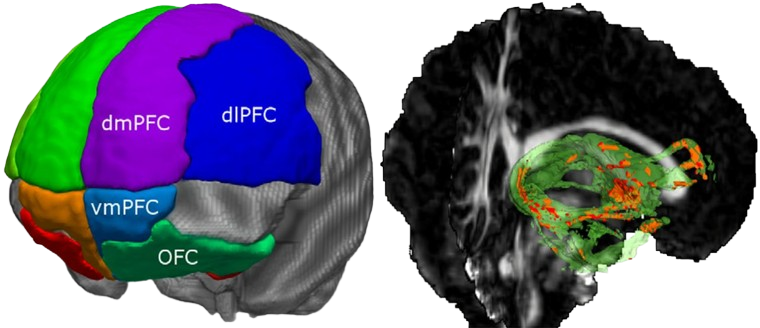
This is called top-down regulation: the PFC dampens the reactivity of your amygdala, and lowers the fear response, without erasing the memory.
Survivor autonomy has been the mission of Cloud IX since its inception. As mentioned in the previous article, I want to support the people that will never step foot into a Title IX office, that will never tell a soul, that will leave their community behind - a community where perpetrators go unaccounted for, and where sexual violence happens every 68 seconds.
But by taking the power back from our experience? Not only do we allow ourselves to not become haunted by our experience, but we get the help we deserve - whether that be in taking that first step to a counselors office, using a formal reporting resource, or relying on our community to have our back.
We, like our community, are a mosaic of every moment, every experience, every person that we meet. It is up to us (and, of course, the wonderful team at Cloud IX) to decide what our mosaic looks like, rough edges and all.
Dunsmoor, J. E., Kroes, M. C. W., Li, J., Daw, N. D., Simpson, H. B., & Phelps, E. A. (2019). Role of Human Ventromedial Prefrontal Cortex in Learning and Recall of Enhanced Extinction. The Journal of Neuroscience, 39(17), 3264–3276. https://doi.org/10.1523/jneurosci.2713-18.2019
Eden, A. S., Schreiber, J., Anwander, A., Keuper, K., Laeger, I., Zwanzger, P., Zwitserlood, P., Kugel, H., & Dobel, C. (2015). Emotion Regulation and Trait Anxiety Are Predicted by the Microstructure of Fibers between Amygdala and Prefrontal Cortex. The Journal of Neuroscience, 35(15), 6020–6027. https://doi.org/10.1523/jneurosci.3659-14.2015
Frankl, V. E. (1946). Man’s Search for Meaning. Beacon Press. (Original work published 1946)
Merleau-Ponty, M. (1945). Phenomenology of perception. Forgotten Books.
Merzenich, M. M., Van Vleet, T. M., & Nahum, M. (2014). Brain plasticity-based therapeutics. Frontiers in Human Neuroscience, 8. https://doi.org/10.3389/fnhum.2014.00385
Palahniuk, C. (1996). Fight Club. W.W. Norton & Company. (my bad)
Palahniuk, C. (1999). Invisible Monsters. W. W. Norton & Company.
Sartre, J.-P. (1943). Being and Nothingness: An essay in phenomenological ontology. Routledge.
No posts
Comments
Nothing yet. Say the first thing.
Sign in to join the conversation.