
I attended a panel at AWP about being a multi-disciplinary artist. During the panel, it occurred to me that I was ALSO a multi-disciplinary artist. I never thought of myself that way. Perhaps this had to do with my understanding that art has always been by nature of itself filled with folks who could be understood as at best polymaths, or at least as multi-disciplinary artists who dabbled. While I wouldn’t identify necessarily as a polymath, I take deep inspiration from those who learn widely in a variety of disciplines. To be clear, I don’t think I read widely or like science enough to be a polymath. But I do think pursuing a variety of interests intellectually is a critical part of being a full human being. To me, any artist worth anything has taken part in numerous activities in order to get closer to capturing the complete vision of what existence means. How can one truly reflect upon your own small existence and the world if you haven’t hitchhiked, read hundreds of poetry books, made love on subway, snuck into academic conferences, slept in the woods, trained muay thai with anti-fascists in Latin America, shot guns in the mountains, worked on an organic farm, or run in a 5k? I think there’s something about physicality that I’d contain in my own belief in multi-disciplinary ability, but that’s a separate conversation. But let me get to the point of this essay.
Before I was a writer, I was a musician. This is not very surprising for my own intellectual trajectory. I follow in the long line of African-American male writers such as Ralph Ellison who talks about how music has shaped his own writing. He talks about this in his introduction to Shadow and Act, a collection of essays published in 1953.
“When the first of these essays was published I regarded myself – in my most secret heart at least – a musician. This was the result, in part, of a complicated, semiconscious strategy of self deception, a refusal by my right hand to recognize where my left hand was headed. Actually I had been devoting as much time and energy to reading and writing as to music, and was passionately engaged, night and noon, in acquiring the basic knowledge and skills of the novelist. Thus, the earliest, most agonizingly written pieces presented here were the results of a crucial conflict raging deep within me...In this sense, writing was an acting-out, symbolically, of a choice which I dared not acknowledge. Indeed, I repressed it beneath my old concern with music and my current involvement in the intense social and political activity which claimed so many of us who came of age during the thirties.”
Ellison is one of my favorites for a reason. The raging conflict between the musician and the writer inside of Ellison is an experience that resonates personally. Throughout my time on this earth, especially in the past several years, I have found that conflict in my personal life abound with how music and writing interact. In ways, I’ve found the need to repress certain parts of myself. There’s not enough time in the world. I’ve seen the musician-writer dynamic rarely written about elsewhere apart from Ellison. In addition, he also draws his writing into contention with his political work in the 1930s, which is a constant tension for myself, albeit I am not a member of the Communist Party. Was Ralph a multi-disciplinary artist? I am unsure, although it’s certain that lots of good art can come from Left. He talks about idolizing jazz men in his youth, in the same way that myself and many other young Black people idolized rappers. I never wanted to be a writer. Hip hop was my first musical love, before I even started playing Bob Dylan covers. I wanted to be a rapper or an alternative R&B singer. Somewhere between Capital Steez, Frank Ocean, early 2000s produce-rapper Kanye West and Chance, The Rapper. That’s what I desired in my youth, even if I often denied it to myself. Fascinatingly, in the same intro, Ellison makes repeated reference to “the renaissance man” that inspired him and other Negro youth to dabble in different intellectual pursuits. The jazzmen could be understood as an inspiration for this dabbling. Ellison puts it quite well, “despite the outlaw nature of their art, the jazzmen were less torn and damaged by the moral compromises and insincerities that have so sickened the life of our country.” One could make a similar argument about the African-American musician today.
In some ways, the musician is the most pure archetype of an African-American experience post-slavery. The absence of the musician in many modern African-American novels is problematic, but that’s a separate conversation. I’m not even gonna speak on some of the popular edgy writing that claims to be in tune with the rhythms of the Black youth, but lacks any knowledge of the social oppression that produces the music. Most writing I’ve encountered in contemporary lit that engages with rap or hip hop culture is just gimmick. Barely anyone writing literature cares about the rappers in the way that Ellison cared about the jazzmen. One of my first non-political pieces of writing was an essay on milo and Elucid’s Nostrum Grocers record I wrote for a campus magazine back when I was 20. I’ve tried to write a few things since, but regardless of my efforts, G-Herbo isn’t a poet worthy of analysis to most literary folks, even those who claim to care about diversity or whatever. He and other Black working class artists are either cheap entertainment to be ridiculed and copied or thugs to be ignored and chastised. But I think of them as outlaws with more moral clarity than most of this society, as Ellison said.
To compare my music to my writing, I have largely been entirely self taught when it comes to making music apart from some time in a choir and piano lessons for a few years as a kid. These experiences provided me with a basis in musical theory, but my own execution musically was quite poor. Not to mention I had a choirmaster who when the choir would miss notes who would yell at us animatedly, so for a few years music inspired feelings of great anxiety. Ironically, many years later, the same choirmaster would see me performing songs on my guitar on the street, and would stand nearby for a while tell the passerbys “that’s my student.” Either way, I’ve never understood my love for music and writing to be a gift. It often weights on me like a curse cast by a scorned lover. It is hard to balance a consistent practice in both things. As my writing career has found more success, I have found less time to play guitar and sing my beloved soul music
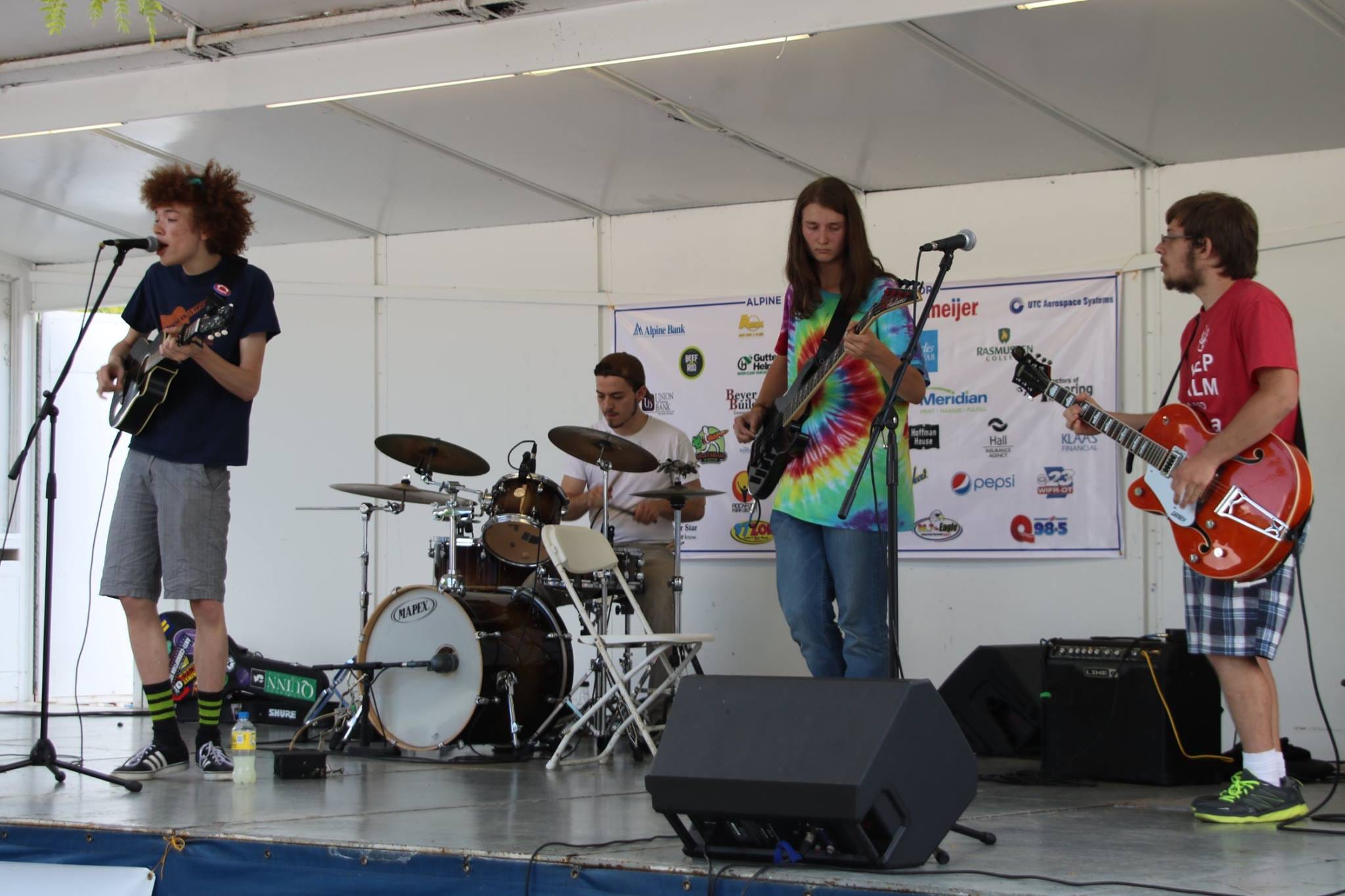
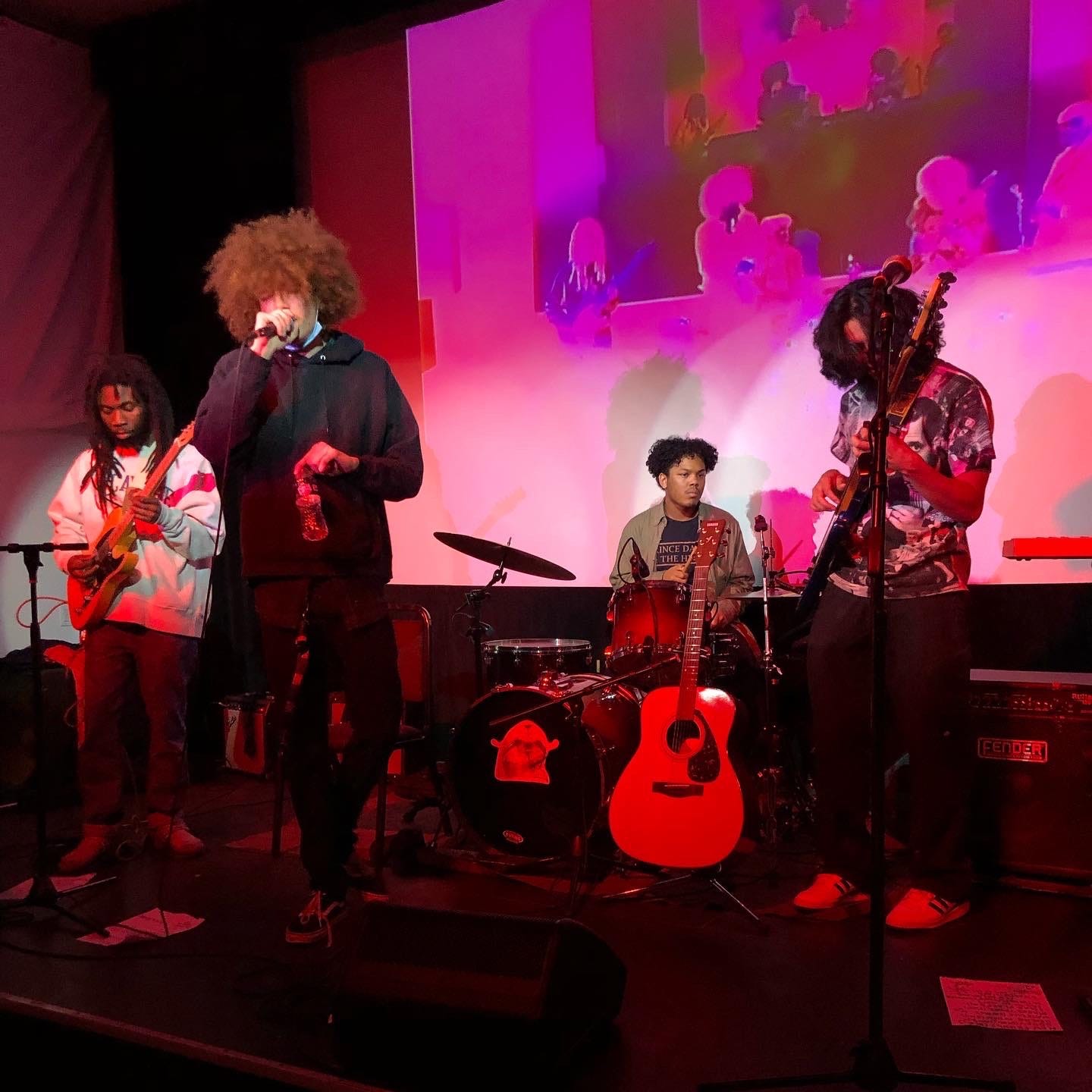
It seems that being “multi-disciplinary” is in, these days, at least from the panel. Maybe just as way to market oneself. While I was inspired by the panel, I do think that the distinctions between poetry and creative non-fiction feel less hard than the weight of being a musician and a writer. But perhaps I am just being judgmental. For those of you on this Substack, I do not talk much about my experience as a musician. My first job in high school was working as a performing musician across my town in Rockford, Illinois. I helped record a friend’s song that went semi-viral in our hometown. That same friend and I hosted an open mic night for several years during our time in high school. I played in one band in high school and another one in college. One of them was a straight up hip hop band, while the other was a combination of folk rock, R&B, and hip hop. Amusingly, after having exhausting experiences with these two bands, I wanted to become a solo artist. I was currently facing a lot of prison time, a standard story for many African-American musicians. After my charges were dropped, I spent time working on learning how to make beats on Ableton. From that, my Huey, The Cosmonaut project was born.
This project has lead to countless releases ranging in genre. For a while, my solo project was a band which played all over Philly and on a local radio station. I never made crazy money as a musician, but for a while a fair amount of my income came from college shows, selling t-shirts and other random music money. I like to tell people that my two real jobs have been working as a musician and a writer. To be honest, looking at my past twelve or so years of employment, those are the jobs I’ve worked the most consistently in. The kitchen jobs, the library tending, the after-school roles and the warehouse stuff was all just an interlude. I’ve been a variety of roles in my musical life. I’ve done songwriting, guitar playing, rapping, audio-engineering, band leading, producing and singing. I miss it so much these days. But it’s hard to do all of those things yourself. While I think all art and frankly anything that requires effort does have an immense amount of self direction, collaboration is the key, especially when it comes to making music. One of my favorite parts of writing is giving and receiving feedback just how you give and receive feedback during a freestyle session
Like Ellison, in some ways, my writing was a product of my political development. I wrote political theory because it seemed necessary as an action for the movements that I was a part of. But like Ellison, for a long time, I saw my heart as truly a musical one. I am unsure now. Can you have a multi-disciplinary soul? My favorite singers seem to. I read that Frank Ocean is making a movie. Not to mention he designs jewelry and dropped a magazine awhile ago. One of my favorite contemporary soul singers Dijon was an english major. He also acted a little bit in that movie everyone hates for no reason. I feel like his soul is definitely multi-disciplinary, he might even describe himself that way. He cares about words, for sure. Attention to words is something that my favorite rappers and singers have always cared about. It makes sense I care about those things, too. I never saw songwriting as connected completely to poetry though, even if I loved all of those Dylan songs. Chance, The Rapper’s most recent album Star Line was promoted using videos that emphasized the text in the songs. He even brought this aesthetic to the live show, with the lyrics behind him. There’s something about the words as important even as they collide with the musicality. Is Chance multi-disciplinary for that?
I don’t really have answers when it comes to what it means to be a multi-disciplinary artist. For me, it’s mostly been a poor economic choice rather than a good marketing strategy. The title of this essay comes from a rap lyric I wrote. I’ve both written albums of music and novels. That has got to be worth something, even if it’s just my own personal satisfaction. But what do you think? Are any of ya’ll musicians and writers? I imagine quite a few of you might be. Do you have any favorite authors who also managed to make great music? Or any great musicians who wrote a good book or essay? Please send some recommendations, so I’ll feel less unfortunate when it comes to my own predicament. Either way, I want to write prose that reads as well as Frank Ocean’s Blonde sounds. Perhaps I’ll try to make a few more songs in the meantime as I’m figuring out how to do that.
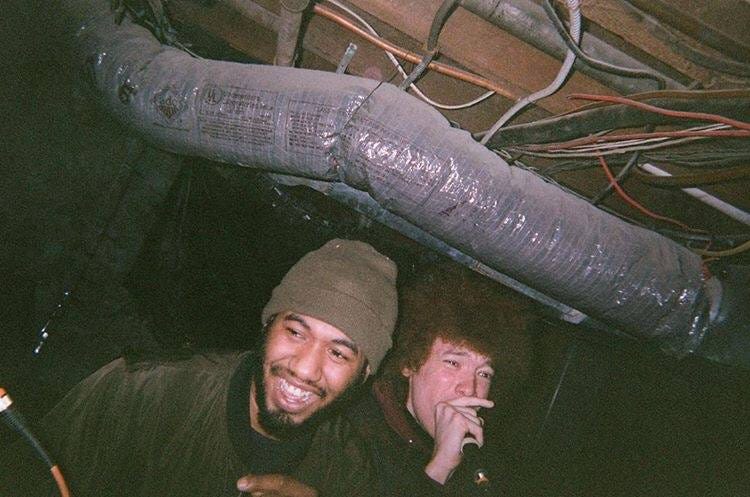
A reminder that I am about to embark upon a cross-country odyssey with my friend Maurice to work on our podcast Rough Drafts. We were funded by the People’s Media Fund in the Greater Philadelphia area to interview writers, artists, academics, filmmakers and organizers across the North American continent. Our podcast is broadly about artistic/creative processes, American subjectivity, masculinity, and social movements. We read a lot of books for each episode so readers are encouraged as guests. If you’d like to be a guest on our podcast, please message me on here or email us at rough.rough.drafts@gmail.com.
No posts
Comments
Nothing yet. Say the first thing.
Sign in to join the conversation.