
Irrational Analysis is heavily invested in the semiconductor industry.
Positions will change over time and are regularly updated.
Opinions are authors own and do not represent past, present, and/or future employers.
All content published on this newsletter is based on public information and independent research conducted since 2011.
This newsletter is not financial advice and readers should always do their own research before investing in any security.
Feel free to contact me via email at: irrational_analysis@proton.me
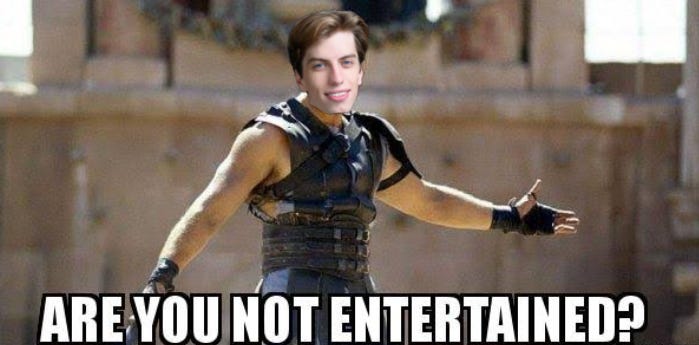
Do you recognize this man?

Many of you do.
For those who do not, his name is Bill Hwang and he is a hero. A legendary degenerate gambler.
I want to start with his story before discussing a new hero and legend of finance, Leopold Aschenbrenner. Leopold was already famous but what happened the last two weeks cemented his place as the greatest degenerate, brain-damaged gambler of all time. You need to be aware of his situation.
Bill Hwang
Leopold Aschenbrenner
Social/industry background
What happened and where we are today.
A 2-week chronological re-telling, featuring 30+ contacts.
State of The Market
Irrational Analysis Consolidated Perf+Holdings+Records
STONKS
Trading Account Names
Long-Only Account Names
The above 16-minute video is excellent summary of this magnificent man.
A two sentence summary of his life up to the event we care about is as follows.
Bill Hwang was a highly experienced hedge fund guy who was trained by one of the best in the industry. After committing some minor crimes, he closed is hedge fund and started a family office.

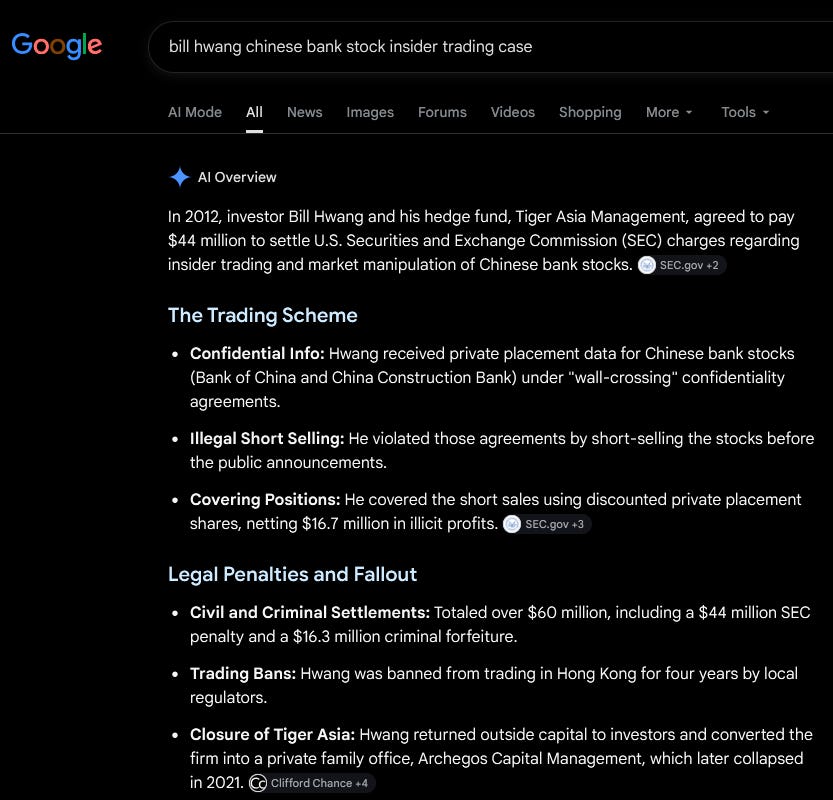
For those who are not aware, family office is a term for institutional investor entities that manage the money of a single private entity. Some of these family offices speak with me from time to time.
There are far fewer rules for family offices, both in how they choose to operate and SEC reporting requirements. Some family offices are simply one guy investing his families $100M of wealth like a normal retail investor, but with a prime brokerage account. Other family offices are staffed with professional hedge-fund people who make the decisions on behalf of the rich person/family. Strategies vary in terms of if using leverage, long/short, diversification requirements, risk rules and so on.
Bill Hwang’s family office was called Archegos Caprial Management. It’s important to understand some unique attributes.
We have a family office that…
Is run by a highly-experienced hedge fund guy playing with his own money.
Run by someone literally convicted of financial crimes in the past.
Has a PM with a risk-seeking personality that somehow (yes really) is strongly linked to his devotion to evangelical Christianity.
It get’s funnier but first I need to explain what prime brokerages are.
I personally have normal brokerage accounts with E*TRADE, Charles Schwab, Robinhood, and Interactive Brokers (lite). My trading account is with a sub-prime broker called Webull (this is a joke I love u Webull). These are all normal accounts.
Prime Brokerage accounts are with large banks such as Goldman Sachs, Bank of America, Morgan Stanely, and so on. These accounts are different than what a normal retail investor can get and typically come with.
Much higher leverage limits.
Bespoke products such as total return swaps, hedging instruments, private placements, convertible bonds, and so on.
Advanced order execution and tools.
High fees.
Bill Hwang’s trading strategy was quite simple. He had a list of stocks he liked and would lever up to the tits.
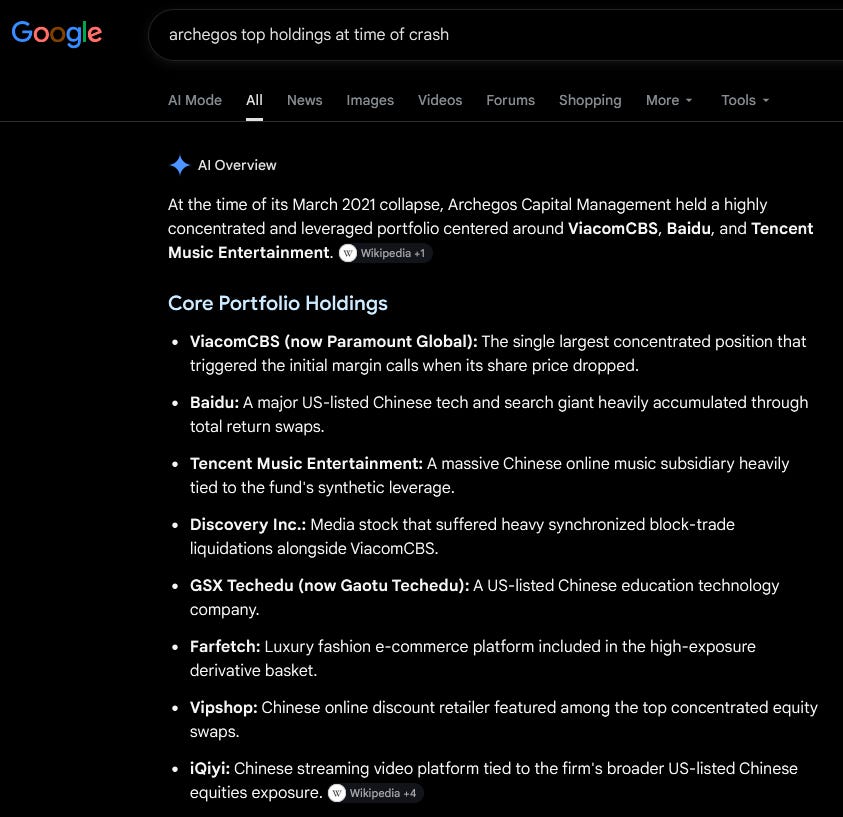
Mostly legacy media and Chinese tech stocks.
But he did not buy the shares himself. He used a bespoke instrument called a total return swap (TRS). TRS is essentially a contract where the prime brokerage client gets the economic exposure (gains/losses) of an instrument (single stock, ETF, whatever) without actually owning it. The prime broker (bank) owns the securities, not the client.
If this sounds like a way to lever up without disclosing what you are levered on, congrats you guessed right.
Now… what if someone went to like 7 different banks, got total return swaps with massive leverage on the same small handful of correlated stocks, lied to the banks about the concentration of his holdings, and the banks where fucking retarded and never bothered to talk to each other?

All right enough back story, let’s look at the shitshow and admire the chaos that occurred back in 2021.
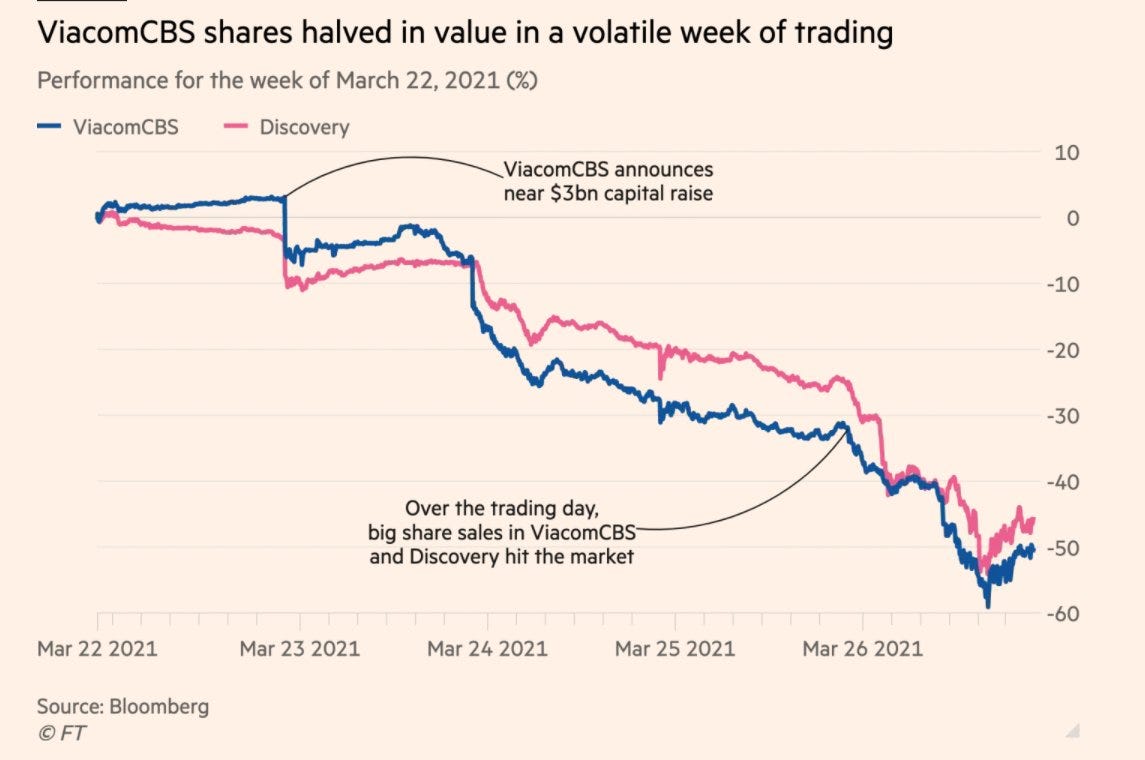
On March 23rd, 2021, ViacomCBS announces a $3B stock offering. Management knew their stock was over-valued and wanted to take advantage by diluting shareholders and getting some cash money in dah bank.
As expected, the stock price tanked. Discovery stock also tanked because these are two highly-correlated businesses and the same psychotic degen is levered up on both lmao.
Then things are flat for about 24 hours because all the prime brokers are trying to figure out what is going on and Archegos staff are obviously in damage control mode.
The zoomed out chart is more useful.
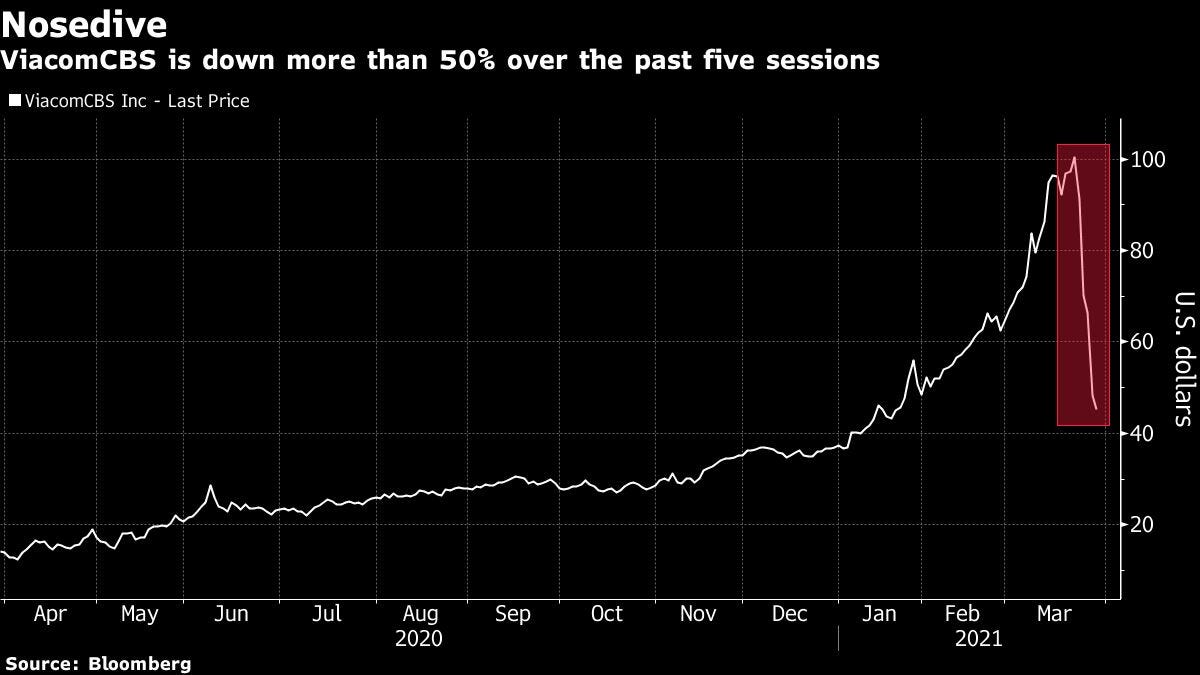
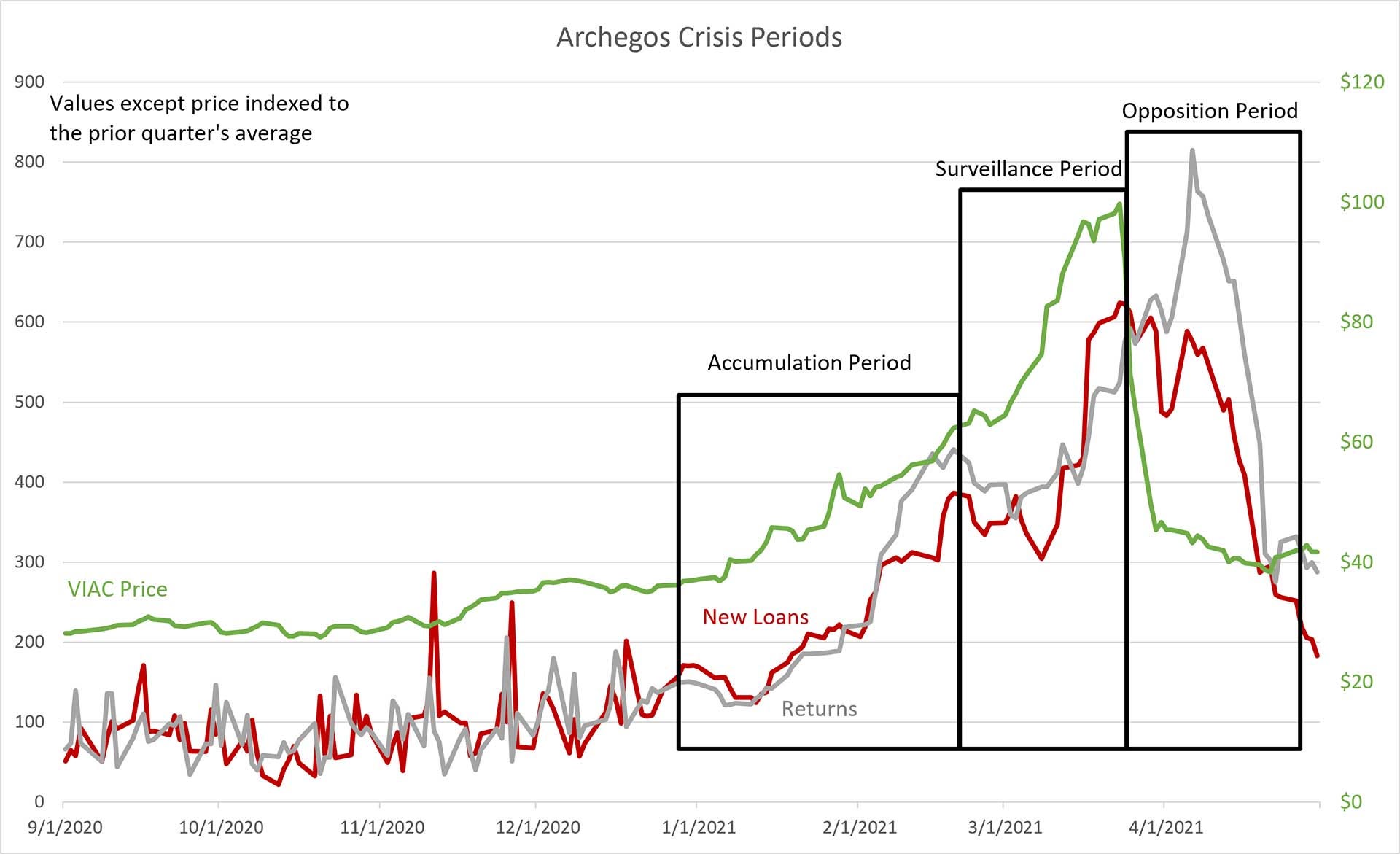
The initial selling was Archegos trying to save themselves. After a brief period, the banks removed heads from asses and started liquidating Archegos. When a large block (chunk) of shares of a stock are sold by a bank to a private buyer all at once, that is called a block trade.
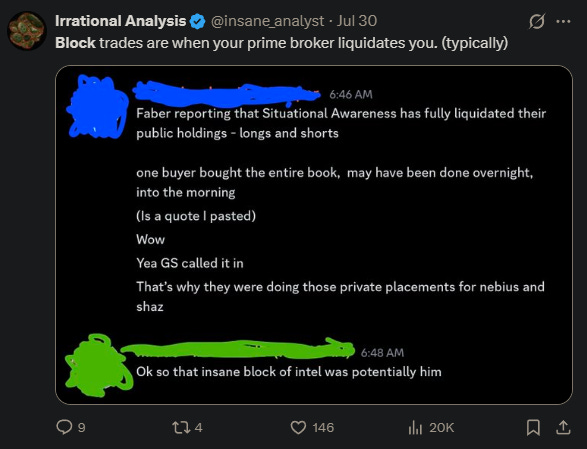
#Forshadowing
There are some truly glorious CNBC clips of Faber and Cramer talking about these Arcehgos-related block trades and the prime broker who ate the most shit, Credit Suisse.
“Credit Suisse has been the center of it. It was originally a $4.7B loss, last week you may recall after the close I was reporting on those Discovery [block] trades… we didn’t think… we thought they were done. They weren’t done. And one of the key questions was are they [Credit Suisse] losing even more money[?] and the answer is yea they are. Almost another $700M.”

The face and body language of Faber is so good. Seriously click video its in the first 30 seconds.

Bill Hwang lost it all, and (more importantly) made a bunch of banks loses a hilarious amount of money too. Years later on November 20th, 2024, Bill Hwang was convicted of a variety of financial crimes.
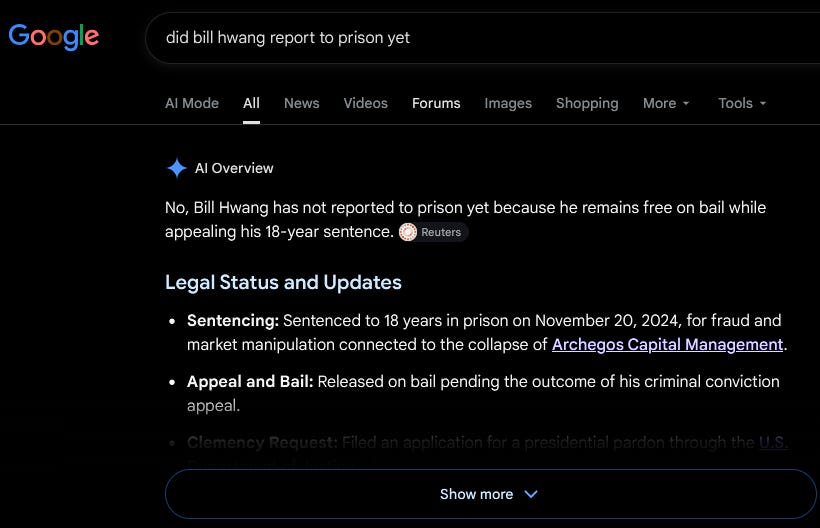
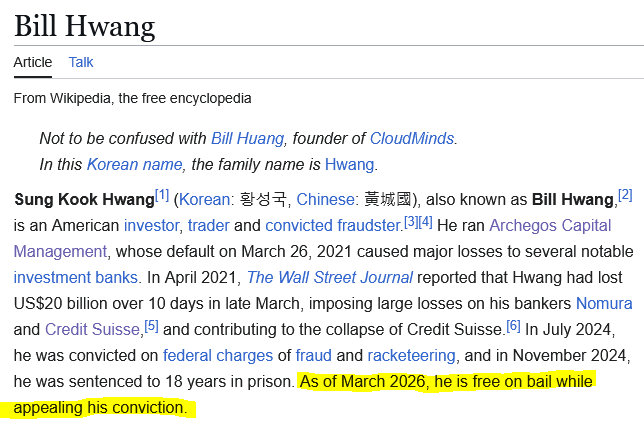
Without commenting on legal matters, I want to say I think Bill Hwang is a hero. A true degenerate gambler.
Frankly the key lesson of this saga is prime brokers should do more due-diligence on clients.
If I go and try to get a home-equity loan on the same house from 10 banks with the intent of YOLO-ing all the money into Lumentum stock on 4x margin, I would be immediately caught. The credit-reporting system would find out immediately.
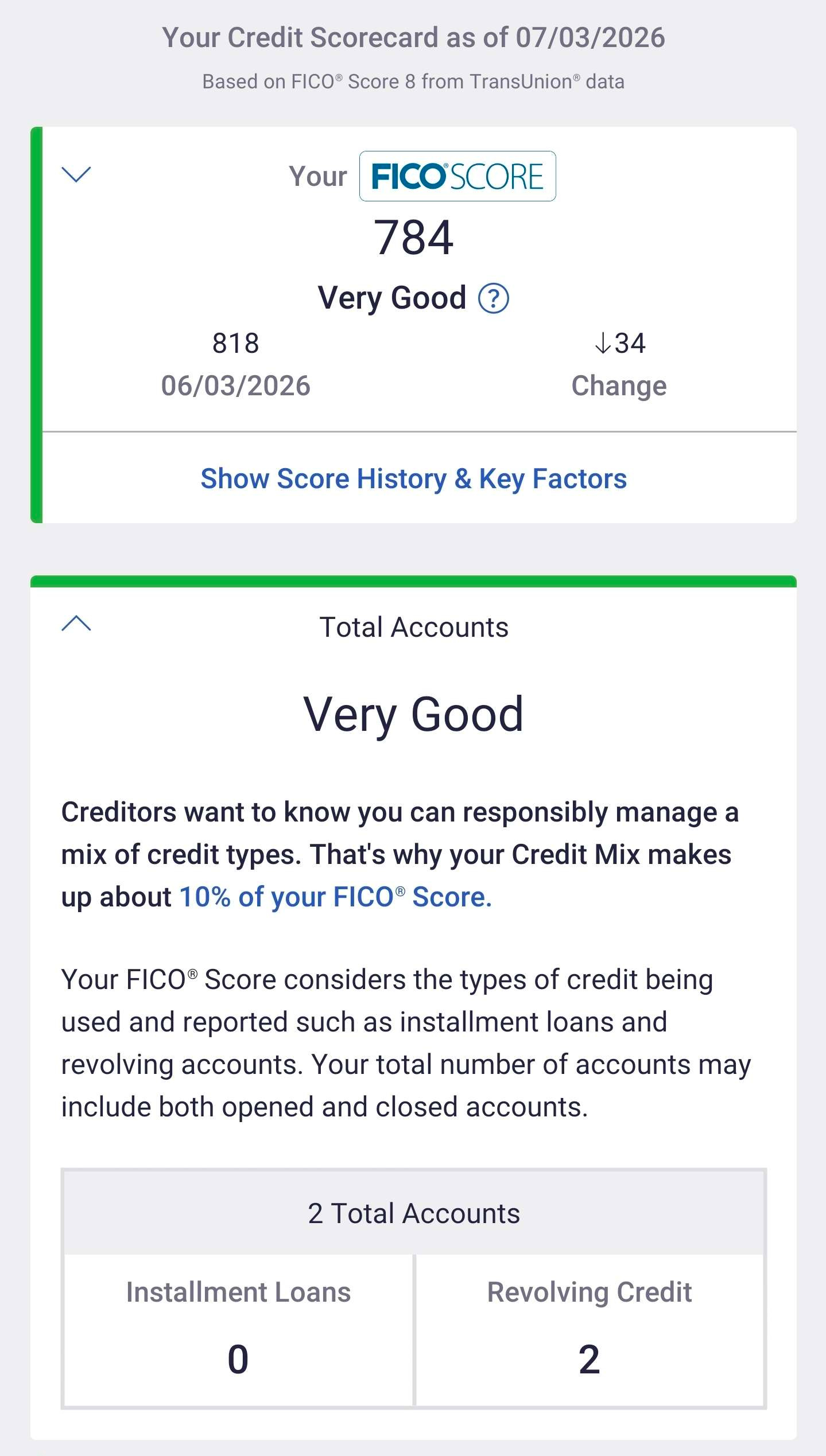
So why the hell does the prime brokerage system not have something similar? A single phone call from one bank to any other of the ~6 banks could have prevented all this.
Bank 1: “Hey do you have Archegos as a client too?”
Bank 2: “Yes”
Bank 1: “Does he have a strangely concentrated book using total return swaps?”
Bank 2: “Shit.”
Apparently, many of the banks had no clue Bill Hwang had accounts with others.
Bill, I don’t believe in God but God bless you. ✝️
Leopold is an AGI cultist.
But is not a brain-dead AGI Cultist like Dwarkesh.
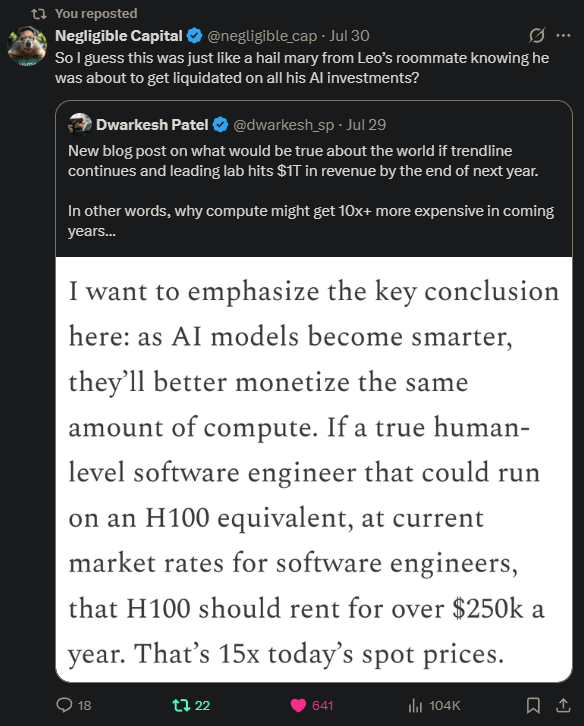
Leopold is reasonably smart and several of the people he hired are also smart and (more importantly) experienced.
I have really struggled with the structure/ordering of this section. Had to delete and re-write several times.
The finance world has a variety of social cliques. Several of these cliques do not like each other. The most obvious divide is between pods and non-pods.
“Pod” refers to the multimanager strategy that major firms like Citadel, Point72, Balyasny, and Millennium.
The way pod shops work is they aggressively manage risk. If you work there and your book (portfolio) goes down more than 5% in a single day, you are literally fired and escorted out the building. This core premise of multi-strategy investing has many consequences. “Pod-brain” and “Pod-monkey” is slang attacking this group of people.
There is this concept called factors. To explain, I need to use a few toy examples.
Let’s say you are bullish AMD GPUs for whatever reason. You want to buy $100M worth of AMD stock but don’t have $100M. Instead you only have $10M. What to do? You could buy $20M worth of AMD and short $10M of an index like SOXX or SMH. But $20M is in fact a smaller number than $100M. We are professionals here and demand leverage.
So what if we buy $100M worth of AMD, sell short $100M of Nvidia, and keep the $10M of cash we started with in something safe like treasury bonds?
That would be much more allowable by the risk department.
But the problem is, AMD is a CPU-heavy business while Nvidia is just starting to sell CPUs. AMD sells FPGAs while Nvidia has none. Nvidia has a strong networking group that sells switches while AMD has zero networking switch department. Long AMD, short Nvidia, is not truly a factor neutral pair trade. We need to go deeper to lever up more.
Suppose you really like Coca-Cola stock (KO) for whatever reason. Maybe you think their brand distribution and growth is better. Maybe you like a new flavor of Coke. Maybe you think Dr. Pepper is about to die and people who like Dr. Pepper will migrate to Coke over Pepsi (PEP), leading to asymmetric market-share gains.

You still have only $10M in starting capital but dammit Coke is better than Pepsi and you want to make a $1B bet on this idea.
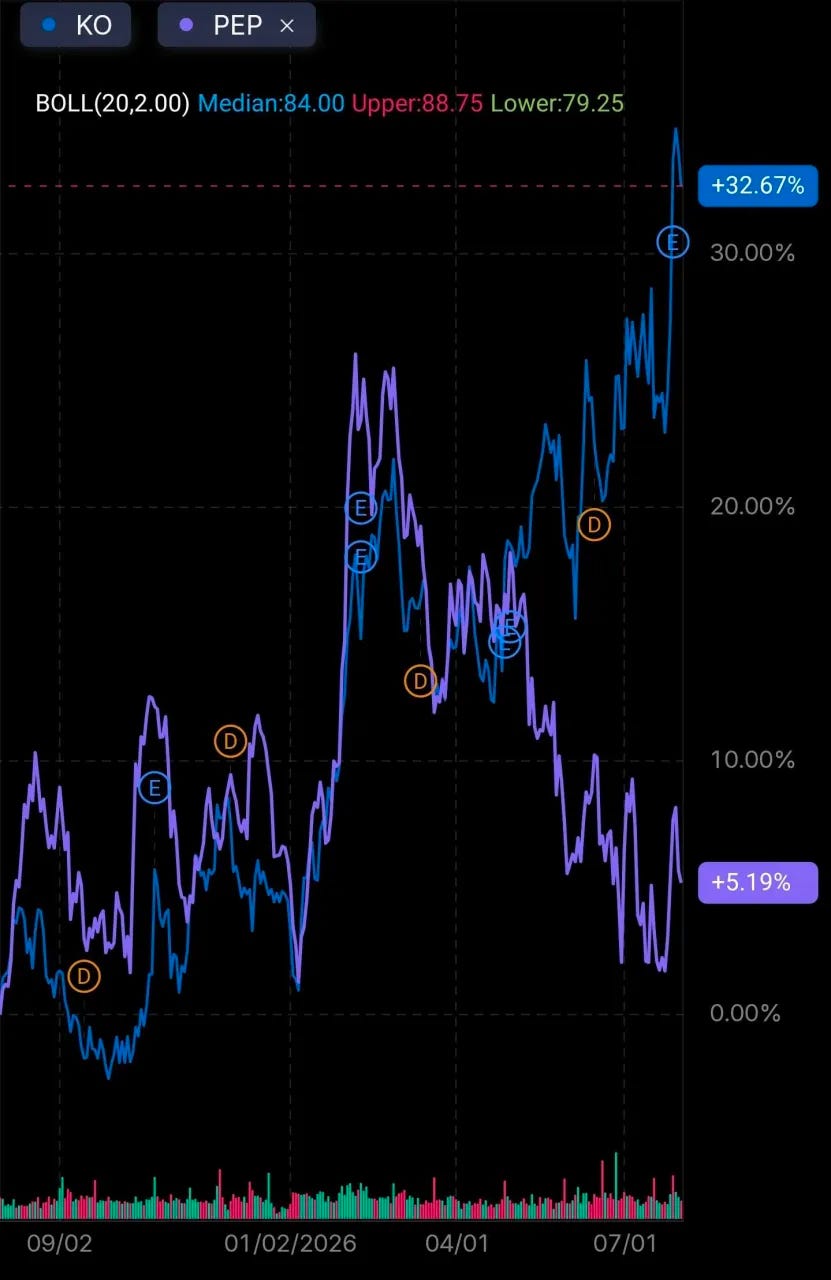
Buy $1B worth of KO.
Sell short $1B worth of PEP.
Pay your prime broker $10M in fees up-front and pray.
At a high-level, allowable leverage scales with three portfolio attributes.
Assume $10M in starting capital.
Net exposure.
Long $10M, short $10M, net 0%
Long $20M, short $10M, net 100%
Long $20M, short $0M, net 200%
Gross exposure.
Long $10M, short $10M, gross 200%
Long $20M, short $10M, gross 300%
Long $20M, short $0M, gross 200%
What are the things you own.
Borring stable shit like carbonated sugar water?
Or volatile levered-up, questionable financial platinum dogshit?
Most of the internal social/politics within finance world revolves around if you are happy with your employers’ rules and what you think of other institutions rules.
(making up some directional numbers)
Pods are levered up 5-10x but always net 0% with extremely strict factor-based risk rules.
Regular hedge fund maybe does 3x leverage, net +/-15%.
A conservative family office might go for 1.5x leverage, net 50%.
Leopold apparently (25+ sources) went 4-5x leverage at an unknown net. But I do know his shorts WERE NOT ANYWHERE CLOSE TO FACTOR NEUTRAL.
Situational Awareness LP (henceforth abbreviated to SALP) was long AI winners, short AI losers.
So say long semiconductors like Intel and SK Hynix and short traditional SaaS like Adobe.
I don’t have solid information on SALP net exposure, only gross. But I don’t think that net number matters because I am reasonably confident a large portion of SALP shorts were anti-correlated with their longs, so these shorts provided little risk-related benefits and were simply more leverage on the same factor (AI).
In short, SALP did not behave like a normal hedge fund. They had the leverage of a pod with the risk-management of a psychotic family office. Perhaps this is not far from the truth given that SALP is basically the AGI cultist family office lol.
Citrini had a great tweet on how the LPs of SALP were true believers and they would get more finding in time and don’t count Leopold out which… aged poorly over less than 24 hours.
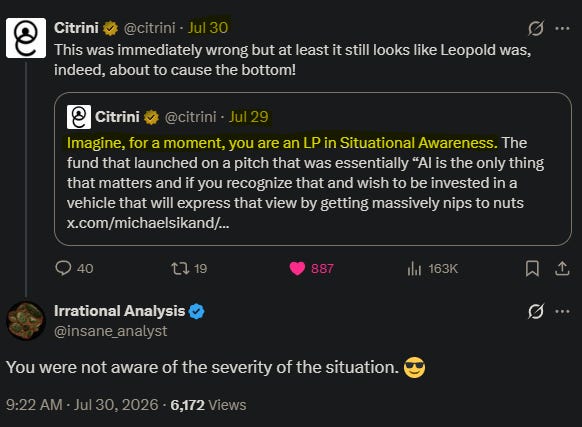
I’m sorry not trying to be mean but the pun potential of this fiasco is too good.
Anyway, just FYI… 80% of the 30+ people who chatted with me over the last two weeks hate SALP. 20% like SALP.
Here is a very generic conversation from… two days ago. 6PM Wed July 29.
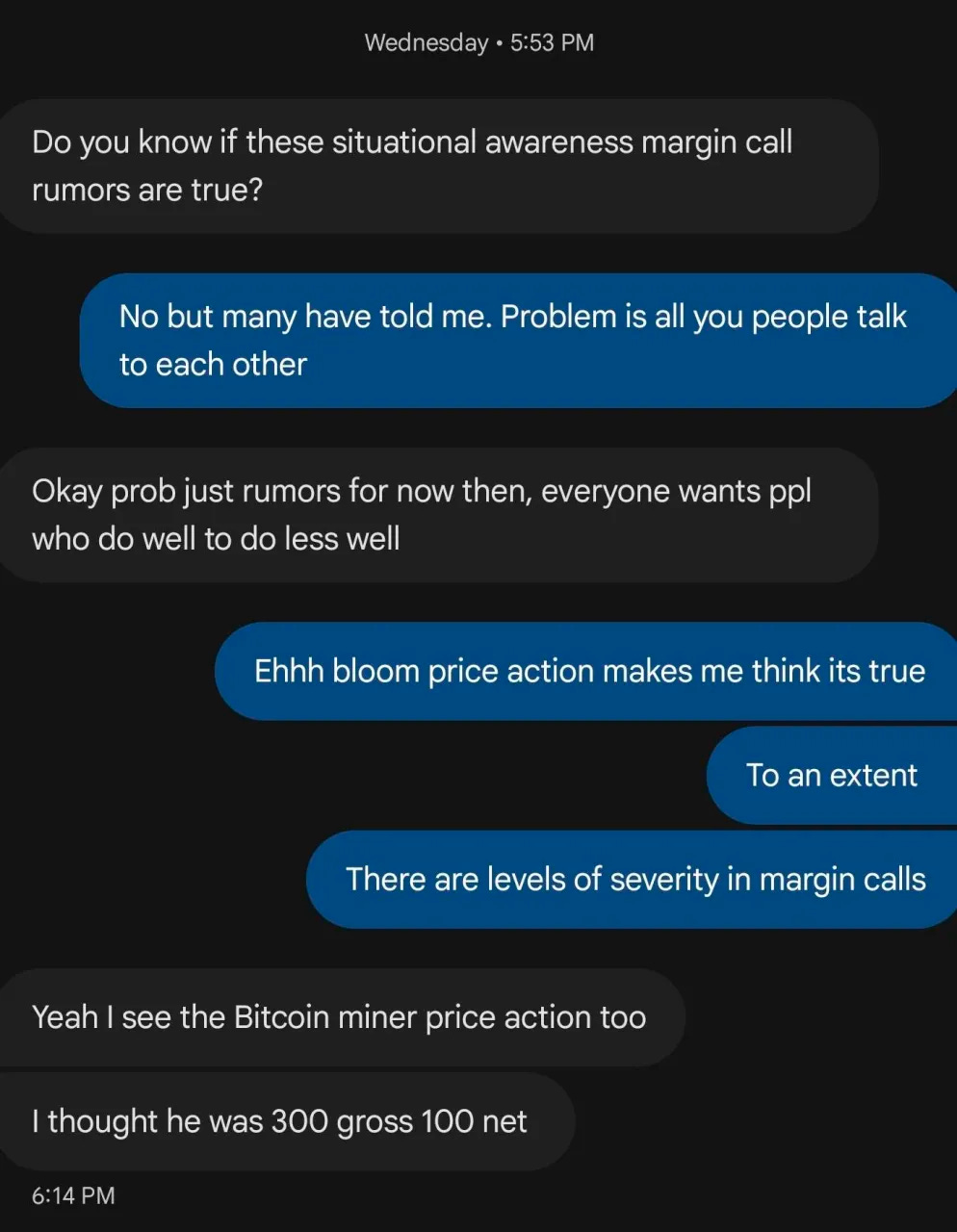
This person is part of the 20%. He was of the mindset that SALP is fine an no margin call.
My view at the time was they definitely got margin called but probably only down 20-30% and will live.
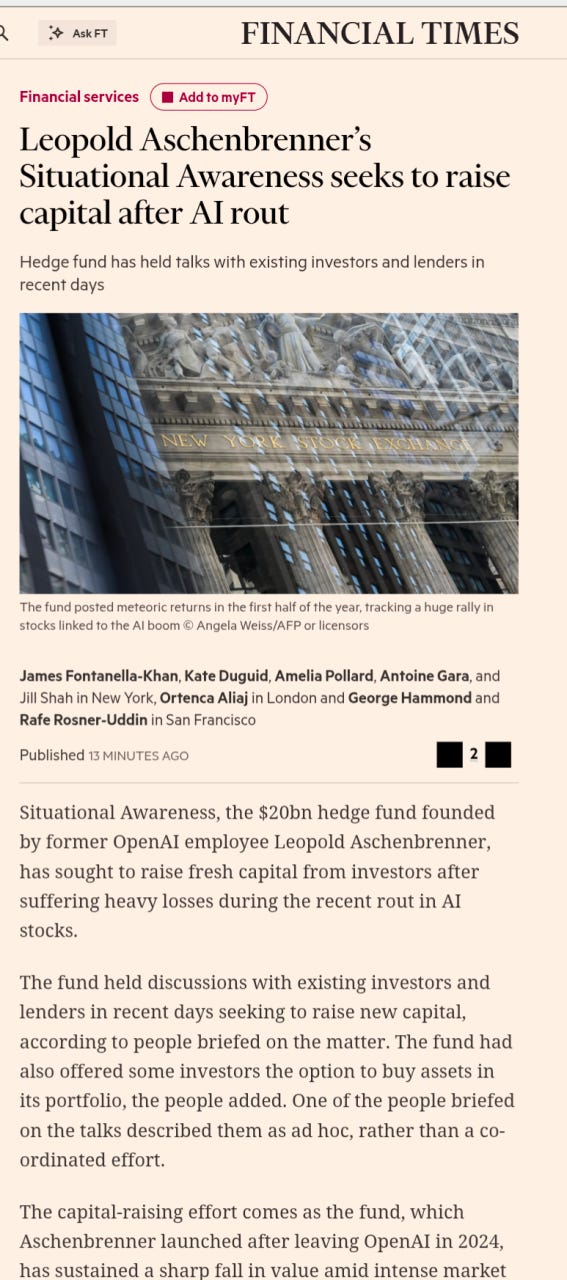
Four hours later, the FT article came out and I became aware that the situation was far worse than I thought.
In the hedge fund world, there is a tradition where if one fund gets in really big trouble, Ken Griffen of Citadel (king of the pod monkeys) will come and buy your book at a steep discount and thus give you a dignified death with some hope of coming back someday.
It’s basically hedge-fund seppuku.

Sepuku is a traditional Japanese samurai ritual where in order to maintain honor, the fallen samurai kills himself with a short sword by stabbing is abdomen and dragging the sword to make sure all the internal organs are sliced and he really has no chance to live. Then a friend of the samurai “assists” the seppuku by chopping his head off.
In this analogy, the prime broker (Goldman Saches and others) represent the short sword. The margin calls become mortal wounds to Leopolds squishy vital organs. And in their hour of greatest need, facing a slow, painful, and humiliating death, Ken Griffen came to give them an honorable one instead.
Here is a snip from the SALP fund letter.
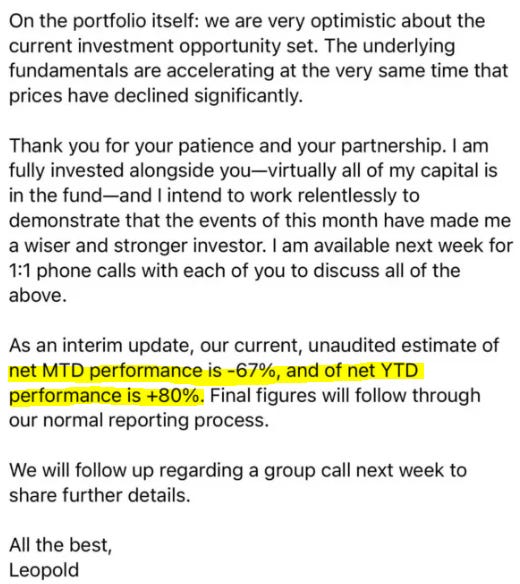
SMH 0.00%↑, the large cap semiconductor index is up 50.1% YTD and my psychotic trading account (typically 150-190% gross and net (I dont short other than for fun)) is up 56.8%.
So SALP still outperforming me YTD. But the thing is, I now have over-paid taxes with all these short term losses. It is unclear what the tax implications SALP have to deal with due to castration via Citadel are.
Let’s talk about how much liquid assets they have. My sense is not much and there is a very specific reason for this suspicion.
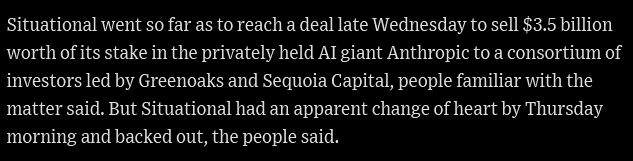
The AGI cultist family office was thinking about selling some Anthropic shares (blasphemy! Future Claude ASI will look down upon this decision) and changed their mind. The only reason you would want to sell some private stuff to get $3.B in cash is to keep more public stocks. This shows you there was some internal conflict between SALP employees who wanted to have more capital to re-build the public portfolio and AGI cultist LPs who offload all their critical thinking to Claude, because they had none to begin with.
I want to try some creative writing for fun.
Our story begins last week, around Wednesday July 22nd. There are (weak) rumors that SALP is in trouble. Maybe even asking LPs for more capital to meet margin calls. Not that bad. Market looks sick, as if someone big is vomiting blood and taking the rest of us with them.
Over the weekend, there was speculation that if Leopold is in trouble, Kioxia would shit itself violently on Monday July 27.
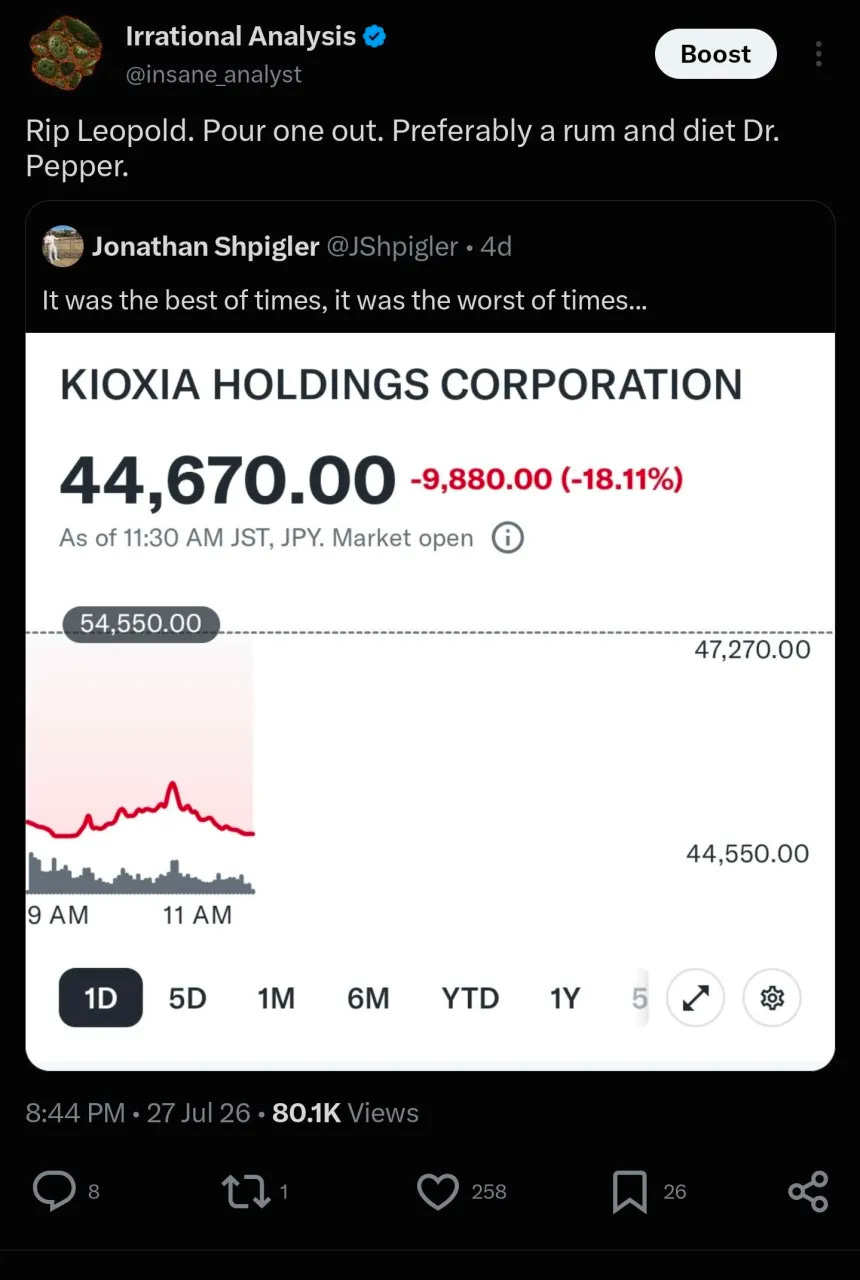
Kioxia indeed violently shits itself.
The entire hedge fund community knew that SALP had massive Kioxia and SK Hynix positions. It is unclear if SALP owned shares or total return swaps, or some other leveraged thing. Only the SALP and the prime brokers who vaporized SALP know what glorious bespoke financial instruments were needed to create this entertainment value.
I know Leopold is German but would love to see one of those DNA tests. He might be ethnically 10% Korean or something.
The next day is Tuesday July 28th and both Bloom Energy and SK Hynix are up for earnings. Once again, these are two names everyone knew SALP was massively long.
Bloom has a blowout earnings. Best earnings call ever. Hyper omega bullish. And yet, the pop got faded after hours as SH Hynix started to violently convulse from a bad miss.
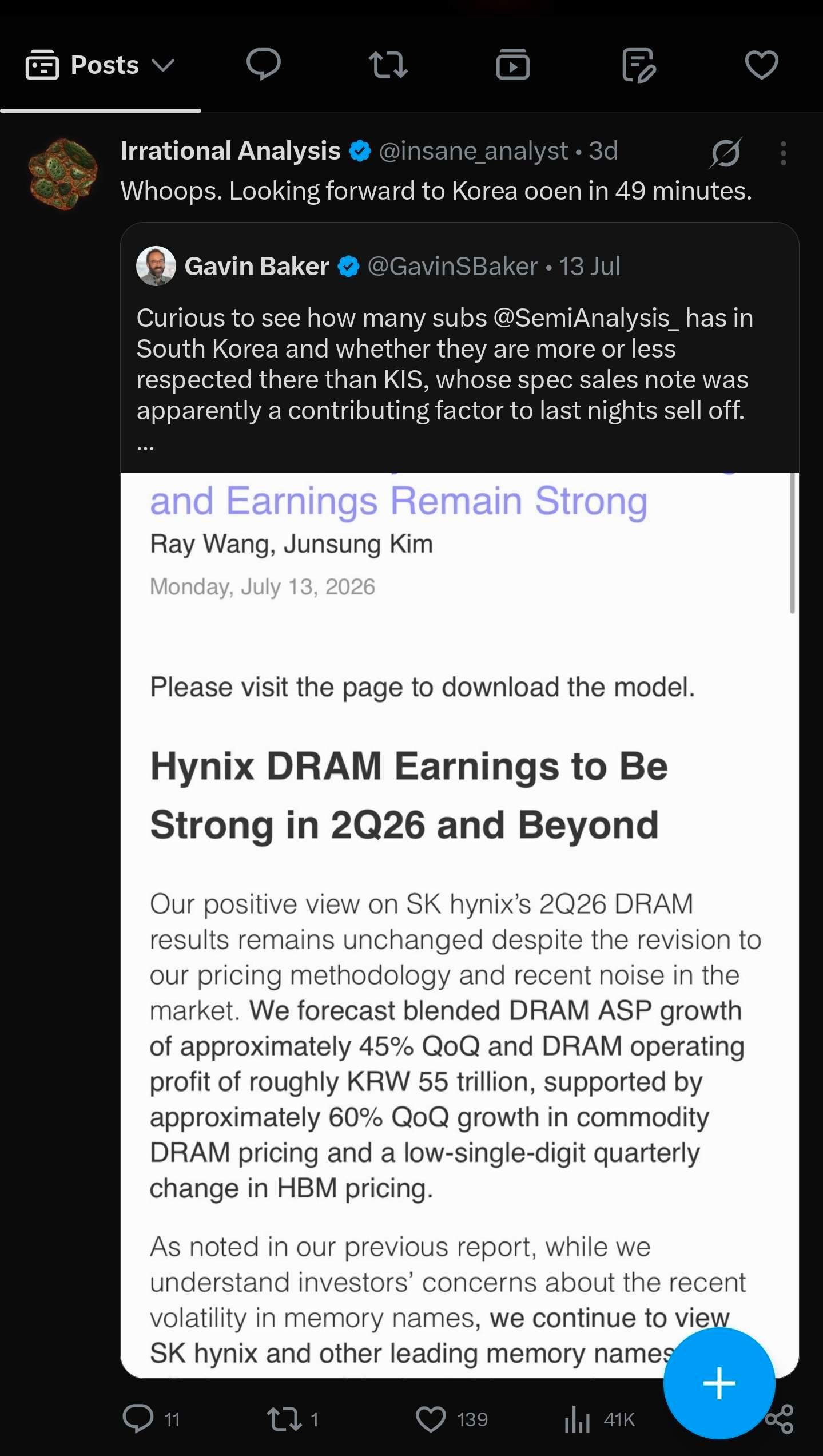
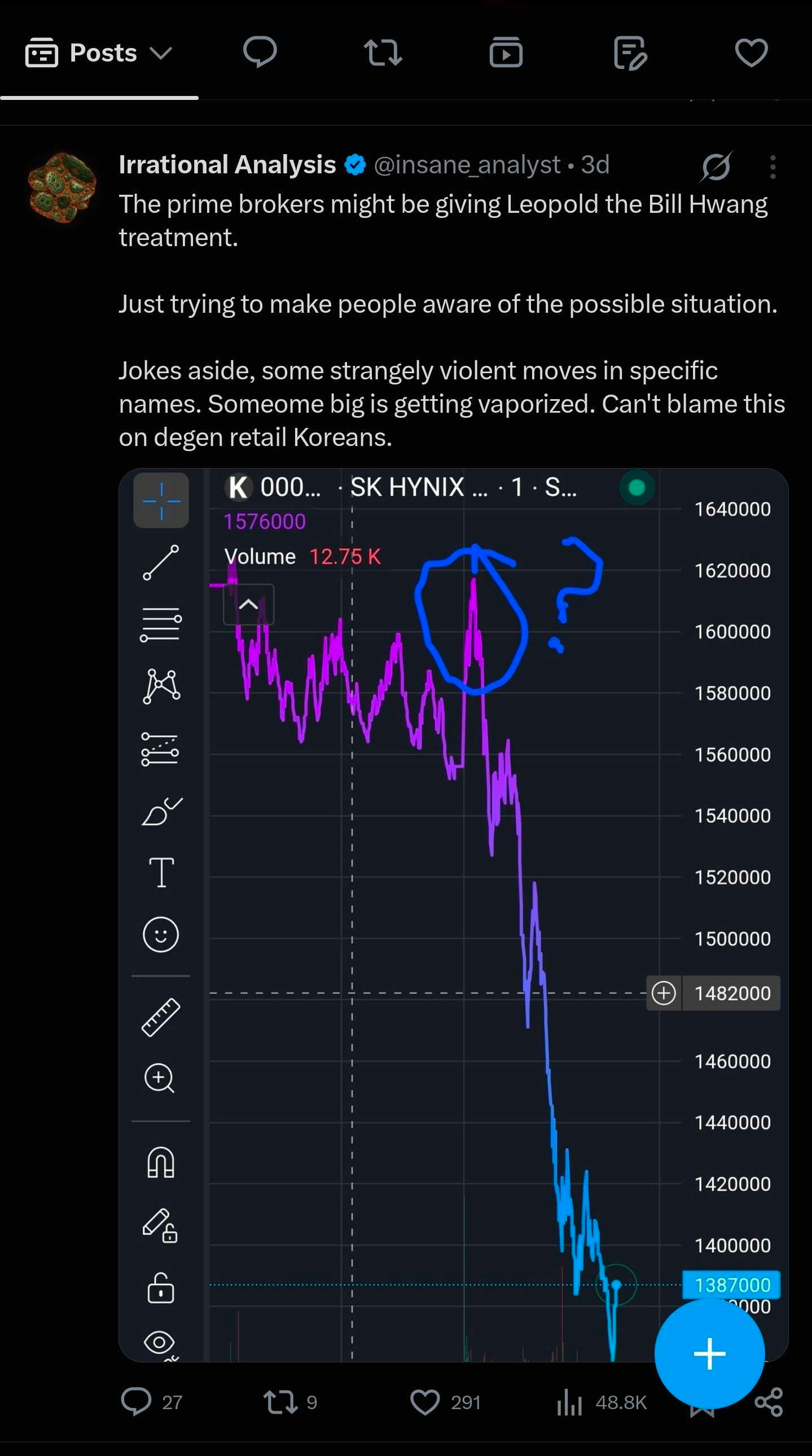
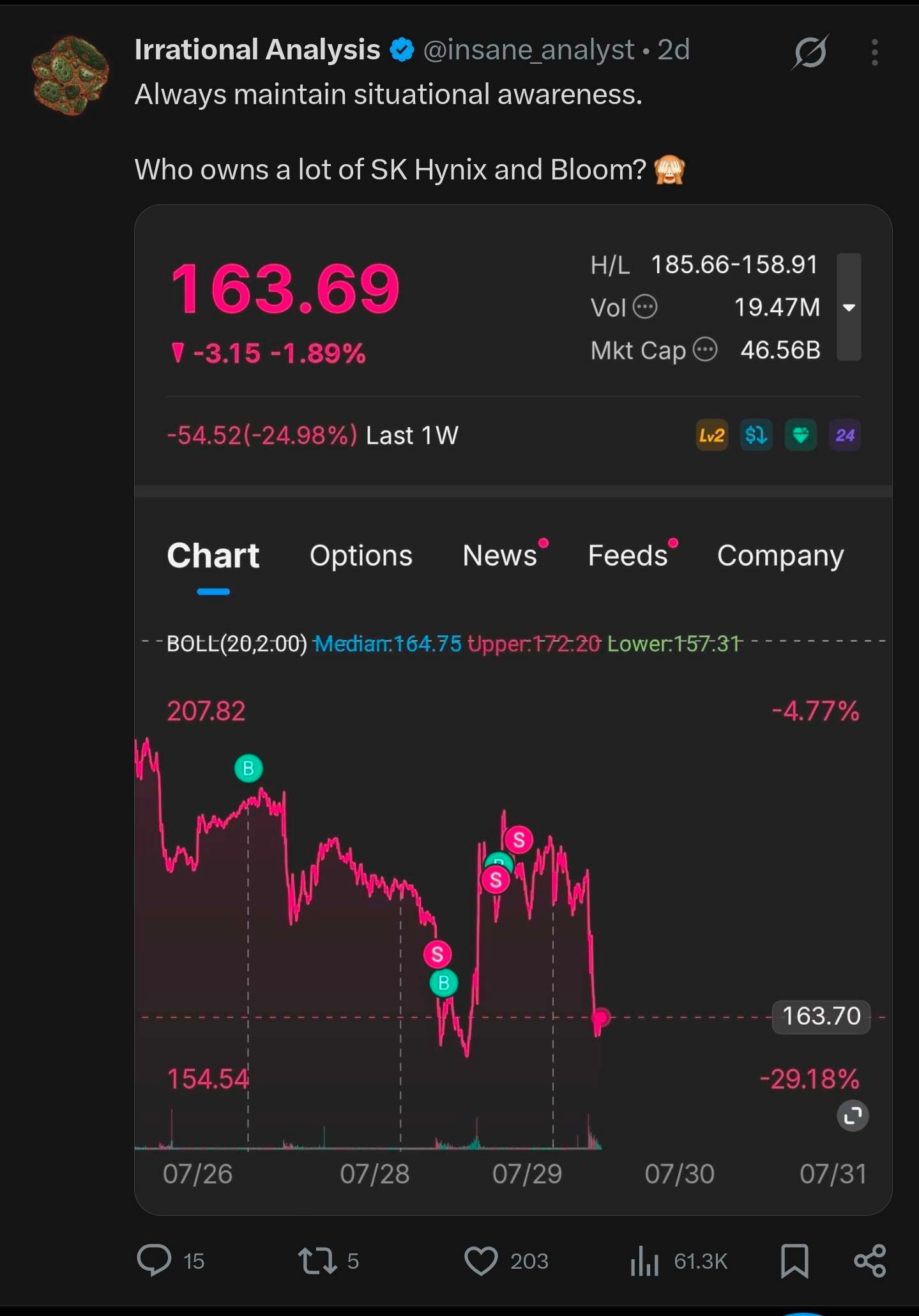
Made like $40K day-trading Bloom correctly. Usually I am an idiot and hold into the down-cycle but the moment I saw weakness in SK Hynix, I knew SALP was gona start selling more Bloom.
The next day (Wed July 29) it becomes increasingly obvious that SALP is in deep shit. During the day, there are (bullshit) claims of how everything is fine and they are unwinding in a orderly way. By the evening, the chatter gets meaningfully worse. And then the FT article comes at like 9 PM. It is at that moment I realize that SALP is probably dead.
12 hours later, Faber from CNBC comes forth with better info.
https://www.cnbc.com/2026/07/30/leopold-aschenbrenners-hedge-fund-is-facing-steep-ai-losses.html
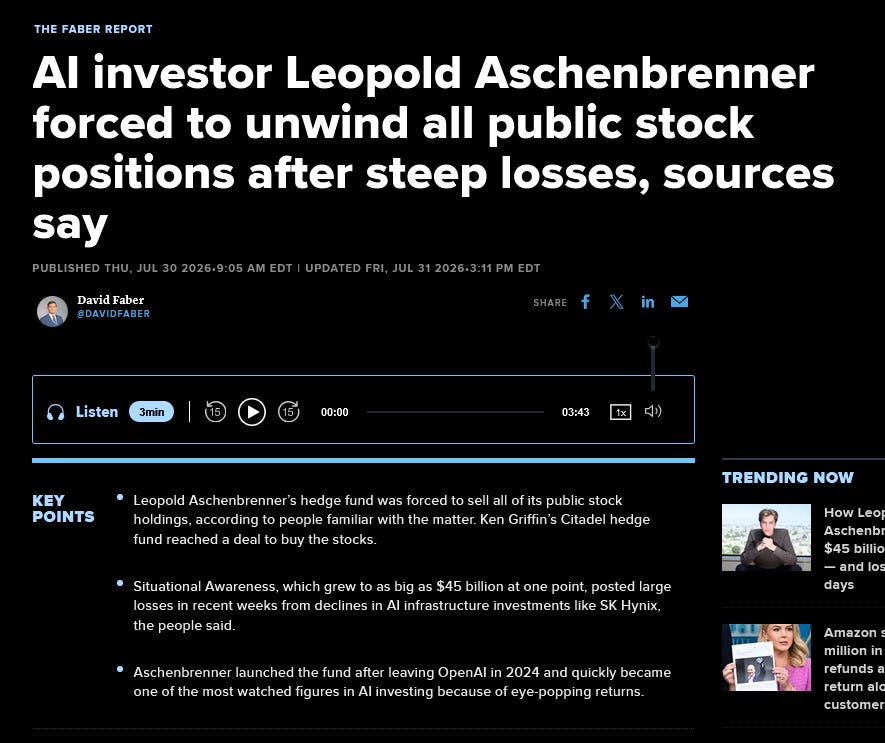
WSJ corroborates a few hours later, only disputing the “all public positions” part.

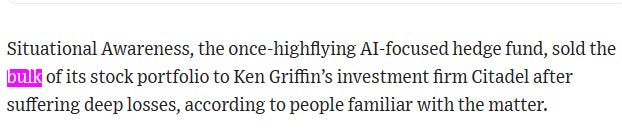
The funny thing is, you could see the seppuku in real-time as Faber published.
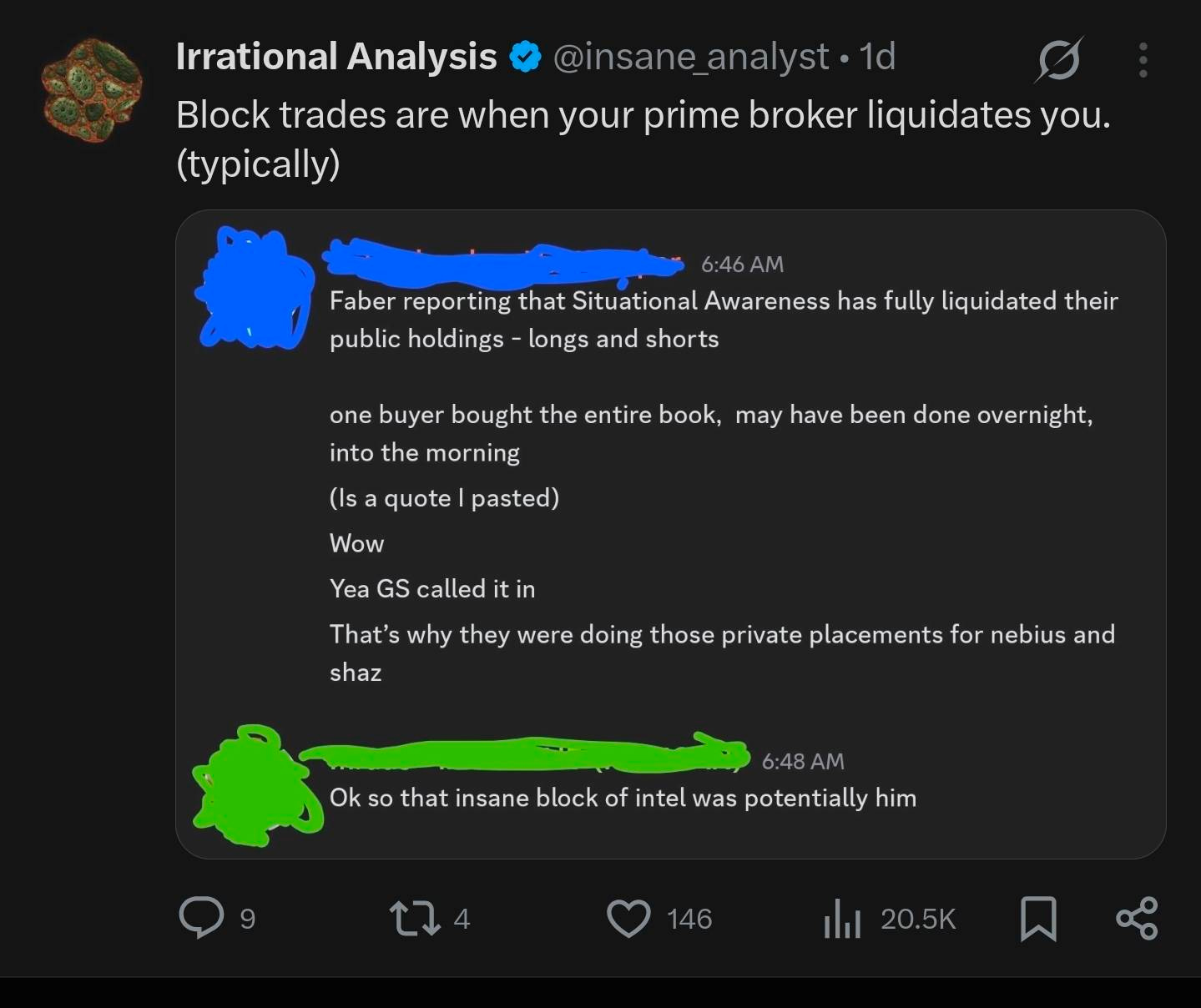
Wednesday was by far the most fun part of this saga.
And so here we are. Thursday and Friday get skipped because it’s mostly AGI cultist cope.
But let it be known that Leopold was right and a good stock picker, just a little too delusional.
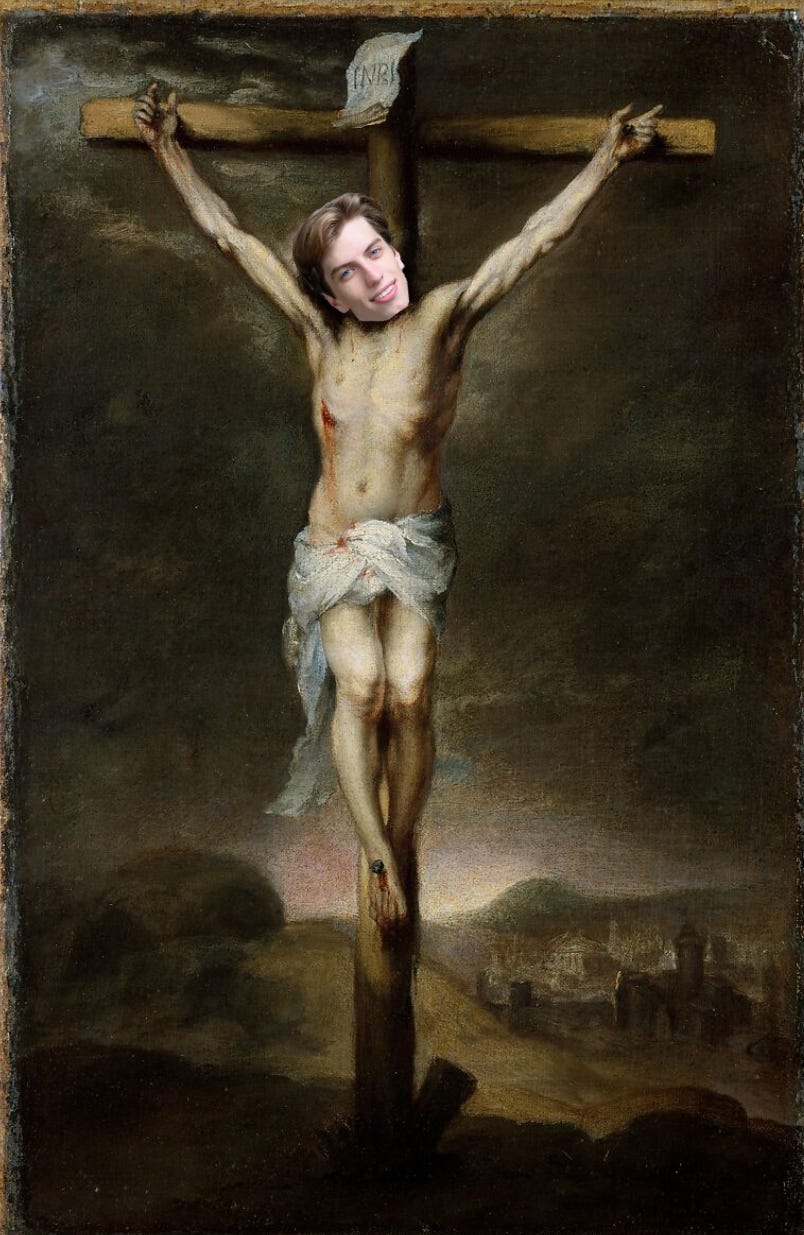
Looking forward to SALP resurrection.
The market was frankly confused last week. Yes, drawdowns happen but this was bubble-pop level of violence and we definitely have a lot more bubble to go.
Early this week, people in the know (me included) knew that someone big (SALP probably) was getting vaporized. Thursday was violent green day because everyone found out the coast is clear and SALP self-immolation had finished. Friday was also up but there was a fade due to Iran war fears. I personally de-levered a bit after hours.
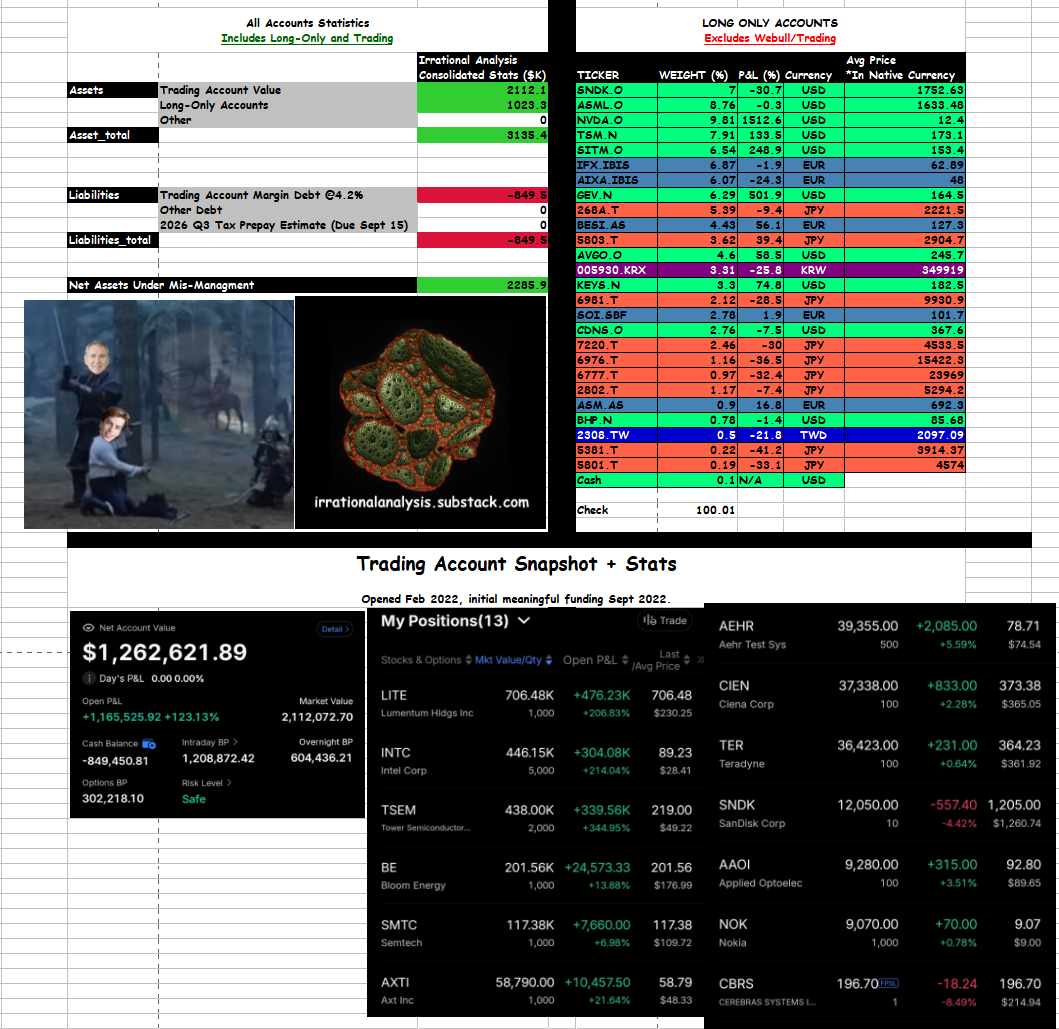
CSV of trading records YTD here.
Presently trying to re-build my trading account. Things are very fluid.
Lumentum, Intel, Tower remain ultra-core positions.
Bloom and Semtech are core positions. Unsure on what sizing I want to do but going to try and keep this unless something crazy (again…) happens.
Everything else I am clueless on sizing so dont take seriously.
AXTI is a giga-long. if you look at the chart, it started to collapse a month or two earlier than everything else. This is because China banned total return swaps and a bunch of Chinese and Hong-Kong institutions became mini-Lepolds.
AEHR very interesting high beta. Their most recent earnings and guide were a smash hit. I think it still has legs but this ticker is really violent.
Like both Ciena and Nokia but same reasons (long haul optics) but can’t decide which one better or sizing.
AAOI has lot of torque (USA based transceivers) but same problem as Aehr. Violent shit.
And finally we have my one share of Cerebras for the activist campaign. Learned some interesting things about Cerebras and they deserve better coverage in a dedicated post. Also it’s 3 AM and im hungry so wana finish this and go cook.
Free-cashflow from my dayjob goes into the long-only accounts and I am still happy with everything except Samsung. Wana buy a lot more.
Leopold preferred SK Hynix but I like Samsung more for DRAM. Really betting on synergy of internal foundry + design team to co-design HBM base die better than SK Hynix.
No posts
Comments
Nothing yet. Say the first thing.
Sign in to join the conversation.