
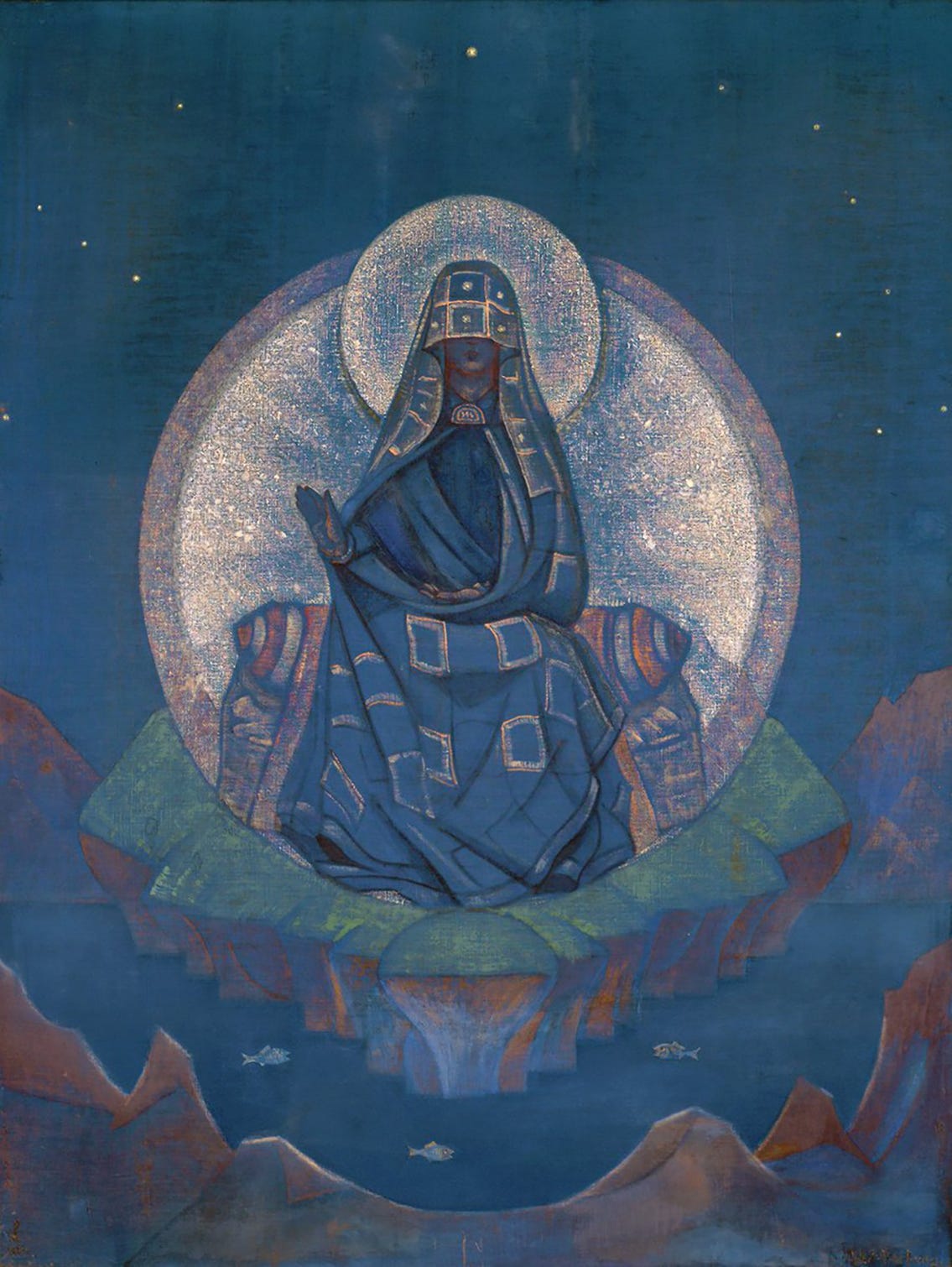
Since coming forward as a UAP whistleblower for the U.S. Congress, I’ve been surprised to find that one of the questions I’m asked most often is for book recommendations — especially books that deal with “the Phenomenon.” For any true bibliophile, this is both an honor and a trial. What do they already know? How fast do they read? What questions are they really trying to answer? Do they seek knowledge, or wisdom? All of this runs through the mind and ties the tongue. Yet for those willing to indulge in a moment of patience, a good answer is always possible… just be prepared to take notes.
Part of the peril in recommending a book is that most people are, if we’re being honest, seeking easy answers: books that “solve” problems, affirm prior beliefs, and present conclusions with confidence and finality. You will find many such offerings stacked on pallets at the entrance to Costco or prominently displayed on the New York Times bestseller list. But those seeking true knowledge, and especially wisdom, quickly depart from these intellectual wastelands.
This is doubly true in fields of inquiry that unsettle institutional authority, the tyranny of degrees, and the brittle orthodoxies of the present age. For the genuine Seeker, the quest for Truth demands a long journey through disparate traditions, obscure texts, and seemingly disconnected domains of study. To those wandering: take heart and do not despair, it has ever been so. The pursuit of Knowledge is ceaseless and unending, but the light of Wisdom is real, and She illuminates the paths of all who seek Her.
To aid those who seek to discover, learn, integrate, and grow, I humbly offer the following reading recommendations for 2026. You will not find anything revealing the “truth” about UFOs, Aliens, or Disclosure (well… perhaps one or two). What you will find instead are explorations of humanity’s relationship to the unknown — within and without — and our long struggle across time and space to wrest meaning from matter. Because uncertainty is certain, and today’s absolute truths are tomorrow’s obvious lies, this list leans heavily on works of fiction and history that have endured at least some test of time. The attentive reader will notice that many paths to knowing are illuminated, and many common pitfalls exposed.
These works are grouped thematically, and within each category arranged in a suggested reading order. While optional, following this sequence will help reveal hidden connections, build symbolic libraries, and plant the seeds for future revelations. Taken together, these works expand the horizons of possibility regarding human potential, non-human life, and deeper mysteries. This list is written with “anyone” in mind: newcomers to frontier studies, those returning after a time away, and, especially, those who already have “it” all figured out.
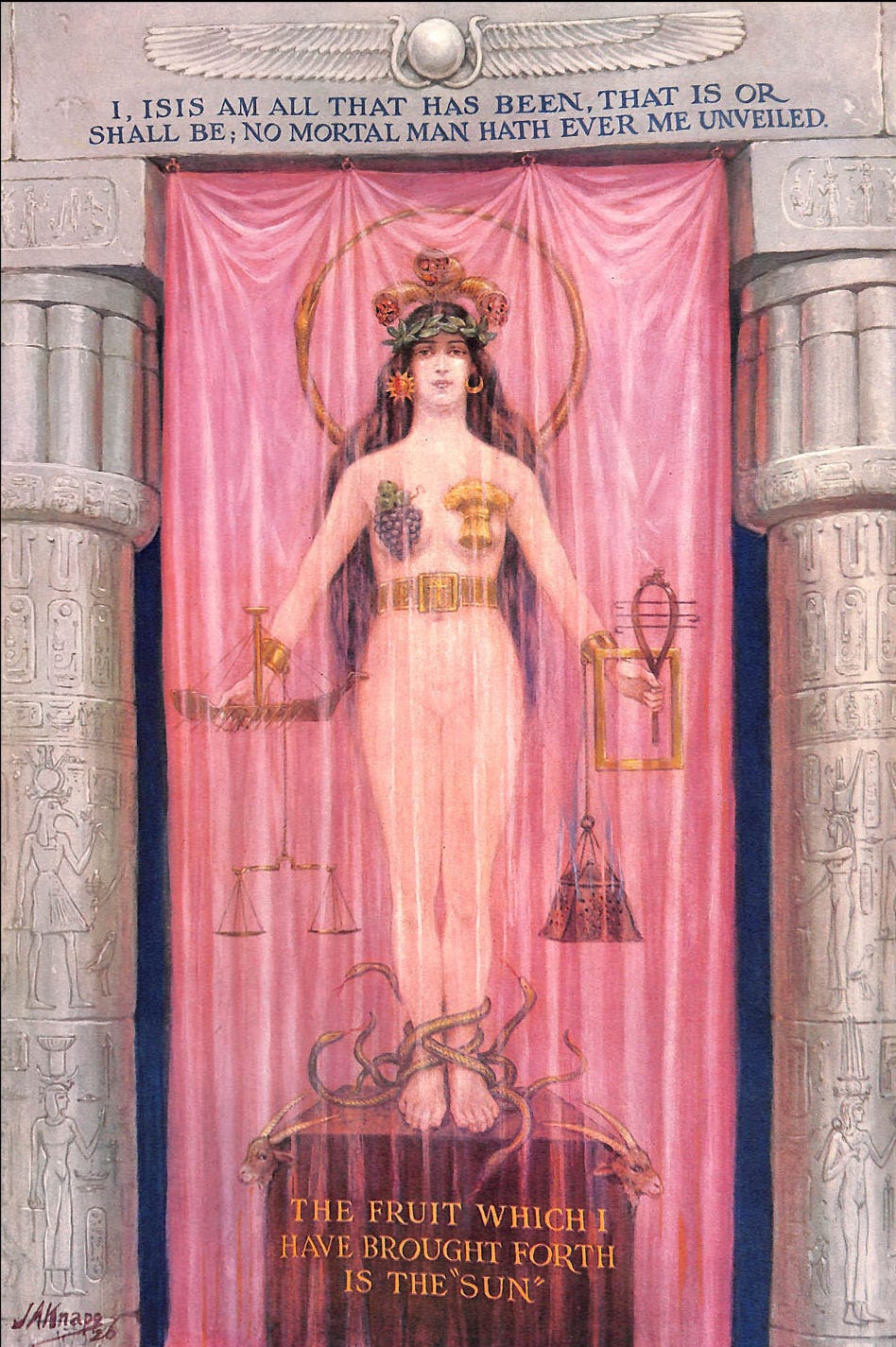
Apocalypse (Apokálypsis) does not mean “the end of the world”, as most Seekers know, it means unveiling. Each of these works turns on a revelation so immense that the human mind must reconfigure itself to survive it: contact with the truly alien, the rise of new modes of being, abrupt confrontations with cosmic hierarchy, and the relentless drums of war. Change brings struggle, but this is inevitable — and survival requires that we struggle.
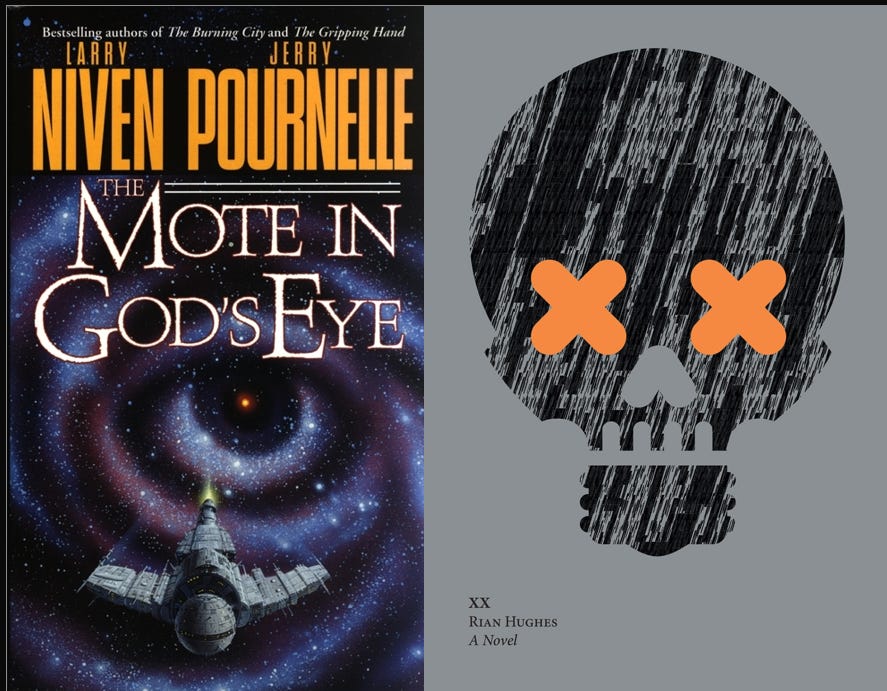
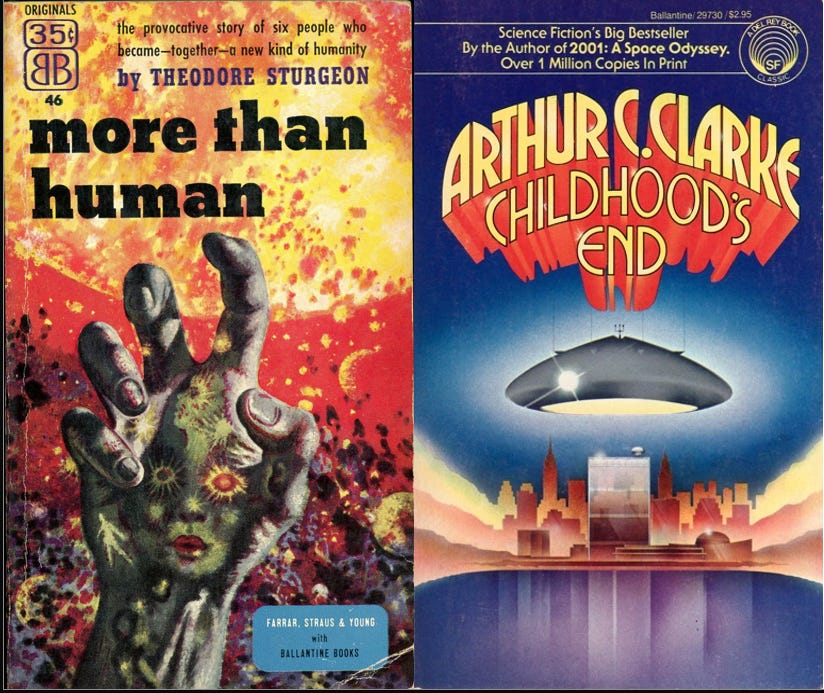
Our first unveiling is the gold standard of first contact science-fiction, The Mote in God’s Eye by Larry Niven and Jerry Pournelle. This is paired with and followed by XX whose author, Rian Hughes, brings first contact literature into the Information Age. Theodore Sturgeon’s classic, More Than Human begins our second pairing – which explores human potentials and their consequences. The metaphysical consequences of human evolution are realized in Arthur C. Clarke’s timeless science-fiction novel, Childhood’s End.
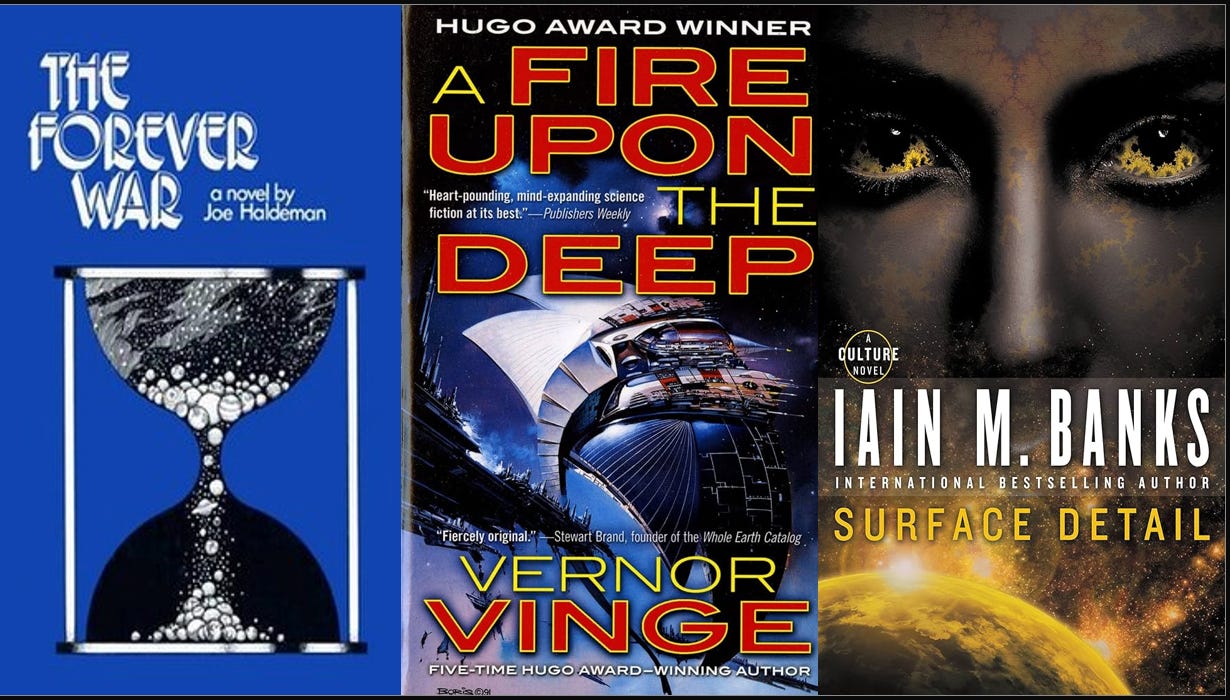
From here we move to a thematic trilogy of books that explore the individual and civilizational consequences of epochal cycles and technologies that warp reality itself: The Forever War by Joe Haldeman, and, A Fire Upon the Deep by Vernor Vinge. Last is Iain M. Banks’ Surface Detail, whose story of a civilization imprisoned in virtual hell – and the forces of good seeking to free them – explores ancient Gnostic themes through a modern science-fiction lens.
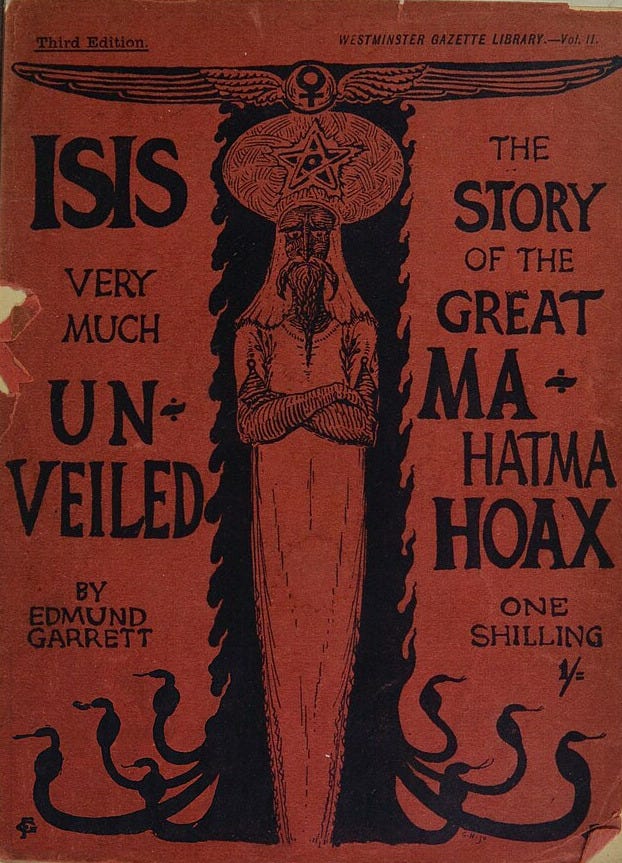
Dystopian fiction is not prophecy, though it may occasionally come close. Each of these works examines different failures of civilization: ideological capture, authoritarian drift, spiritual perversion, greed, and the perpetual temptation to surrender true freedom for false order. Together, they teach us to recognize subtle dangers before they metastasize into systemic corruption.
One thing unites these otherwise disparate-seeming tales: sex. More specifically, the strategic manipulation of the human sexual impulse to control the individual, the masses, and the fate of a civilization. Through artificial abundance, enforced scarcity, or total control, the generative act is twisted, disciplined, weaponized and made servant to the State — the surest sign of authoritarianism’s looming victory.
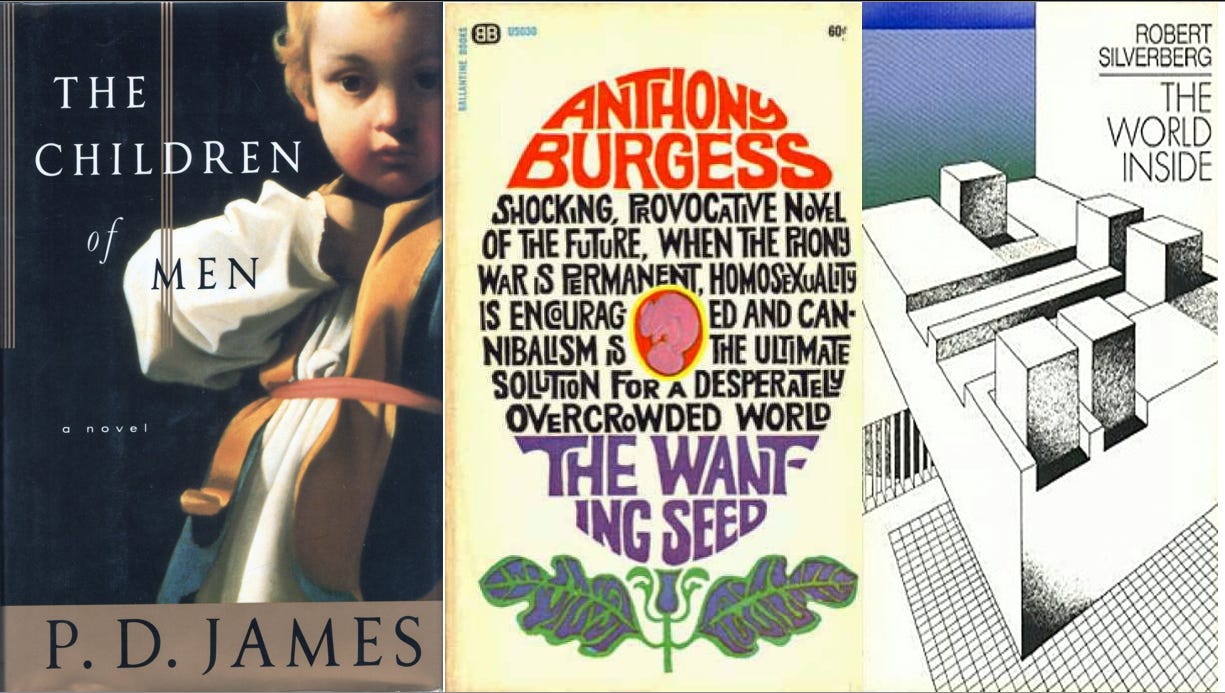
Our first work, The Children of Men by P. D. James, imagines the final scarcity: a world without fertility. What remains is a civilization sinking under its own despair while the State tightens its grip to fill the void. In contrast, The Wanting Seed and The World Inside depict the opposite conditions: artificial abundance and ritualized excess. By the end the warning becomes clear — whether through removal, rationing, or forced participation, State regulation of the generative act is the final nail in the coffin of a people’s freedom.
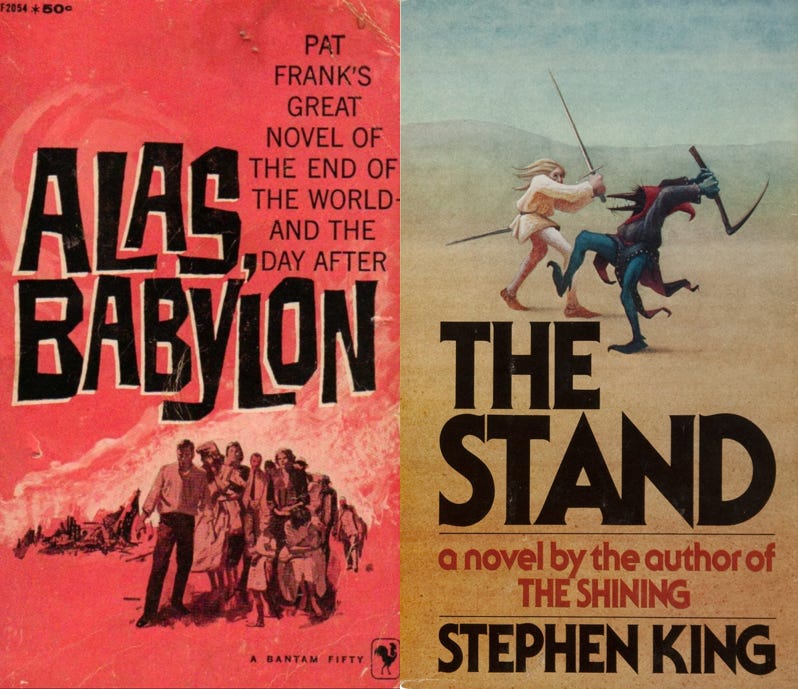
Lest we fall prey to myopia, the next sequence reminds us that the individual is capable of transgressions equal to the State — and sometimes more so. In both Pat Frank’s Alas, Babylon and Stephen King’s The Stand, civilization collapses completely, forcing humanity to confront its darker instincts and its persistent sexual rivalries without the guardrails of “polite” society. By each story’s end we are left with a stark lesson: catastrophe does not erase human nature – it distills it.
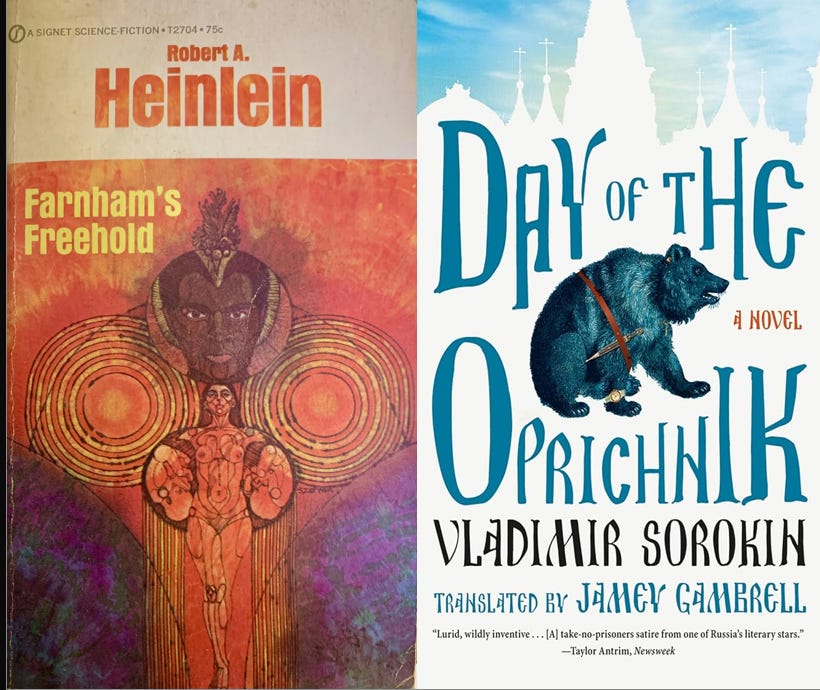
Our final two novels descend further into the consequences of blind obedience to carnal desire — Vladimir Sorokin’s Day of the Oprichnik and Robert Heinlein’s Farnham’s Freehold. Challenging, controversial, and occasionally vile, these books expose the extremes of human behavior that emerge when sex is devalued, power is worshiped, and fear rules all. Products of their time, in many ways these books tell us more about the preoccupations of their authors than their dystopias — reminding us that sometimes the lesson from a story isn’t always written on its pages.
Taken together, these seven works demonstrate that human sovereignty — over body, mind, and soul — is non-negotiable. Cede an inch, and the adversary will take everything. Yet these tales also carry a more hopeful message; that in the end our lives are defined by our choices, not our circumstances.
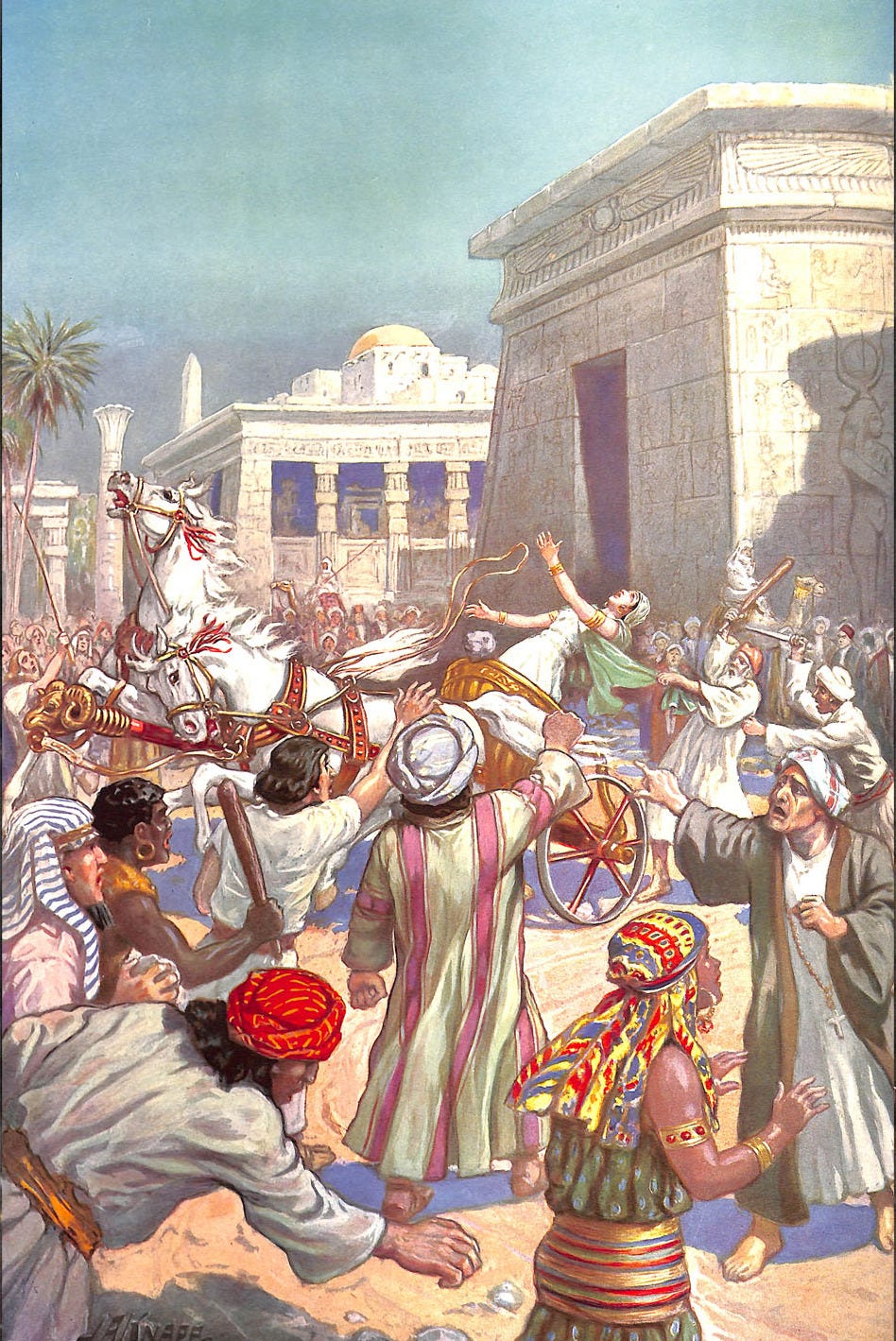
Beneath the soulless propaganda that passes for the history of science as taught to the public, lies an occult root indivisible from the scientific project itself. These books uncover the hidden intellectual lineages that form the true foundation of modern thought and scientific progress. Hermetic philosophy, secret societies, suppressed inquiries, mystical ascents, and the quest for the Prisca Theologia — the primordial wisdom from before the Flood — are the real origins of the White Tower, not the rote memorization, ancestor worship, and navel-gazing pedagogy of today’s pretenders. And when Reason is severed from Wisdom, the results are catastrophic, as the final three works in this category make painfully clear.
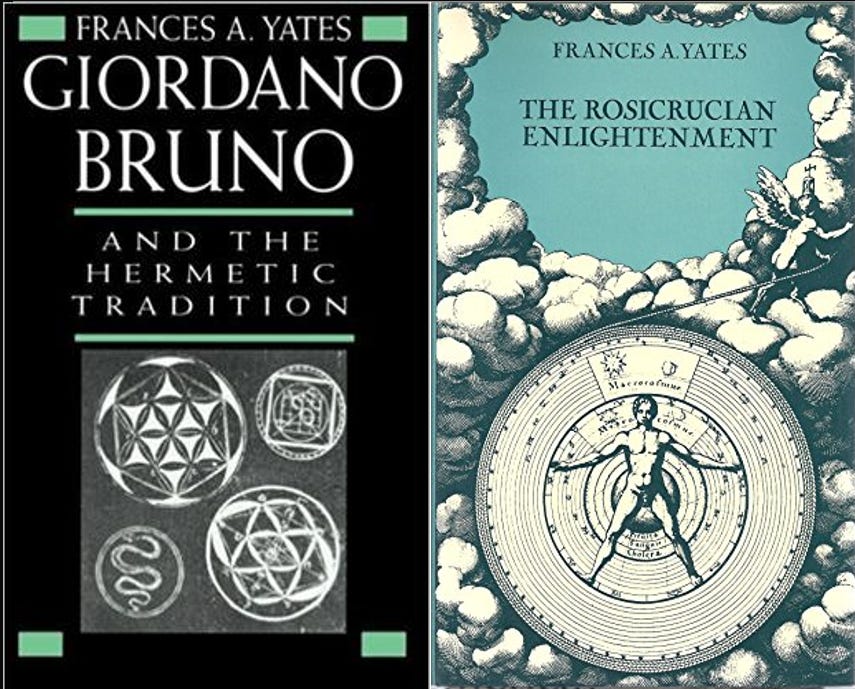
In truth, this list could be several times longer, but we will restrain ourselves for the time being; there is always room for return and expansion. For now, we cut through centuries of lightless commentary and sterile critique to find the mercurial fount from which the Art that we now call Science first supped. Dame Frances Yates lights our way with her two essential histories of natural philosophy during the Renaissance and the early Enlightenment. Giordano Bruno and the Hermetic Tradition provides the foundation for all that follows, gently guiding the reader into the deeper waters of humanity’s intellectual inheritance. The Rosicrucian Enlightenment continues the saga of Wisdom’s reemergence in the West and introduces the namesake of the now-famous “Invisible College.”
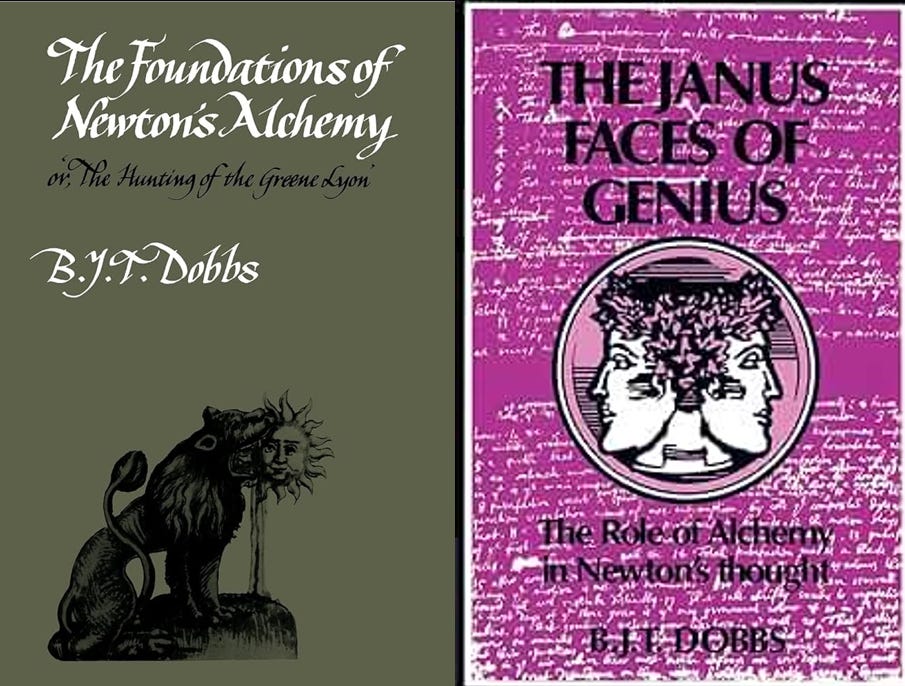
Next, we cross the Atlantic to consult two works by Betty Jo Teeter Dobbs, who carried forward the torch Yates lit. Transgressive in their time, and quietly suppressed, Dobbs’ landmark studies establish beyond any reasonable doubt the central role that metaphysical speculation and mystical contact played in shaping the thought of Isaac Newton.

Our final three books: Blowback by Christopher Simpson, Factories of Death by Sheldon H. Harris, and Biohazard by Kanatzhan Baizakovich Alibekov — form a trilogy of doom. Together they explore, in horrific detail, what becomes of science when its practitioners abandon the light of Wisdom, suppress their conscience, and surrender the Art to kings. These books exist as stark warnings of how quickly science can be inverted into monstrous creation.
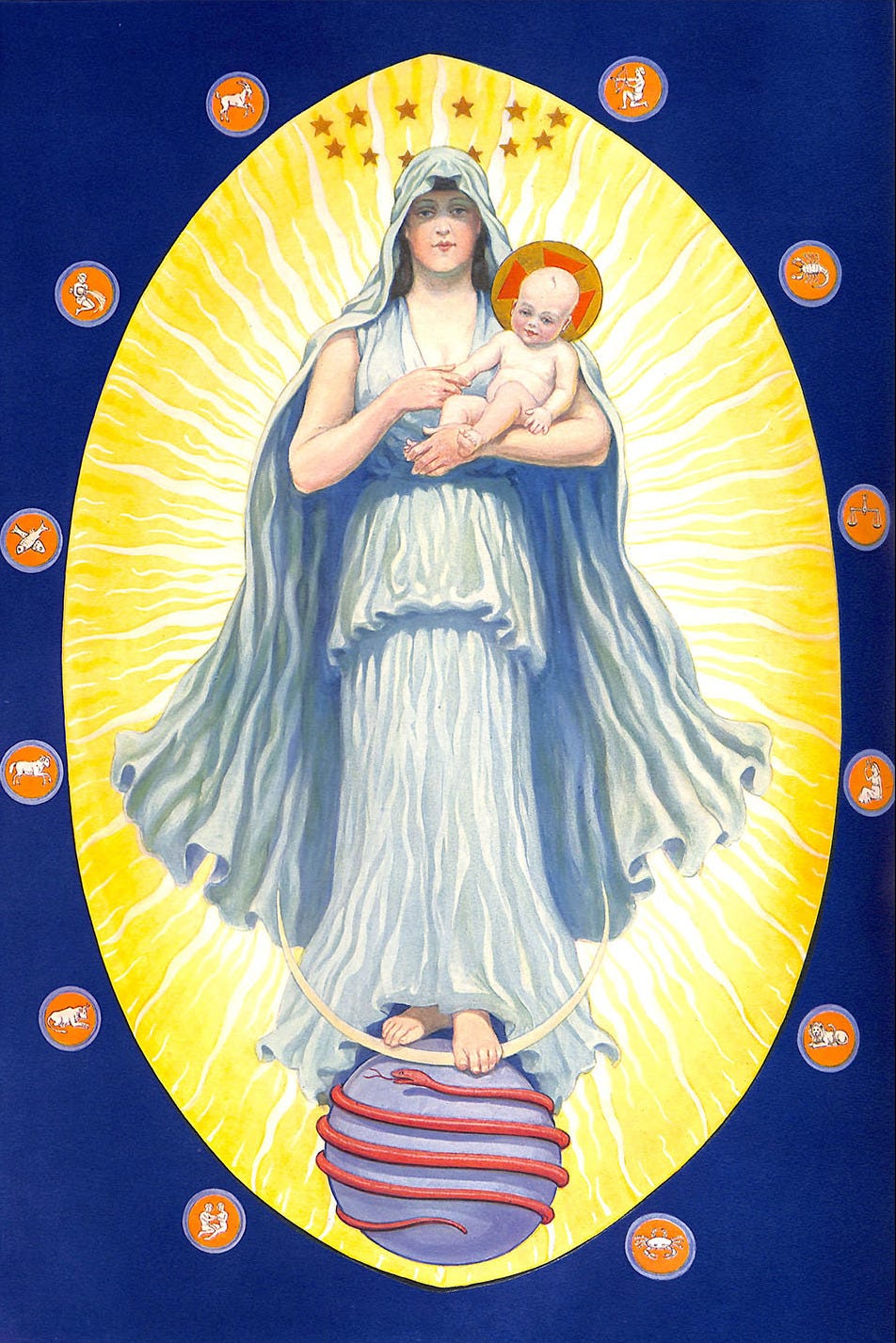
Having traced how science loses its way when severed from Wisdom, we now turn to reclaim those sources where Her memory is preserved; works that do not instruct so much as transform. Some books are alive, and of these, a special few will change their reader forever. In earlier ages, these texts might have been chained with iron to library shelves, guarded not from theft but out of caution. Open these, and enter new chambers in the palace of the Mind.
Of these works we will say little; with books like these the journey is the destination. Still, every seeker benefits from a compass, so we will cover the essential facts of these seven ageless treasures.
We begin with a slim yet astonishingly rich Tibetan commentary on the Prajnaparamita (The Heart of the Perfection of Wisdom, or “Heart Sutra”). Translated by Khenpo Tsewang Dongyal Rinpoche, the light within Ceaseless Echoes of the Great Silence shines brilliantly — despite the best efforts of the Chinese Communist Party to extinguish it. Equally impressive in their transmission across millennia, though preserved in a more fragmentary state, are the once-famed Chaldean Oracles, authoritatively compiled and translated by Ruth Majercik.
The blessings of brevity remain with us in our third text, the thrice-great Corpus Hermeticum. Synthesized and translated into English by Brian Copenhaver, these ancient writings form one of the essential springs from which western esotericism flows. We then return to the wisdom of the Buddha with the Dhammapada (“Path of Virtue”), translated from the original Pali by Eknath Easwaran. Long known to those who travel East, the Dhammapada offers a map of the inner world — showing how mastery of the mind transforms fate, dissolves illusion, and makes space for quiet revelation.
Our fifth work stands apart — not only for its length but for its syncretic power. Ovid’s Metamorphoses shows how metaphysical truths become visible in Nature, expressed through the language of Roman myth. Often encountered through Arthur Golding’s essential Elizabethan translation, Metamorphoses continues to delight while revealing eternal secrets. Following these dramas — both earthly and cosmic — is a book that is not a book: the Nag Hammadi Scriptures. What the Dead Sea scrolls are to ancient Judaism, the Nag Hammadi library is to ancient Christianity — an essential collection whose visionary, symbolic, and startlingly mystical teachings restore primordial vitality to an oft abused Tradition.
Finally, we arrive at a work that is both culmination and crucible: John Dee’s Monas Hieroglyphica. Deceptively brief yet endlessly revisitable, the Hieroglyphic Monad encodes a lifetime of revelation into a single symbol. To approach it is to learn that true Wisdom is not acquired but experienced. Thus, we end at the beginning, with the circumpunct echoing the principles of a great silence.
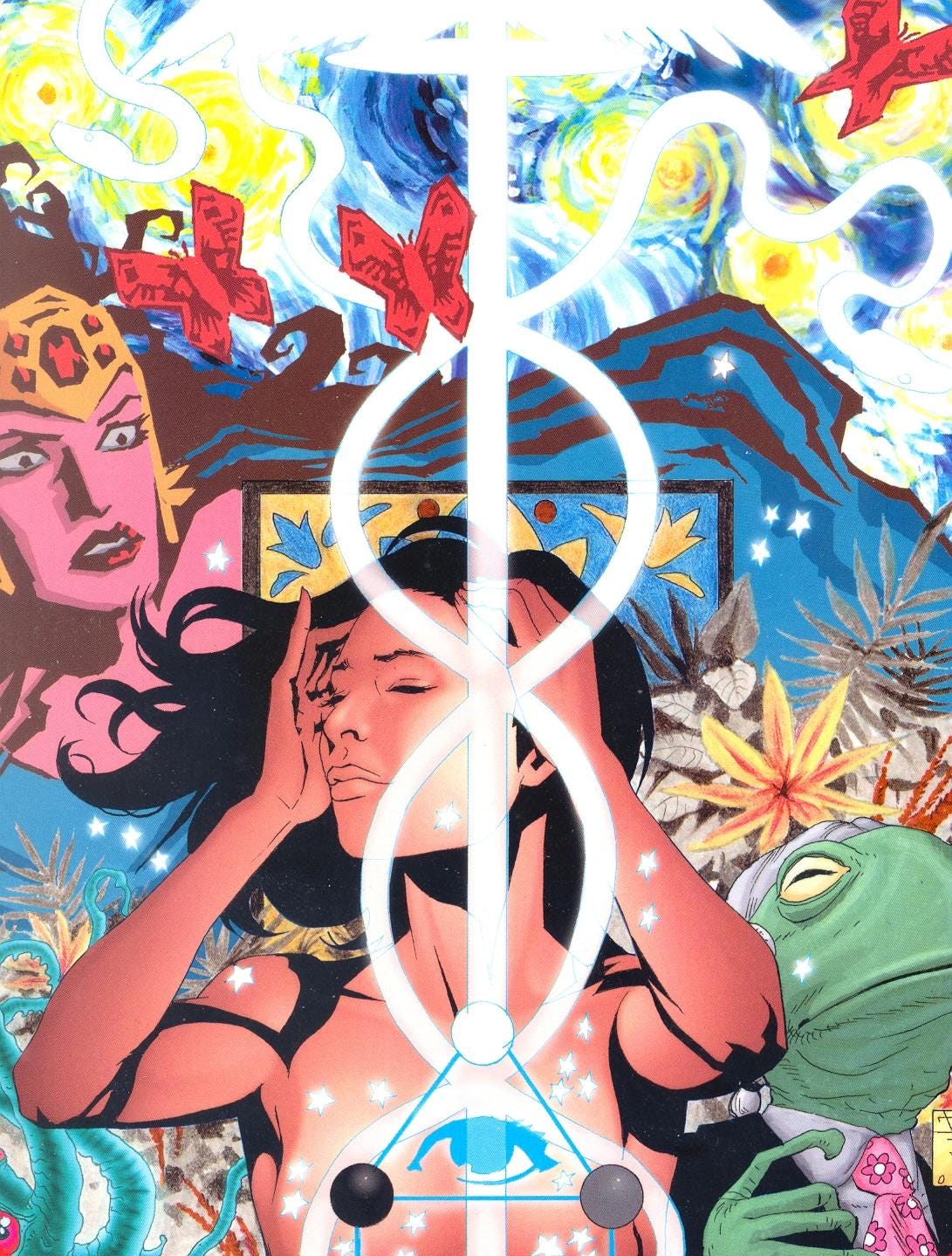
Symbols transcend language and speak directly to the Mind. The Artist arranges them into infinite patterns that can titillate, disturb, or initiate – sometimes all three at once. The best of these works dazzle the eye and pierce the heart. Those selected here function as initiatory texts in their own right, blending myth and magic, history and horror, and the metaphysical with the mundane. And yes — Disclosure is sprinkled throughout.
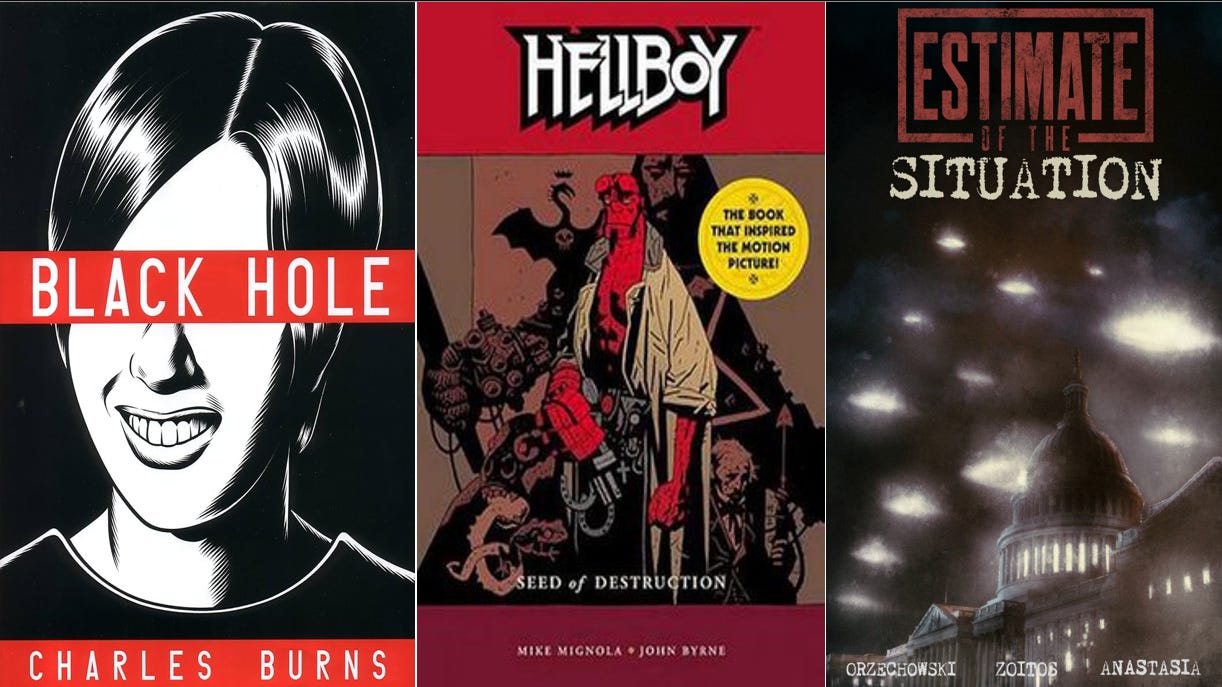
We begin with two works that explore encounters with malevolent or indifferent intelligences: Charles Burns’ Black Hole, a body-horror parable of unwanted transformations, and Mike Mignola’s Hellboy: Seed of Destruction, which draws on occult history to portray ancient non-human forces meddling in human affairs. Taken together, they attune the reader to the darker perils of the ineffable. From here, we cross the boundary from myth and into history with Estimate of the Situation — an ongoing comic series that deserving support for its ambitious attempt to weave folklore, aerospace secrecy, and suppressed science into a unified narrative for the cause of Disclosure.
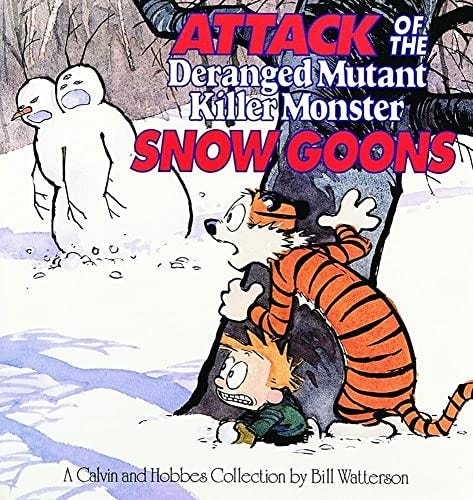
Interrupting this journey is some welcome relief from the bleakness, Attack of the Deranged Mutant Killer Monster Snow Goons, by Bill Watterson. This winter-themed Calvin & Hobbes collection remind us to tend to our inner child, preserve our curiosity, and find humor even in dark times…and to always keep an eye out for the Abominable Snowman
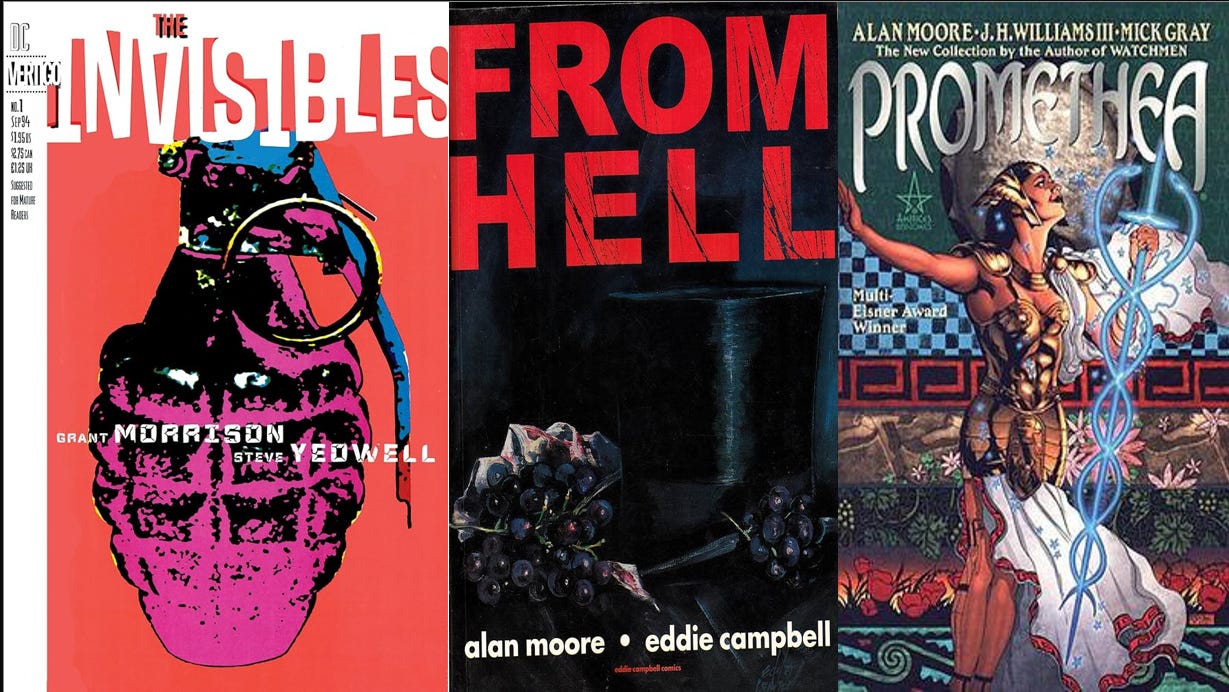
The final triad forms its own initiatory sequence. Grant Morrison’s The Invisibles knocks down the door with a hedonistic countercultural initiation into a world where magic, conspiracy, and metaphysics collide. Alan Moore’s From Hell follows as the descent — an uncompromising confrontation with violence, prophecy, and the shadows of our good intent. Then, Moore returns in Promethea to complete the arc with an ascent through the symbolic universe, and a formal induction into the magical worldview, presented with rare beauty and skill. Taken together, these seven works teach that gnosis comes in many forms — terrifying, playful, revelatory — and that the border between fiction and our world is far more porous than we pretend.
This reading list is not a curriculum but an invitation to explore the wider field of inquiry surrounding “the Phenomenon” and the deeper mysteries of the human experience. These works do not always agree with one another, nor should they; but taken together, they open new frontiers that emerge only through contrast, tension, and exploration. Engaging with these texts will help to sharpen our discernment, widen our symbolic vocabularies, and strengthen the inner faculties required to fight for our future. The challenges are many, the unknown is not empty, and humanity is fallible – but Wisdom still speaks in silence.
Comments
Nothing yet. Say the first thing.
Sign in to join the conversation.