
“Do you want to stay in the room? The priest is coming by to do a blessing.” I nodded my head as I fought back tears and stepped back into the corner of the hospital room. I had come into work on my day off from pediatrics residency to see my patient Catrina before she passed away.
Catrina was a lively Latina teenager who had been battling leukemia for the past five years. I had been lucky to get to know her and her family during my time in the oncology unit and reconnected with them again during my time in the pediatric intensive care unit. She had come in unexpectedly overnight in a coma after experiencing a seizure and remained in a coma. Her family knew that her prognosis was very dire; however, nothing prepared them for this moment of standing by her bedside, unsure if she would wake up again.
That morning, her family requested for a Catholic priest to come by to offer support and prayers for Catrina. By the time I arrived, her family was preparing for this religious ceremony and asked me to stay. I stood in the back of the room, holding the hand of one of Catrina’s aunts, listening to the priest offer blessings to Catrina. My chest tightened and the tears I held back slowly started falling down my cheeks. I was thankful for the opportunity to spend time at Catrina’s bedside outside of my usual constraints as a resident physician, and it also devastated me to see Catrina in this way, so unlike her usual cheerful self. I couldn’t help recounting our last conversation about her favorite television shows and books – it felt so long ago.
After the prayer, I walked out of the intensive care unit and went home, uncertain of what would happen in the coming hours. The next day, I returned to work and found out Catrina had passed away overnight. No one acknowledged the impact of her death or asked any of us how we were feeling. I continued work that day in a state of deep grief, wishing desperately for the ability to share the moment I had with her family, to have space to process my sadness. However, I didn’t want my feelings to affect the patients I had to care for that day – so I continued as if nothing had happened, even though I felt hollow inside.
Bearing witness to human suffering and death is a part of our job as healthcare workers and, ultimately, grief can be a common experience. It can present feelings of sorrow, heartache, confusion, anger and it is the normal response after a traumatic event or after losing someone we care for. The COVID-19 pandemic exacerbated this intensity of grief within the healthcare community; many are still reeling from the emotional effects of what they witnessed.
Throughout my medical training and my career as an attending pediatrician, there have been very few outlets to navigate my grief or to honor the patients I’ve cared for who have died. In the best-case scenario, we may have a gathering facilitated by a chaplain or palliative care team member – but often, it happens in the middle of the workday when we are tending to other patients. The vast majority of the time, there is little to no acknowledgment of patients who have passed. I often wonder if it is because the depth of what people feel is too immense to create a space that may elicit feelings of grief, anger, and sadness that have been dormant for years. It can be deeply vulnerable to sit with those feelings, especially if we expect one to return to work shortly afterward.
It remains a painful juxtaposition that the healthcare system is where so many families navigate grief, death, and dying, and yet so many healthcare workers feel ill-equipped to support families and each other through the process. More starkly, our healthcare system is poorly set up to help folks navigate the process with dignity and meaning. Within the healthcare roles I am in, there are almost no rituals in which to process loss or grief for patients, much less so in a community setting. The absence of ritual feels most dire when we experience a loss that is unexpected or feels deeply unfair (though perhaps all loss feels this way, to some extent).
In sharp contrast, many cultural and spiritual traditions have robust practices surrounding grief and death. Many of these practices can be specific to regions, communities, or even within families. In Hinduism, several pujas (religious ceremonies) are conducted around the time of death for a bereavement period of 13 days followed by a mourning period that lasts a year. Families may gather at one month, six months, and one year on the date of their loved one’s passing to do a puja in their honor, as a consistent way to honor the person they lost.
For me, this ritual acknowledges that grief grows and changes over time and the need for a community does not cease immediately after the person’s death – it remains essential for a community of loved ones to gather with intentionality, to acknowledge the life of the person who has passed away. In the Jewish tradition, some communities may follow the tradition of kriah to make a tear in their clothing as an outward symbol of the tear in their heart from grief, allowing for others in their community to recognize their loss. They wear it while sitting shiva, a time for spiritual and emotional healing from intense grief during the first week following the death of a loved one, which leads to a 30-day period and a yearlong period of decreasingly intense grieving.
These rituals around grief remind me of the importance of creating space to pause, to mourn, to feel anger, and loss. While we should never seek to center our grief over the grief of patients and their families, ensuring that healthcare workers have the space to acknowledge what they have witnessed, to honor the care and love they may feel for patients they have lost, is essential for reconnecting with our humanity and sustaining ourselves in this work. Healthcare institutions have an opportunity to learn from spiritual traditions that create formalized rituals for communities to acknowledge and grapple with their grief. These practices are not only meaningful, but they are necessary for a more humane healthcare system.
What rituals do you use to process your grief? We’d love to hear from you.
With gratitude,
Anu & Laura
Piece originally published in Interfaith America Magazine, March 2023

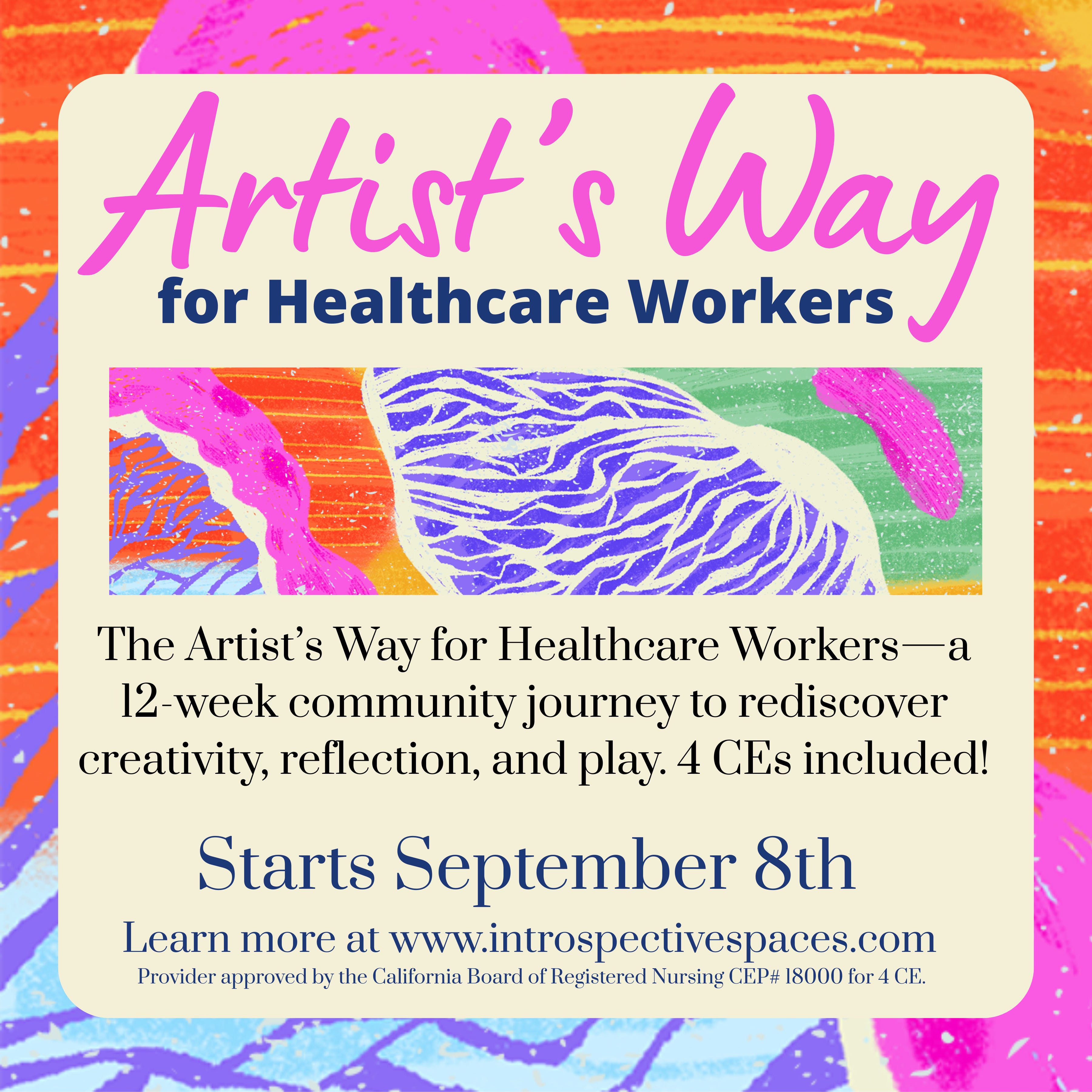
The Artist’s Way for Healthcare Workers is a 12-week guided experience designed to help clinicians and caregivers reconnect with their creative spirit, reduce burnout, and build meaningful community with others who understand the demands of working in healthcare.
Rooted in Julia Cameron’s beloved book The Artist’s Way, our program goes far beyond a traditional book club. Participants are grouped into local small, supportive pods and meet weekly—either live or asynchronously—to explore creativity as a tool for healing, reflection, and renewal.
Participants also receive:
A weekly email digest tailored specifically for healthcare professionals
Access to a group chat for peer support and inspiration
Four live CE webinars on creativity, moral distress, and healing
A celebratory in-person or virtual reception to mark your completion on December 6, 2025
Registration for our Fall 2025 cohorts is now open, and we’re actively building groups across the country. We'd be grateful if you would consider sharing this opportunity with your staff or wellness network. Mutual aid scholarships are available for anyone who needs it! Last Day to register is August 25th!
Want to learn more? Watch our Artist’s Way Program Overview!

What We’re Reading: Serviceberry by Robin Wall Kimmerer
What We’re Listening To: Making Good Podcast - How Small Business Can Do Good
What Bring Us Joy: Laura’s fig tree that she successfully transplanted from her time in LA!
[Have something that uplifts your soul? Share it with us and we’ll add it to the list]
No posts
Comments
Nothing yet. Say the first thing.
Sign in to join the conversation.