
I fell in love with him from the passenger side of his cherry red sedan. I still remember the way it smelled: like ramen noodle packets and liquid car freshener. I remember the shiver of excitement that tickled the back of my neck whenever he said my name, and the Amaretto sour he snuck from work in an hourglass shaped bottle. He was the first man to ever really want me; to look at me with his dark and revealing eyes searching for the woman in me.
I was only eighteen then. Blind to the innocence still coiling around my neck, keeping me warm. He was a year older and everything I thought a college man should be: principled, athletic, masculine, strong. It didn’t occur to me to question if we had anything in common. All that really mattered was if he thought I was beautiful and wanted to hold my hand in public.
It was the first really cold day in December when everything ended. He fiddled with the steering wheel while my hands sat in tightly wound fists in my lap. It wasn’t a new pain, just one I’d never felt before. He murmured something devastating that pierced my skin with betrayal. I stormed out of his car and didn’t look back.
I’d been anticipating my first heartbreak for a long time. I thought it would turn me into the writer I always wanted to be. Later that night, rocking deep in the murky waters of mourning, my heartbreak didn’t seem profound at all. It felt more like an abyss, throttling my senses, leaving me shivering and cold. Then came “Blonde.”
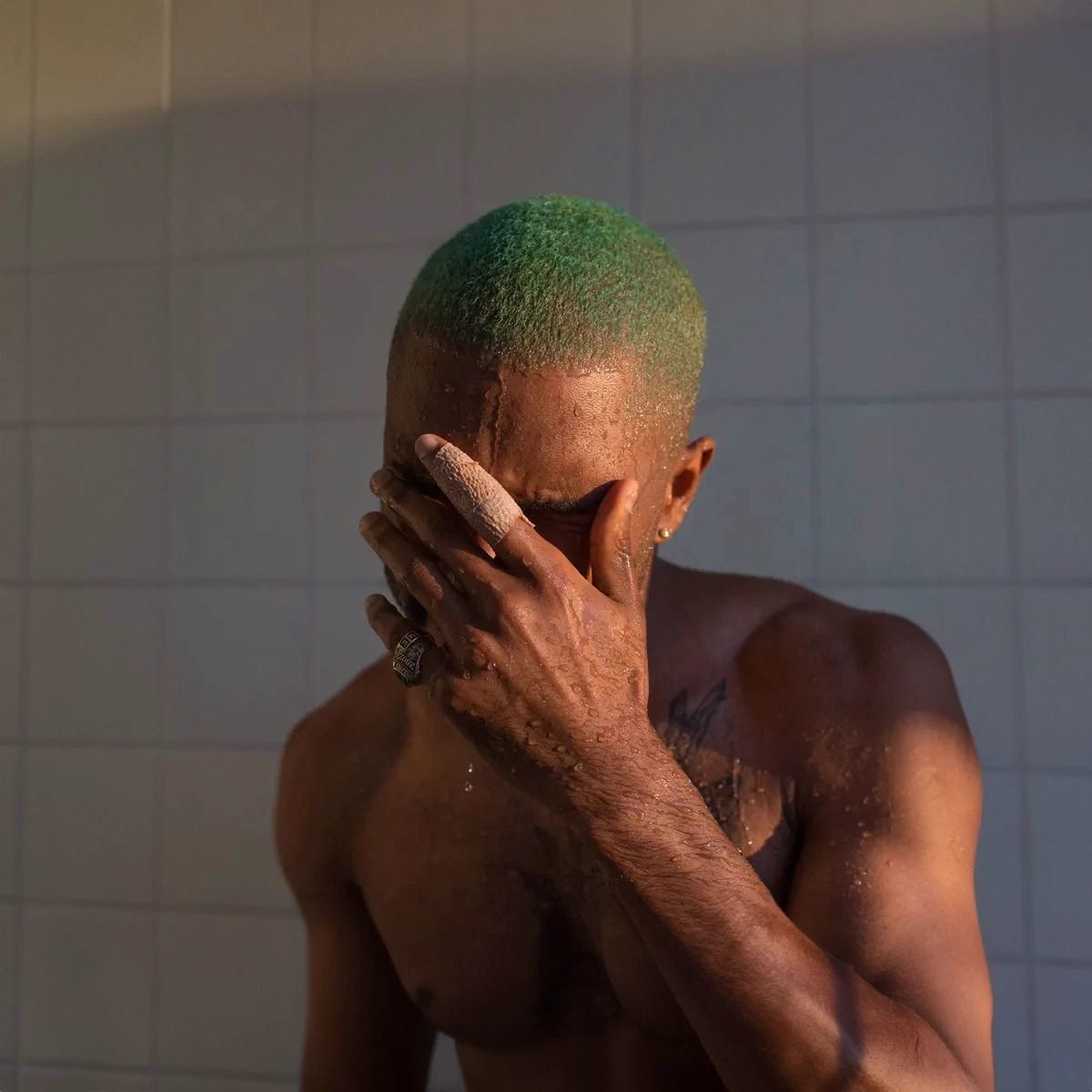
On August 20, 2016, Frank Ocean surprise released his second studio album, “Blonde.” A few moments later, in typical Frank Ocean fashion, he turned to Tumblr. There, he released the digital liner notes, an accoutrement to “Blonde’s” feast.
“I put myself in her seat then I played it all out in my head,”
At 28, “Blonde” was a potent survey of Frank Ocean’s coming of age. Almost instantly, “Blonde” rippled across the airwaves, halting listeners in their tracks. The album felt revolutionary upon its release, a bricolage of memories conveyed through pitched vocals and wheezing synthesizers. In the liner notes, Frank Ocean revealed that the genesis of the album was from an image of a blonde girl in the backseat of a car:
The claustrophobia hits as the seatbelt tightens, preventing me from even leaning forward in my seat. the pressing on internal organs. I lean back and forward to release it. Then backwards and forward again. There it is—I got free.”
Freedom was unfathomable to me then. At eighteen, I was still shedding the uncertainty of adolescence, flakes of dead skin in my hands. Frank Ocean was everything I hoped to become. An enigma, a storyteller, a writer so extraordinary, he created a record of the worst things that ever happened to him and made something immortal. He did what Lot’s wife and Orpheus could never do; he looked back and survived. Better than before, a masterpiece in his hands.
“How much of my life has happened inside of a car?”
There was my best friend’s rickety vintage Lexus, my other best friend’s sporty little sedan with the bumper stickers. My sister’s gray Chrysler 200, my guy friend’s old family minivan. The cherry red sedan.
I still remember the first time my guy friend left his minivan idling in my driveway, his key dangling from the ignition. He was the first boy to ever touch me in the place that really mattered— my mind. Until then, I’d always thought of him as stoic and unflappable. That night, he revealed a part of himself that was just like me. Sensitive, complex, yearning for someone real. On the walk back to my door, I cradled his late-night confessions in my hands with sincere reverence. It all meant so much.
That summer of “Blonde,” my innocence slipped from my grasp as I tried to keep up with the college boy in the cherry red sedan. He accused me of being naive, and I was incredulous. After all, there I was fumbling in the dark, trying to learn the contours of my own desire. Every glance that passed between us felt so loaded. The guitar line in “Self Control” reminded me of fingertips dragging across skin. Our late-night car conversations were a cerebral kind of foreplay to me, one that didn’t require any kind of consummation.
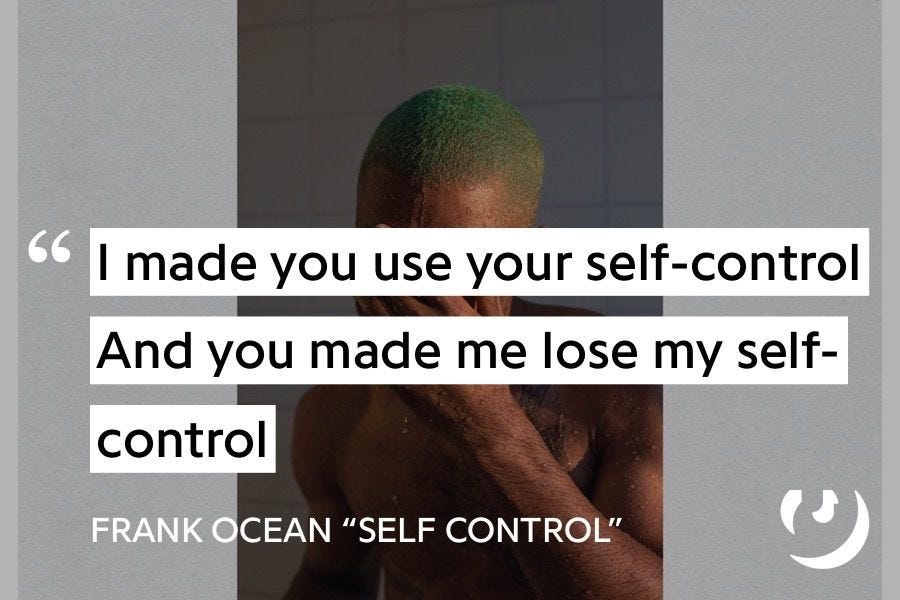
On the last day before I went off to school, I sat across from him in his car. He went quiet, looking off into the middle distance. I noticed the whir of the air conditioner, the curve of the moon. Finally, he looked at me and said, “I really, really hope you never get your heart broken.” Little did we know.
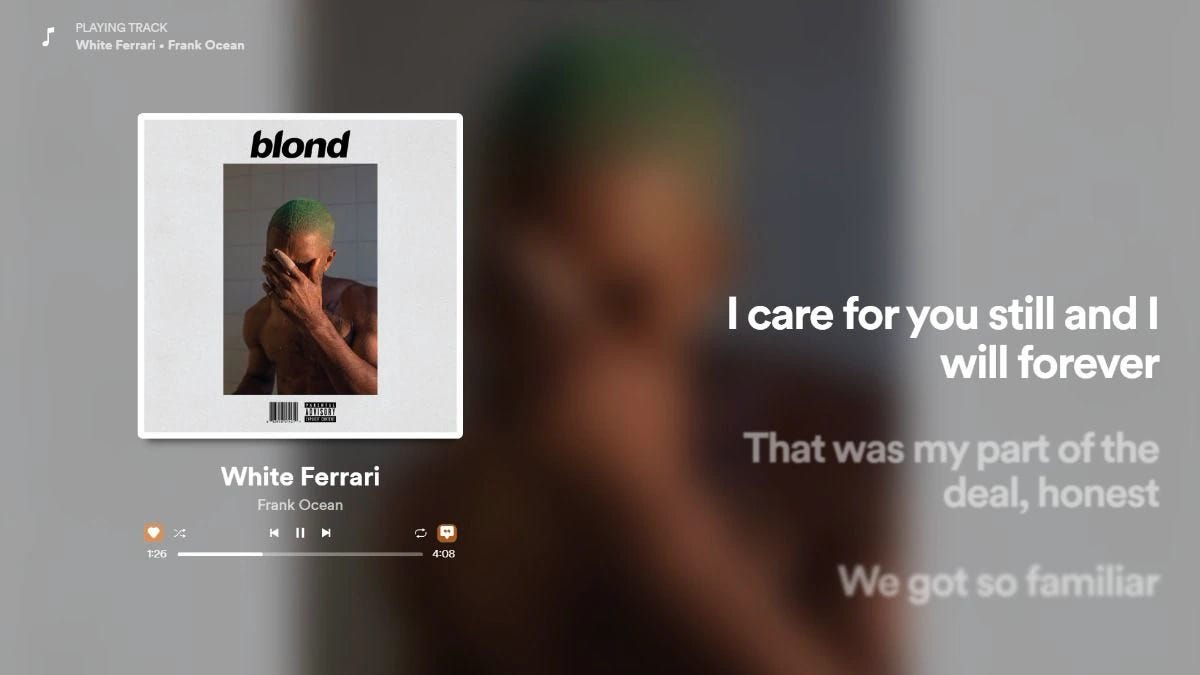
“White Ferrari” was the only song that made any of it make sense after. The synths reminded me of the gray ocean water chasing me in my dreams, the soft patter of cymbals, markers of winter’s brutality. I went back to school on the East Coast while he fell in love with somebody new.
That winter, I studied everything I could find about Frank Ocean and his process. I needed to know how someone could articulate their pain with such dexterity. I wrote and wrote and wrote. Essays, poems, short stories, anything to change our ending into something beautiful.
The thing about Frank Ocean is there’s no imitating what he created. “Blonde” was an intimate and personal offering born from deep introspection. He toyed with the constraints of memory to create something entirely original. Every sonic decision, from the twinkling synths to swollen strings, was a reflection of his resilience. It was Blonde that helped me understand the kind of storyteller I hoped to become.
I looked up and realized ten years had gone by, ten years since my time on the passenger’s side. The cherry red sedan is long gone. We haven’t spoken in years; we may never speak again. I can only shake my head and smile warmly at the girl I was, who loved with so much reckless abandon. “Blonde” left an indelible mark on my chest; Frank Ocean’s coming-of-age was a lighthouse guiding me through my own. I used to know every breath, every pause, every word. And now I’m almost the same age he was when the album dropped. I don’t know where the time goes, except maybe it lives in me, changing me for the better.
I listened to “Blonde” again last week, vignettes of my youth tangled in the melodies. The words sound different to me now. Frank was right all along. The feeling still deep down is good.
Comments
Nothing yet. Say the first thing.
Sign in to join the conversation.