
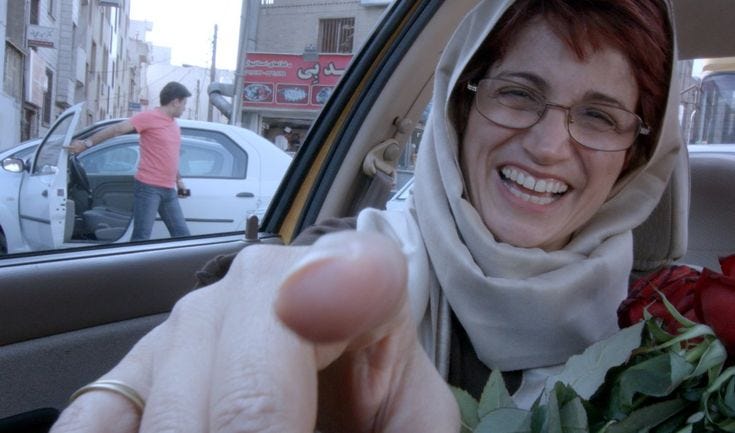
“It’s the flower lady!” shouts Hana, a vibrant well of precocious energy and Persian filmmaker Jafar Panahi’s niece. It’s near the end of his 2015 film, Taxi, when Panahi slows his taxi to a stop, greeting Nasrin Sotoudeh, an Iranian civil rights lawyer known only in the film as “the flower lady.” She’s armed with a sprouting bouquet of long-stem roses and a radiant smile that instantly suffuses the taxi with a luminous warmth. Sotoudeh unflinchingly hands Hana a rose, whose eyes gleam with childlike wonder, as she scurries off to the backseat.
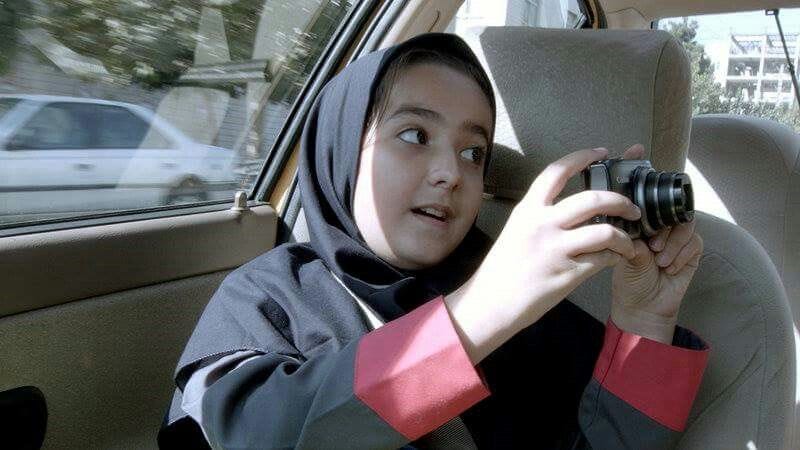
What appears to be a chance encounter on the crowded streets of Tehran is really an opportunity for Sotoudeh and Panahi to discuss the unjust imprisonment of Ghoncheh Ghavami. Ghavami, a young British-Iranian woman, was apprehended for attempting to attend a volleyball game; she didn’t even make it inside. They arrive at Sotoudeh’s stop, where she has a planned visit with Ghavami at a local prison. Before she exits the car, Sotoudeh offers a rose to the camera and, with a twinkling smile, declares, “This is for the people of cinema, because the people of cinema can be relied on.”
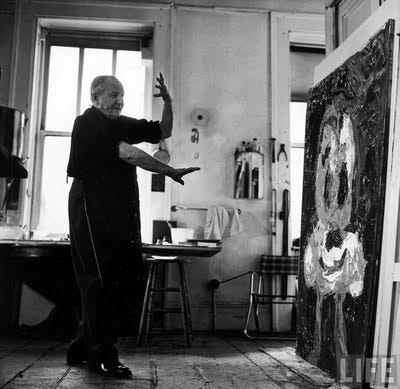
In the 21st century, what is the artist’s responsibility? In the novel, Ninth Street Women, written by Mary Gabriel, she explores the evolution of the abstract expressionist art movement through the careers of Lee Krasner, Elaine de Kooning, Grace Hartigan, Joan Mitchell, and Helen Frankenthaler. Gabriel details the evolution of artistry from the early to late 1900s, a period marred by war and economic hardship. During Krasner’s art classes with German-American painter Hans Hofmann, he insists that “the artist’s responsibility to society, especially during dark times, was to preserve, nurture and glorify the human spirit.” (Gabriel, 39) Panahi’s civil disobedience, strategically disguised behind meta-cinema practices, embodies that responsibility.
After nearly two decades as a professional filmmaker, Panahi was arrested in 2010 on charges of “propaganda activities against the regime,” sentenced to six years in prison, and barred from filmmaking for 20 years. Though his prison sentence was ultimately commuted to less than a year, the ban remained. Panahi chose to subvert his expulsion from cinema by relying on guerrilla-style filmmaking for over a decade. He smuggled This is Not a Film on a USB drive hidden in a birthday cake to premiere at the Cannes Film Festival, before being arrested again in 2022. In protest of his second imprisonment, Panahi embarked on a prolonged hunger strike, ultimately resulting in his release in 2023.
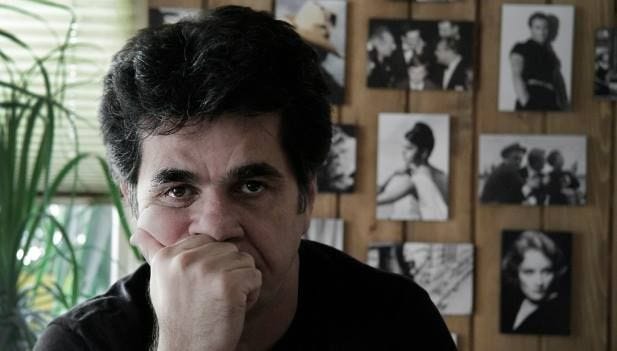
Less than two years later, Panahi comepleted the film It was Just an Accident, a scripted narrative chronicling the lives of former political prisoners debating revenge. While on a global press tour promoting the film, Panahi was indicted on propaganda charges for a third time. Despite enduring efforts to silence him, Panahi remains a dedicated social filmmaker undeterred by the looming threat of imprisonment.
During an interview with The New Yorker staff writer H.C Wilentz, Panahi shirked Western media’s attempts at mythologizing his persistent filmmaking, pointing out that “When they tell me I’m courageous, I always ask, compared to who? Compared to the one who sits home and does nothing? Or compared to the one who has been in prison for years?” (The New Yorker) Panahi’s continued resilience in the face of censorship is emblematic of his love of craft and commitment to art as a vehicle for social transformation.
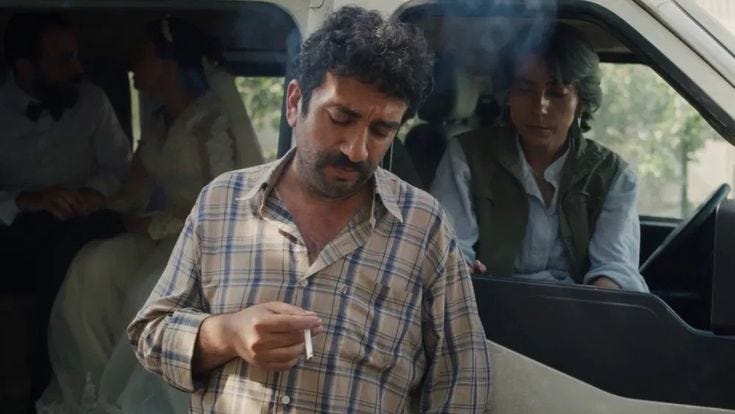
The people of cinema can be relied upon because they, too, are driven by the depth and breadth of the human spirit. During his seminal speech at the Community Church in New York City in 1962, literary titan James Baldwin posited that, “It seems to me that the artist’s struggle for his integrity must be considered as a kind of metaphor for the struggle, which is universal and daily, of all human beings on the face of this globe to get to become human beings.” Baldwin suggests that to create is to give meaning to the human condition. Panahi’s unshakeable voice reaffirms the necessity of art in times of hardship. His films are a burbling well of empathy and resistance, handcrafted with love. Through his work, Panahi fosters a better tomorrow by immortalizing today, no matter the cost.
Our 20th-century predecessors left dust-covered blueprints for navigating dark times, found in the words of writers like Toni Morrison and Gil Scott-Heron, the protest anthems of Bob Dylan and Tracy Chapman and the principled righteousness of entertainers like Marlon Brando and Sidney Poitier. The message is clear: Create, with scrupulous fervor as loudly and as frequently as you can. Do not let them take your voice, or your pen, or your mind. Most importantly, do not give up. As long as the sun rises and sets, we can try again.
Comments
Nothing yet. Say the first thing.
Sign in to join the conversation.