
August 19th, 2026
Greetings and Happy Hump Day!
Mark and I were recently on Ukrainian television with anchor Daniel Tkiie discussing the current situation in Ukraine. One of the questions Daniel posed to me was what I thought about Ukraine’s new strategy of targeting Wildberries throughout Russia.
Wildberries is the largest online retail and e-commerce platform in Russia. It is often described as the Russian equivalent of Amazon. Founded in 2004, it sells a variety of consumer goods – including clothing, electronics, cosmetics, and household items – and operates an extensive logistics and pickup point network.
It is an essential ‘tool’ for entrepreneurs in Russia to store, sell, and distribute their products. But also for the Russian defense industry to distribute components for their weapons systems to production and assembly plants throughout the country.
Destroying these Wildberries warehouses further cripples the Russian economy – directly affecting Russian entrepreneurs – while also disrupting Russia’s ability to manufacture the very weapons systems they use to target Ukrainian’s critical infrastructure and civilian population.
Win – Win.
But as I told Daniel. It’s not a new strategy; rather, it’s an evolution of their existing strategy.
As retired U.S. Army Lt. Gen. Ben Hodges and former commander of U.S. Army Europe brilliantly described it, “Ukraine is undermining Russia’s ability to sustain the war.”
***
UKRAINE’S THREE FOLD STRATEGY
Ukraine’s strategy? Undermine Russia’s ability to sustain the war. It’s a three fold strategy:
1. Inflict crippling amounts of casualties on Russian ground forces;
2. Deny Russia the ability to fund the war by targeting its oil and gas industry; and
3. Attack the Kremlin’s means of distribution … the Wildberries.
All the while defending – holding – terrain, isolating Crimea and making it untenable.
A tall task, but one the Armed Forces of Ukrainian (AFU) has masterfully achieved in a multi-domain operational environment – on the battlefield. And, mostly accomplished with their own weapons via Fire Point manufactured drones and missiles.
***
THE EFFECTS?
In short, a Revolution in Military Affairs (RMA). Mark and I asked back in July 2022 if that was what we were witnessing, and today we would have to say the answer is a resounding yes.
For Russian soldiers on the battlefield – the number one casualty producing weapon system is the Ukrainian drone.
Since the beginning of the war, Russia has sustained 1,471,160 casualties. Last month, 42,860. That’s 1,383 soldiers a day – a little over two infantry battalions.
Ukraine’s ‘Kill Zone’ strategy has decimated Russian ground forces and the Kremlin’s ability to sustain them via ‘mid-range’ drone interdiction strikes. In our May 29th edition of INTREP360, we highlighted that:
“90 percent of Russian soldiers are being killed before they even get to the front lines – and without ever confronting a frontline Ukrainian soldier. 96 percent of those casualties come from remotely-operated drones.”
On August 3rd the Moscow Times reported that:
Russian oil refining fell in July to its lowest level in more than two decades as Ukrainian drone attacks intensified against refineries, tankers and other energy infrastructure.
Refineries processed an estimated 3.6 million barrels of crude per day, the lowest level since May 2002 – roughly one-third below the seasonal norm.
Eighteen Russian refineries were targeted in July, including the Omsk refinery, the country’s largest and located more than 1,550 miles from the Ukrainian border.
Five large tankers, five pieces of port infrastructure and two pipelines were also targeted in July. Bloomberg counted 30 attacks on oil infrastructure during the month, the second-highest total after 32 in May.
If eight tankers linked to the Caspian Pipeline Consortium (CPC) terminal are included, July would rank as the busiest month for attacks on oil assets connected to Russia.
And then Ukraine went after the Wildberries warehouses. As Zelenskyy stated, the [Wildberries] warehouses struck are “elements of Russian logistics [...] used to distribute equipment for the war: navigation systems, components for drone production, and other supplies for the Russian army.”
Ukraine has knocked out seven of Russia’s ten biggest logistics hubs. The largest warehouse was a 250,000-square-meter complex at the Koledino industrial park in Podolsk in the Moscow region, around 261 miles from the border. In total, 20 Wildberries facilities have been struck.
***
AND UKRAINE IS RECAPTURING TERRAIN
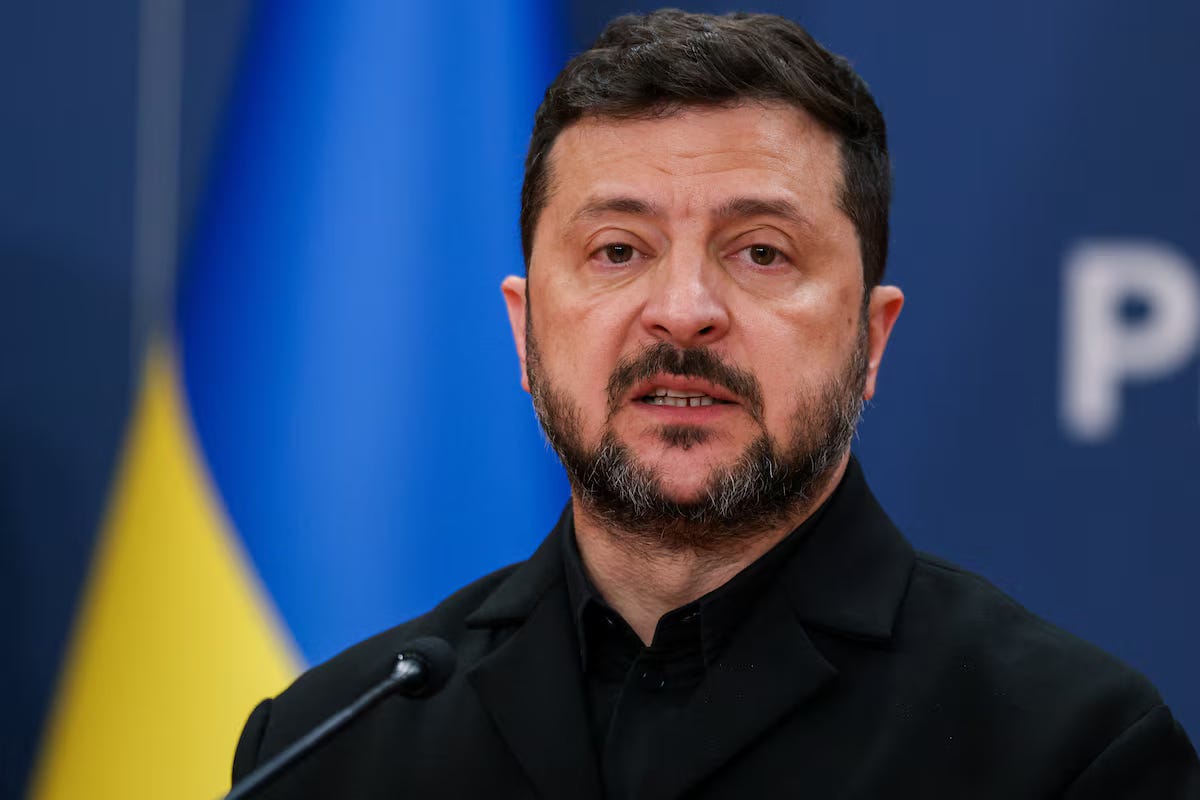
Photo Credit: REUTERS/Marko Djurica. Ukrainian President Volodymyr Zelenskiy speaks at a press conference with Serbian President Aleksandar Vucic during his visit to Belgrade, Serbia, August 8, 2026.
Last week Ukrainian President Volodymyr Zelensky announced that the Ukrainian armed forces had recaptured 288 square miles of Russian-occupied land this year across its southeastern front – and that the operation went “exactly as planned.”
Winning!
***
THE FOURTH FOLD
Yet despite these successes – Ukraine struggles to defend itself against Russian drones and ballistic, cruise, and hypersonic missiles. As Mark described in last night’s INTREP360:
The Kremlin is preparing yet again to weaponize the upcoming winter.
Russia also continues to attack Ukrainian civilian infrastructure with ballistic and hypersonic missiles as part of its ongoing terror campaign and in advance of – once again – attempting to shape the battlefield ahead of Spring and Summer 2027 offensives in the Donbas.
There is a shortage of Patriot interceptor missiles – and the White House has walked back the President’s announcement to allow Ukraine to produce them, for whatever reason.
Shooting missiles and drones out of the sky cannot be the primary course of action though; rather, it must be the exception – course of action B – for missiles and drones that get through.
The best defense is a good offense.
Course of action A – an active defense – must be incorporated as the ‘fourth fold’ of Ukraine’s strategy. That means targeting Russian mobile and fixed launch sites and their crews, radars, command and control networks and headquarters, airfields, missile storage facilities, missile production and assembly facilities, and ports of debarkation where North Korean missiles are being delivered.
Ukraine needs precise targeting data from the U.S. and NATO to accomplish this mission. The United Kingdom’s Storm Shadow and Ukraine’s FP-7 and FP-9 missiles can accomplish this task.
***
ICYMI. In addition to the interview with Daniel Tkiie, Mark and I participated in interviews with QNews and Al Qahera today. When we get the video links we will post them here.
***
PROGRAMMING NOTE. Don’t miss our Thursday National Security column in The Hill tomorrow morning. The link goes live at 7:00AM:
https://thehill.com/opinion/national-security/6038488-fedorov-ukraine-wartime-elections/
***
Thank you for reading.
We’ll see you tomorrow.
Please subscribe, comment & share. We truly appreciate it!
Follow Jon on X at @JESweet2022 or on Bluesky at @JonSweet.bsky.social.
Follow Mark on X at @MCTothSTL or on Bluesky at @MarkToth.bsky.social.
No posts
Comments
Nothing yet. Say the first thing.
Sign in to join the conversation.