
Welcome to the Midweek edition of The Long and the Short — a show where you can expect an honest take on trading, something you won’t hear elsewhere.
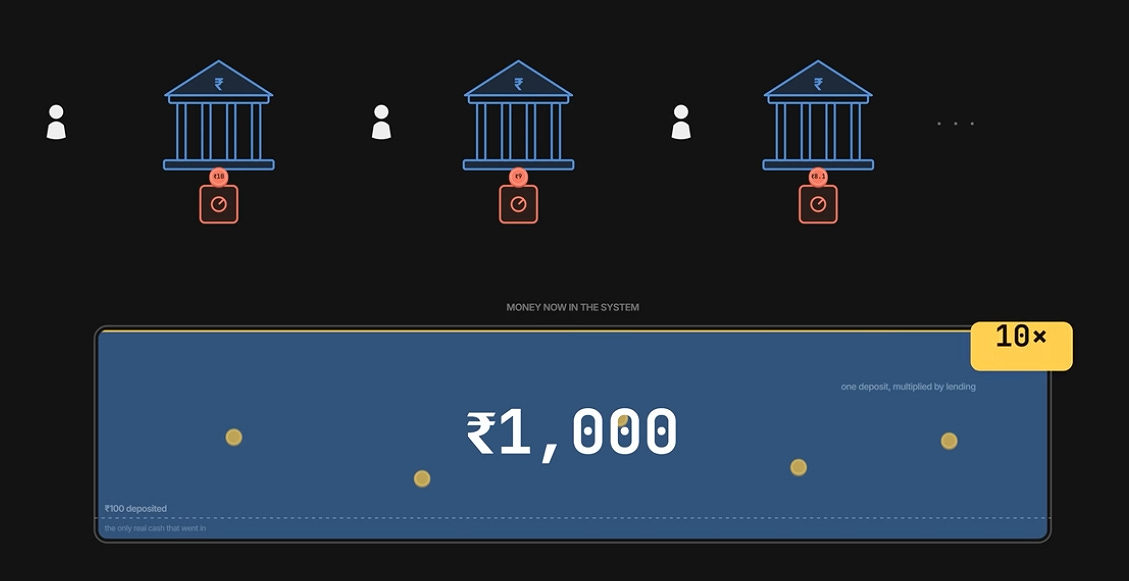
The year was 2010, and I was watching a documentary called Inside Job. There’s a clip where Hank Paulson, the U.S. Treasury Secretary at the time, made a statement that still haunts me: “There is not a bank in the world that has enough money in its vault to pay its depositors.”
While he said that in the context of the 2008 financial crisis, it was that quote that sent me down the rabbit hole of how modern banking actually works — how banks, in a way, create money.
Then came Bernie Madoff. Years before his Ponzi scheme collapsed, legendary investor and mathematician Ed Thorp looked at Madoff’s returns and immediately felt something was wrong. The numbers were just too perfect. Markets don’t move in straight lines, yet Madoff’s performance barely seemed to fluctuate. Jim Simons and his team at Renaissance Technologies reached a similar conclusion and avoided investing with him. Everyone else eventually discovered that those impossibly smooth returns had been hiding the largest Ponzi scheme in history.
In 2013, a quant trader named Haim Bodek discovered that stock exchanges were selling order types to high-frequency trading firms that retail investors didn’t have access to. The market wasn’t rigged against you because traders were evil. It was rigged by design. Built into the infrastructure.
These aren’t stories from novels. These are real events. Real money. Real consequences. Some of which I learnt watching documentaries.
Towards the end of last year, I did an edition recommending movies based around finance and investing. At the time, I deliberately left out documentaries because I felt they deserved their own edition. Movies entertain first and educate along the way. Documentaries do the opposite. And financial markets have produced enough unbelievable stories that they don’t need any Hollywood exaggeration.
Today, we’re stepping away from the theatres and into the documentary archives.
Twelve documentaries, grouped into six categories — each looking at financial markets from a slightly different perspective.
We’ll begin with the Global Financial Crisis of 2008, because it’s one of the most important events anyone interested in finance should understand. From there, we’ll look at how modern markets actually function through documentaries on high-frequency trading and market microstructure. The third category is about legendary traders and the role of risk management. The fourth focuses on fraud — Ponzi schemes, accounting scandals, and corporate deception. After that, we’ll come back to India and look at documentaries on some of the biggest financial scandals closer to home. And finally, we’ll end with a documentary that is the complete opposite of everything before it.
No spoilers. The goal is simply to tell you why I think each one is worth your time and what I personally took away.
If you’ve been investing for only the last five or six years, 2008 may feel like distant history. But unless you’ve spent time understanding that period, it’s hard to put today’s markets in perspective. The Global Financial Crisis fundamentally changed how central banks operate, how governments respond to financial crises, and how investors think about risk. Many of the policies we take for granted today — from aggressive liquidity injections to coordinated bailouts — have their roots in what happened during those few months.
Three documentaries here because each tells a different part of the same story.
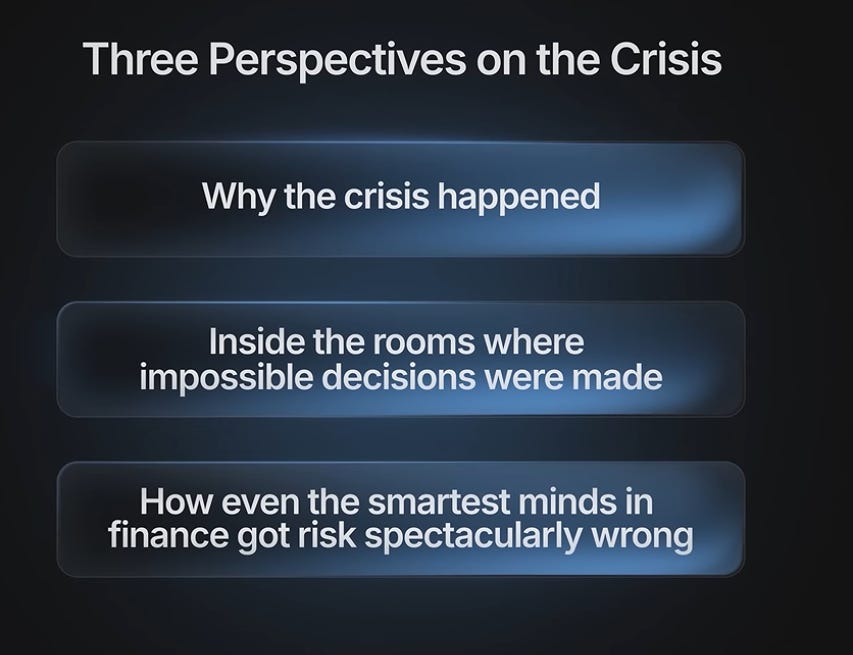
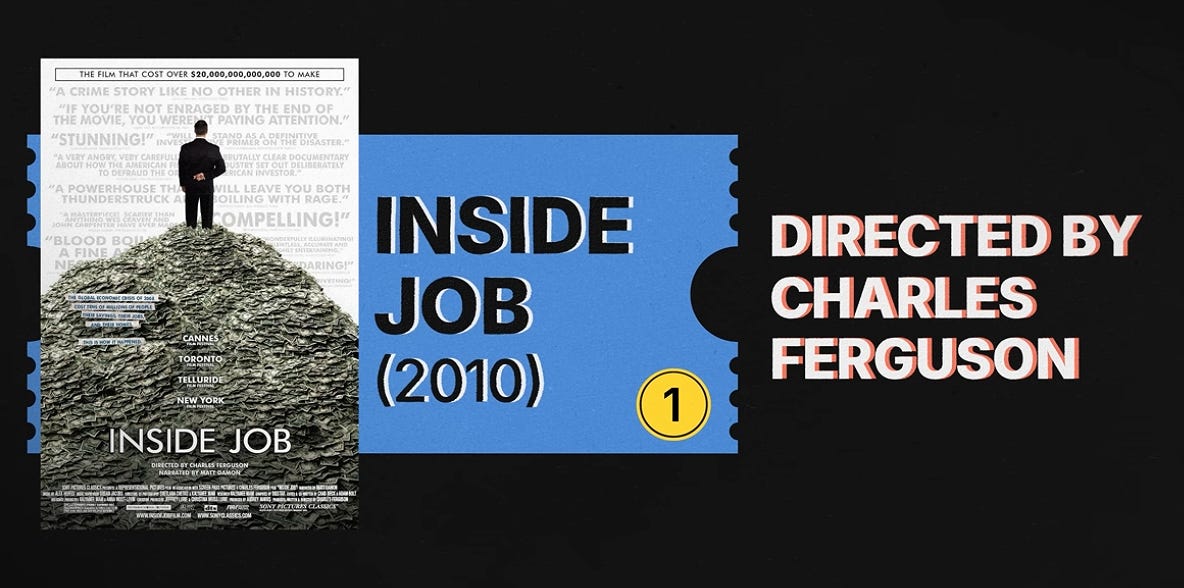
If you’ve never watched a documentary on the Global Financial Crisis before, start here.
When people talk about 2008, the conversation usually begins and ends with greedy bankers. Inside Job argues that the reality was far more complicated. It shows how investment banks, credit rating agencies, regulators, policymakers, and even parts of academia all played a role in creating a system where excessive risk was not just tolerated — it was rewarded.
What I particularly liked is that it doesn’t assume you have a background in finance. Complex topics like mortgage-backed securities, leverage, and securitisation are explained in a way that’s surprisingly easy to follow, while interviews with the people who actually lived through the crisis add a level of credibility that’s hard to match.
The biggest takeaway for me wasn’t that people became greedy — markets have always had greed. The more important lesson was how dangerous misaligned incentives can become when they’re allowed to persist for years. If you only watch one documentary from this entire list, make it this one.
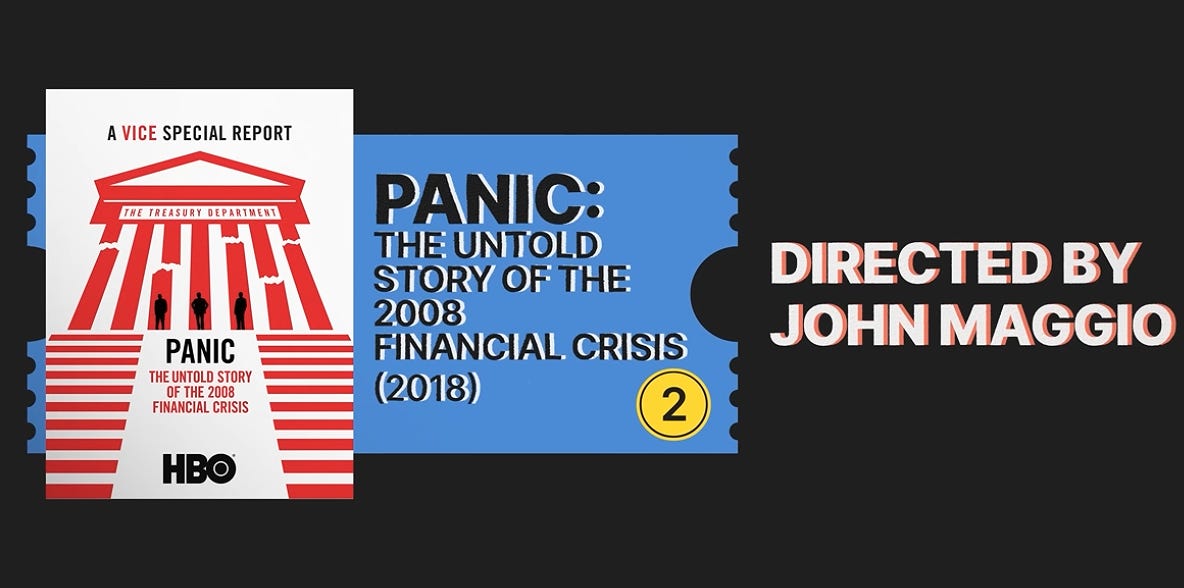
Once you’ve watched Inside Job, follow it up immediately with Panic. The two complement each other beautifully. While Inside Job explains why the financial system broke, Panic focuses on what happened after it broke.
The documentary is built around interviews with Hank Paulson, Ben Bernanke, Tim Geithner, and several others who found themselves making some of the most consequential financial decisions in modern history. Looking back today, it’s easy to say Lehman Brothers should have been saved, or AIG should have been allowed to fail. But Panic reminds us that none of these decisions were obvious at the time. Every option carried enormous consequences, and policymakers were effectively trying to prevent the global financial system from collapsing while making decisions in real time.
If Inside Job gives you the diagnosis, Panic tells you what the emergency room looked like.
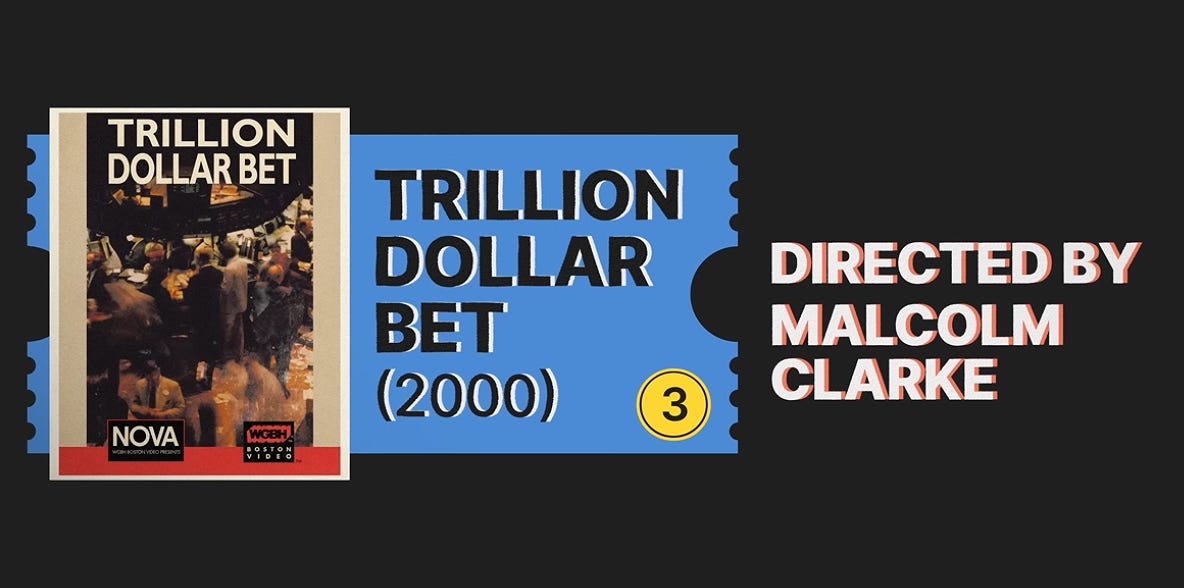
(Also known as The Midas Formula, 1999 — essentially the same documentary.)
The last recommendation in this category takes us back almost a decade before the Global Financial Crisis. If you’ve ever traded options, you’ve almost certainly come across the Black-Scholes option pricing model — probably the single most influential equation in modern finance, which earned Myron Scholes and Robert Merton the Nobel Prize in Economics.
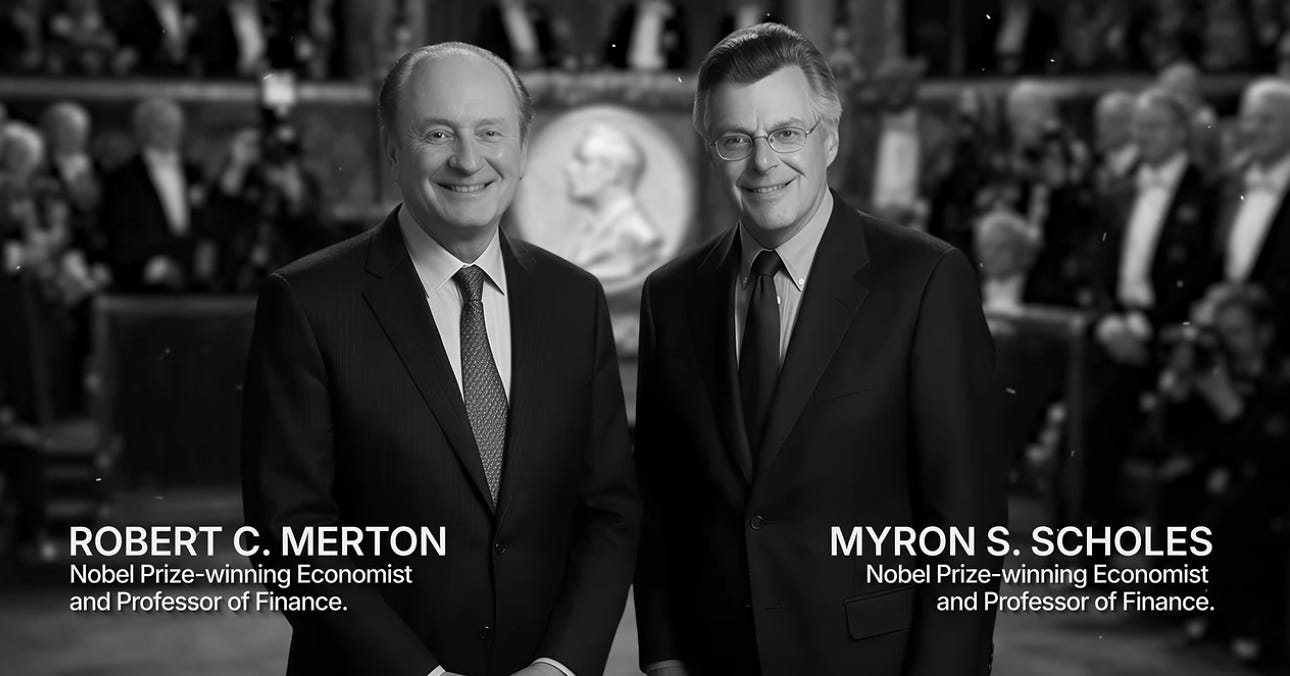
This documentary tells the story of how that breakthrough changed Wall Street forever. Suddenly, risk became something that could be modelled, measured, and priced mathematically.
That idea eventually led to Long-Term Capital Management — LTCM — a hedge fund founded by some of the brightest minds in finance. It used sophisticated quantitative models and enormous leverage to exploit tiny pricing inefficiencies across global markets. For a while, it looked like they had cracked the code. Then came the 1998 Russian debt crisis; markets behaved in ways the models hadn’t anticipated, and LTCM collapsed so spectacularly that the U.S. Federal Reserve had to coordinate a rescue to prevent wider damage.
As someone who spends a lot of time thinking about systematic trading, I found this documentary fascinating because it highlights both the power and the limitations of financial models. Models are incredibly useful, but they’re only as good as the assumptions they’re built on. When those assumptions break down, markets have a way of reminding us that reality is always more complicated than mathematics.
The most niche category on this list — but also the one I personally found the most eye-opening.
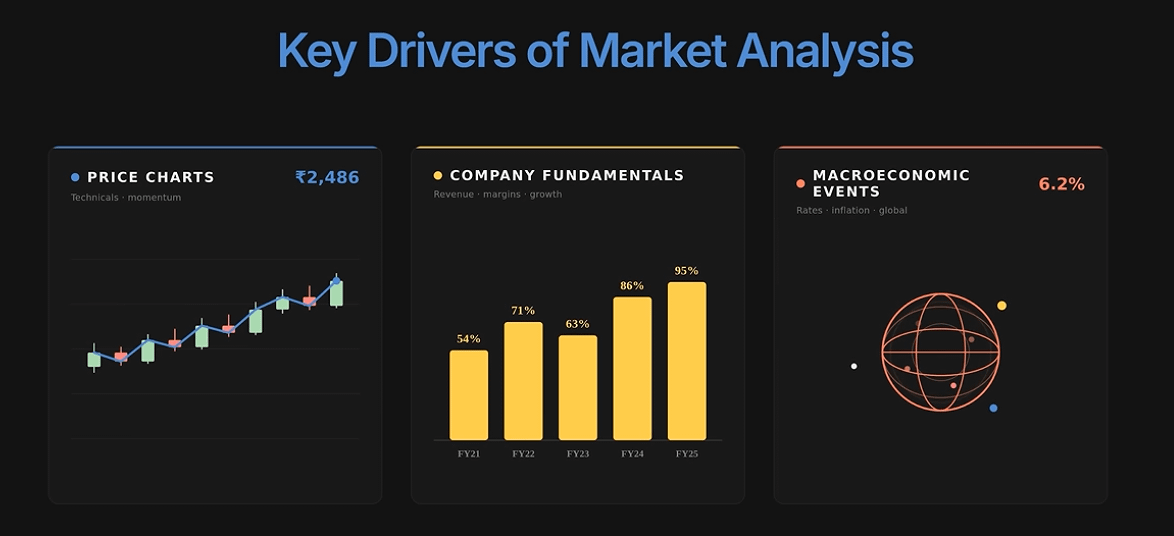
Most of us spend our time analysing price charts, company fundamentals, or macroeconomic events. Very few stop to think about what happens after we click Buy or Sell. How does an order actually reach the exchange? Who gets to see it first? How is it matched? Does everyone really play by the same rules? These documentaries explore exactly that.
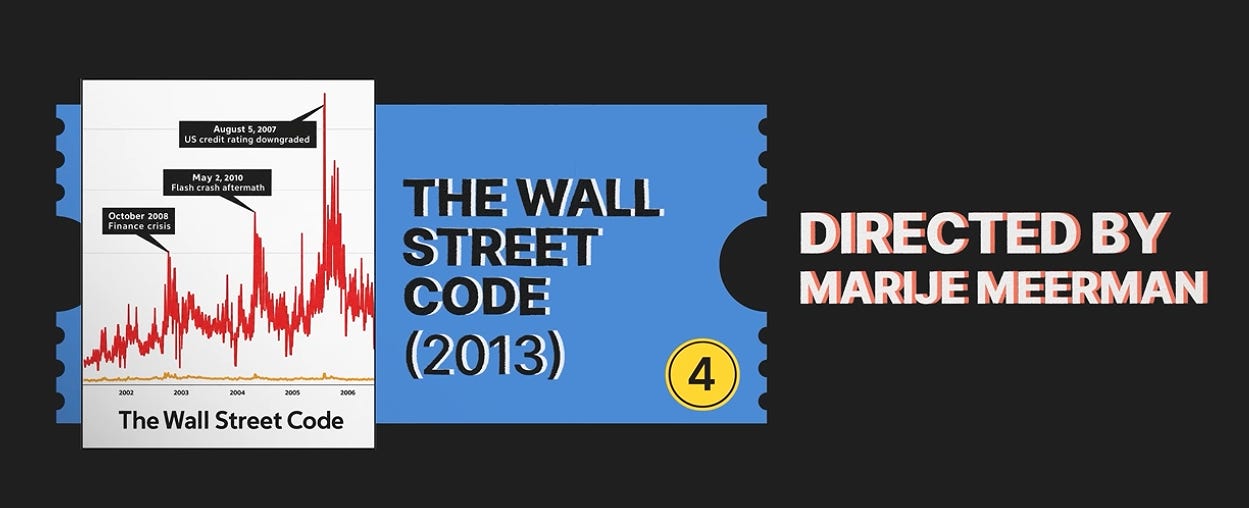
If I had to recommend one documentary for anyone interested in market microstructure, this would be it.
The documentary follows Haim Bodek, a former high-frequency trader who accidentally discovered that U.S. stock exchanges had introduced specialised order types that gave certain trading firms an advantage over everyone else. These weren’t illegal. They were simply so complex that very few participants even knew they existed.
One of the fascinating things it explores is how exchanges slowly transformed from neutral marketplaces into businesses competing for order flow. In that competition, exchanges began creating increasingly sophisticated order types and execution mechanisms to attract high-frequency trading firms. The result was a market that became incredibly efficient — but also incredibly complicated.
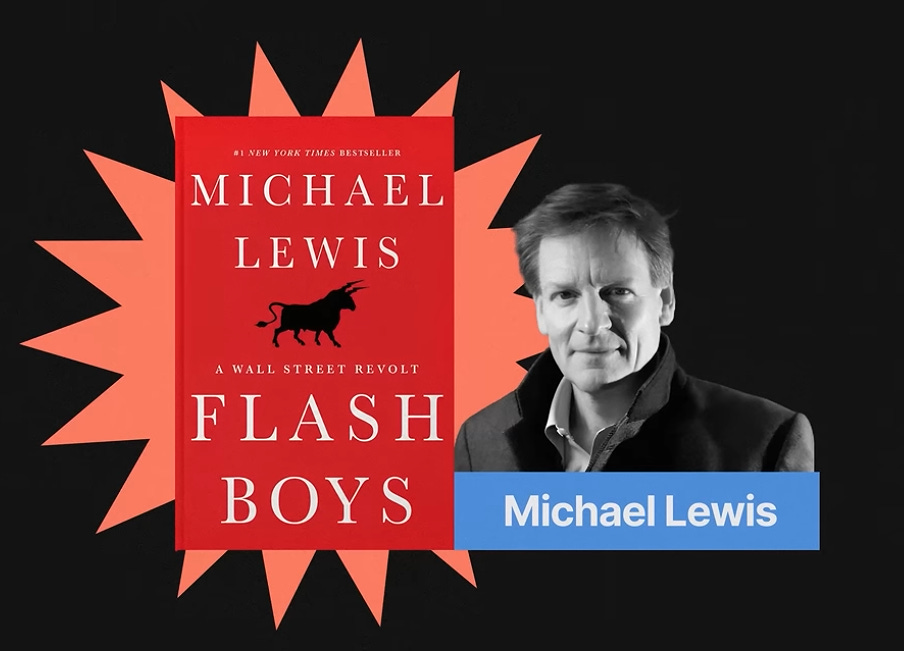
If you’ve read Michael Lewis’s Flash Boys, many of the themes will feel familiar, because both revolve around the same period in market history. Haim Bodek’s work played an important role in bringing many of these issues into the public domain.
This documentary completely changed the way I thought about exchanges. We often assume that markets are simply buyers and sellers interacting with each other. Once you understand the plumbing underneath, you realise there’s an entire ecosystem working in the background. As traders in India, we may not be affected by these specific issues right now — but understanding them certainly makes us better market participants.
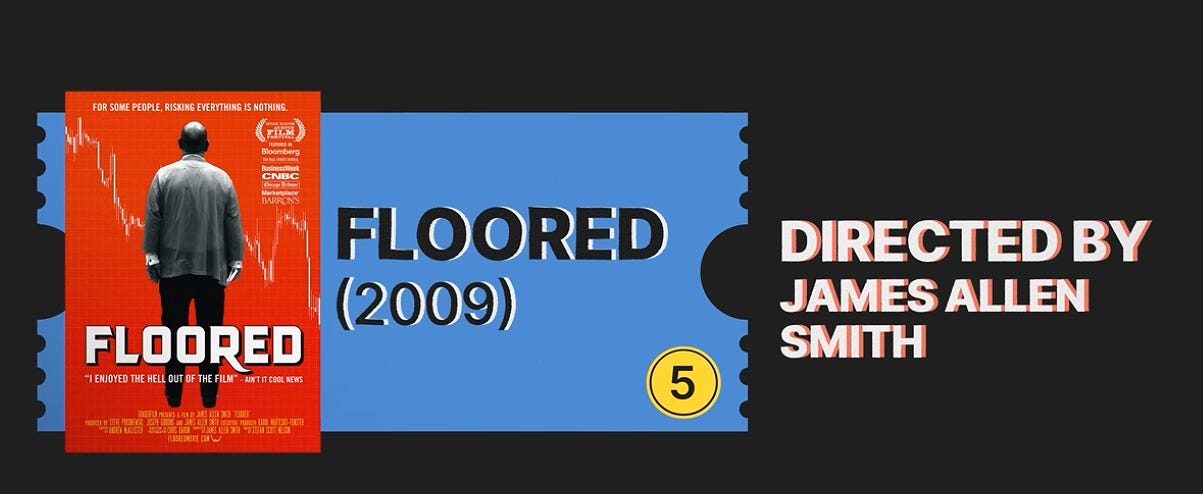
If The Wall Street Code shows you where markets were headed, Floored shows you what they left behind.
The documentary follows traders on the Chicago trading floors during the transition from open outcry to electronic trading. For decades, these pits were where some of the world’s largest futures and options contracts were traded. Orders were shouted across crowded trading floors, relationships mattered, and experience often counted as much as technical skill. Then came electronic trading — algorithms could execute faster, more consistently, and without emotion. Within a few years, an entire profession that had existed for generations began disappearing.
(Tom Sosnoff, who has been on our podcast, traded in exactly this exchange and had some fascinating anecdotes to share.)
What I enjoyed most is that the documentary isn’t trying to tell you whether technology is good or bad. It captures a fascinating moment in financial history when one era was ending, and another was just beginning. Watching traders adapt — or struggle to adapt — was a reminder that markets are constantly evolving. The edge that works today may simply not exist tomorrow.
One documentary in this category — and it gives us a rare glimpse into the mind of one of the greatest traders who ever lived.
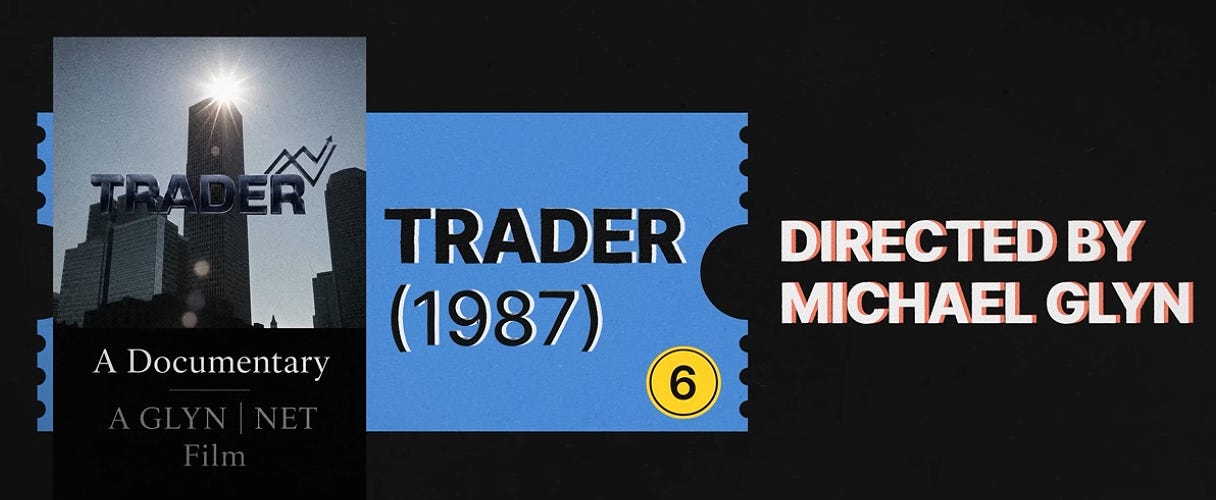
If you’ve spent any time reading books on trading, you’ve almost certainly come across Paul Tudor Jones. He’s regarded as one of the greatest macro traders of all time, and Trader is one of the very few documentaries that lets you watch him think while he’s actually trading.
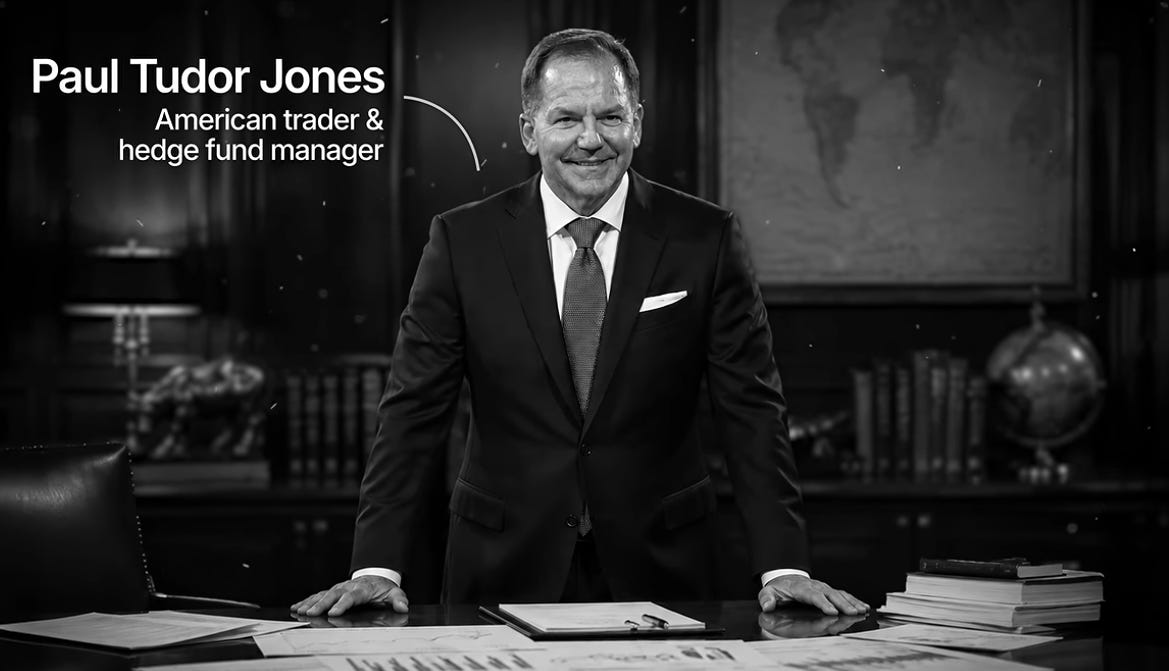
The documentary follows Jones in the months leading up to the 1987 Black Monday crash, when the Dow Jones fell more than 22% in a single day — the largest single-day percentage decline in U.S. stock market history. Jones had positioned himself for exactly such an event and ended up making one of the greatest trades of his career.
But what makes this documentary worth watching isn’t the prediction. It’s the way he thinks about markets. Throughout the film, he talks about preserving capital, staying flexible, and respecting risk. There’s a famous line where he says: “Don’t focus on making money. Focus on protecting what you have.” That’s one of the most important lessons any trader can learn.
One caveat: this documentary is surprisingly difficult to find because of licensing issues. But if you do manage to get hold of it, it’s well worth your time.
Whether it’s a Ponzi scheme, accounting manipulation, or corporate deception, the details may change, but the underlying pattern remains very similar. A compelling story, unquestioned optimism, a lack of transparency — and eventually, reality catches up.
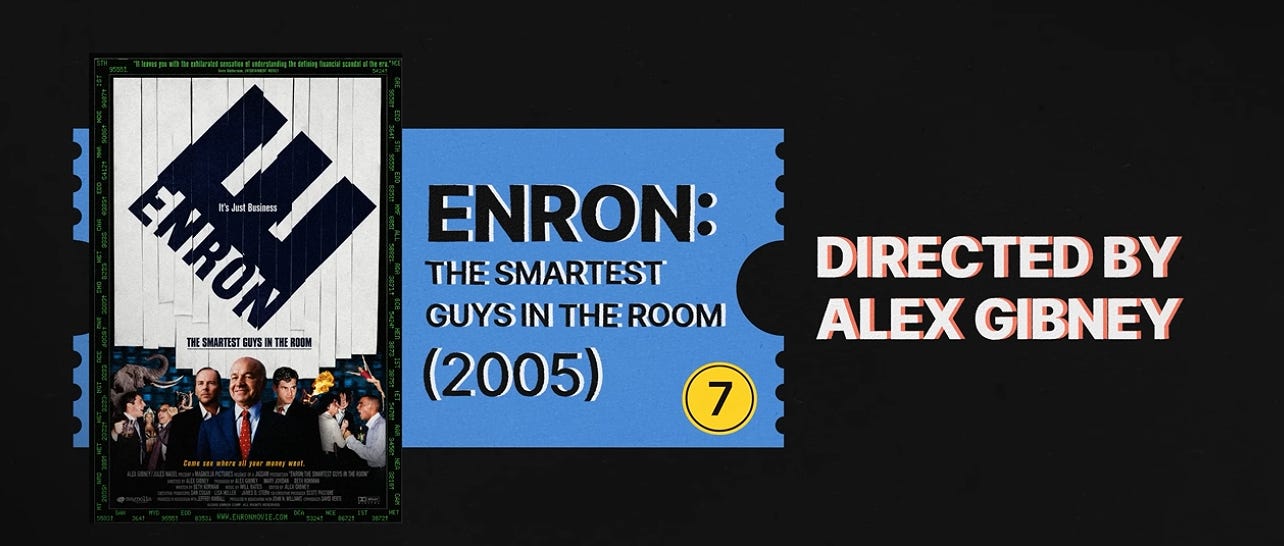
At its peak, Enron was considered one of America’s most innovative companies. Analysts loved it, investors trusted it, and business schools studied it. Behind the scenes, however, the company was using increasingly aggressive accounting techniques to hide debt and inflate profits.
One concept you’ll repeatedly hear about is mark-to-market accounting. In simple terms, Enron was booking profits it expected to earn years into the future as if they had already been realised — making the business appear far more profitable than it actually was.
The documentary also highlights the role played by Arthur Andersen, one of the world’s largest accounting firms at the time. A reminder that corporate governance only works when every gatekeeper actually does their job.
What I found most fascinating was how long the illusion survived. Thousands of intelligent people looked at Enron and believed everything was perfectly fine. That’s a lesson that goes well beyond financial markets.
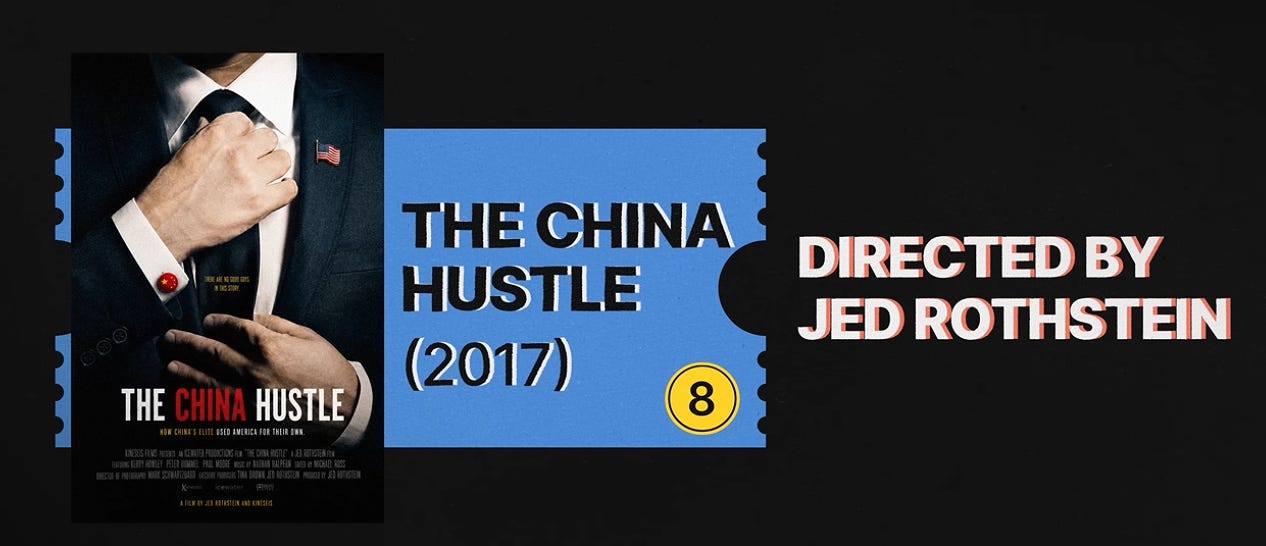
During the 2000s, dozens of Chinese companies found their way onto U.S. stock exchanges through a process known as reverse mergers — faster and easier than a traditional IPO, but in many cases, investors discovered far too late that the underlying businesses weren’t nearly as impressive as they appeared on paper.
What makes this documentary interesting is that it’s told largely through the eyes of short sellers — investors who actually benefit when they uncover fraud. It gives you a fascinating look at the investigative work that goes into proving a company isn’t what it claims to be. If you’ve ever wondered what serious forensic research in financial markets looks like, this is an excellent place to start.
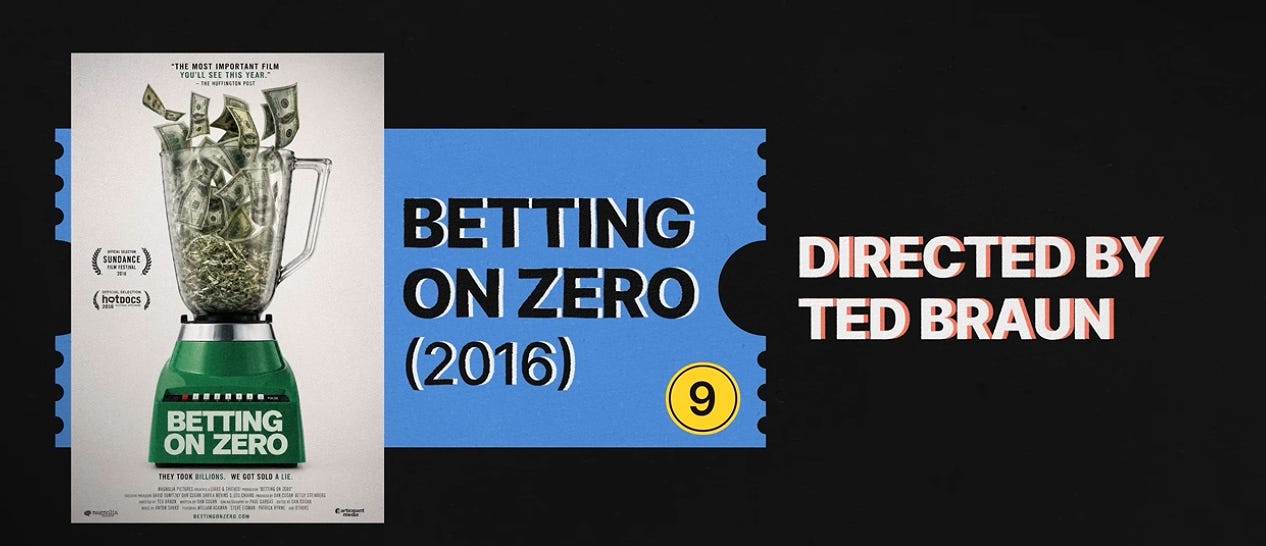
Slightly different from the others in this category — the story doesn’t end with someone going to jail or a company collapsing.
The documentary follows Bill Ackman and his billion-dollar short bet against Herbalife. Ackman publicly argued that Herbalife was operating as a pyramid scheme and backed that conviction with years of research, presentations, and regulatory complaints. On the other side was Carl Icahn, who took the exact opposite view and built a massive long position.
Two of the world’s most successful investors looked at the same company, analysed the same data, and reached completely opposite conclusions. Whether you agree with Ackman or not, the documentary is an excellent reminder that investing is rarely black and white. My personal takeaway: many of the biggest debates in markets don’t end with a definitive winner.
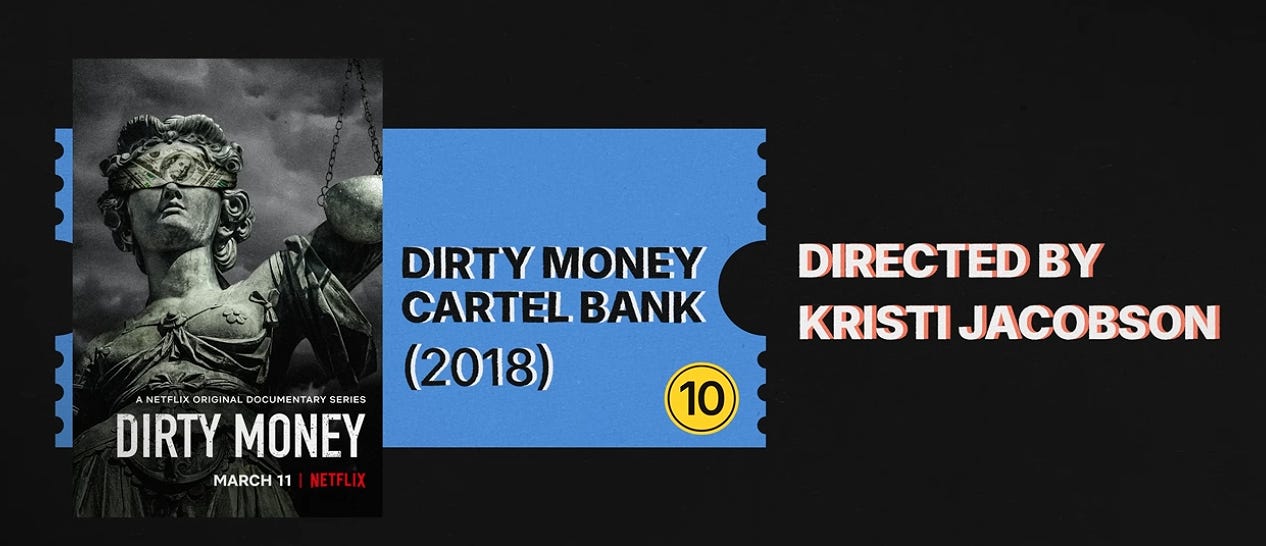
Season 1, Episode 4 of Netflix’s Dirty Money series — and probably the most frustrating documentary on this list.
It tells the story of how HSBC, one of the world’s largest banks, was found to have processed billions of dollars linked to Mexican drug cartels and other criminal organisations. Serious failures in the bank’s anti-money laundering controls raised obvious questions about accountability.
What stayed with me wasn’t just the scale of the problem — it was the outcome. Despite everything that came to light, the institution survived, paid a massive fine, and moved on. It raises an uncomfortable question that comes up repeatedly in finance: when an institution becomes large enough, does the system treat it differently?
While I’ve specifically recommended Cartel Bank because it fits this theme, I’d actually suggest watching the entire Dirty Money series. Across its two seasons, every episode explores a different story involving corporate misconduct, financial fraud, or abuse of power. Not all of them are market-related, but almost all of them are fascinating.
India has had its own share of financial scandals — many of which reveal the same patterns we’ve already seen: unchecked ambition, regulatory gaps, and systems that were easier to exploit than most people realised.
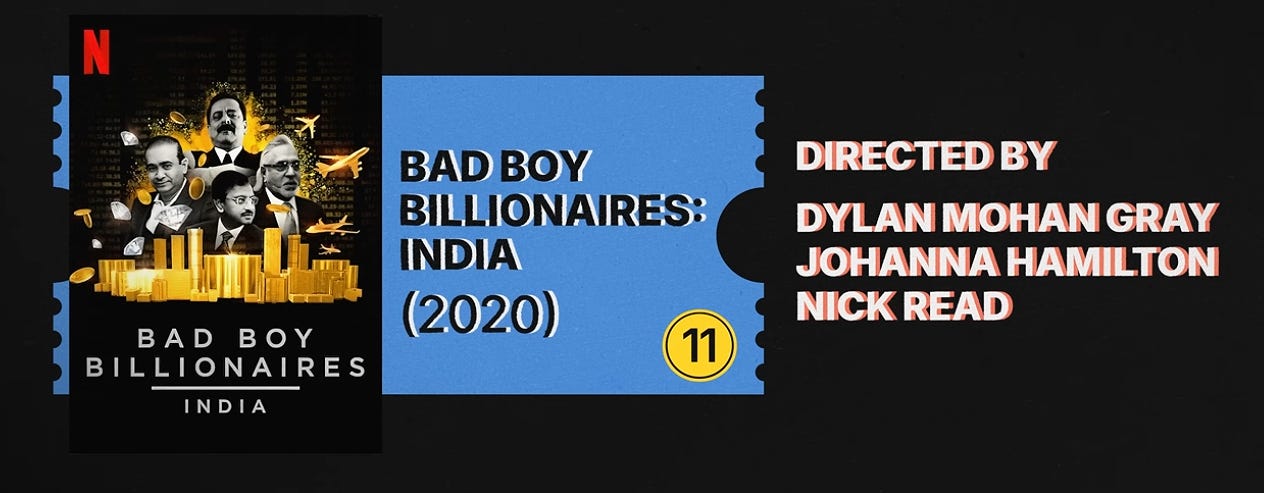
The only India-specific recommendation on this list. Technically a docu-series rather than a feature-length documentary — but it’s simply too good to leave out.
The series tells the stories of four high-profile businessmen: Vijay Mallya, Nirav Modi, Subrata Roy, and B. Ramalinga Raju of the Satyam scam. What I liked most is that it goes beyond the headlines. Most of us know these names and broadly know what they were accused of — but the series takes you through how these businesses were built, how confidence gradually turned into overconfidence, and how systems that appeared perfectly normal for years eventually began to unravel.
By this point in the edition, you’ll probably notice how similar these stories are to the ones we’ve already seen. Whether it’s Enron in the U.S., Bernie Madoff’s Ponzi scheme, or the scandals closer to home — the details differ, but the underlying pattern rarely changes. A compelling story, rapid success, unquestioned trust, and eventually reality catching up.
That’s one of the biggest reasons to watch documentaries like these. They don’t just teach us about individual scams — they teach us to recognise patterns. And once you start recognising those patterns, you become a much better investor.
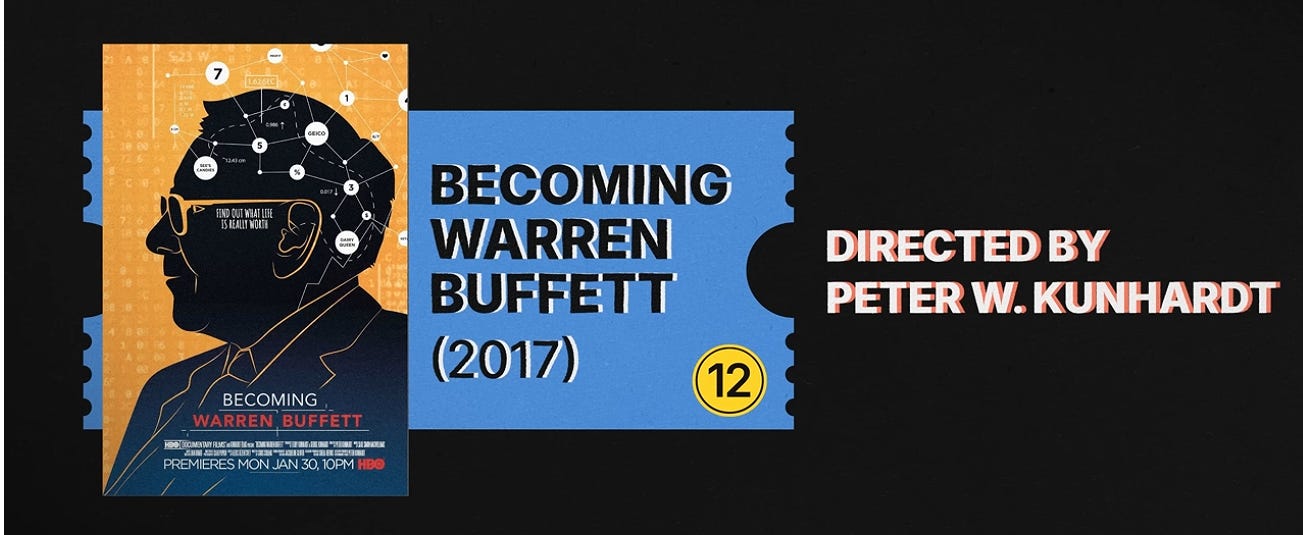
There probably isn’t a more fitting way to end this edition than with Becoming Warren Buffett.
Unlike most of the documentaries we’ve covered, this one isn’t about a market crash, a financial scandal, or a blow-up. It’s simply a look at Buffett’s life, his approach to investing, and the principles that have guided him over several decades.
I’ll admit I’m not a pure Buffett-style investor — my approach to markets is quite different, and that’s perfectly fine. But there’s still a great deal to learn from the way he thinks. Whether it’s staying within your circle of competence, being patient when opportunities are scarce, or making decisions based on logic rather than emotion, many of those principles apply regardless of whether you’re a long-term investor, a swing trader, or a systematic trader.
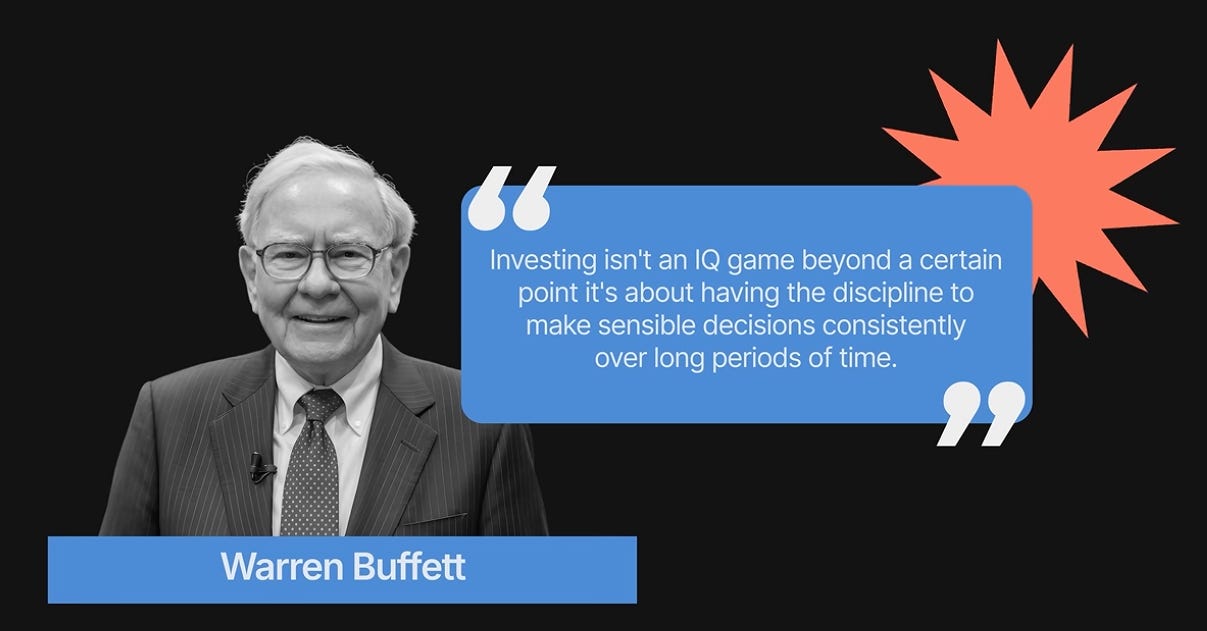
What I also appreciated is that the documentary focuses less on stock picks and more on temperament. Buffett often says that investing isn’t an IQ game beyond a certain point — it’s about having the discipline to make sensible decisions consistently over long periods of time.
After spending time thinking about leverage, fraud, speculation, and financial crises, I wanted to end with a documentary that reminds us that there are many different ways to succeed in financial markets. Buffett’s approach may not suit everyone — but the importance of discipline, patience, and clear thinking is something very few people would disagree with.
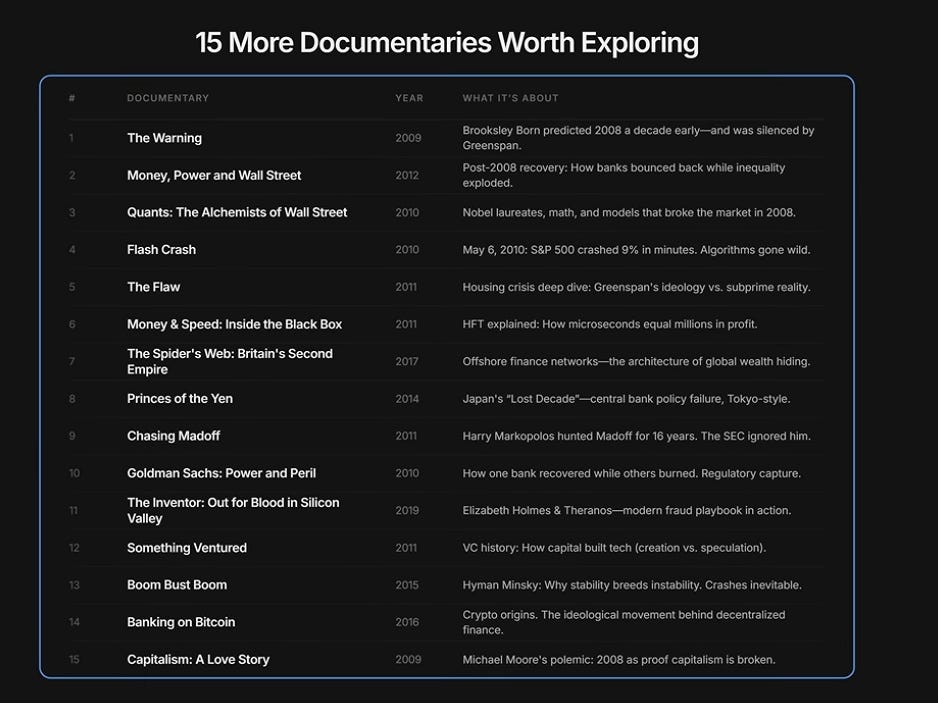
Twelve documentaries, six categories, and many lessons. Take your time with them.
I’m personally more of a documentary person — I prefer to see things without the Hollywood gloss.
As always, if you enjoyed this edition, do share it with someone who would find it useful.
Till then — take care and trade safe.
No posts
Comments
Nothing yet. Say the first thing.
Sign in to join the conversation.